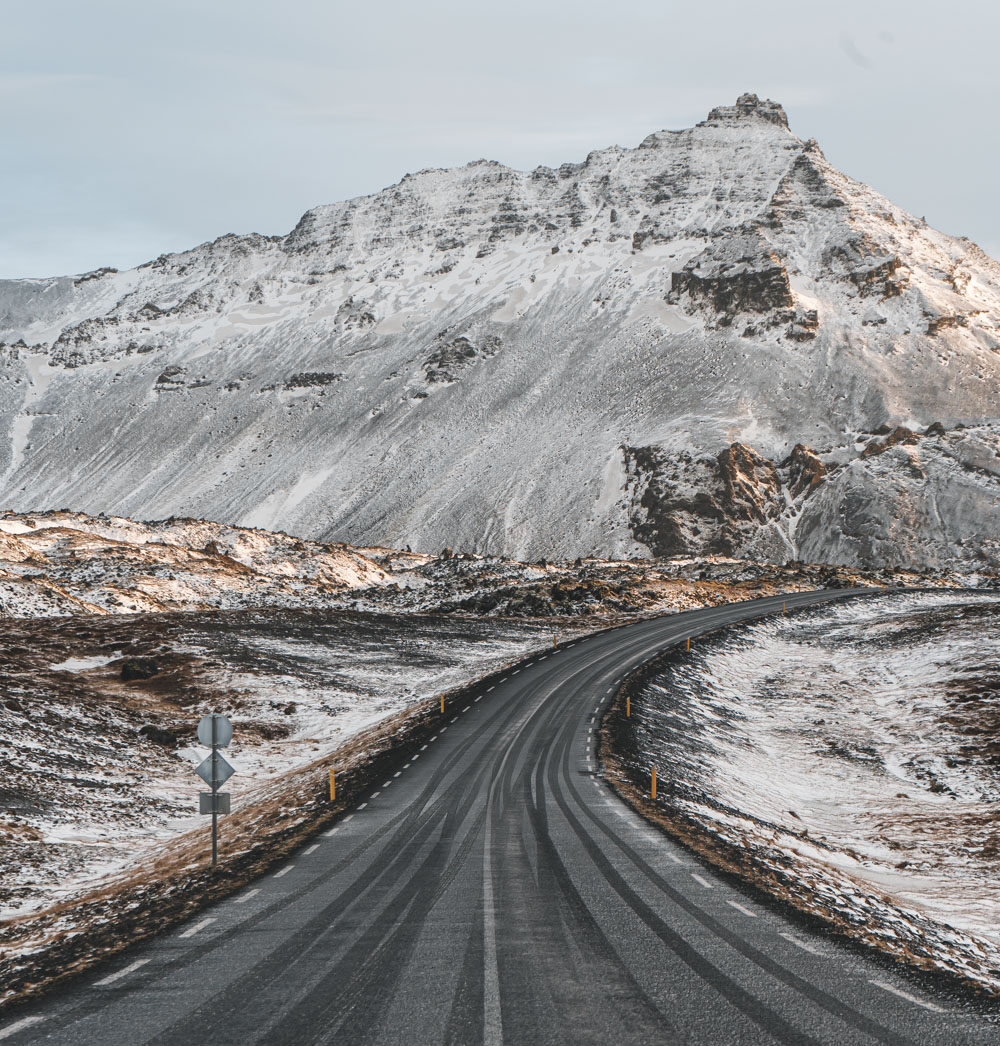
Iceland 8 Day Photography Road Trip Itinerary
I first became interested in Iceland after seeing photos Albert Dros, my brother. When I finally visited myself I understood immediately why people become obsessed with this country. Every direction you look feels like a potential photograph.
This guide is a complete 8 day self drive itinerary designed for people who want to travel Iceland with a photography mindset. It focuses on the most visually powerful regions including the south coast Snæfellsnes Peninsula and glacier areas.
This is not only a travel plan. It is a structured route designed to help you capture Iceland in the best possible way with realistic driving times and carefully selected stops.
Why a Road Trip in Iceland
A road trip is the best way to experience Iceland because the country is built around open landscapes rather than cities or fixed attractions.
Iceland is not about ticking off sights. It is about movement between places where the journey is just as important as the destination.
What makes it unique is the constant change in scenery. You can drive for an hour and go from glaciers to black sand beaches to green valleys without warning.
For photography this is ideal. It means you are always working with different light conditions and compositions throughout the day instead of staying in one environment.
A fixed itinerary or tour limits that flexibility. A self drive road trip gives you control over timing weather and light which is critical in a place like Iceland.
Where to rent your car in Iceland
For this itinerary, having a reliable rental car is essential. Distances are long, weather can change quickly, and you don’t want to deal with unclear insurance or hidden costs.
I usually compare options using DiscoverCars, because it shows multiple rental companies, clear insurance options, and often better prices than booking directly. It’s an easy way to find a car that actually fits your route and season.
Recommended setup
- 4×4 vehicle (especially in winter)
- Full insurance (gravel + sand protection)
- Unlimited mileage if possible
Where to Go in 8 Days in Iceland
You cannot see all of Iceland in 8 days without rushing. The country is too large and weather too unpredictable.
Instead, this route focuses on the most photogenic regions:
- Snæfellsnes Peninsula (west Iceland highlights)
- Golden Circle (geothermal and waterfalls)
- South Coast (waterfalls and black sand beaches)
- Glacier region (Jökulsárlón and ice landscapes)
- Southeast Iceland (Vestrahorn and dramatic mountains)
The north and highlands are left out on purpose to avoid long driving days and to maximize photography time.
Overview of the Route
| Day | Location | Focus | Key Highlights |
|---|---|---|---|
| Day 1 | Reykjavik | Arrival & city | Hallgrímskirkja, Harpa Concert Hall |
| Day 2 | Snæfellsnes Peninsula | Landscapes | Kirkjufell, Arnarstapi, Black Church |
| Day 3 | Golden Circle | Geothermal & waterfalls | Strokkur, Gullfoss |
| Day 4 | South Coast → Vík | Waterfalls & coast | Skógafoss, Kvernufoss, Dyrhólaey |
| Day 5 | Vík (base) | Exploration | Reynisfjara, Fjaðrárgljúfur, Plane Wreck |
| Day 6 | Glacier Region → Höfn | Ice landscapes | Svínafellsjökull, Fjallsárlón, Jökulsárlón |
| Day 7 | Höfn / Stokksnes | Mountains & coast | Diamond Beach, Vestrahorn, Eystrahorn |
| Day 8 | Return to Reykjavik | Drive back | Scenic return along south coast |
Why This Route Works for Photography
This itinerary is designed around light, weather variability, and driving efficiency.
Instead of constantly backtracking or rushing, the route naturally flows along Iceland’s south coast and gradually moves east before returning.
This means:
- More sunrise and sunset opportunities
- Less driving stress
- More time at key locations
- Better conditions for photography
Day 1 Reykjavik
Arrival day and slow introduction to Iceland. Pick up your car from the airport and acclimatize after your flight.
What to do in Reykjavik
- Walk downtown Reykjavik
- Hallgrímskirkja viewpoint
- Harpa Concert Hall at blue hour
Where to stay in Reykjavik
Reykjavik city center, or just outside of the city center (make sure your hotel has parking available).
Recommended hotels:
- City Center Hotel (especially if you like cats).
- Skuggi Hotel
Day 2 Snæfellsnes Peninsula
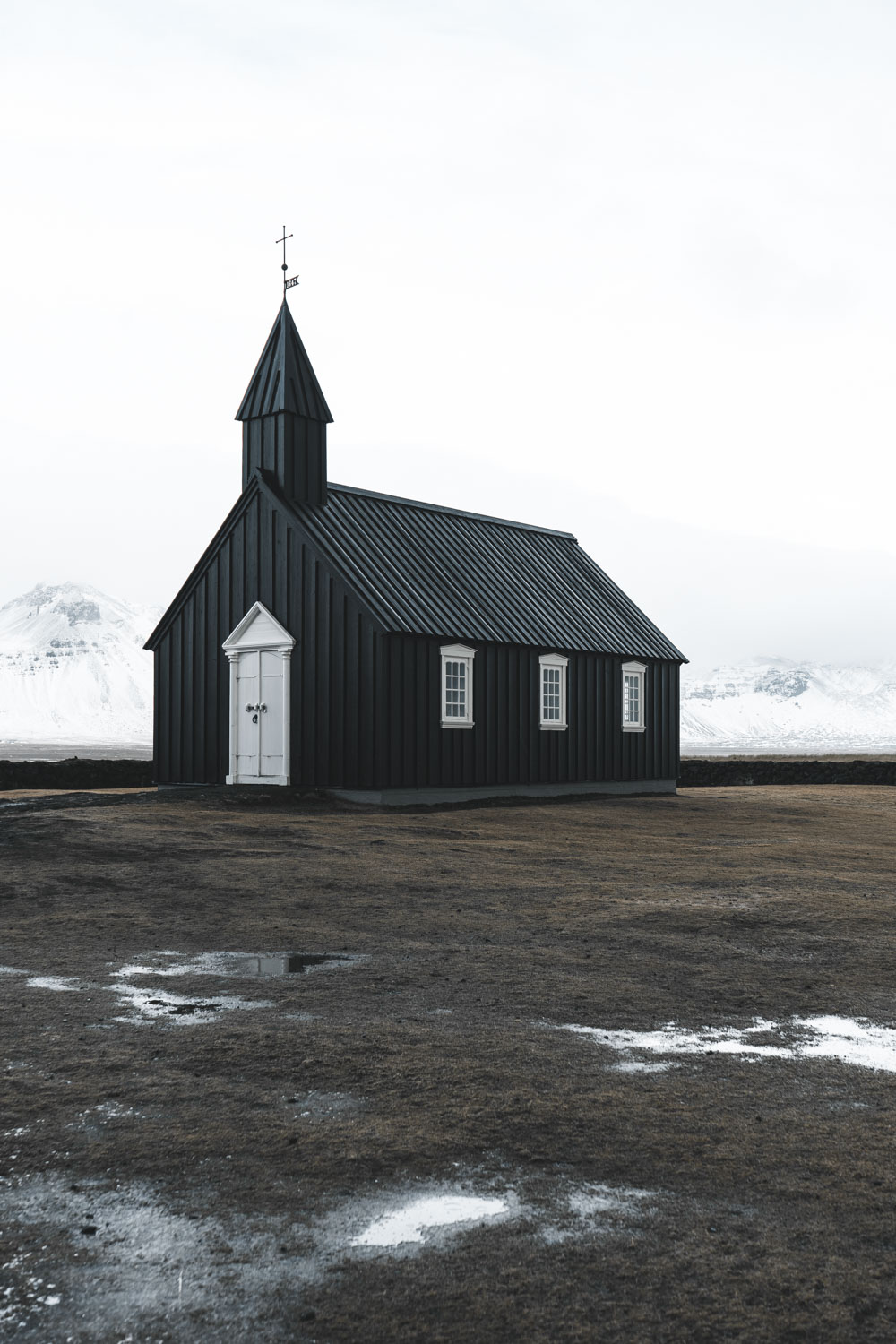
One of the most diverse regions in Iceland. The Snæfellsnes Peninsula offers some of Iceland’s most famous scenery, such as Kirkjufell (Iceland’s most photographed mountain), Snæfellsjökull National Park which features really spectacular cliffs and the Saxholl Crater. Stay in Arnarstapi and wake up next to beautiful cliffs in the ocean. The photogenic Iceland Black Church is also located in this area. And I had the best fish soup at Hraun Restaurant in Ólafsvík (now re-opened as REKS it seems).
Photography Highlights
- Kirkjufell (Iceland’s most photographed mountain)
- Arnarstapi cliffs
- Snæfellsjökull National Park
- Búðakirkja black church
Personal note
This was one of the first moments where Iceland really hit me. The wind was strong and shooting Kirkjufell required patience.
Where to stay
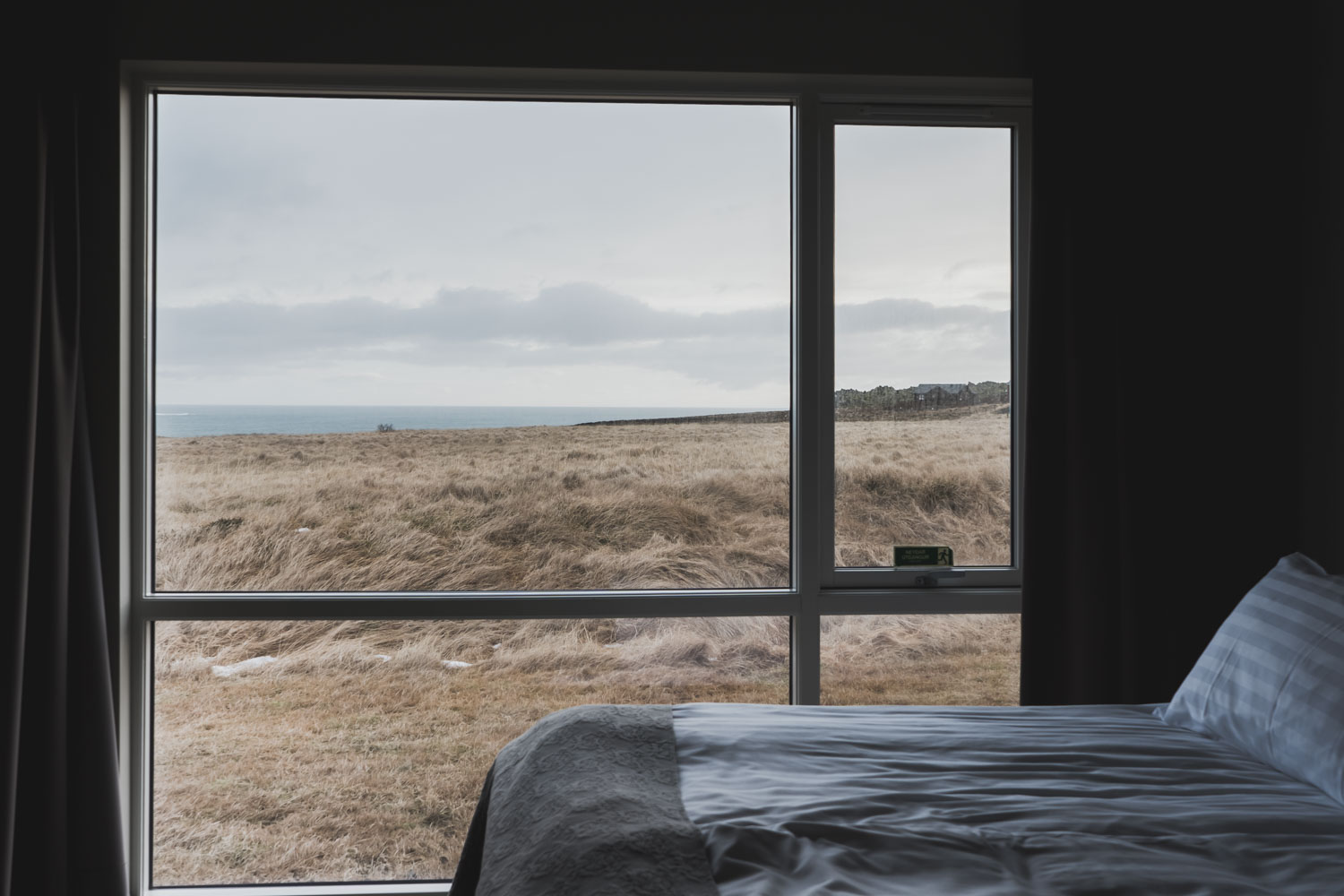
Arnarstapi Hotel. Nice little hotel with beautifully minimalistic sea view rooms. In the early morning you can walk to the cliffs right in front of the hotel and enjoy sunrise with the Arnarstapi Mountain right behind you.
Day 3 Golden Circle
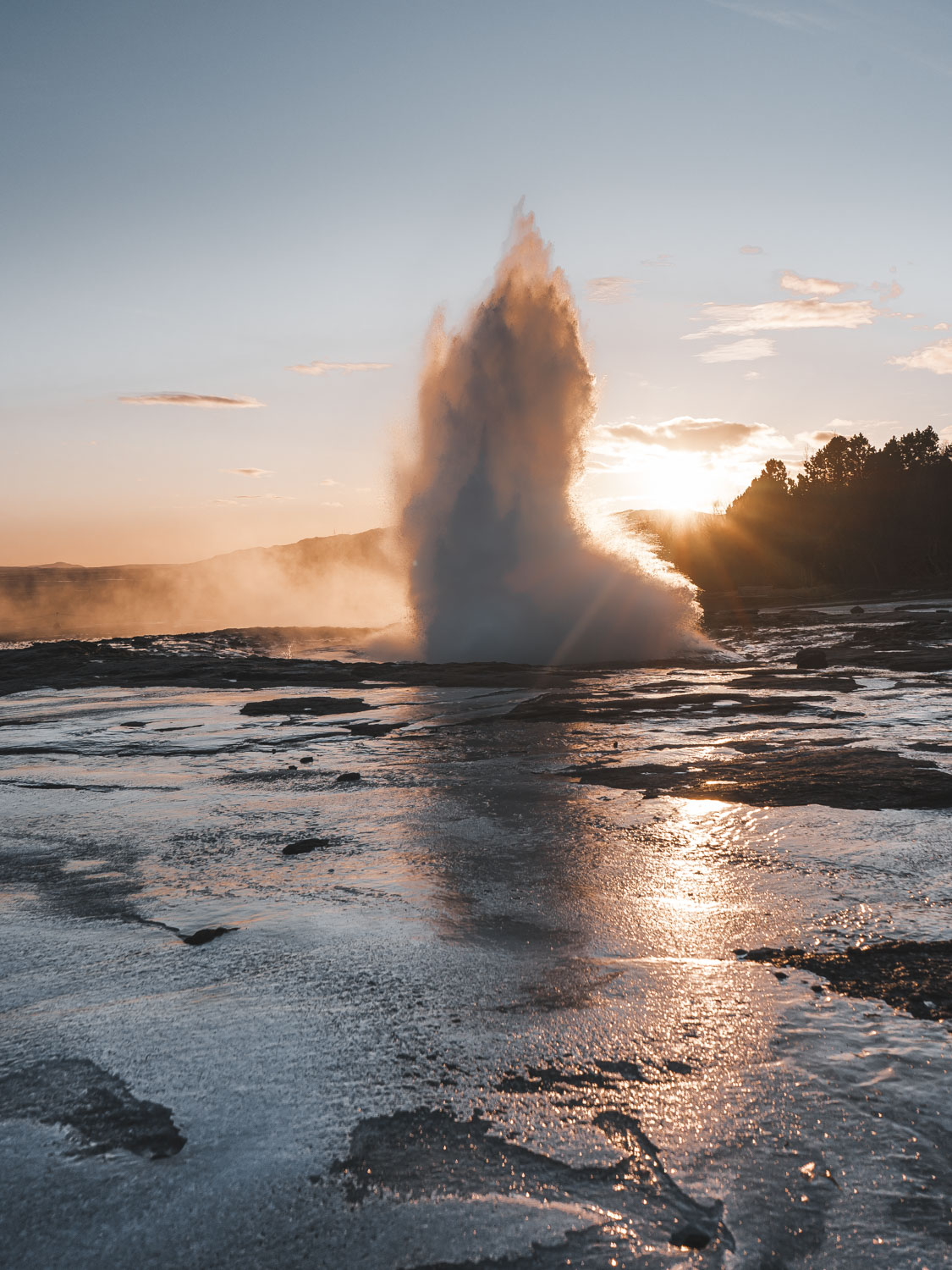
Geysir hot spring area & Gullfoss waterfall, also known as the Golden Circle (I believe so, I’m still trying to find out what that Golden Circle exactly stands for…). You’ll find the famous Great Geysir and the Strokkur Geyser here, the latter one erupts every 8 to 10 minutes! A natural spectacle which is a must see when visiting Iceland. The park is open all night and Hotel Geysir is located right opposite of the park where they geysers are located. The famous waterfall called Gullfoss is also located here.
Photography Highlights
- Strokkur geyser (erupts every 8 to 10 minutes!)
- Gullfoss waterfall
- If you are lucky you can see the geyser together with the Northern Light at night!
Where to stay
Geysir Area (Golden Circle): Hotel Geysir. This is the most fancy and pricy place I’ve stayed in Iceland. Brand new. Incredibly nice designed hotel. Very comfortable and right in front of the Geysir Park. I loved everything about this hotel. The Northern Light wake up call was great too.
Day 4 and 5 Vík í Mýrdal
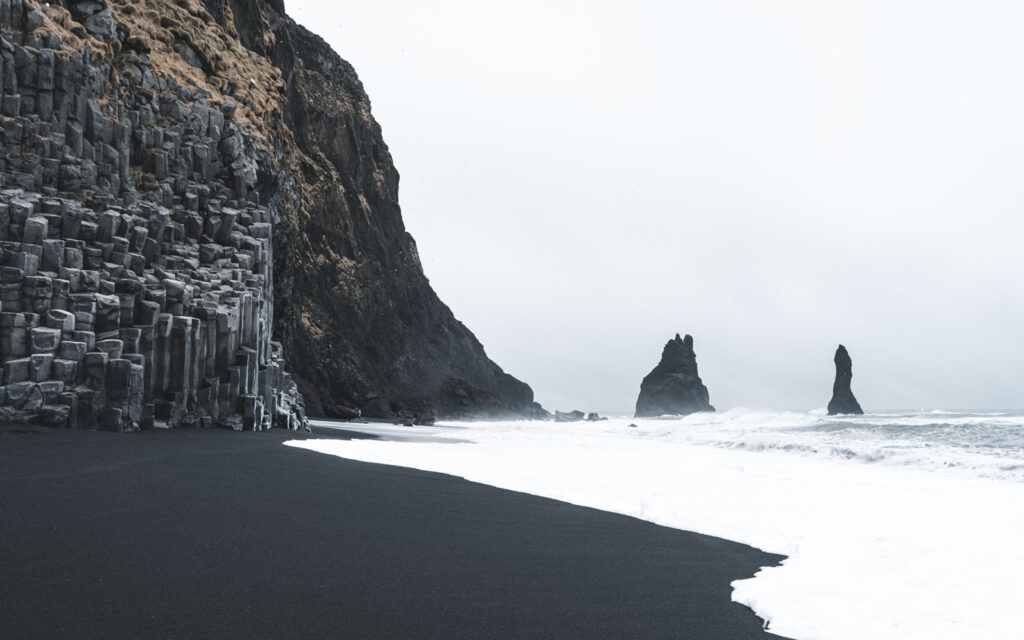
Tonight you will stay in Vīk for two nights, this is where you’ll find the famous long Black Sand Beach (Reynisfjara Beach), one of Europe’s most dangerous beaches (to go into the water) due to the extreme conditions of the ocean. Vík itself features a really nice viewpoint from where you can photograph the Church with ocean and its cliffs in the background. Another highlight here is Dyrhólaey a little peninsula with great views over Black Sand Beach as well.
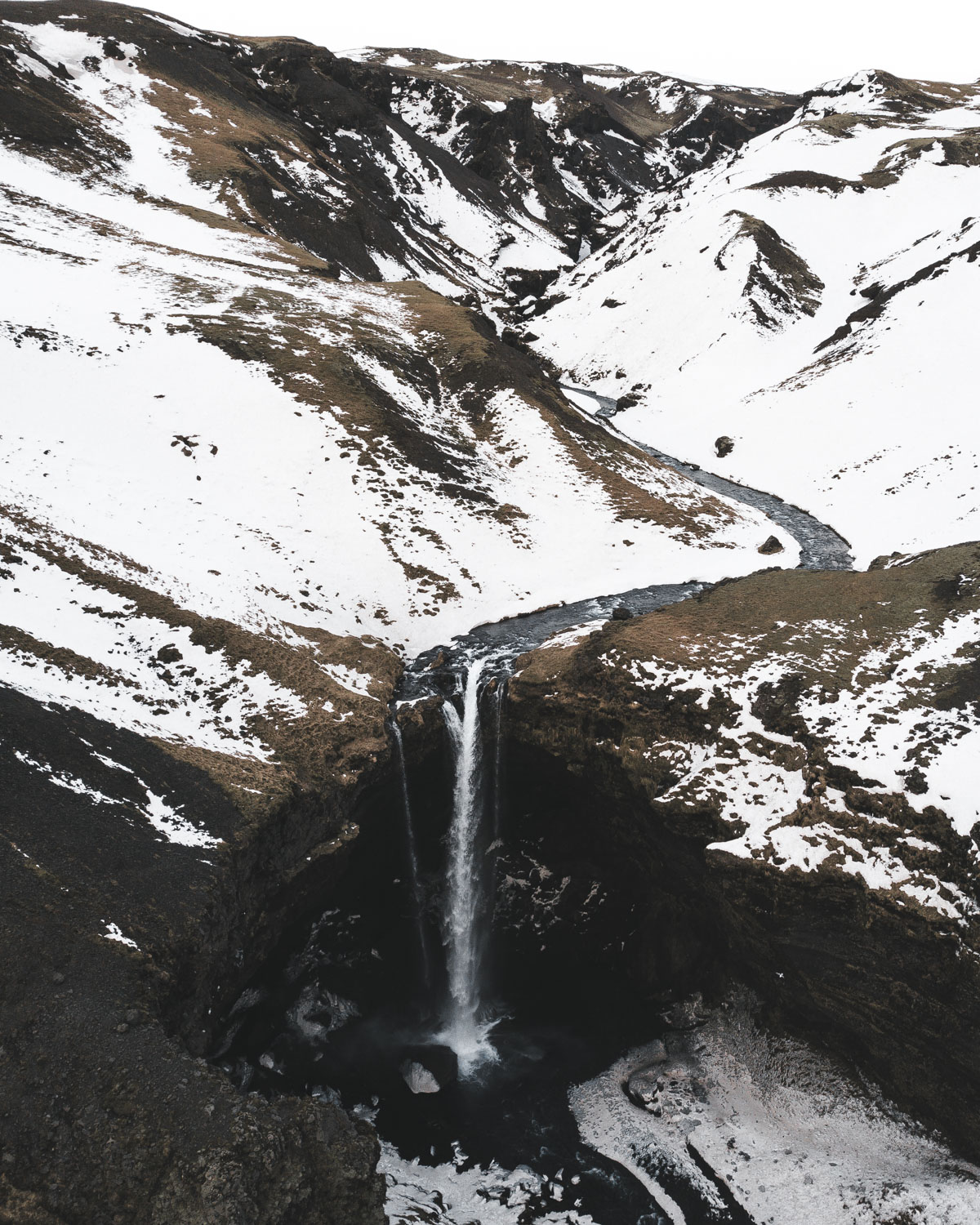
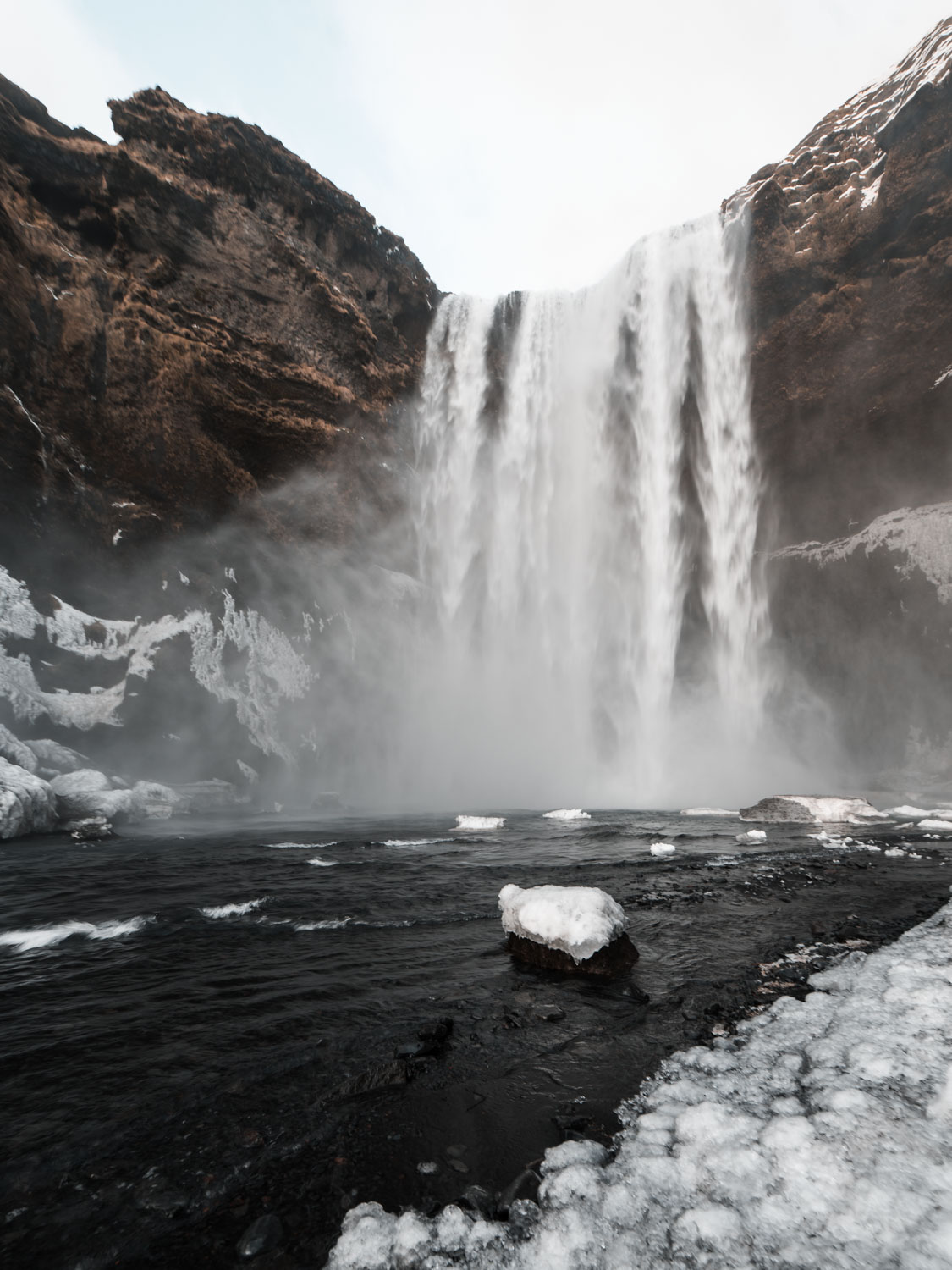
On the way to Vīk you will stop in Skógafoss & Kvernufos. While Skógafoss is one of Iceland’s most famous waterfalls, its little brother Kvernufoss is located just around the corner in an idyllic little canyons that invites to be explored. By foot or by drone.
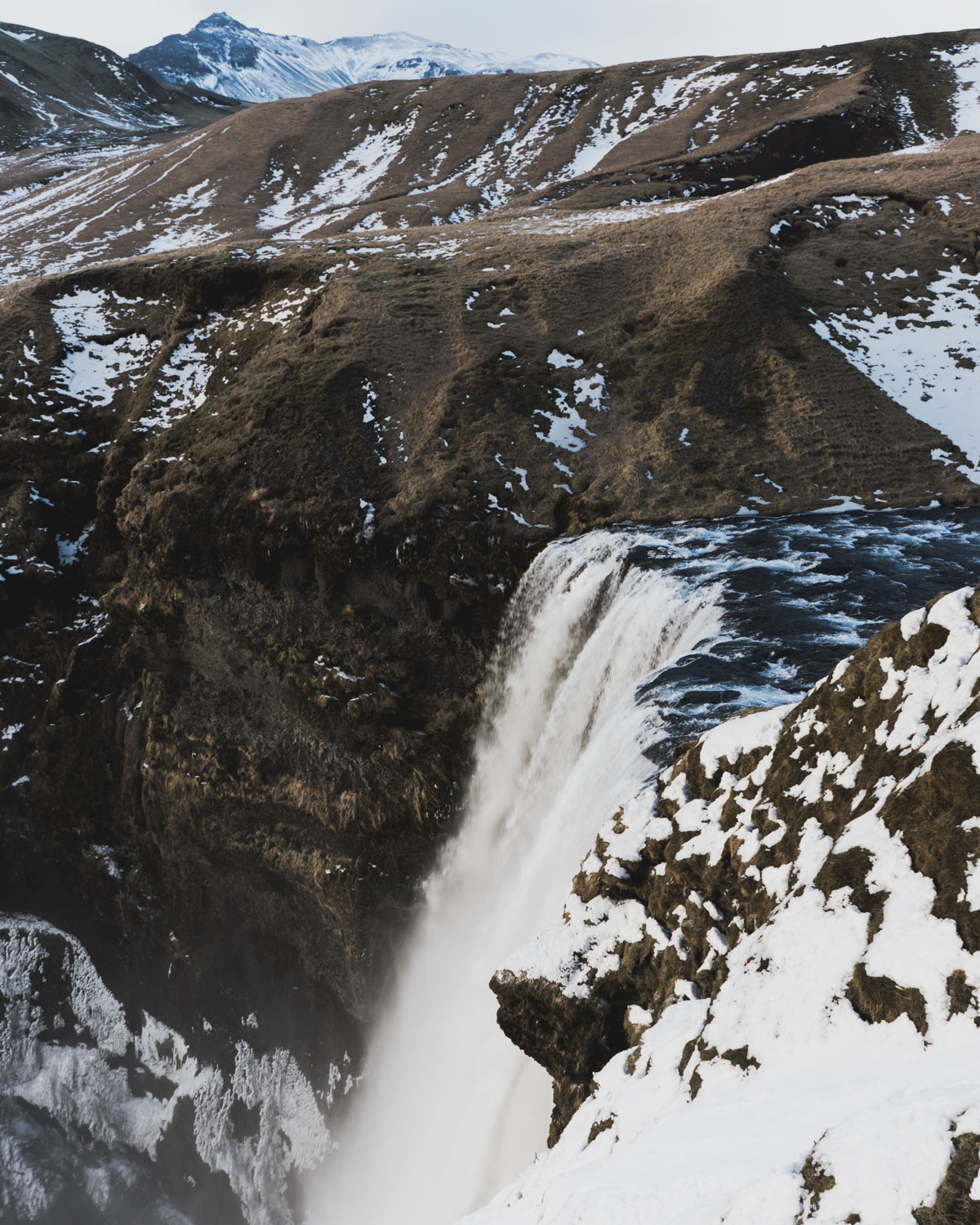
Staying two nights in Vīk, the next day you have plenty of time to explore Fjaðrárgljúfur Canyon. Fjaðrárgljúfur Canyon is super easily accessible, not even a few minutes away from the ring road. The canyon can be seen from the parking lot and a hiking trail can be done to see the canyon from different perspectives. When I went, the canyon was completely covered in snow which was beautiful to see as well.

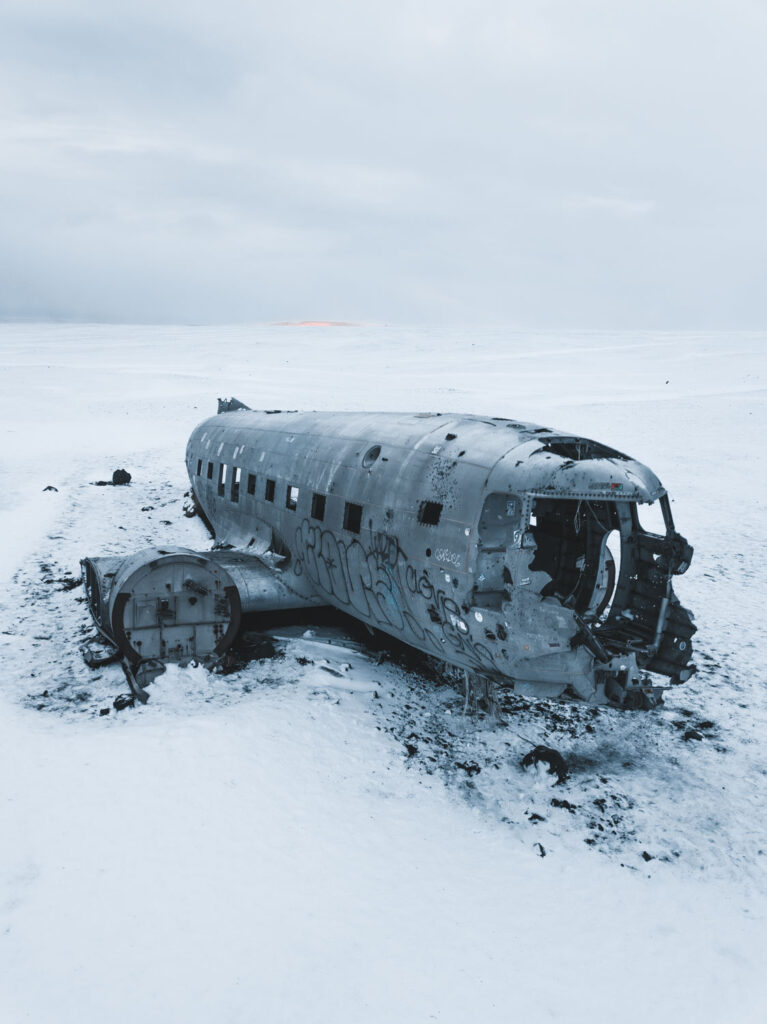
From Vīk you can also explore Solheimasandur Plane Wreck. An Instagram favourite. It’s quite a walk from the parking lot to the actual Plane Wreck (though there is an optional shuttle should you not want to walk), and actually the plane wreck is, well, no more than a plane wreck in the middle of nowhere. Note that there will most likely be a lot of people around the plane because the hype. It’s nice to see though after all the waterfalls, glaciers and other natural spectacles. That said, it’s not a must in my opinion.
While staying in Vík, this is also a great place to add a glacier experience to your trip. From here you can easily join an ice cave tour or glacier hike on nearby glaciers. These tours give you a completely different perspective compared to viewing glaciers from a distance, as you actually walk on the ice and explore formations up close. Especially in winter, ice caves can be one of the most unique experiences in Iceland.
Check availability for glacier hikes and ice cave tours here
Photography Highlights
- Reynisfjara black sand beach
- Dyrhólaey cliffs
- Fjaðrárgljúfur Canyon
- Solheimasandur Plane Wreck
- Ice Cave Tour and / or Glacier Hike
Where to stay
- Budget: Arsalir Guesthouse Vik (in town walking distance from the photogenic church)
- Budget: The Barn (quirky guesthouse that offers both dorms as well as private rooms)
- Mid range: Vík Apartments (walking distance from Black Sand Beach)
- Mid range: Black Sand Suites (offers beautiful sea-view rooms)
Day 6 and Day 7 Höfn and glacier region
On day 6 of our itinerary you will be driving to Höfn where we recommend to stay for two nights. On the way you will stop at some of the most spectacular places of the itinerary: Svínafellsjökull, Fjallsárlón, Glacier Lagoon.
I had never seen a glacier before and was blown away by the beauty of these three glaciers. All of them are located close to each other on the ring road and I’d check out all of them. These three glaciers all equally beautiful. While Glacier Lagoon is the most famous out of these three, Fjallsárlón and Svínafellsjökull are as beautiful and less touristy.

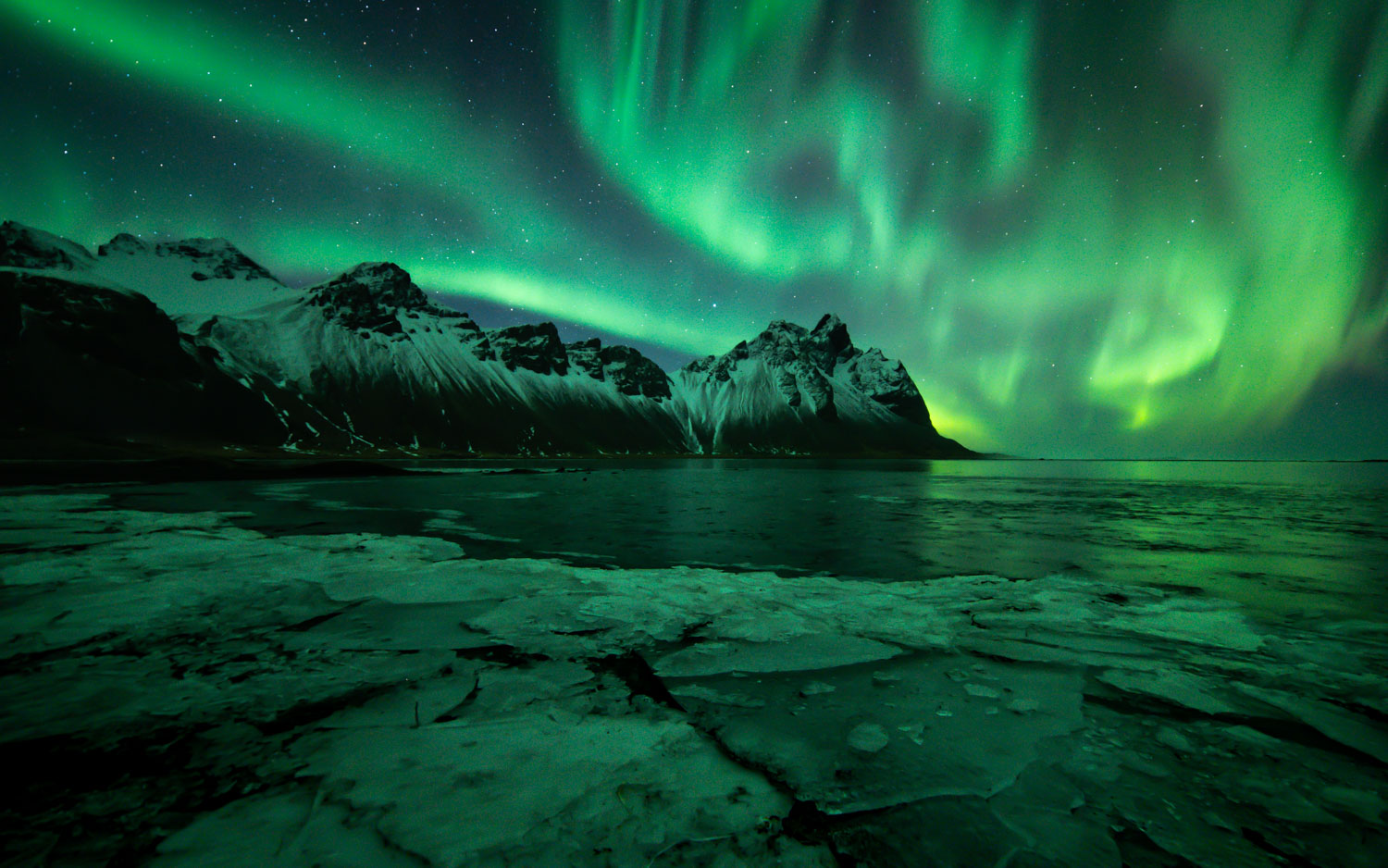
Going further east on the Icelandic south coast you’ll find the small town called Höfn. The town is located right next to the Stokksnes peninsula, a beautiful hiking area. Stokksnes offers some of the most dramatic landscapes I’ve seen in Iceland, with the Vestrahorn mountain in the backdrop. This place is also great to come at night and watch the Northern Lights. Note that there is an entrance fee to enter the peninsula.
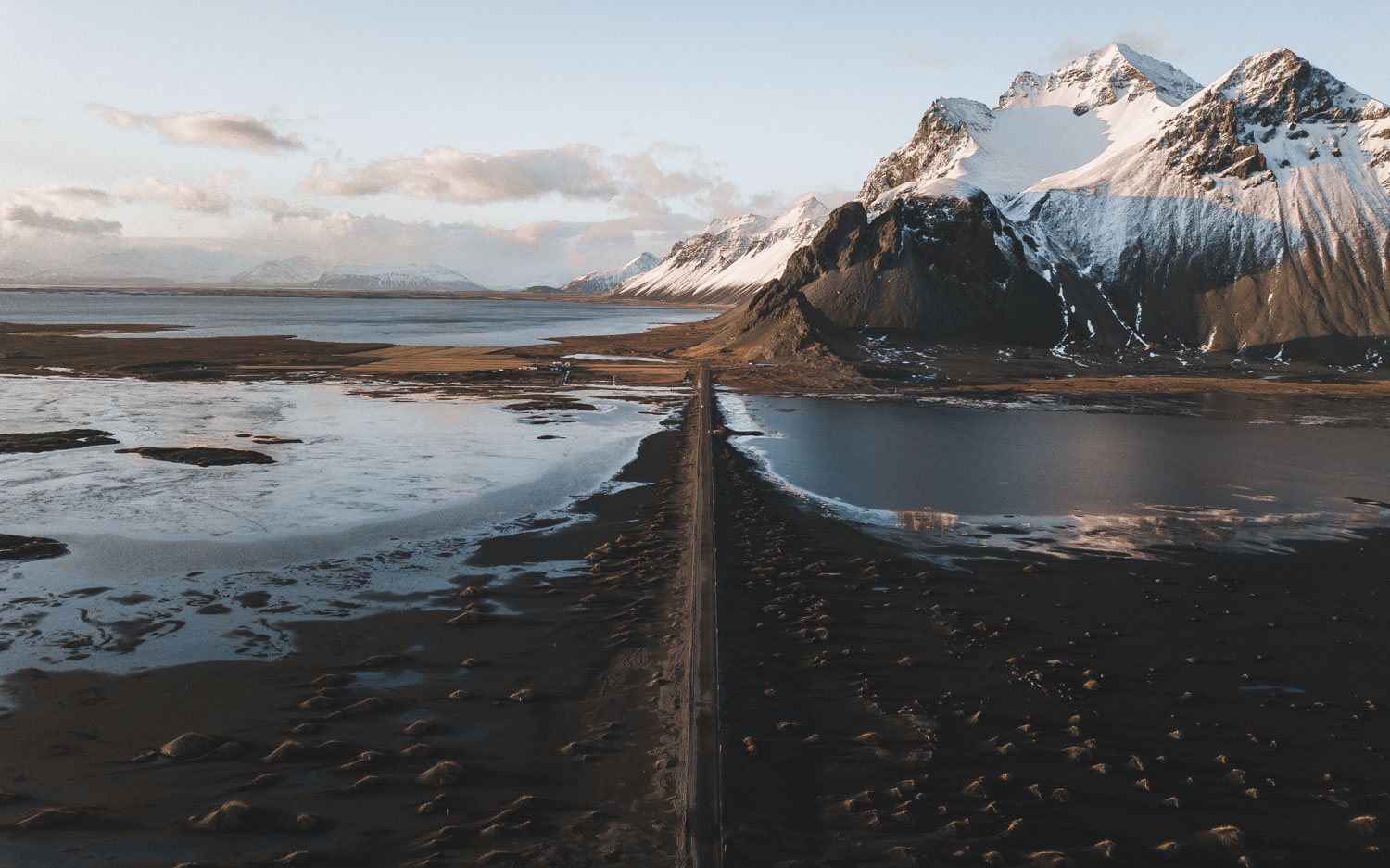
Depending on your time, you can go here after checking into your accommodation in Höfn to see the sunset. Either way, you might want to come back here again for its spectacular nature. Personally I came back later that night to photograph then Northern Lights.
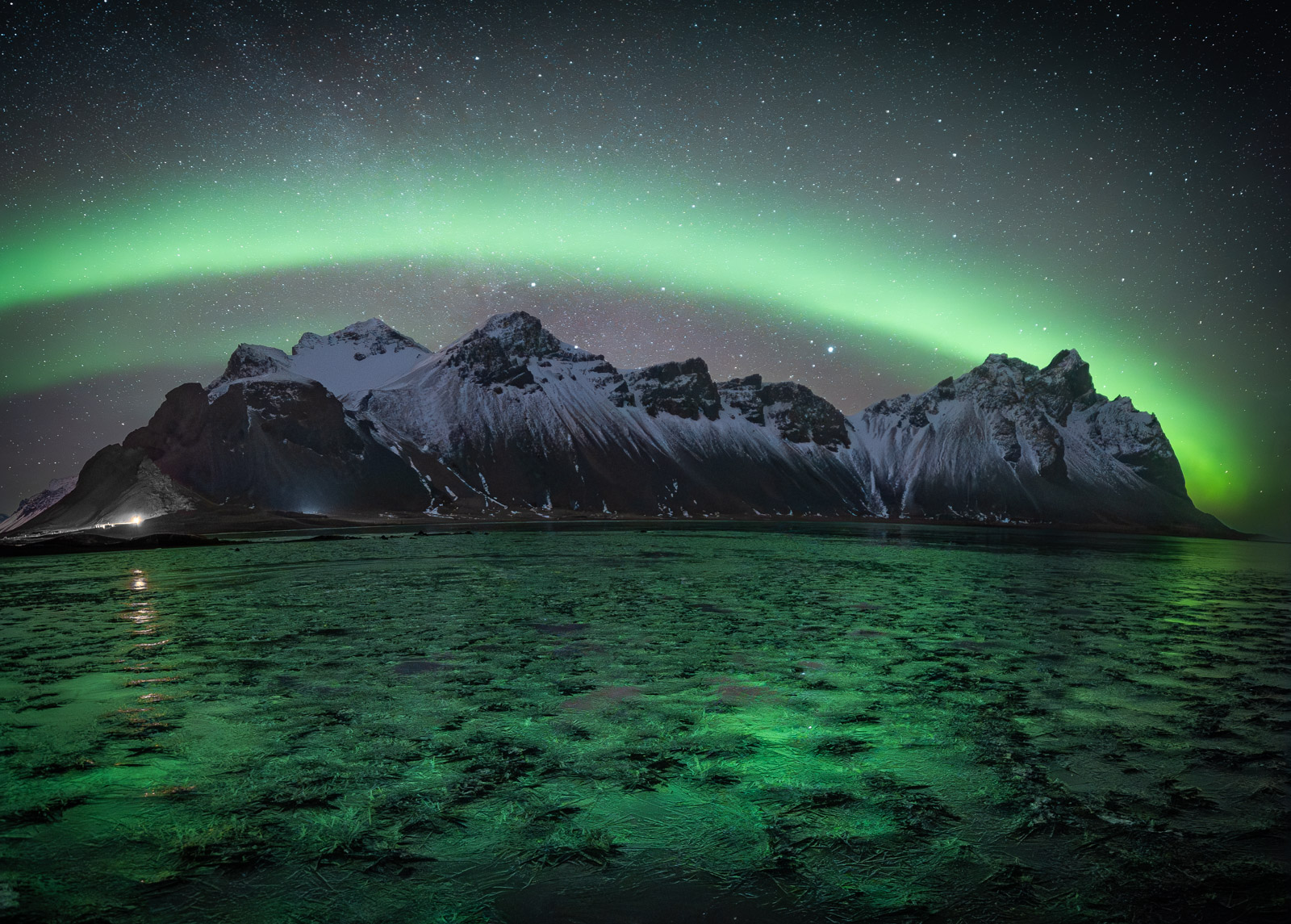
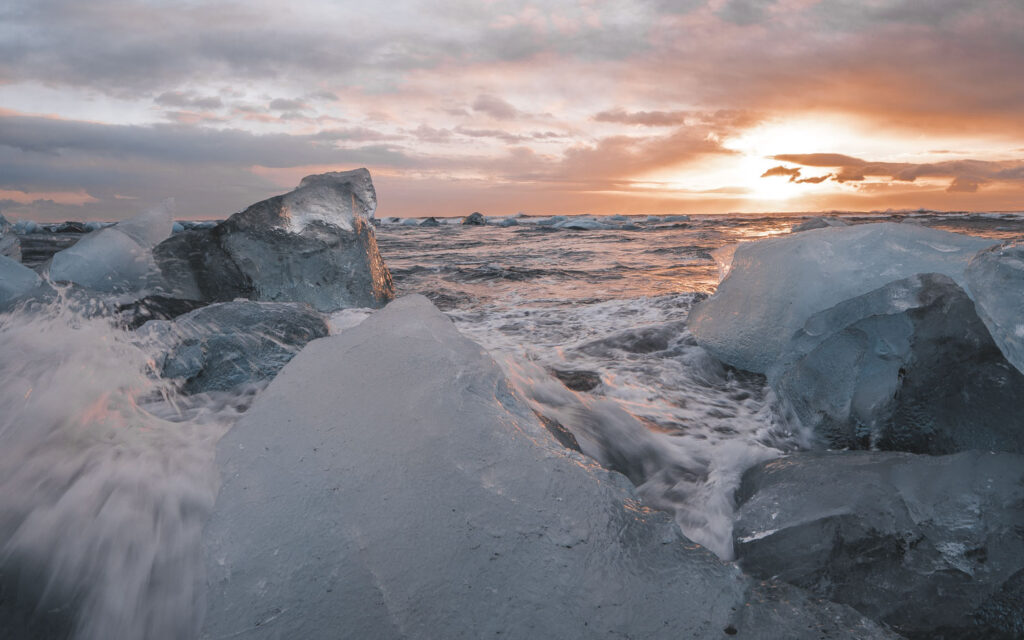
After a good night of sleep in Höfn (if you were not awake all night photographing the Northern Lights at Vestrahorn) you will wake up early to catch the sunrise in Diamond Beach.
Diamond Beach is located right in front of Glacier Lagoon. In fact that the ice from Glacier Lagoon forms the beach’s “Diamonds”. As these come and go, day in day out, the beach looks different everyday. We deliberately suggest to skip it when you pass by in the afternoon (unless it’s sunset!), because we recommend catching the sunrise here instead. The sunlight reflecting one the ice makes the place looks magical.
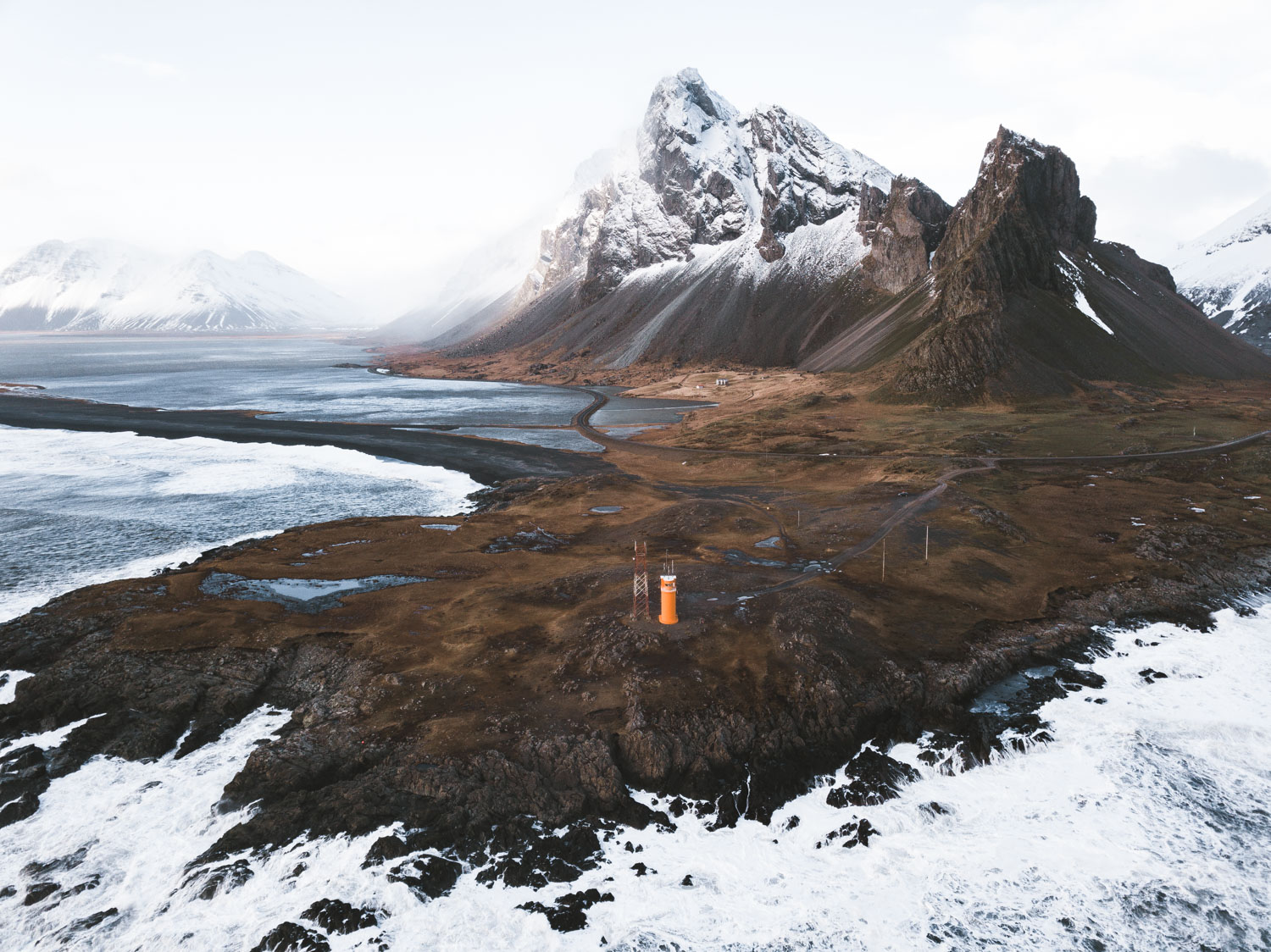
The most east you go this trip before heading back to Reykjavik is Eystrahorn. It was extremely windy when I went here which made it difficult to drone, however in better weather conditions it’s an amazing spot to fly. In front of the Eystrahorn mountain you’ll find the orange painted Hvalnes Lighthouse, where you can park your car. There’s a spectacular beach here as well, not nearly as famous as Black Sand Beach. Just be really careful flying your drone here, it was extremely windy and I had a hard time getting it back after flying over the ocean!
If you haven’t already done so, while staying in Höfn, this is the best place to add a glacier experience to your itinerary. From here you can join ice cave tours in winter, glacier hikes, or even kayaking trips on the glacier lagoons. These experiences take you beyond just viewing the ice from a distance and let you get right up close to the glaciers.
When I was there, just seeing the glaciers was already impressive, but being on the ice or out on the water would take it to a completely different level.
Check availability for glacier hikes, ice cave tours and kayaking here.
Photography Highlights
- Svínafellsjökull, Fjallsárlón and Glacier Lagoon
- Diamond Beach
- Stokksnes and Vestrahorn
- Eystrahorn
- Ice Cave tours and Glacier Hikes
Where to stay
- Seljavellir Guesthouse (I really liked this place. The guesthouse is quite basic but all clean and new and spotlessly clean. Super friendly staff and just a few minutes driving from the town of Höfn)
Day 8 Return to Reykjavik
On your last day you’ll have a drive of about 6 hours ahead from Höfn back to Reykjavik. You will pass many of the stops we’ve covered in this itinerary, and if you feel like you missed any spots this is your last chance to check them out on the way back.
Suggested Iceland 8 day road trip itinerary
- Day 1: Reykjavik (1 night)
- Day 2: Snæfellsnes Peninsula (1 night)
- Day 3: Geysir Area (Golden Circle) (1 night)
- Day 4 and 5: Vík í Mýrdal (2 nights)
- Day 6 and 7: Höfn (2 nights)
- Day 8: Reykjavik (1 night) – or somewhere in between Höfn and Reykjavik.
Iceland 8 days road trip highlights Google Map
Iceland Road Trip Budget (What to Expect)
Iceland is not a cheap destination, but the good news is that most of the highlights are completely free. The landscapes are the main attraction, and apart from a few locations like private land at Stokksnes, you won’t pay entrance fees.
Accommodation
Expect to pay around €125–€250 per night for a double room, depending on location and comfort level. Prices increase quickly for hotels with views or in peak season.
Car rental
Around €125–€175 per day including full insurance.
For this itinerary, I strongly recommend a 4×4, especially in winter. Weather conditions can change quickly, and having a more stable car makes a big difference on the road.
Tip: always check insurance coverage carefully (gravel and sand protection are worth it in Iceland)
Fuel prices fluctuate, so it’s hard to give an exact number. Expect it to be on the higher side compared to most of Europe.
Food
Restaurants are relatively expensive.
- Dinner: around €50–€75 per person
- Lunch: supermarket or bakery is the best option
Personal tip: We often grabbed simple sandwiches during the day to save both time and money, especially when chasing light for photography.
Tours & activities
Most natural attractions are free.
Paid activities (like glacier hikes or ice caves) can be expensive, but they are often worth it if you want a more unique experience.
What to Pack for Iceland (Especially in Winter)
What you pack depends heavily on the season, but if you’re visiting in colder months, this is what you’ll actually need:
- Thermal layers: you can wear these as an extra layer to stay warm underneath your normal clothes.
- Fleece clothes: both fleece (snow) pants and a fleece jacket to stay extra warm. Oh and don’t forget the extra layer of fleece socks if you are like me, always cold!
- Water and wind proof winter jacket: this is essential.
- Waterproof shoes: preferably boots’ style (e.g. Timberland, Colombia, etc) with good grip. You could add crampons to that (I did not) depending on how much you are planning to walk on ice.
- Gloves, hat: to keep your hands and ears warm.
- Snacks: you can simply stop at any supermarket to get these in Iceland. But snacks should never be missing on a good road trip!
- Water flask: don’t bother buying water. Tap water is perfectly safe to drink. Simply refill your own flask and save money and plastic.
Note that I bought the thermal and fleece clothing at Decathlon which I find to have quite reasonable prices.
Visited: February 2020. Updated April 2026.