A Mount Fuji road trip from Tokyo is one of the most popular photography routes in Japan. In this guide, we share our exact 2-day itinerary, best photo spots, and driving route based on real travel experience.
Mount Fuji is one of those destinations that looks almost unreal online. Perfect reflections, empty viewpoints, clear skies. The reality is very different. The weather changes quickly, clouds come and go, and even with planning you are never guaranteed a clear view.
That is exactly why we stayed for two full days in the area (three nights in total, although we left early on day three due to heavy rain). It wasn’t just about needing time, but mainly about increasing the chances of actually seeing Mount Fuji in different conditions.
Best Mount Fuji Photography Spots Road Trip Itinerary Overview
| Day | Location | Why we went there |
|---|---|---|
| Day 1 | Lake Yamanakako | First full view of Mount Fuji, calm lake scenery |
| Day 1 | Oshino Hakkai | Traditional village with Fuji backdrop |
| Day 1 | Lake Kawaguchiko | Classic viewpoints and lunch stop |
| Day 1 | Lake Shoji | Quiet stay with direct Fuji views |
| Day 1 | Lake Saiko | Scenic drive and photo stops |
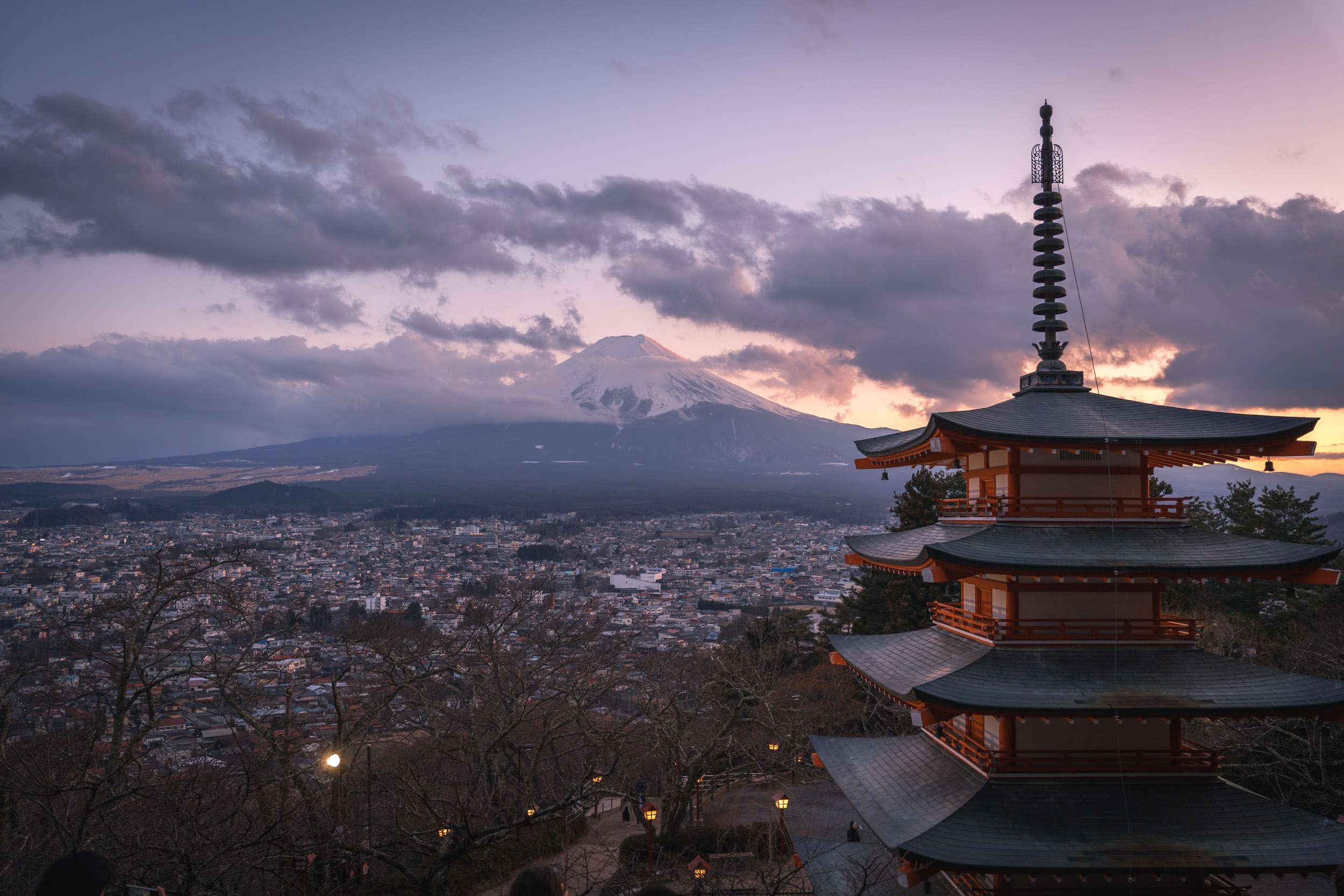
| Day 1 | Chureito Pagoda | Iconic Fuji viewpoint (sunset) |
| Day 2 | Lake viewpoint sunrise spot | Early morning Fuji views |
| Day 2 | Lawson / 7-Eleven spots | Convenience store Fuji photography |
| Day 2 | Train crossing viewpoints | Unique moving train shots |
| Day 2 | Overpass viewpoint | Famous elevated Fuji composition |
| Day 2 | Tea fields area | Rural landscapes and countryside drive |
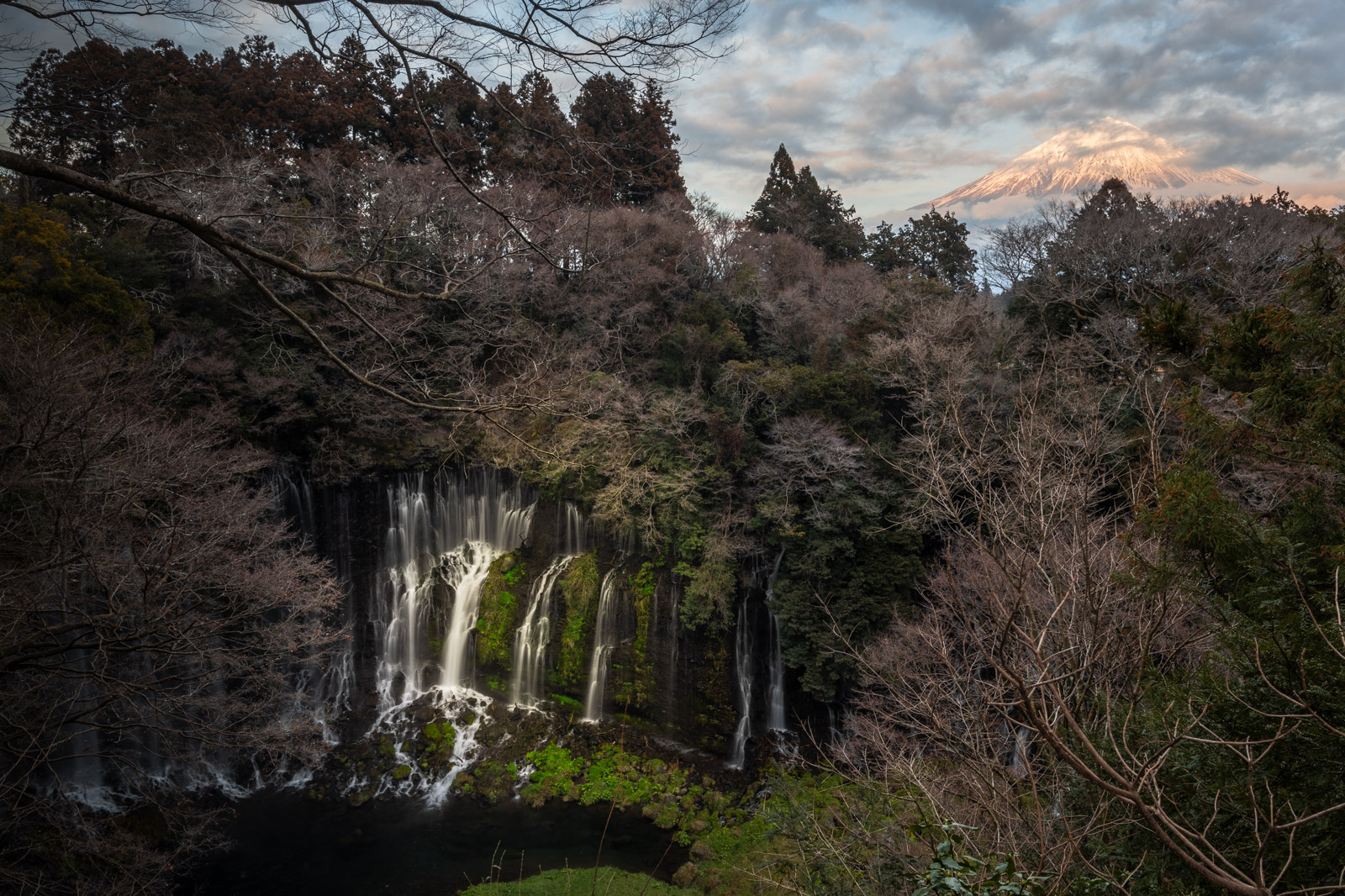
| Day 2 | Shiraito Falls | Waterfall with Fuji backdrop |
| Day 2 | Lake Tanuki | Final quiet lake walk |
Mount Fuji Photography Map (Lakes, Viewpoints & Scenic Stops)
We’ve added all photo spots, viewpoints and key stops from this itinerary to a Google Maps list.
Instead of following a strict route, this map is designed as a flexible reference. Conditions around Mount Fuji change quickly, so we recommend using it to adapt your day based on weather, visibility and timing.
Why this Mount Fuji road trip works for Photography
Most Fuji itineraries focus on a few famous spots. This Mount Fuji road trip route is different because it is built around movement.
Instead of staying in one place, you are constantly shifting between:
- lakes
- viewpoints
- rural roads
- hidden stops
That flexibility is what makes it work, especially when weather changes quickly.
We would not recommend doing this route without a car, as it completely changes the flexibility of the trip and the ability to react to weather conditions.
Where to stay
We recommend staying in the Fuji Five Lakes area, but choosing your base carefully makes a big difference in the overall experience. Staying in Kawaguchiko is convenient, with more restaurants and services nearby, but it doesn’t always offer the same views or sense of atmosphere as staying directly by the quieter lakes.
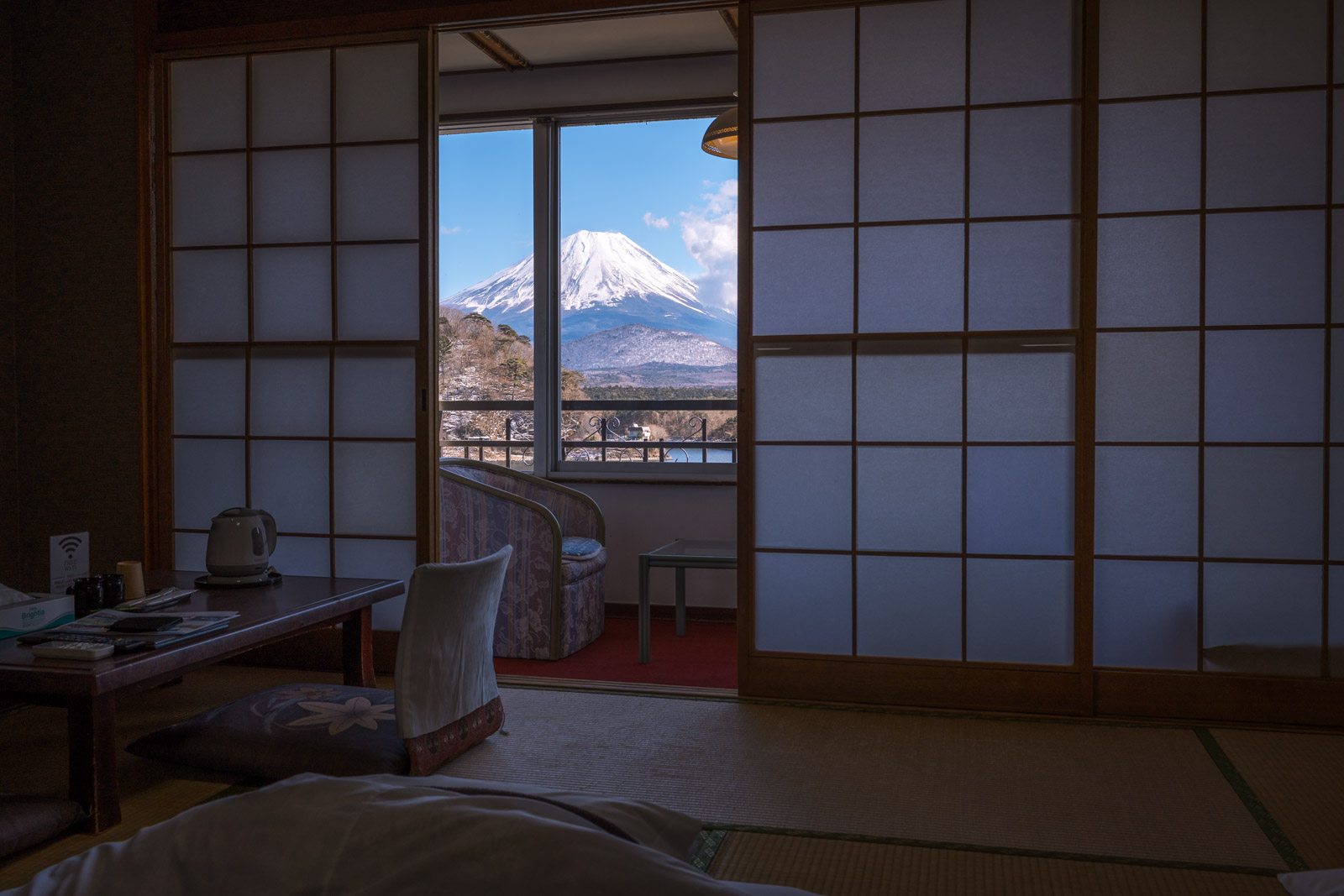
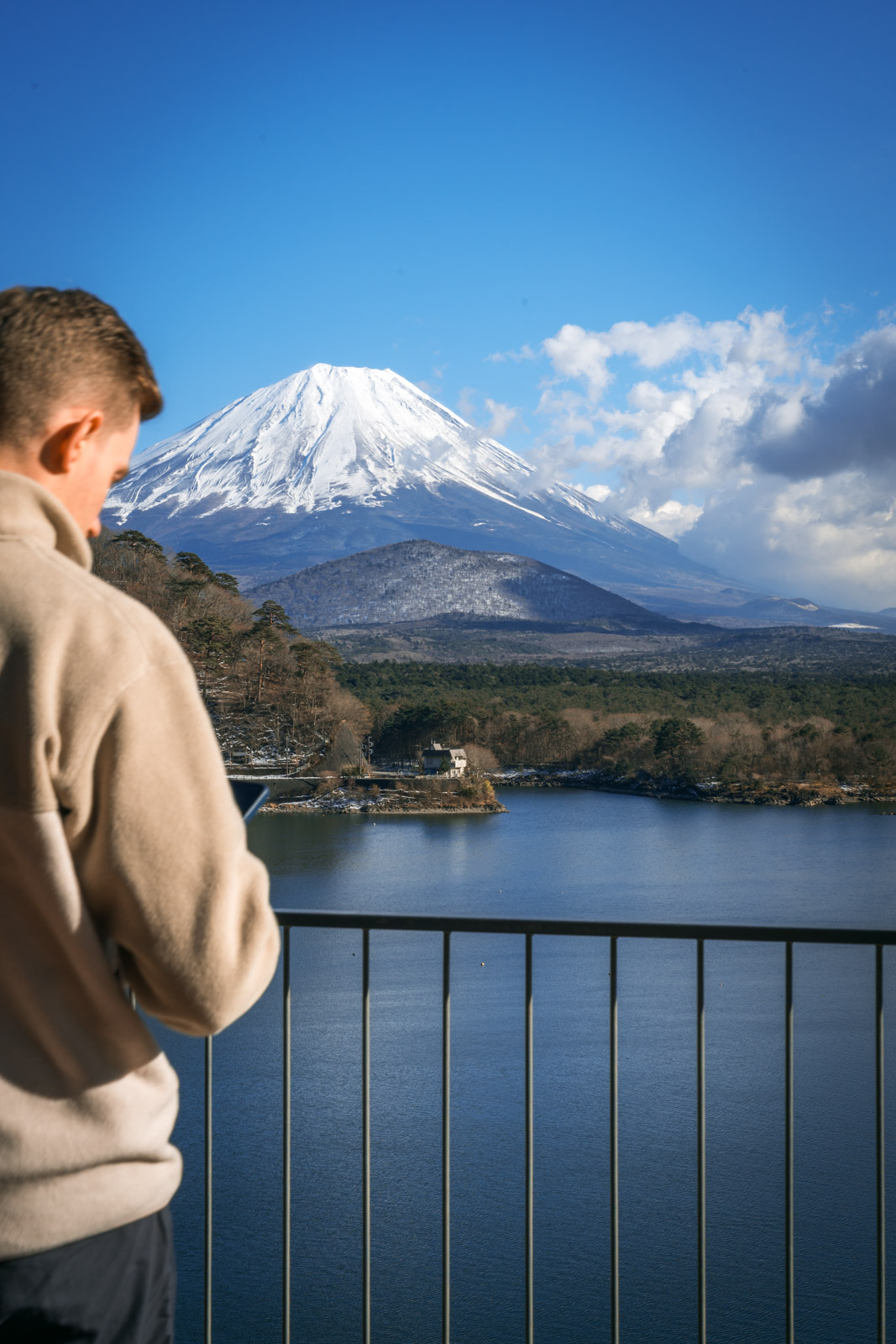
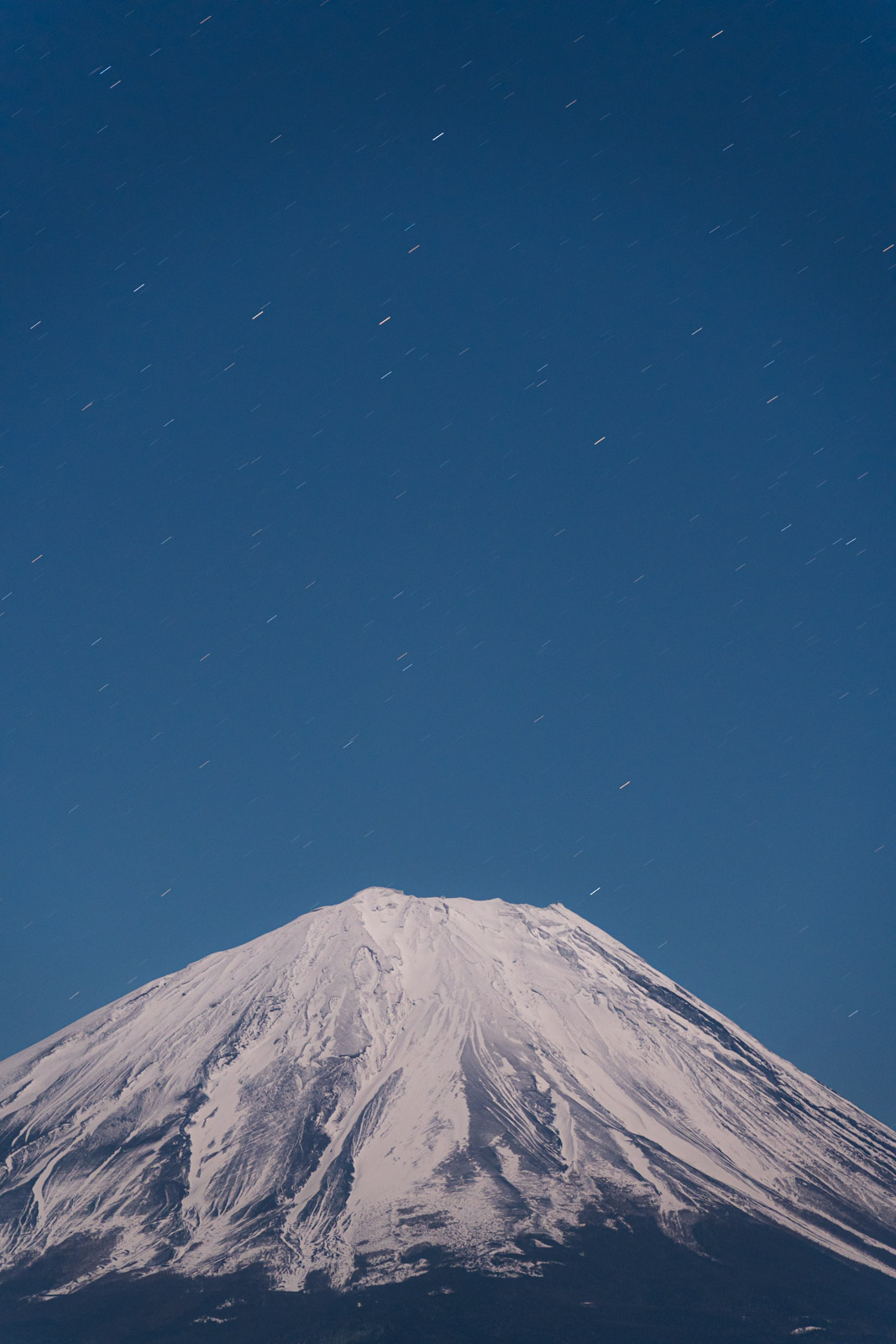
We personally stayed near Lake Shoji, which gave us a much more peaceful experience compared to Kawaguchiko. The biggest advantage of Shoji Lake Hotel was the view from our room, directly facing Mount Fuji. At night, we were even able to photograph the mountain under the stars from our window.
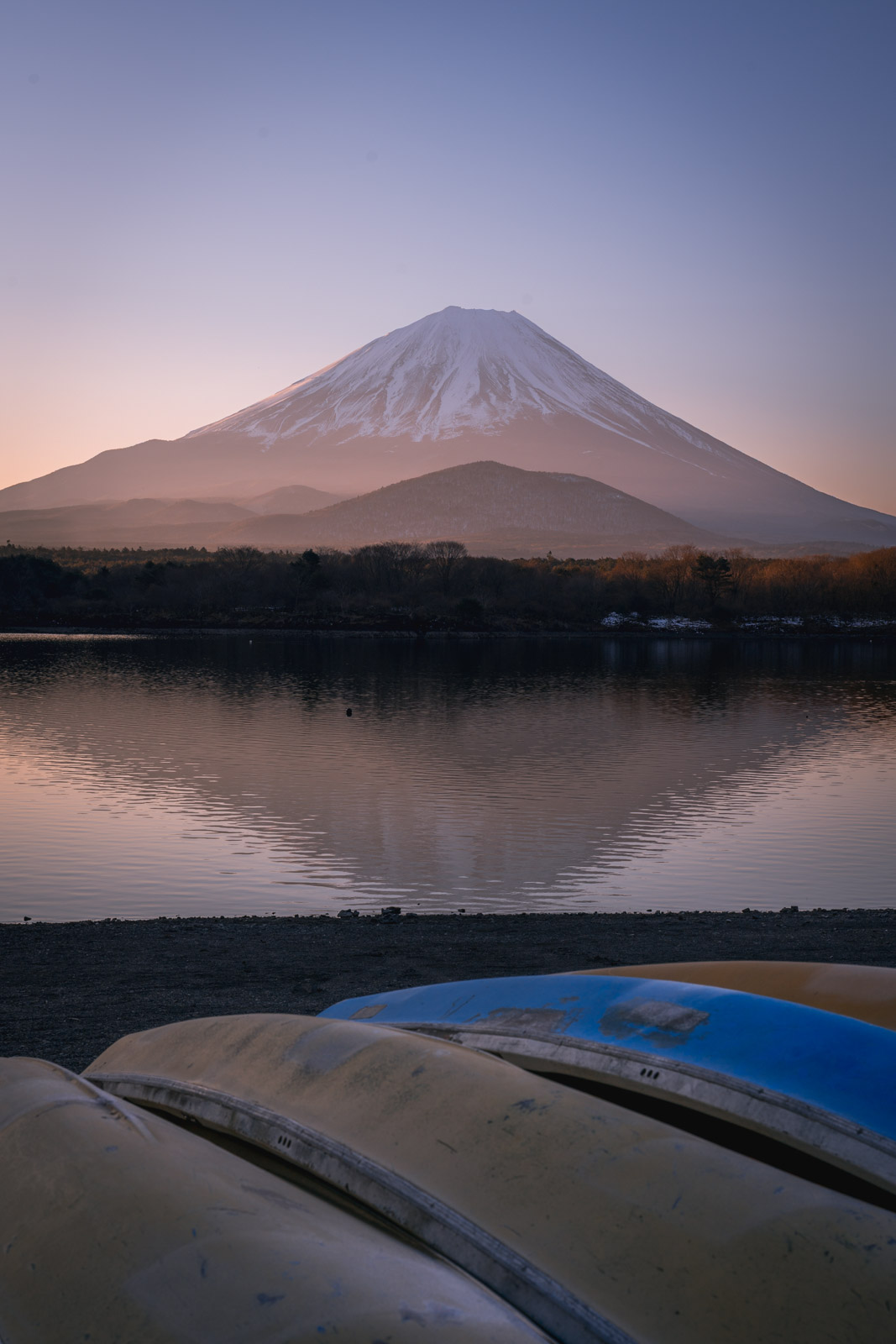
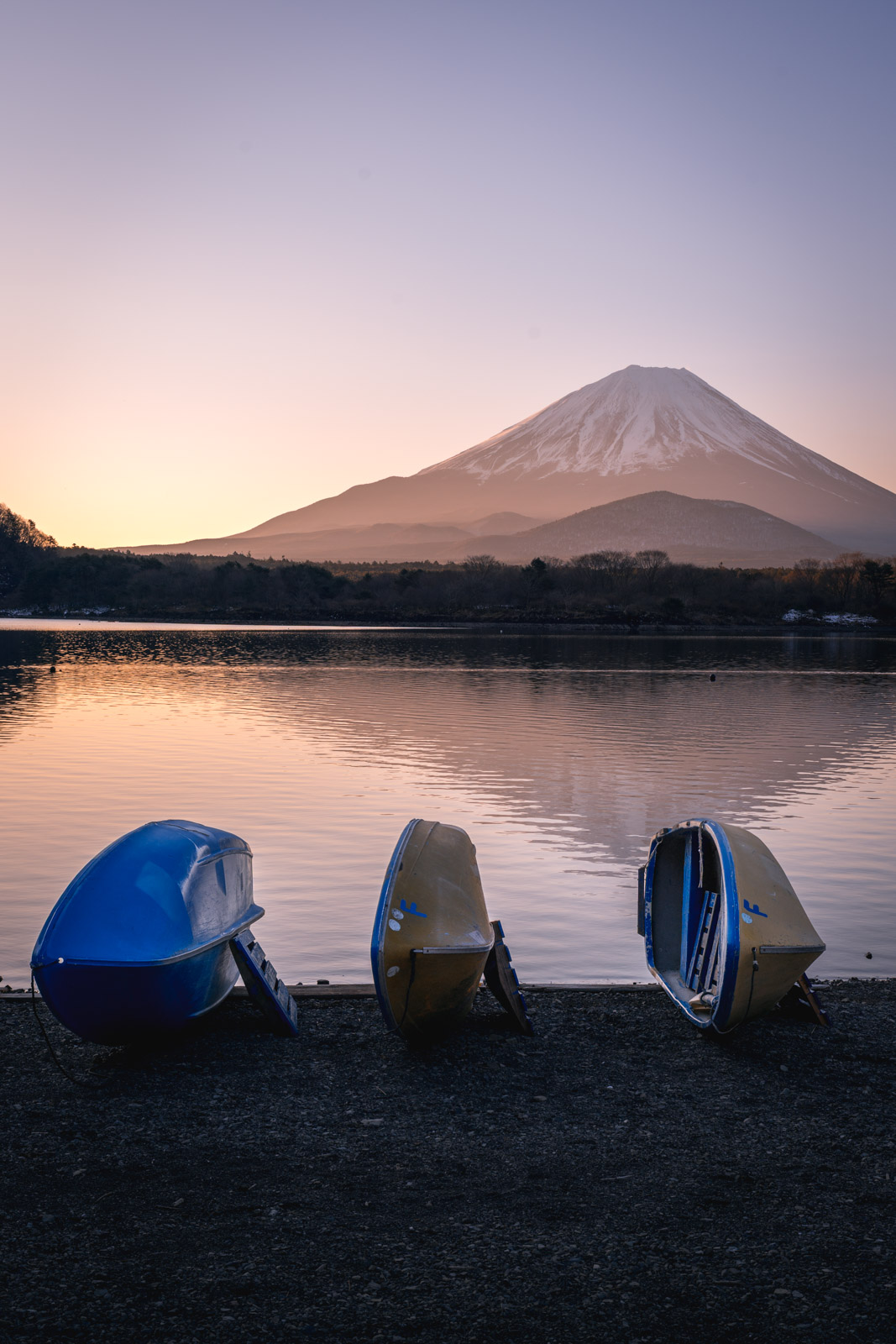
In the morning, it was just a short walk to the lake shore, where we could watch a quiet sunrise over the water in complete silence.
Recommended Hotels
- Shoji Lake Hotel (Very afforable. Traditional Japanese rooms, affordable, great views).
- Kasuitei Ooya (On the shore of Lake Kawaguchiko)
- Fuji Onsenji Yumedono (Luxury, close to Lake Kawaguchiko)
Car rental in Japan
If you are planning a Mount Fuji road trip, renting a car is almost essential.
We picked up our car in Tokyo and drove directly to the Fuji area.
We usually compare options through DiscoverCars, which makes it easy to find the best prices across different rental companies in Japan. Booking in advance also gives you more choice, especially during peak seasons.
Things to know:
- you drive on the left side of the road
- international driving permit is required
- highways are easy and well maintained
- parking is available at almost all viewpoints
We recommend picking up your car in Tokyo and dropping it off either in Tokyo or near Haneda or Narita Airport depending on your route.
Day 1
We left Tokyo early in the morning and started driving towards Mount Fuji. The weather was partially cloudy, but we did see some blue sky and sun in the direction of Mount Fuji, which was slowly appearing in the distance.
Lake Yamanakako
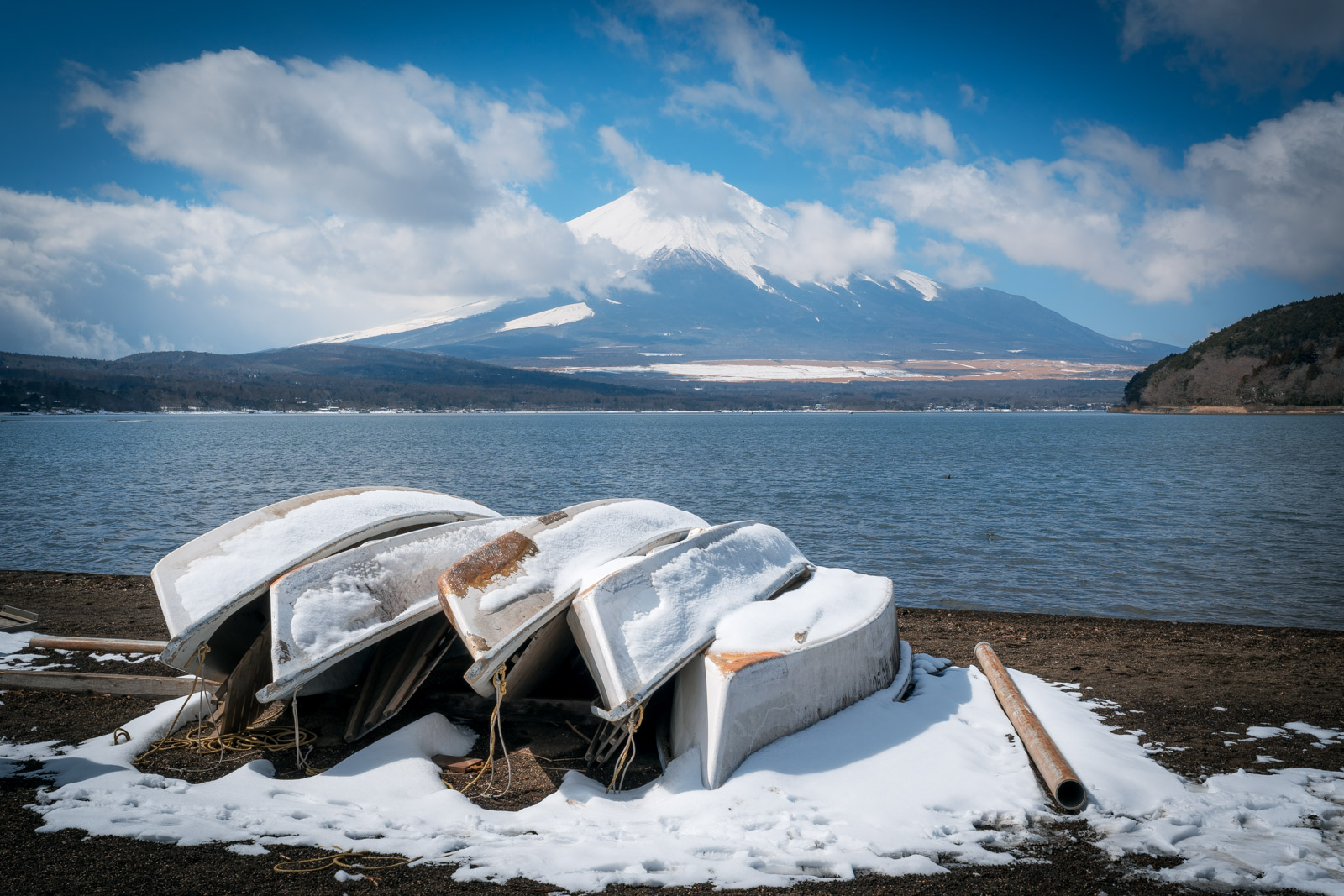
Our first stop was Lake Yamanakako. The lake is known for its open views of Mount Fuji and occasional swans, although we did not see any during our visit.
The conditions were good. Partially cloudy but the sky was clear enough to see the mountain! As we arrived close to noon, the light was very bright. It has also snowed the past days, and there was plenty of snow remaining. It was a quiet introduction to the area and a good place to slow down after the drive.
Oshino Hakkai
From there we continued to Oshino Hakkai. This is a traditional village built around natural spring water ponds with Mount Fuji in the background.
It is supposed to be one of the most photographed locations in the area, and that also means it is busy. Tour buses (mainly with Chinese tourists) arrive throughout the day, and it can feel crowded quickly.
Despite that, the setting is still beautiful. Wooden houses, clear water and the mountain in the background make it worth a short stop.
Lunch near Lake Kawaguchiko
We stopped for lunch at Tsujiya near Lake Kawaguchiko. Simple food, nothing special on its own, but the setting makes it memorable. Sitting with a view of the lake and Mount Fuji in the distance changes the experience completely.
Lake Shoji accommodation
In the afternoon we continued towards Lake Shoji, where we stayed in a traditional Japanese style hotel (Lake Shoji Hotel). The location is much quieter than Kawaguchiko and feels more remote.
On arrival, the owner immediately encouraged us to go outside for photos because the light was perfect. Moments like that define this area. The weather can change quickly, and when conditions are good you should not wait.
Lake Saiko and Lake Kawaguchiko
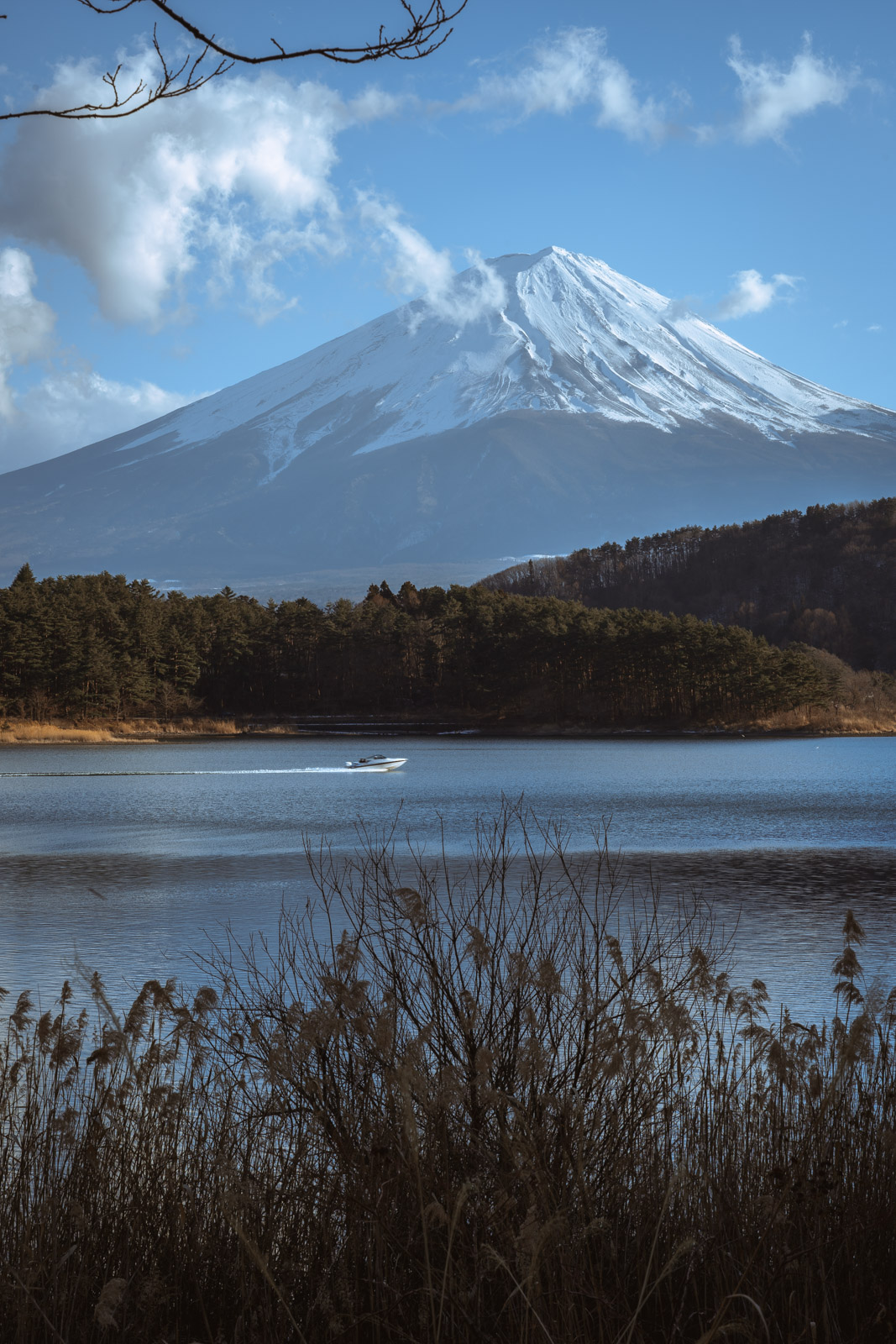
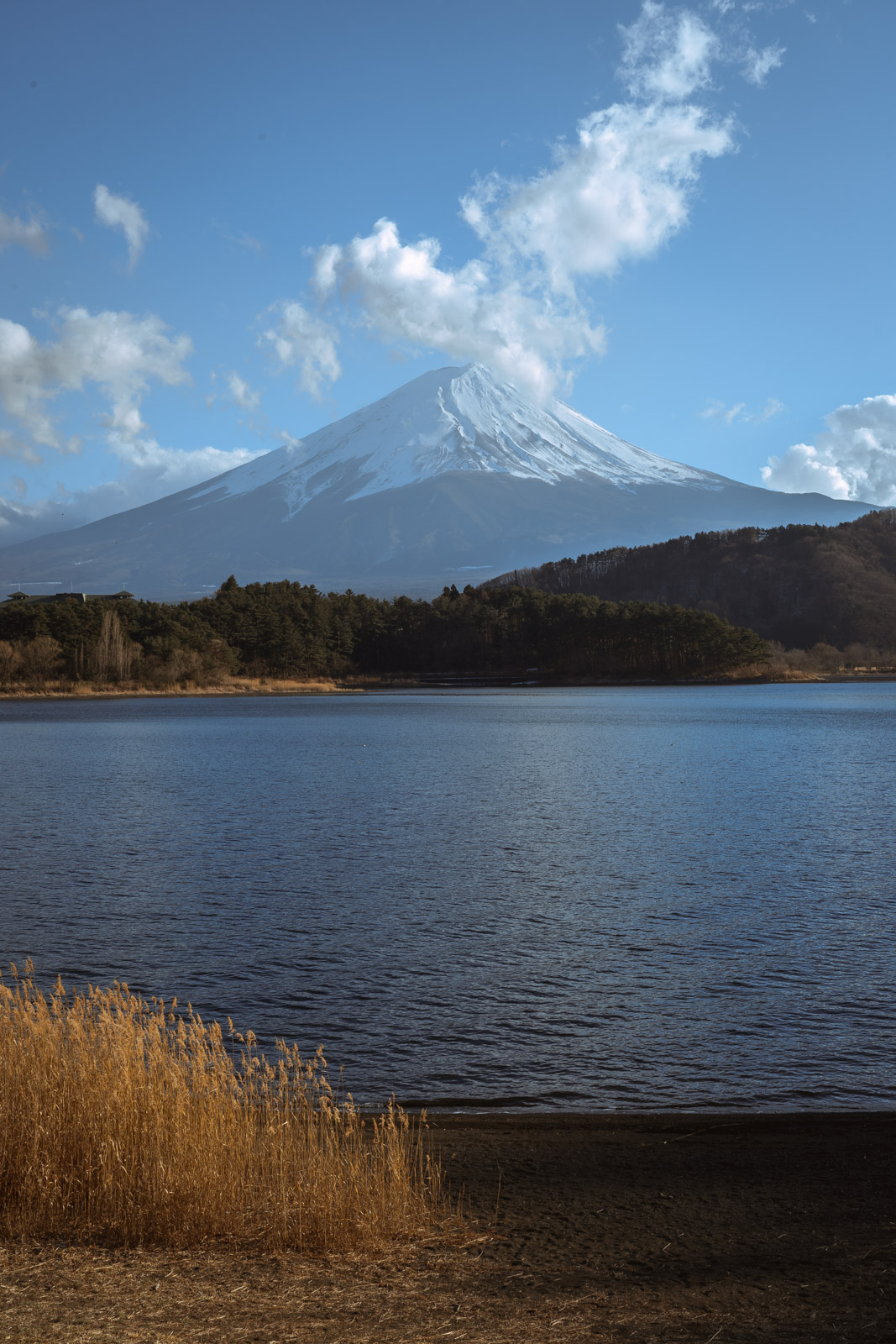
Later in the day we drove around Lake Saiko and Lake Kawaguchiko (stop at Oishi Park), stopping at multiple viewpoints along the way. This is where having a car becomes essential. You can simply pull over whenever the view opens up.
Each lake offers a slightly different angle of Mount Fuji, and the light changes constantly throughout the afternoon.
Shrine viewpoint
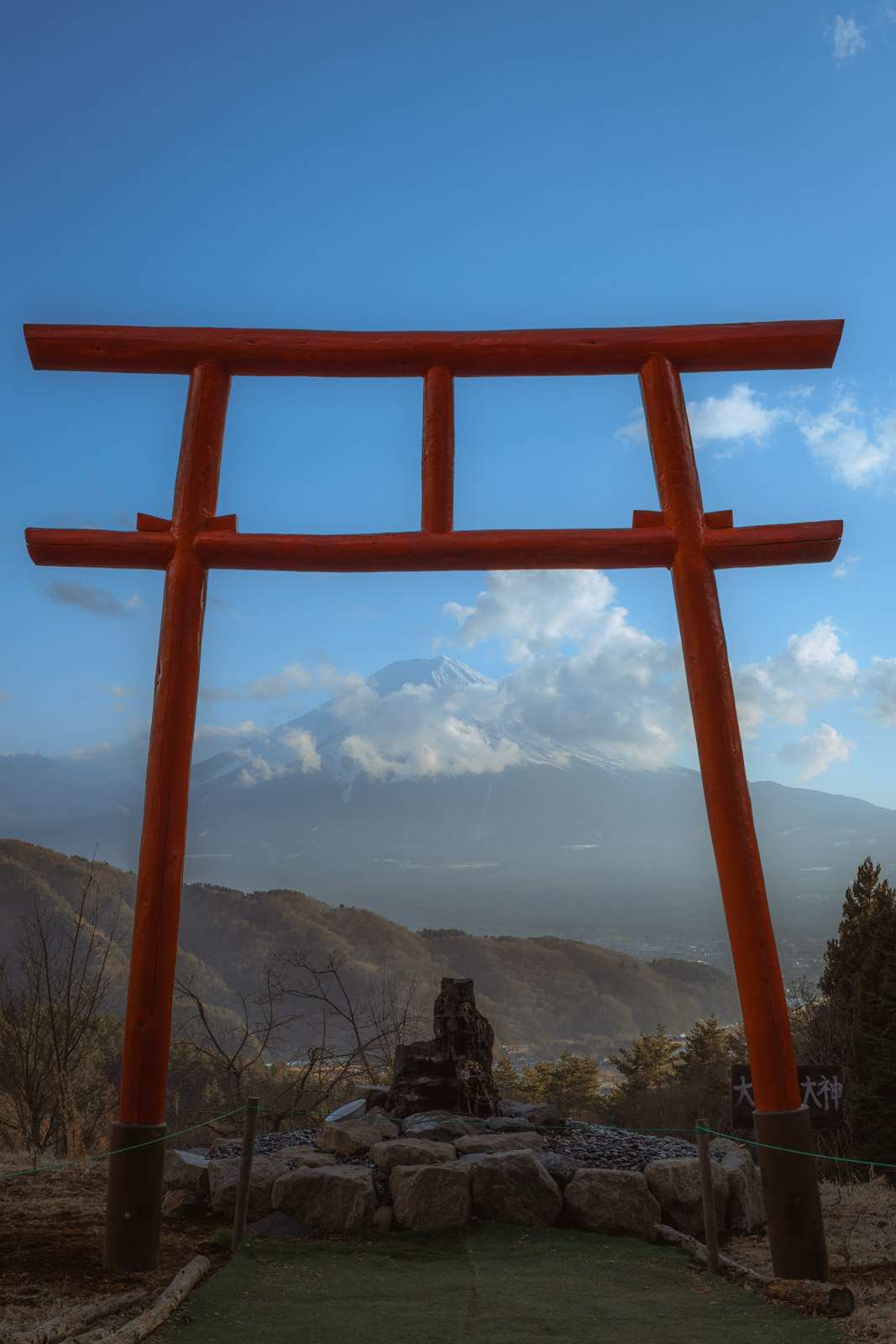
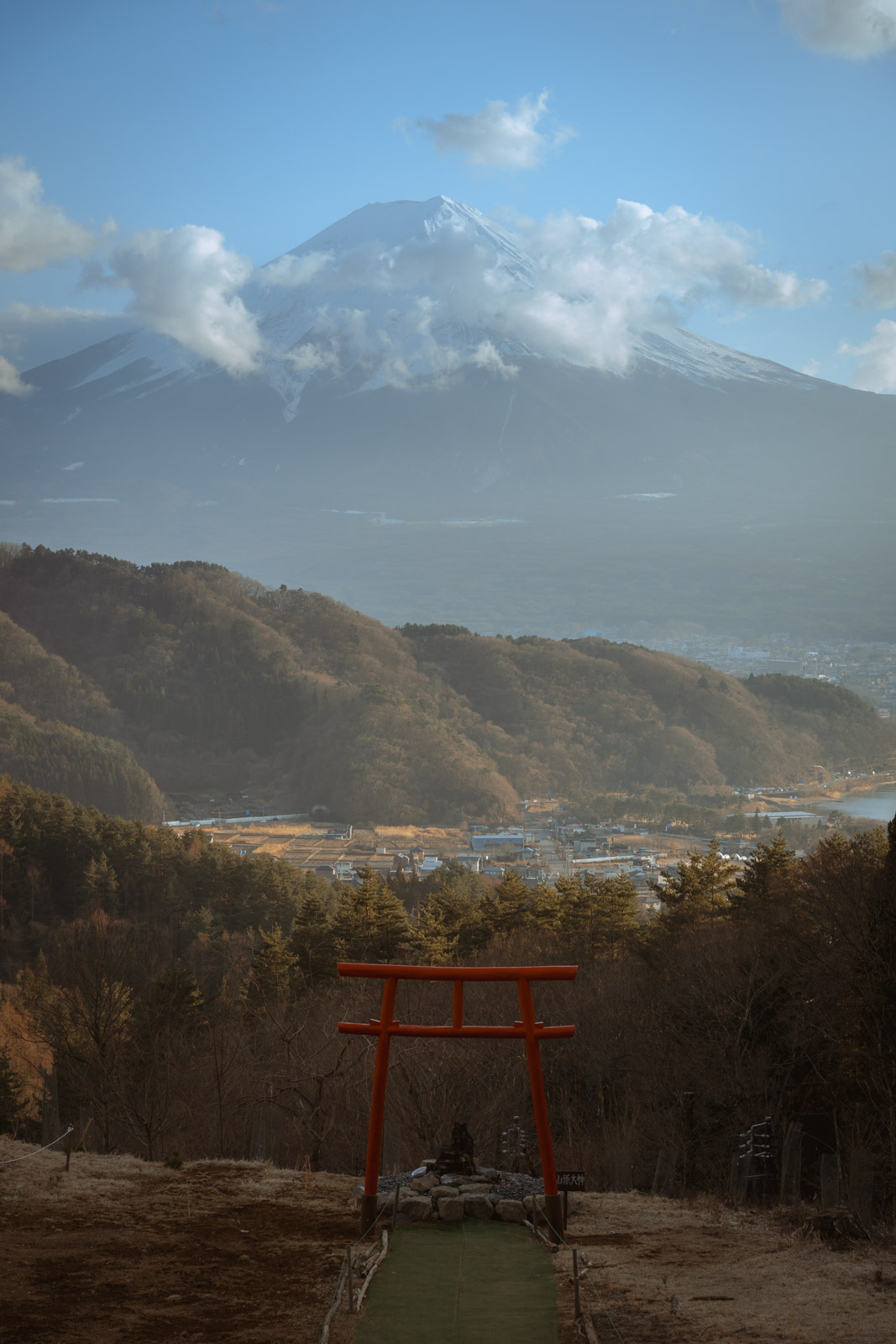
We also visited a small shrine on a hill with a torii gate framing the view. There is a small entrance fee, as it is private land, but the perspective is worth the stop.
Chureito Pagoda
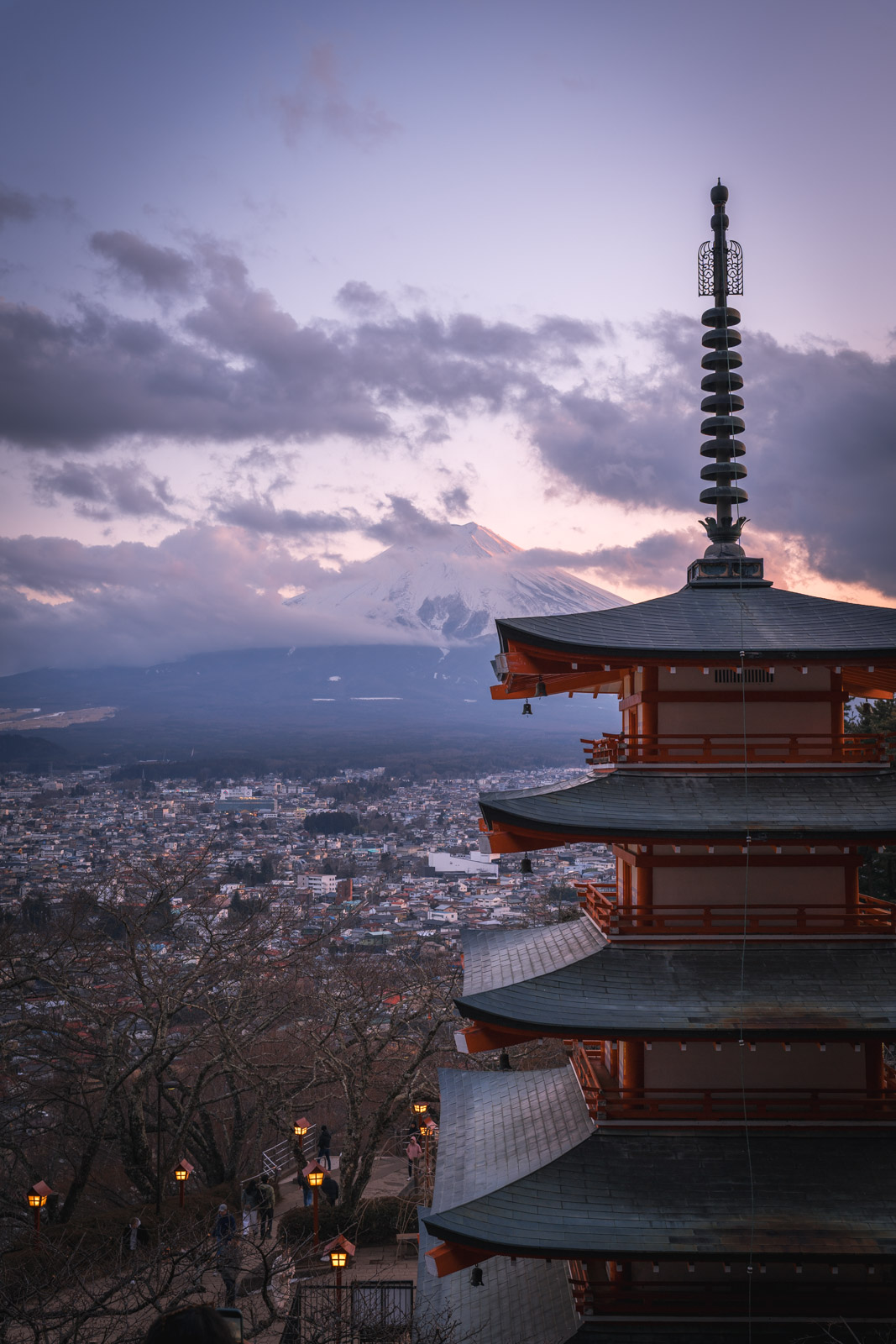
We ended the day at Chureito Pagoda, one of the most famous viewpoints of Mount Fuji.
It was busy, parking was difficult, and as we were a bit late the timing was not ideal. We rushed up the stairs of the viewpoint and made it just in time for sunset. We were hoping for a clear sunset, but the clouds never fully opened. Blue hour looked beautiful nevertheless.
This is one of those locations that looks perfect online but is highly dependent on weather conditions.
Evening in the Kawaguchiko
Dinner was simple at a local restaurant after a long day of driving and stops. The Japanese curry at
Izimiya was decent, but the day ended with something better.
Back at the hotel, the sky cleared completely. From our room we could see Mount Fuji reflected in the lake. A view we did not expect that day.
Day 2
We woke up at 5 am and walked to a nearby beach at Lake Shoji, right in front of our hotel. The sky was completely clear and Mount Fuji was visible, but the sunrise was subtle. No strong colours or dramatic reflections, just a calm morning scene.
Convenience store photo spots
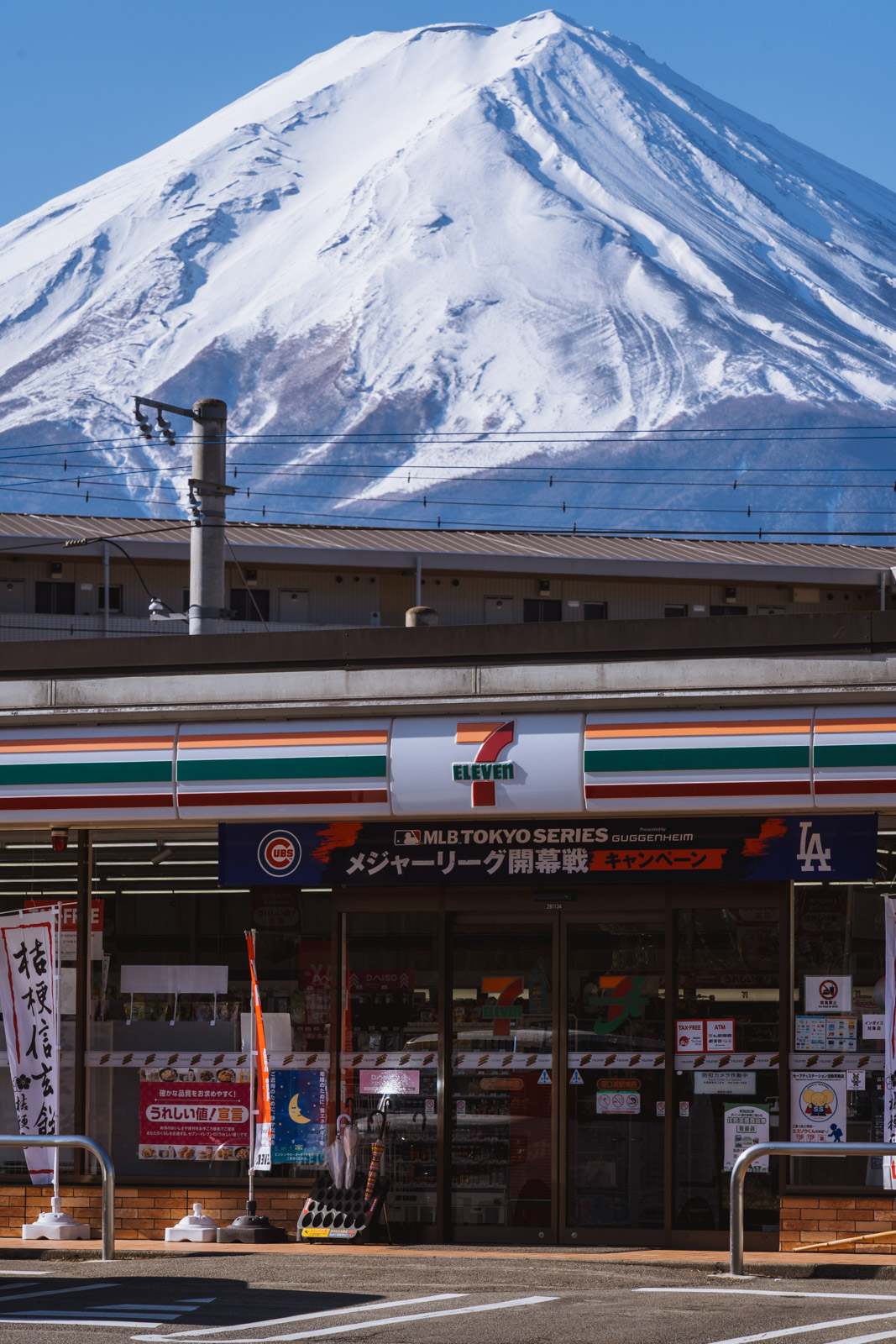
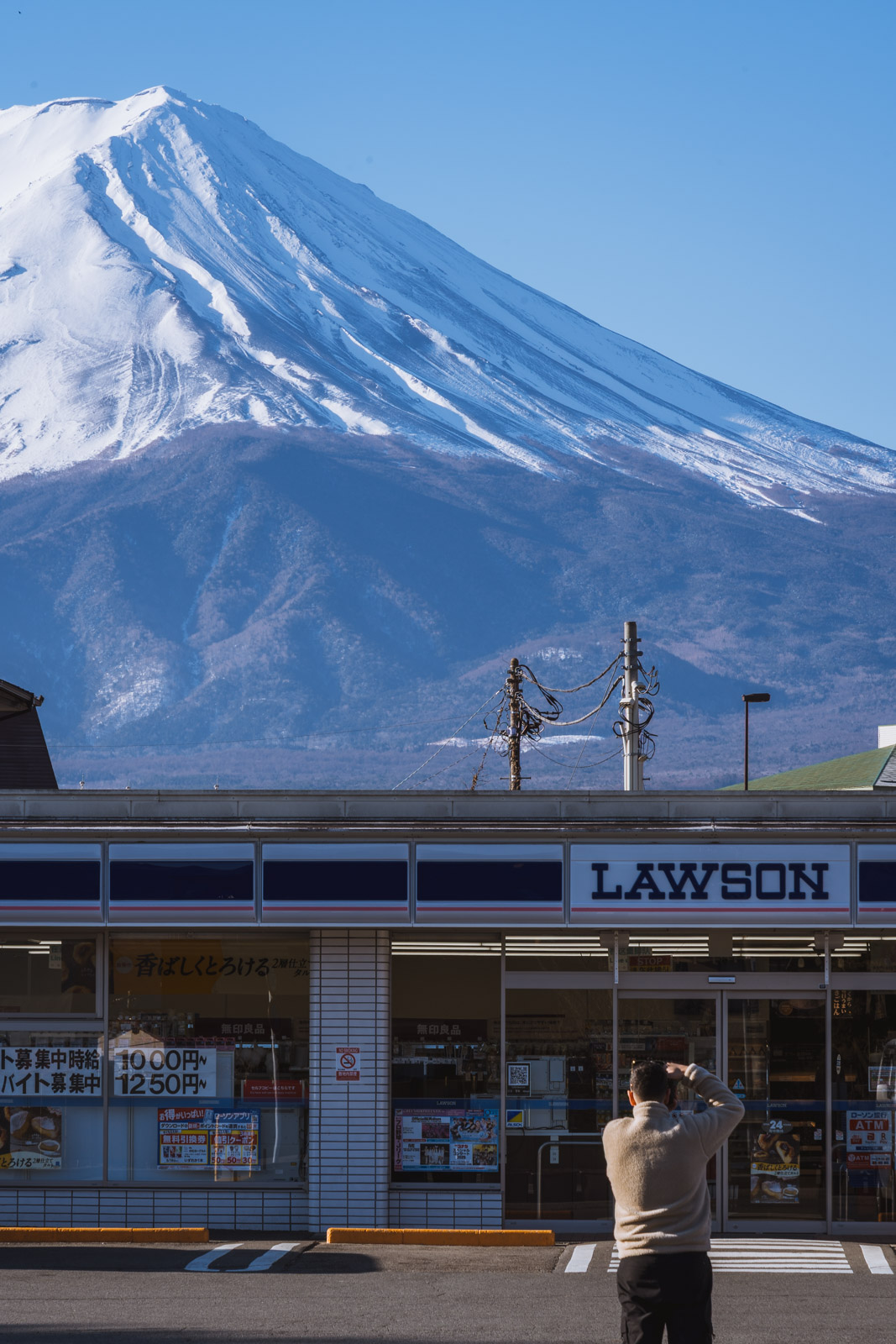
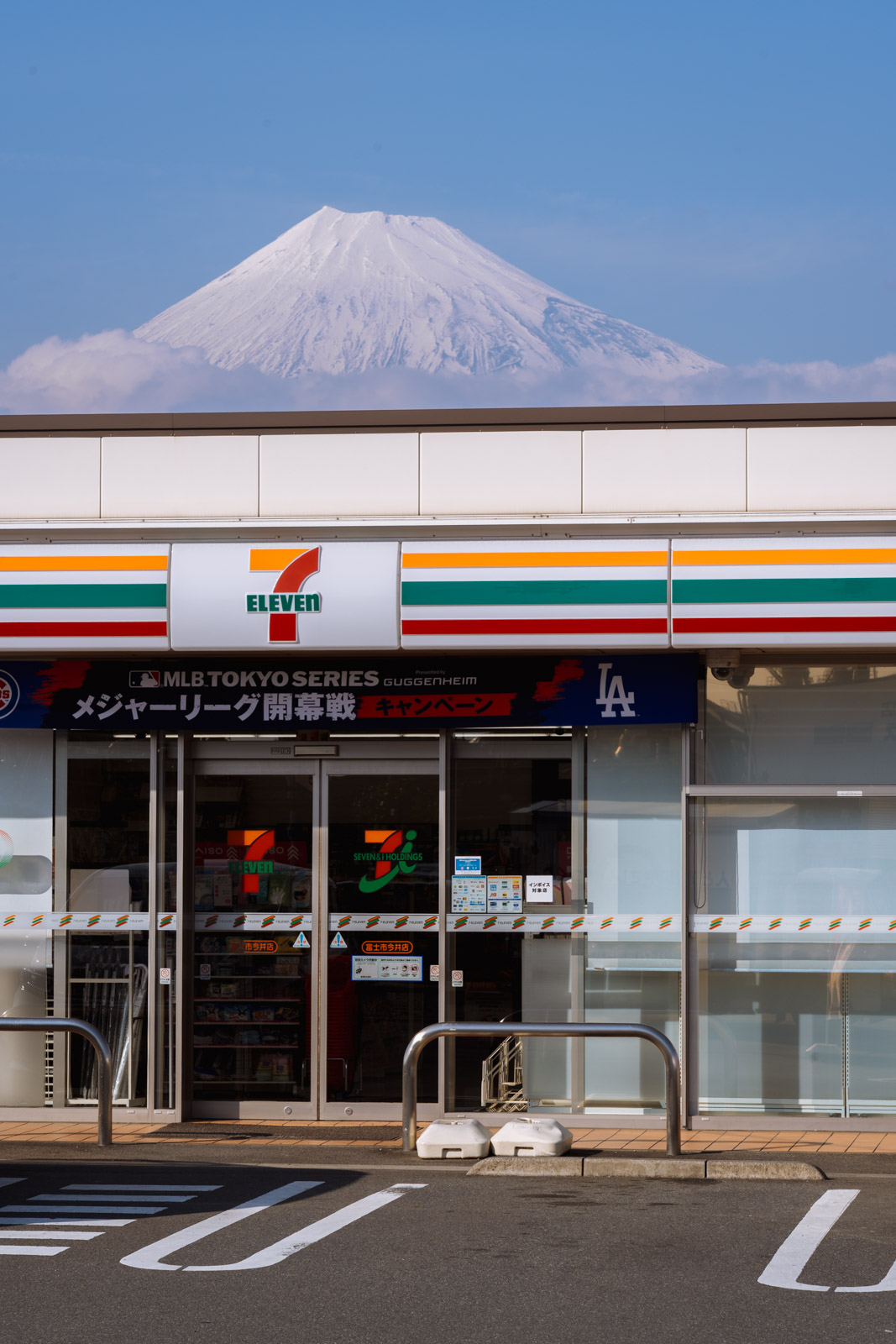
One of the most unexpected parts of the trip were the convenience store viewpoints. Both Family Mart, Lawson and 7-Eleven locations in Kawaguchiko offer clear views of Mount Fuji in the background.
They are simple spots, but surprisingly popular for photography. Early morning is best to avoid traffic and people.
Train viewpoints
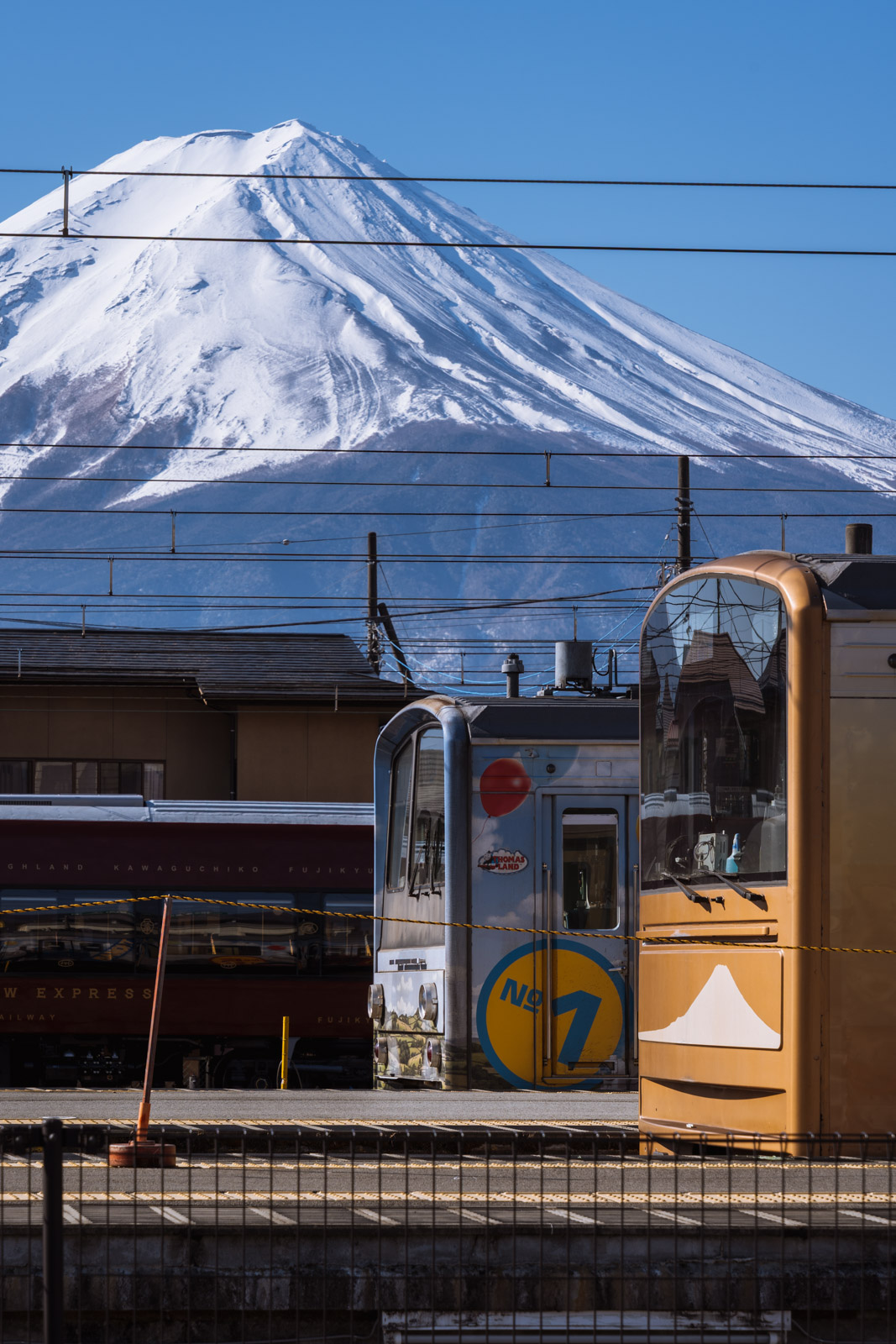
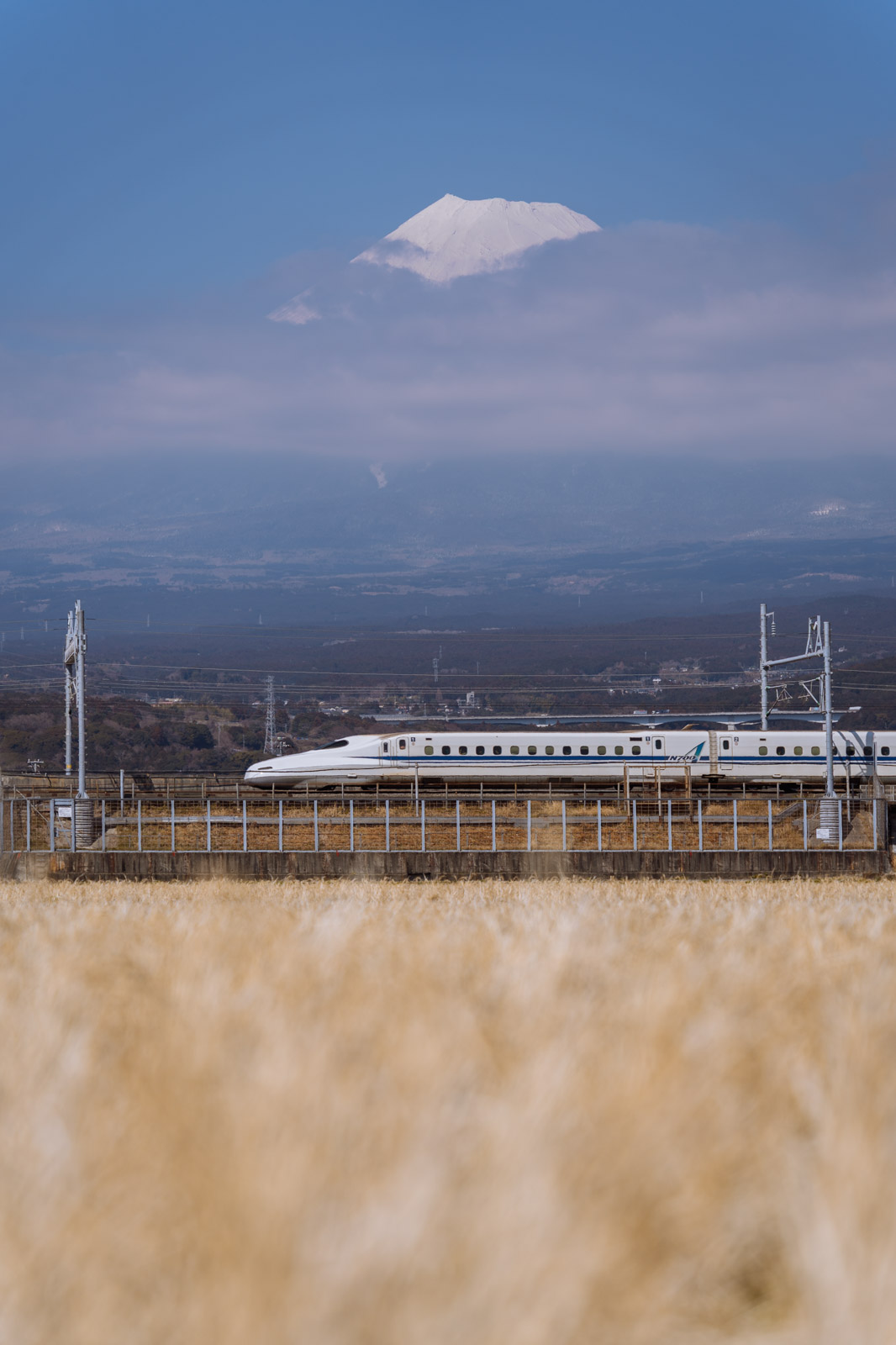
We also stopped at several locations where trains pass with Mount Fuji in the background. It’s nice to wander around Kawaguchiko Station to take photos, but we also found a famous spot a bit further out while driving south onto our next stop. Here the Shinkansen passes by in the countryside with Mount Fuji in the background. On our way there we found another really cool 7-Eleven.
Overpass viewpoint
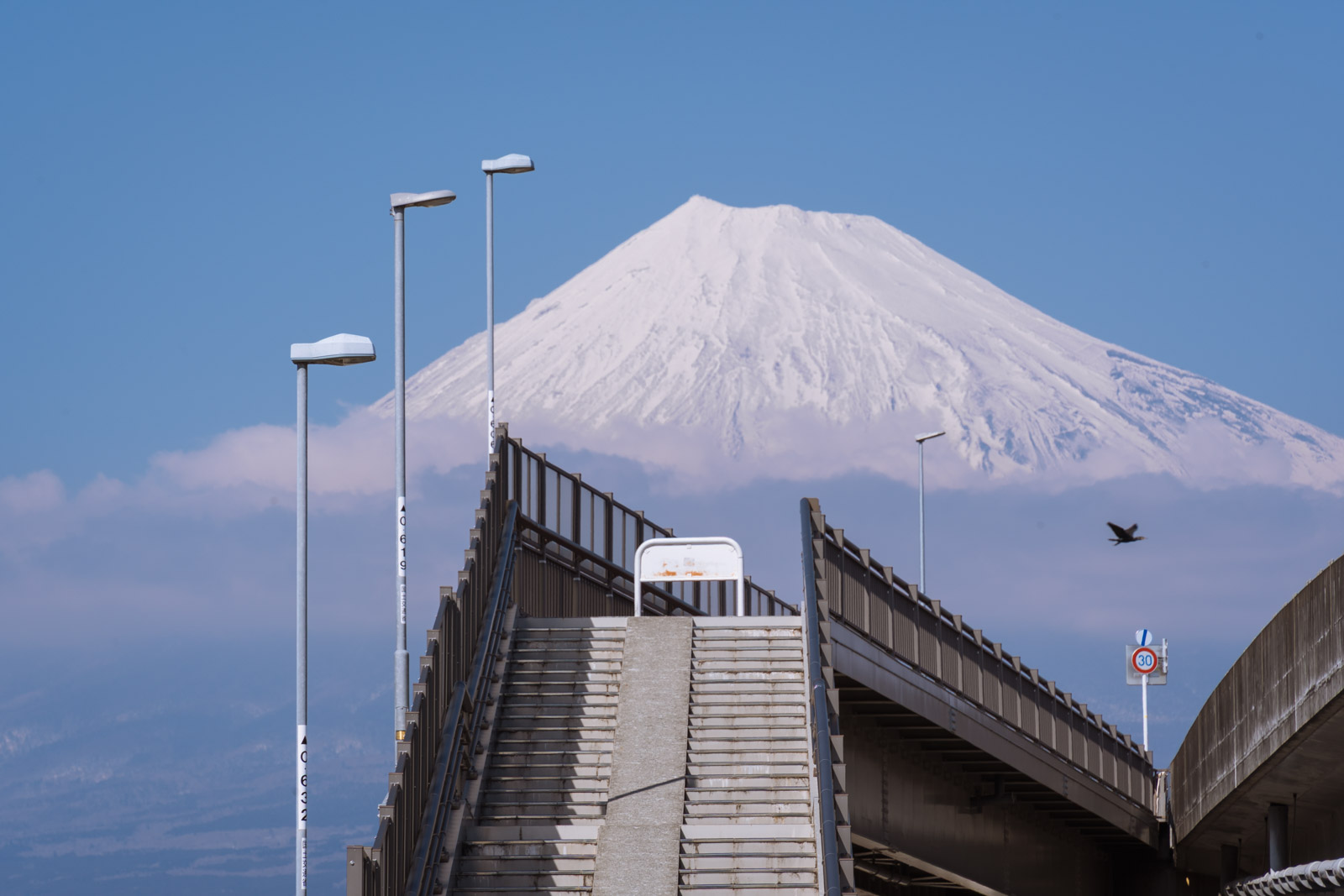
One of the more famous photo spots is an overpass (Fujisan Yume No Ōhashi Bridge) where Mount Fuji can be framed with the road and surrounding landscape.
One side was crowded with photographers. The other side almost empty. The difference in perspective was interesting and worth exploring.
Tea fields and countryside drive
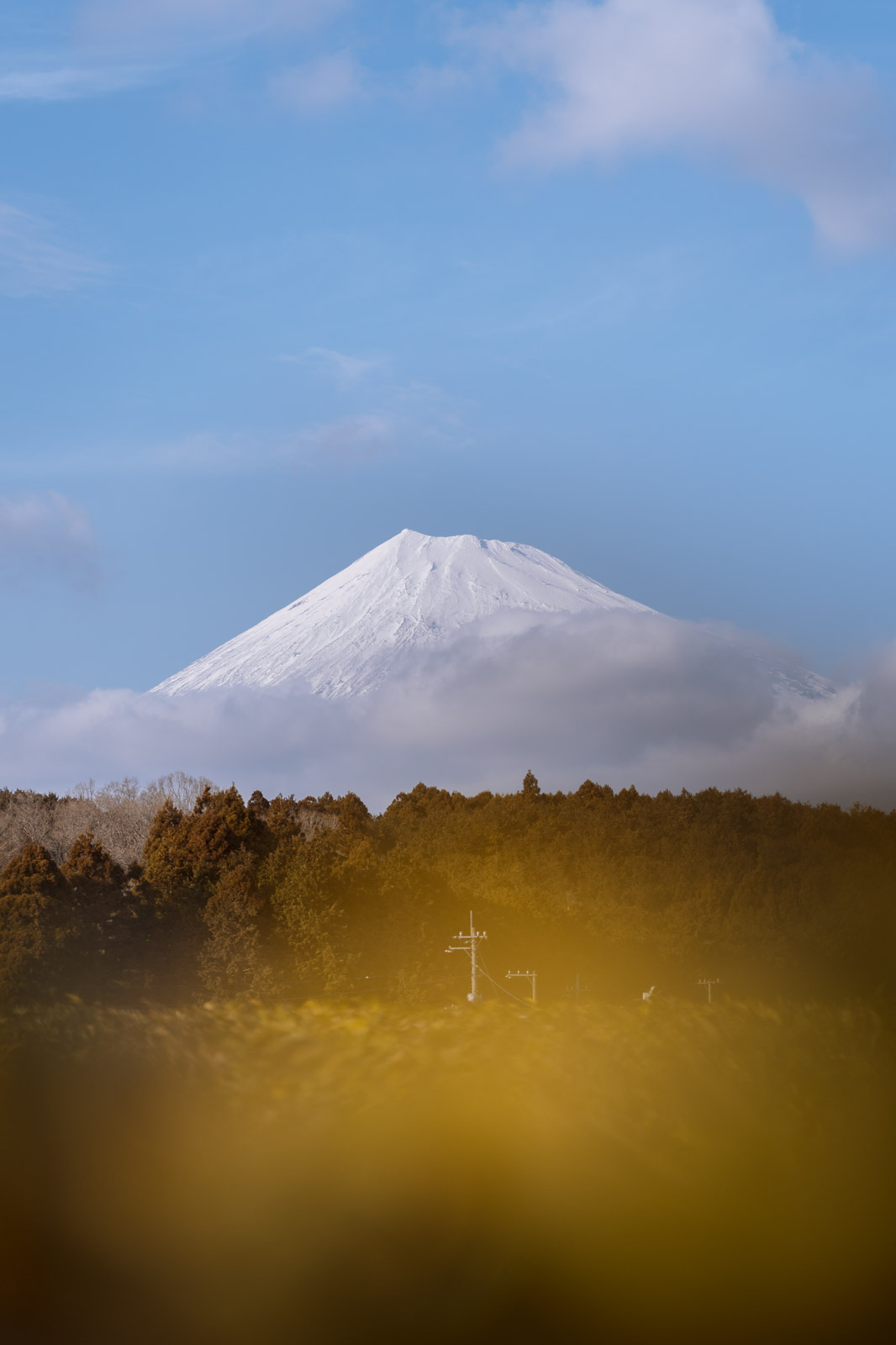
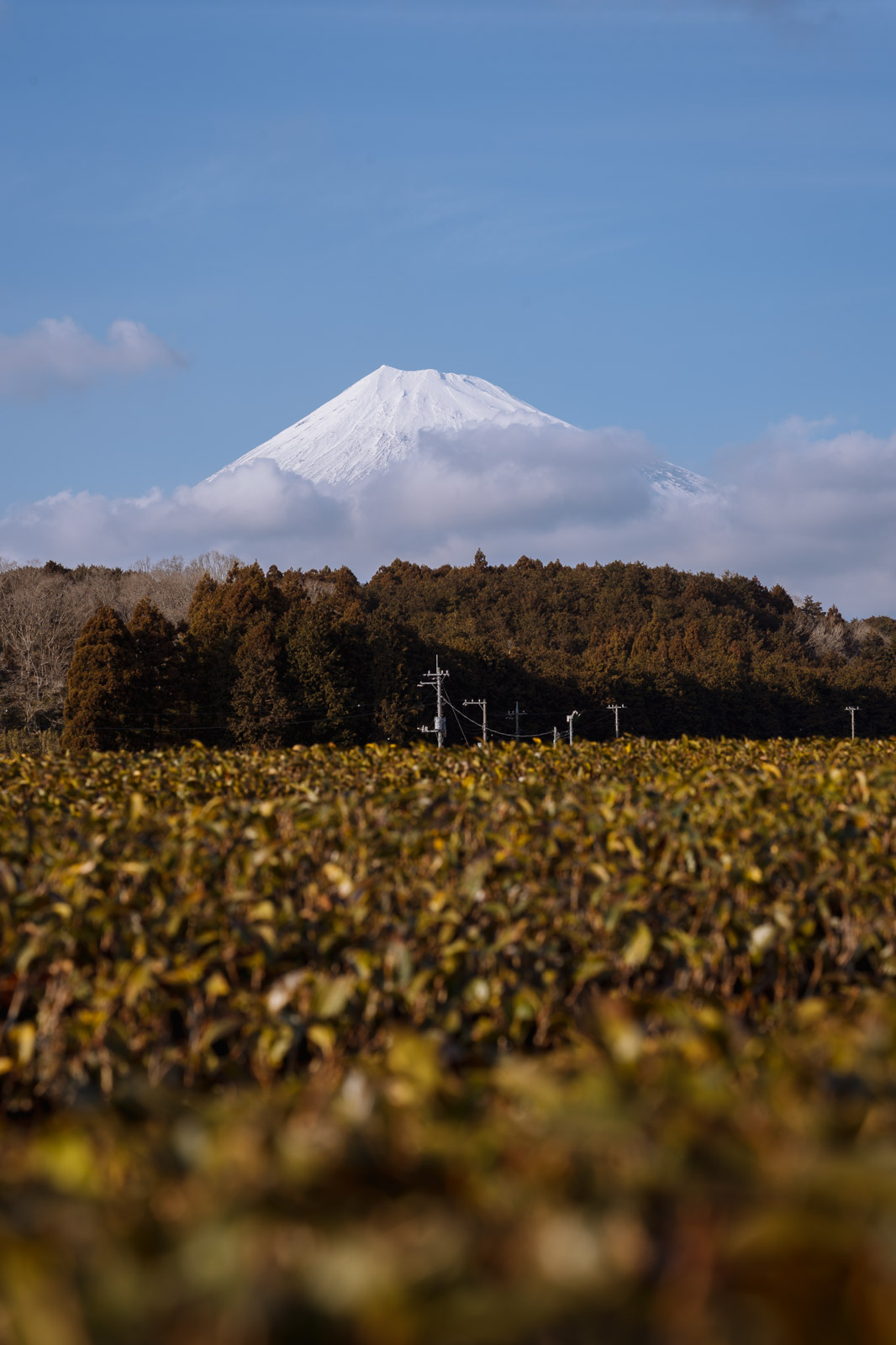
As we drove further away from the main lakes, the landscape became quieter. Tea fields, small roads and a much more rural atmosphere.
This part of the drive felt completely different from the busy viewpoints earlier in the day. It is worth spending some time at Obuchi Sasaba Tea Plantation to walk around and take pictures of the tea fields with Mount Fuji in the background.
Shiraito Falls
One of the highlights of the second day was Shiraito Falls. A wide, delicate waterfall surrounded by greenery, with Mount Fuji visible in the background.
This was one of the most memorable views of the entire trip.
Lake Tanuki
Our final stop was Lake Tanuki. By the time we arrived, clouds had covered Mount Fuji completely and the mountain disappeared from view.
Still, the lake itself is peaceful and a nice place for a final walk before heading back.
Final thoughts
Mount Fuji is not a destination where everything goes according to plan. The mountain is often hidden, weather changes quickly, and timing plays a huge role in what you see.
During our Mount Fuji road trip we had clear views, full cloud cover, and everything in between.
That unpredictability is part of the experience.
The best way to approach Mount Fuji is not to expect perfect conditions, but to stay flexible and move between locations. Having a car makes that possible and is, in our opinion, essential.
Related articles
- Tokyo Photography Guide: Free Photo Spots, Trains & Food Stops in the City
- A Week in Tokyo & Mount Fuji: Photography, Food & Travel Itinerary Through Japan
- Mount Fuji Photography Spots: 2-Day Photo Road Trip Itinerary
- Guide to Buying Second-Hand Camera Gear in Tokyo
- Best Tokyo Tower Photography Spots & Instagram Locations