Japan rarely matches the version you see online. The photos are perfect, the skies are blue, and everything feels carefully composed. In reality, it’s constantly changing. Weather shifts within minutes, cities feel chaotic and calm at the same time, and the best moments usually happen in between plans.
This trip was split between Tokyo and a short road trip around Mount Fuji. Two completely different experiences, but connected through photography, food, and movement. We didn’t follow a strict itinerary. We just moved through the city and countryside, stopping whenever something felt interesting.
Some of the best moments and most beautiful photography locations in this Tokyo and Mount Fuji road trip itinerary came from not planning too much at all.
Day 1: First steps into Tokyo
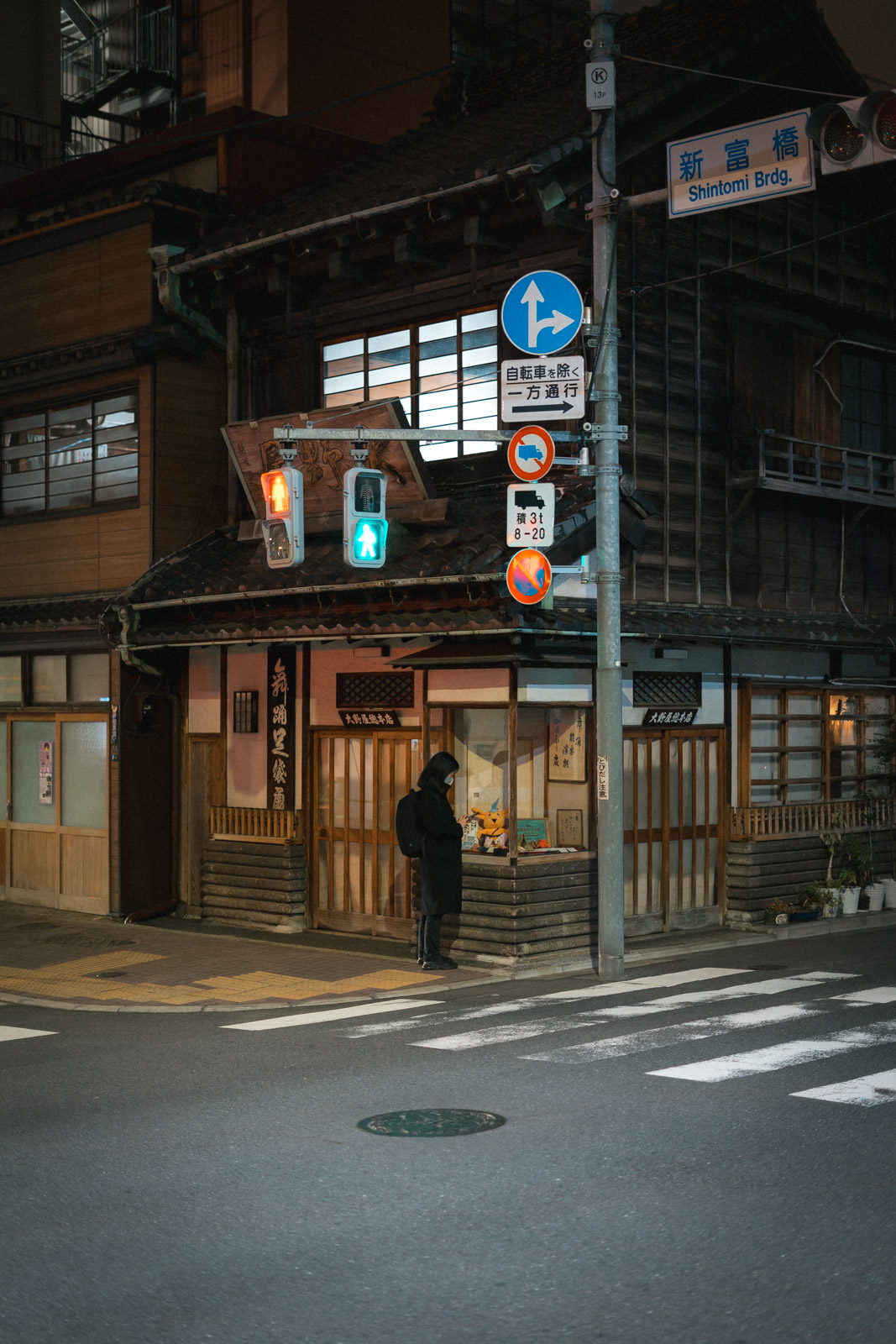
We arrived in Tokyo in the late afternoon and took the metro into the city. After checking in at Hotel Vintage Tokyo Tsukiji, a surprisingly spacious loft style room for Tokyo standards, we immediately went out for our first walk.
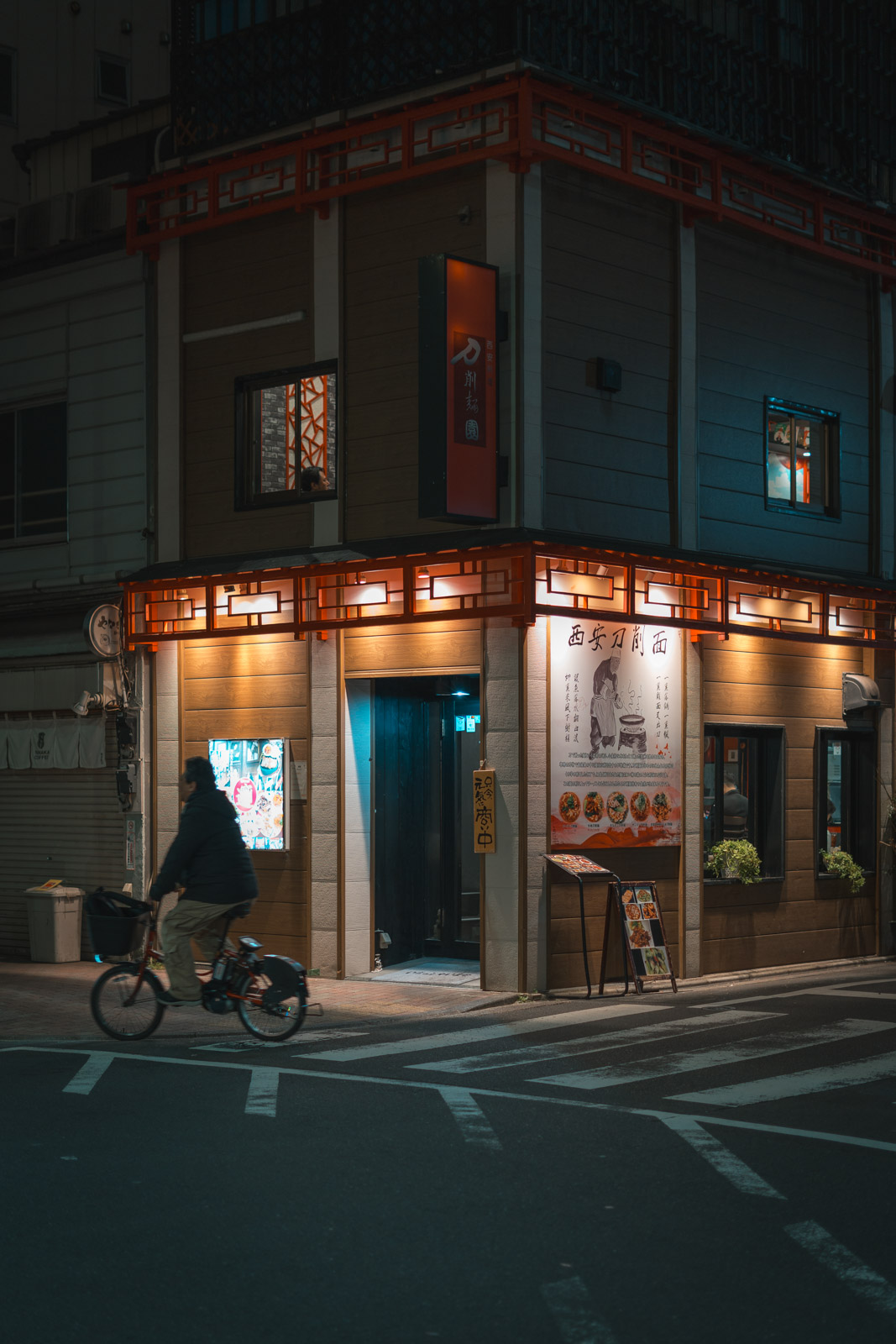
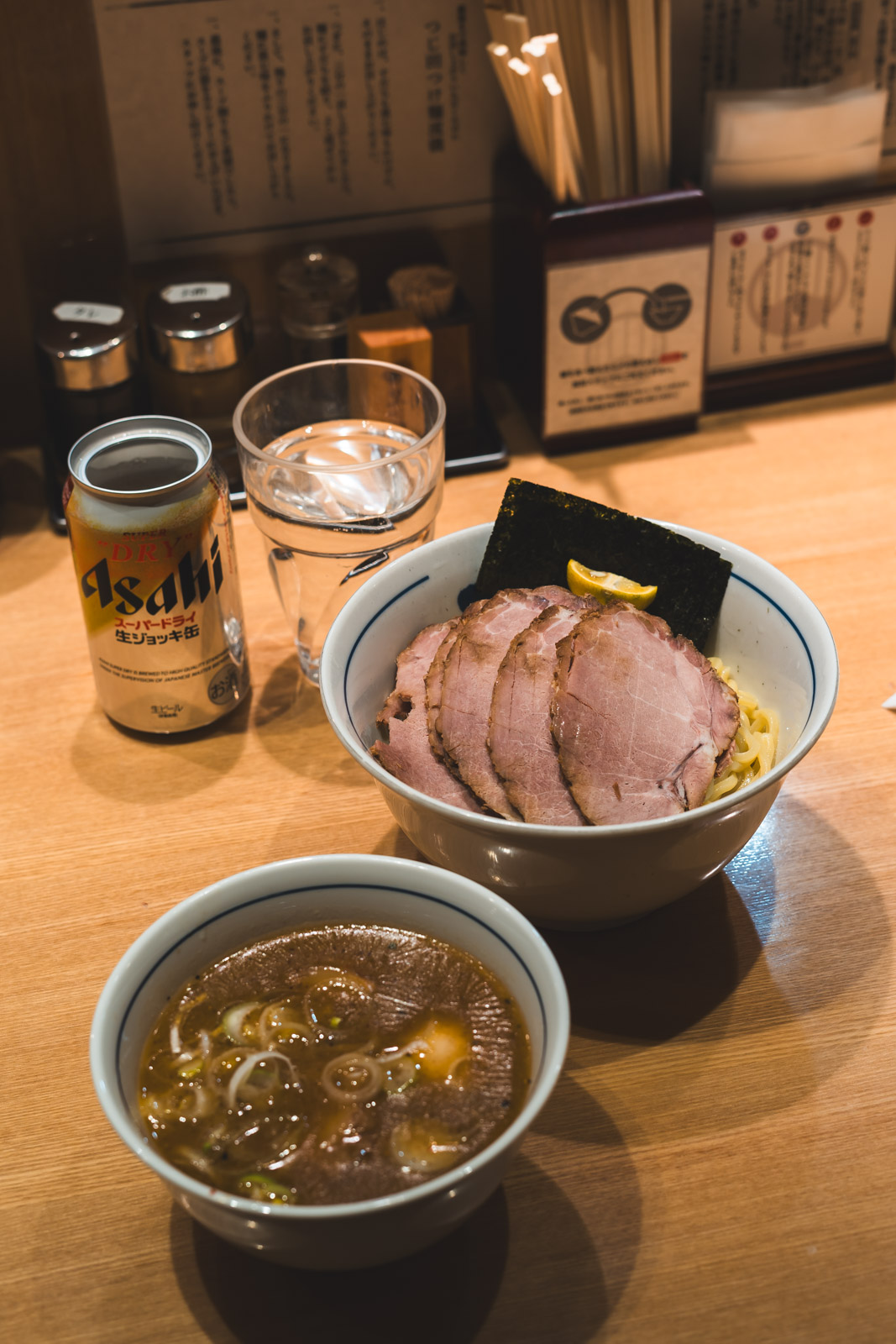
Dinner was at Tsujita Ginza, a Tsukemen restaurant about 17 minutes away on foot. Tsukemen is a style of ramen where noodles and broth are served separately. The noodles are thick and chewy, and you dip them into a rich, concentrated broth before eating. The contrast between hot broth and colder noodles is what makes it interesting.
Ordering was done outside through a vending machine. Cash or Suica only, which reminded us again how simple and efficient everything in Japan is once you understand the system. No credit cards. As someone once told me: “Japan is stuck in the year 2000 since the 90s”. Modern, but yet doing its own thing different than the rest of the world. Luckily nowadays you can add and charge your Suica card easily by ApplePay in your iPhone wallet.
It was a simple first evening, but exactly what we needed after a long flight. No big sightseeing yet, just walking into the rhythm of the city.
Day 2: Trains, electronics & Akihabara photography spots
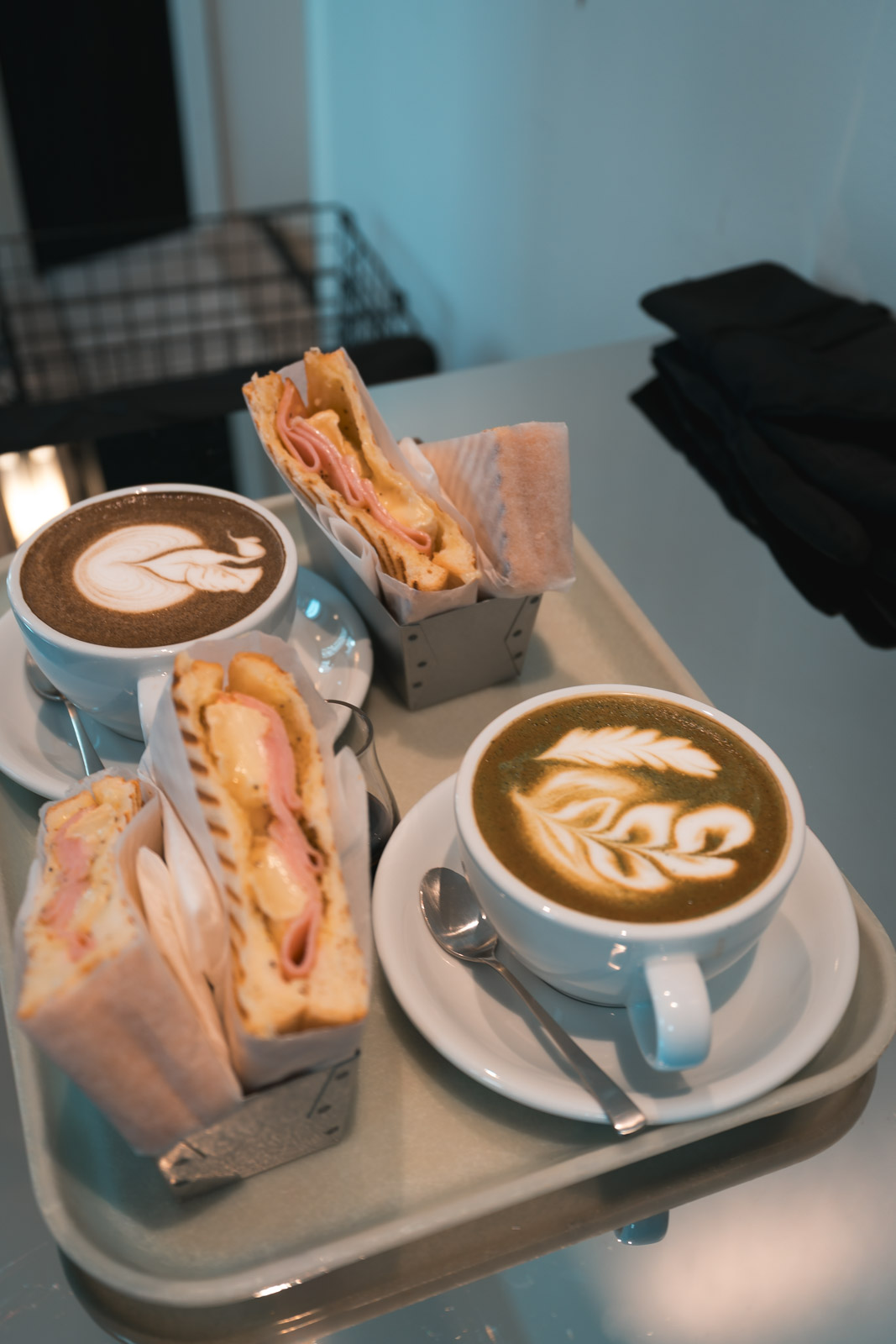
We started the day at Roar Coffee with a Hojicha latte and an Espresso Matcha latte, plus a ham and camembert sandwich. One of the few places open early in the morning.
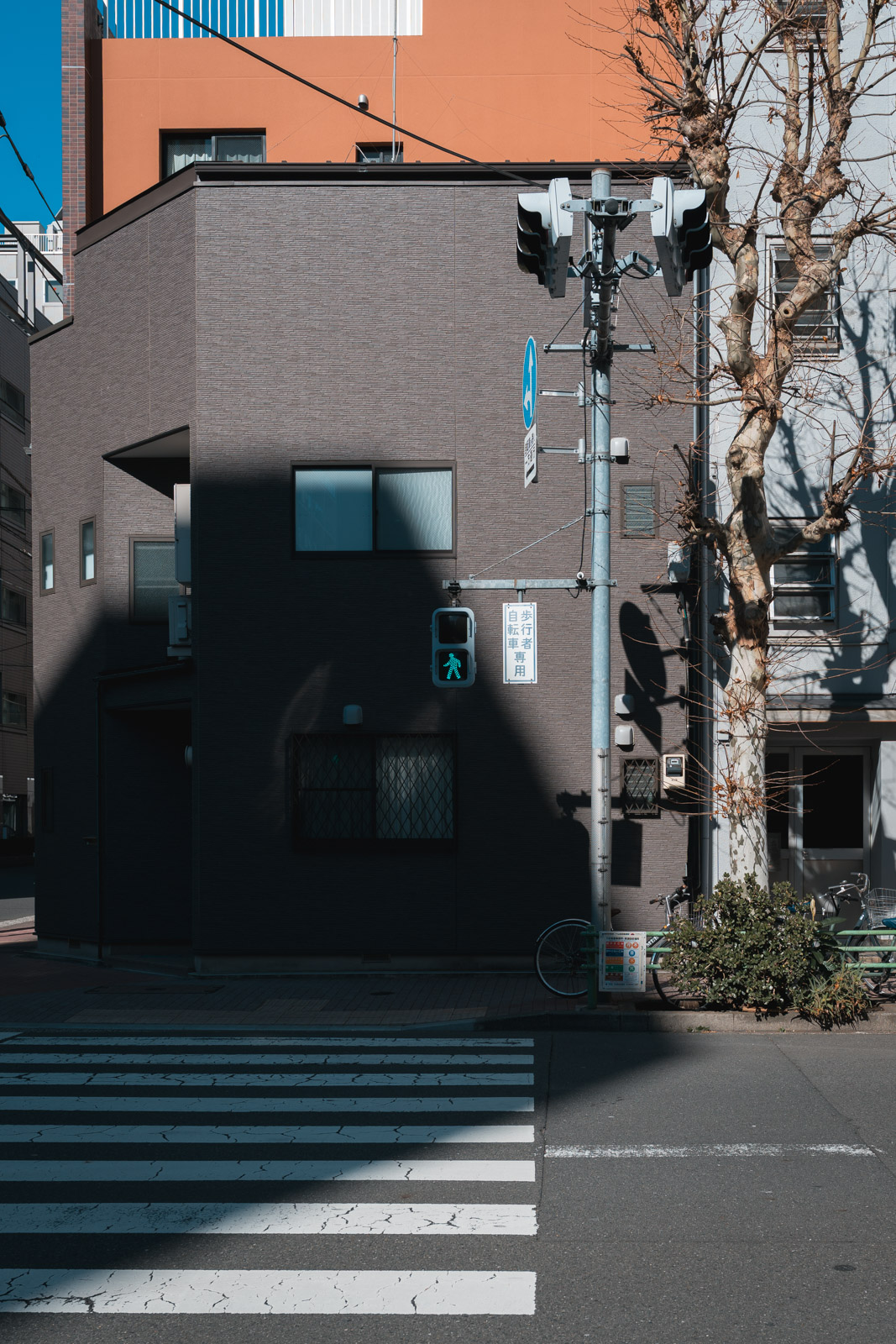
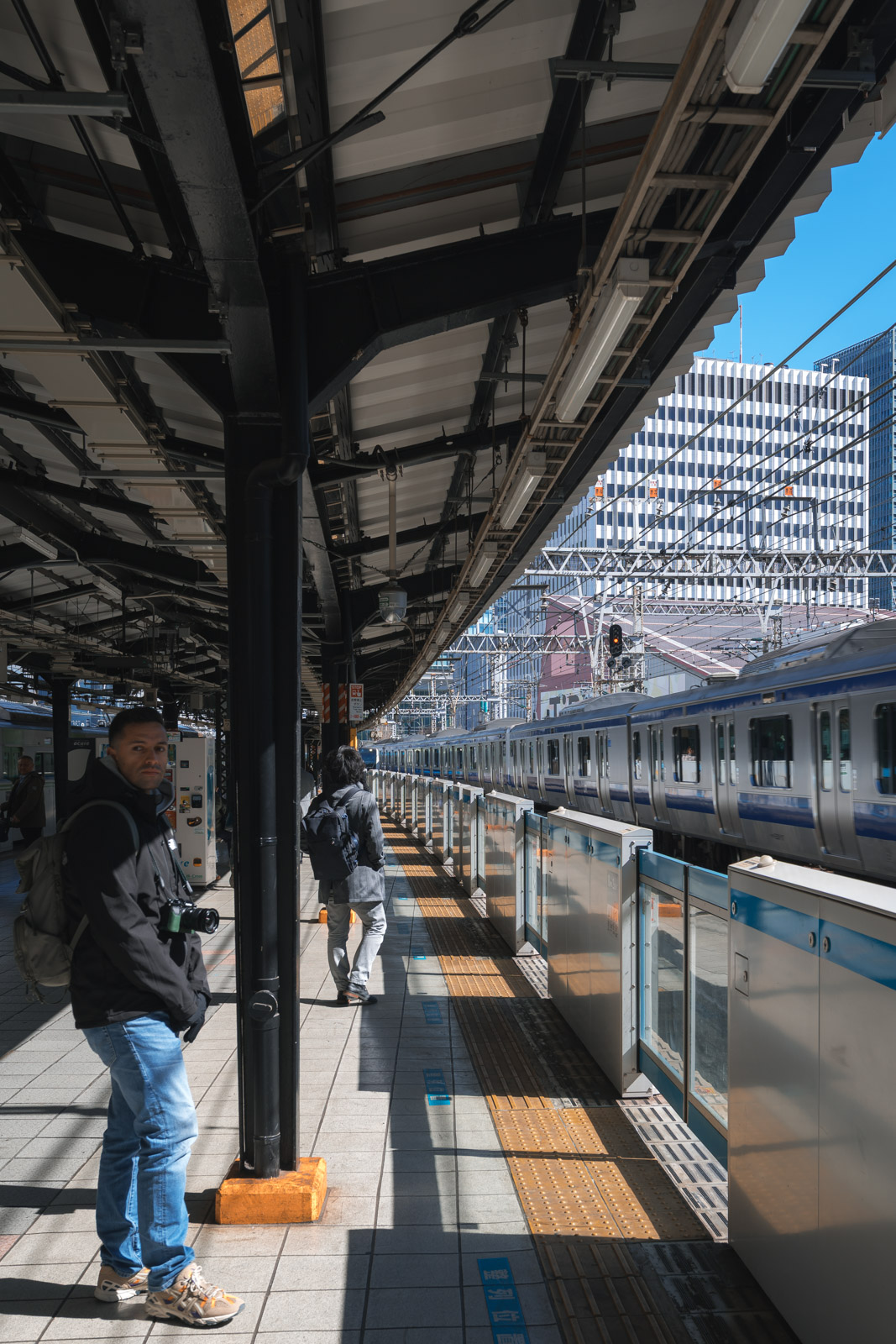
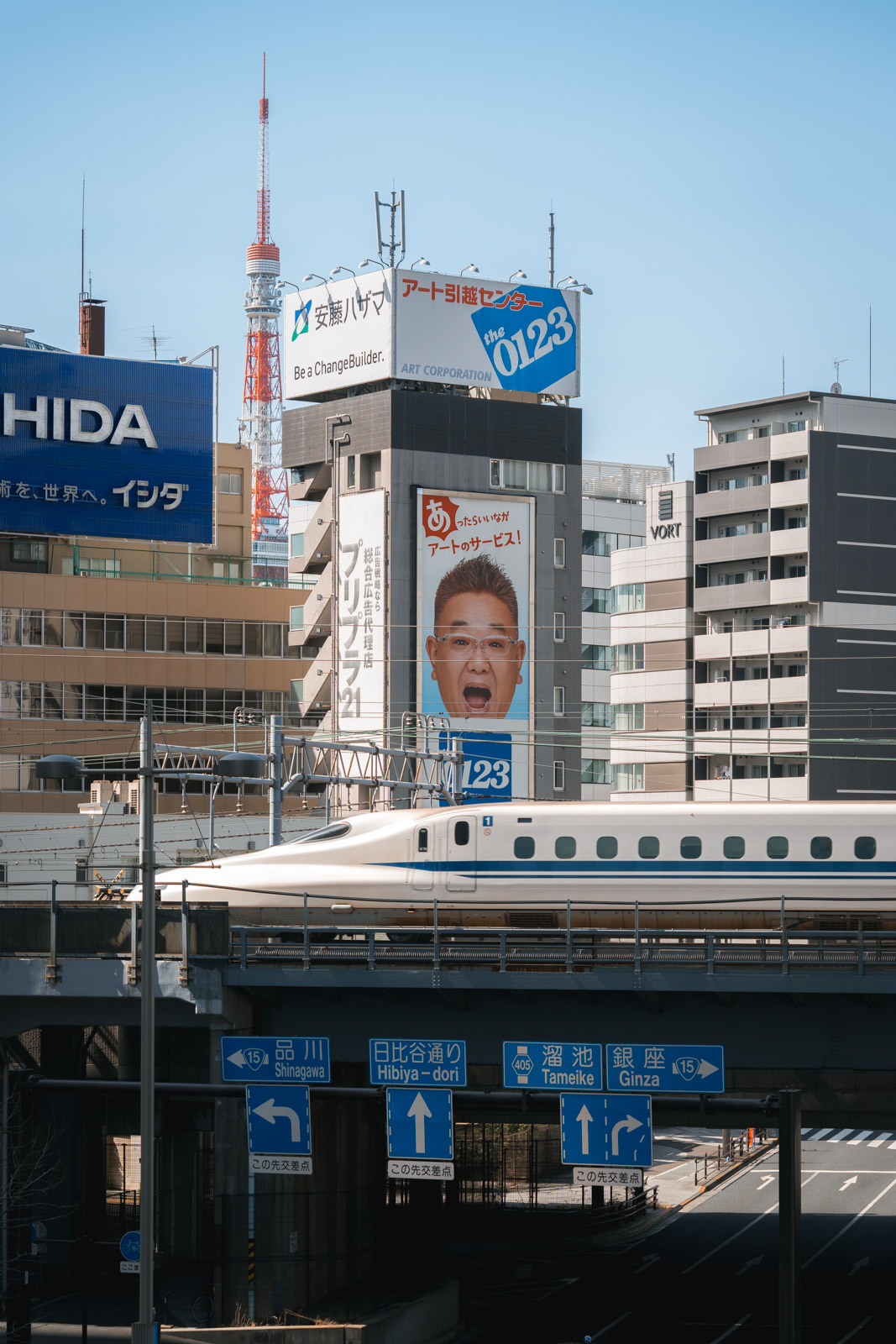
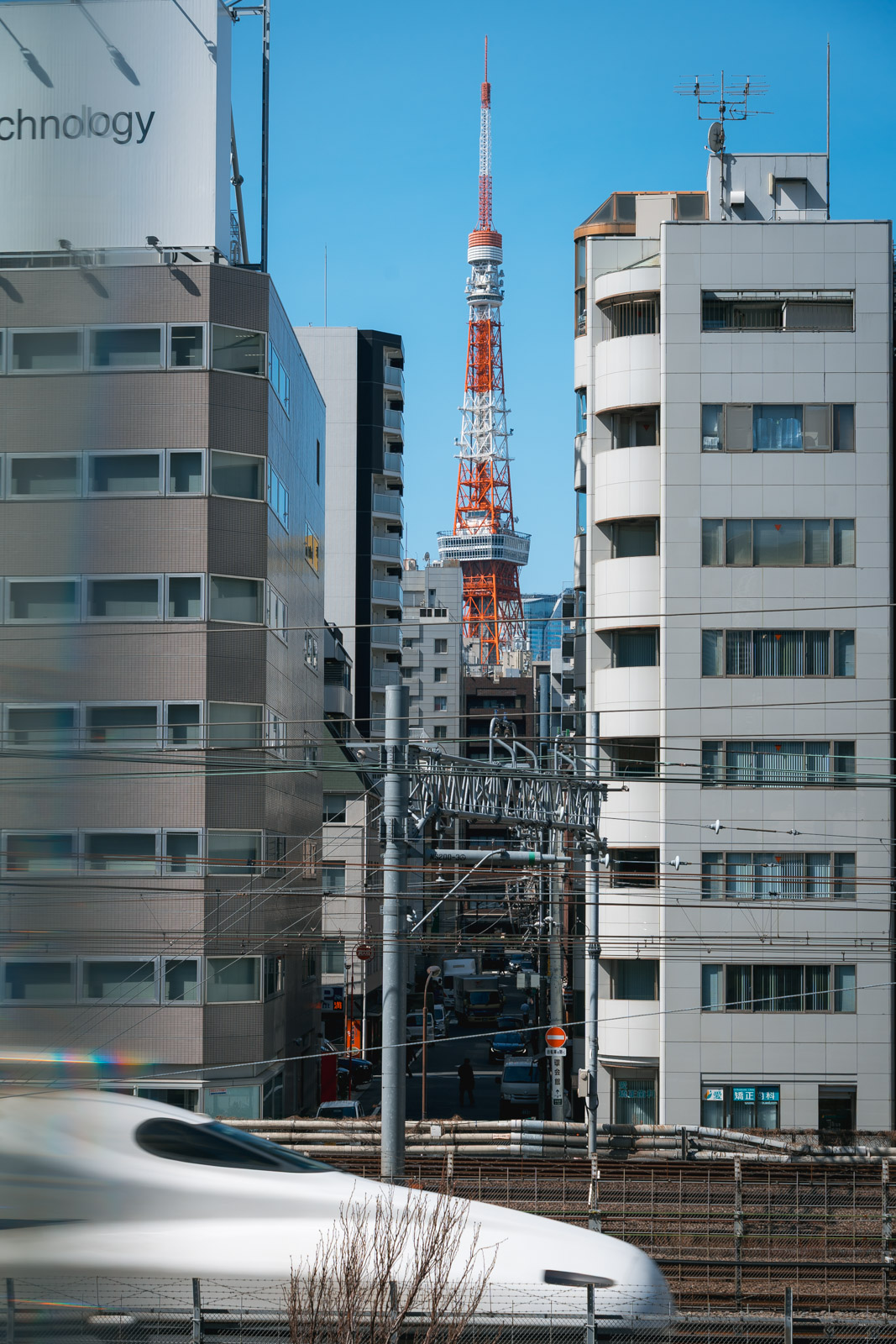
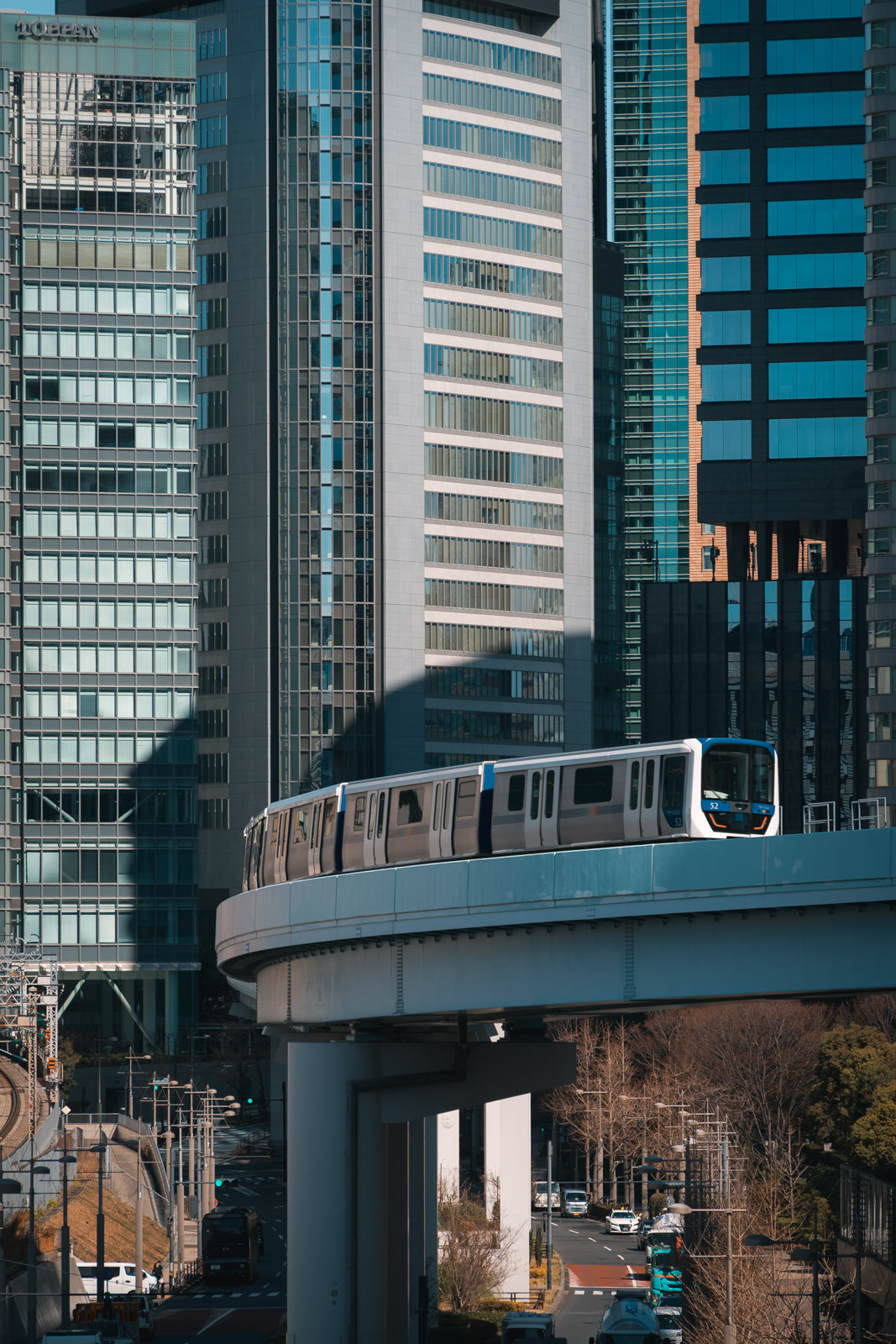
From there we took the metro to Hamamatsuchō. This area is one of the best places in Tokyo for train photography. You can see the Tokyo Tower in the background while Shinkansen and metro lines constantly move through the city. We walked along elevated walkways towards Shinbashi, stopping every few minutes for photos. It’s one of those places where you don’t really follow a route, you just keep stopping.
We briefly walked into GU (Uniqlo’s cheaper brother) and ended up buying a hat for David. First small purchase of the trip, which quickly became a theme in Japan.
Akihabara: finding the Fuji lens & arcade chaos
Next stop was Akihabara. The goal was to find a specific Fuji pancake lens for David. We had found online that this particular store had it in stock (as it was sold out in many shops around the city). One staff member said it wasn’t available, another staff member double checked, and eventually they found it hidden in a box behind the counter among dozens of other lenses. Japan is one of the best places for second hand camera gear for exactly this reason. You never really know what is sitting in a drawer.
We’ve written more about buying second-hand camera gear in Japan here:
We spent some time in the arcades next, trying to win a Doraemon plush. We didn’t.
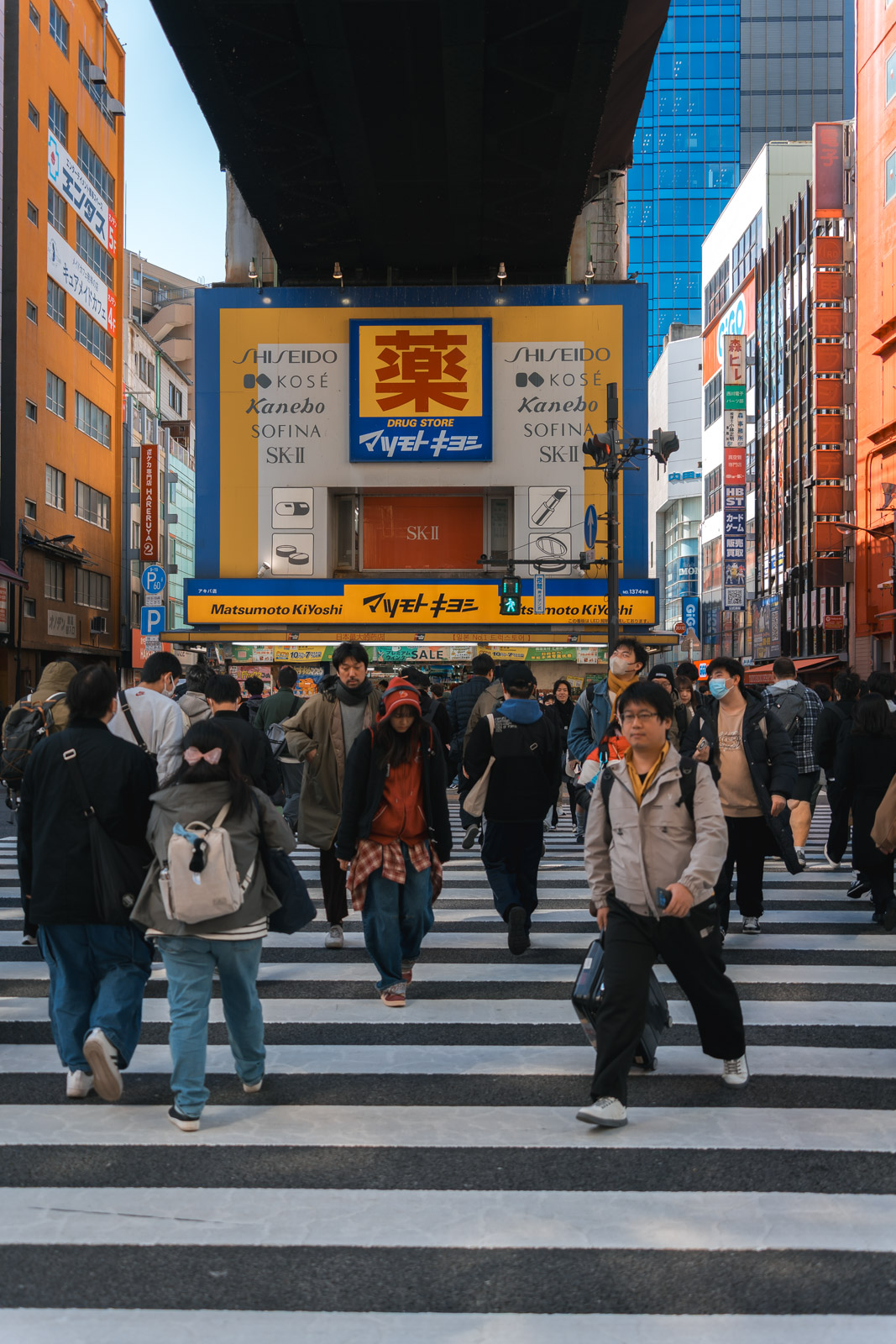
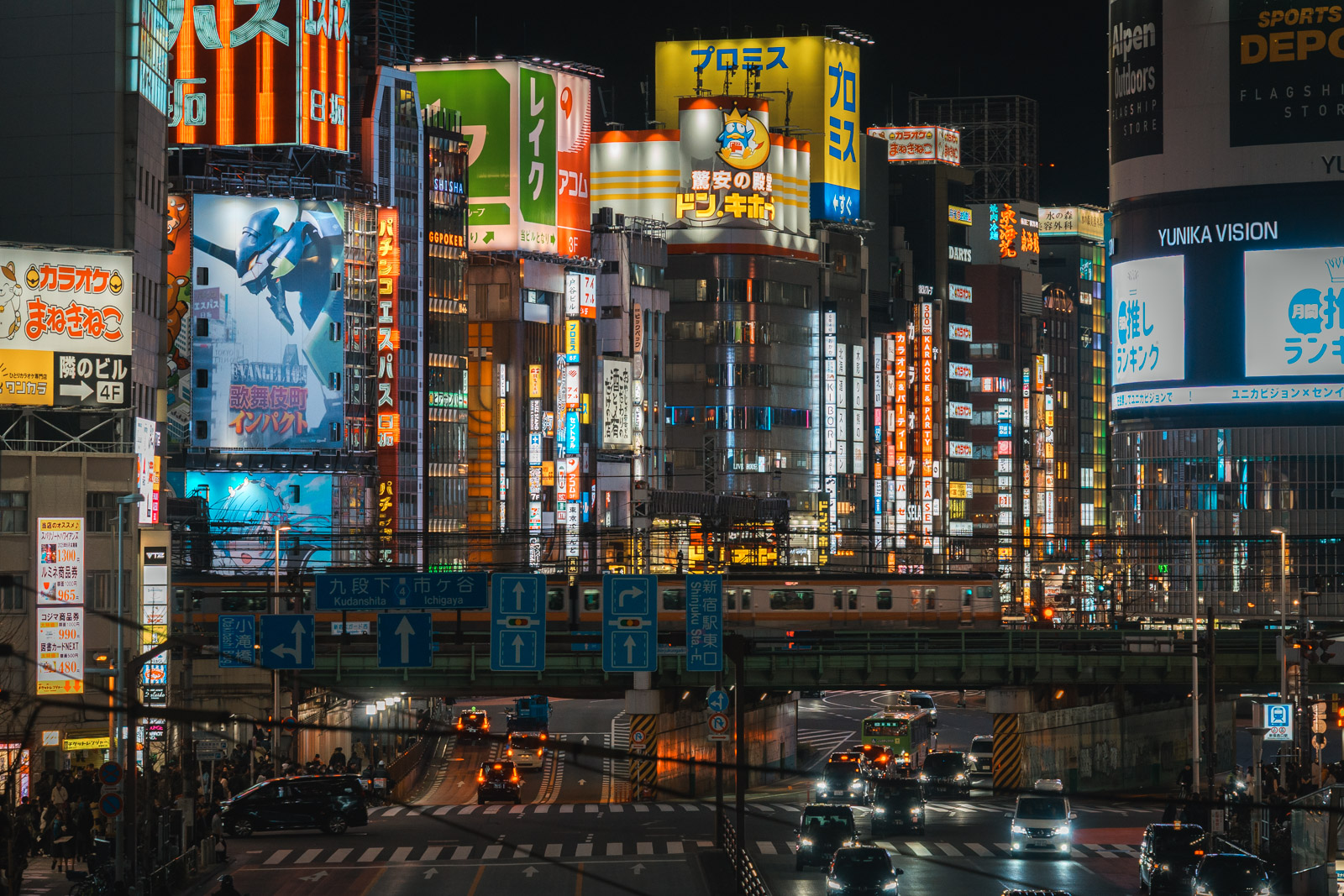
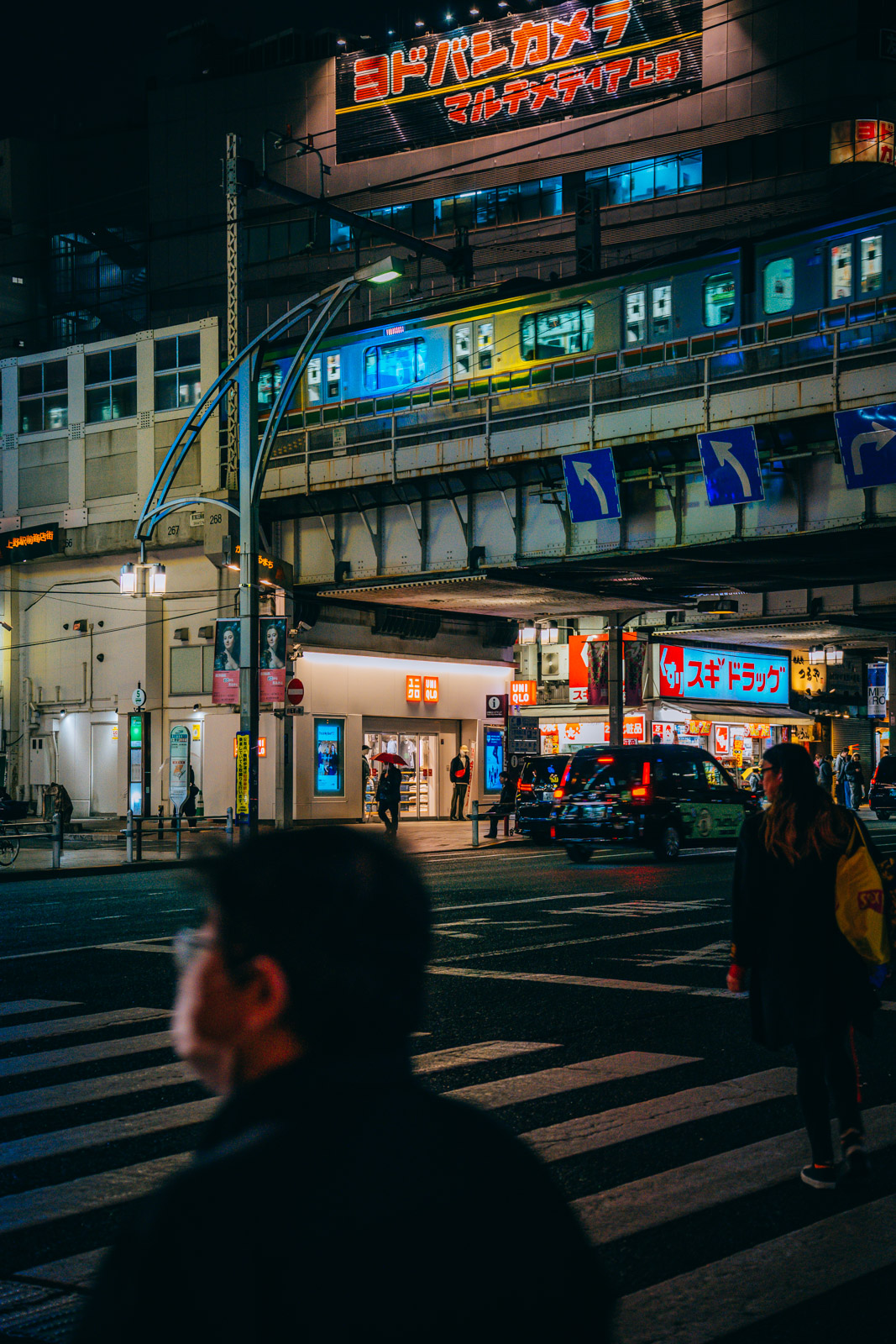
After that we walked through Akihabara’s main crossing (the one with the pharmacy behind) and smaller back streets, filled with electronics stores and glowing signs. The area feels chaotic but organised at the same time, great for photography.
Nakano: authentic sushi at Shouei Sushi
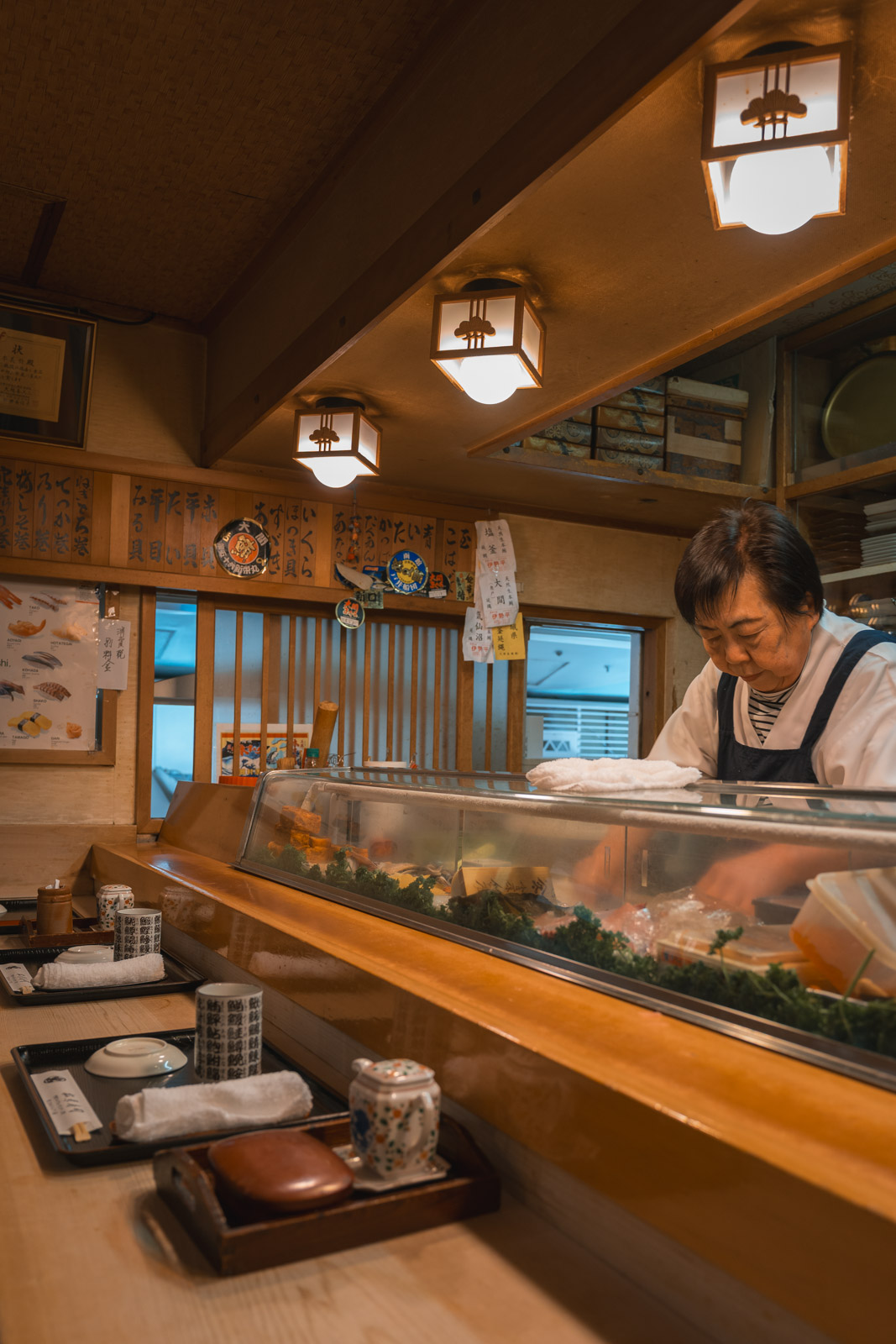
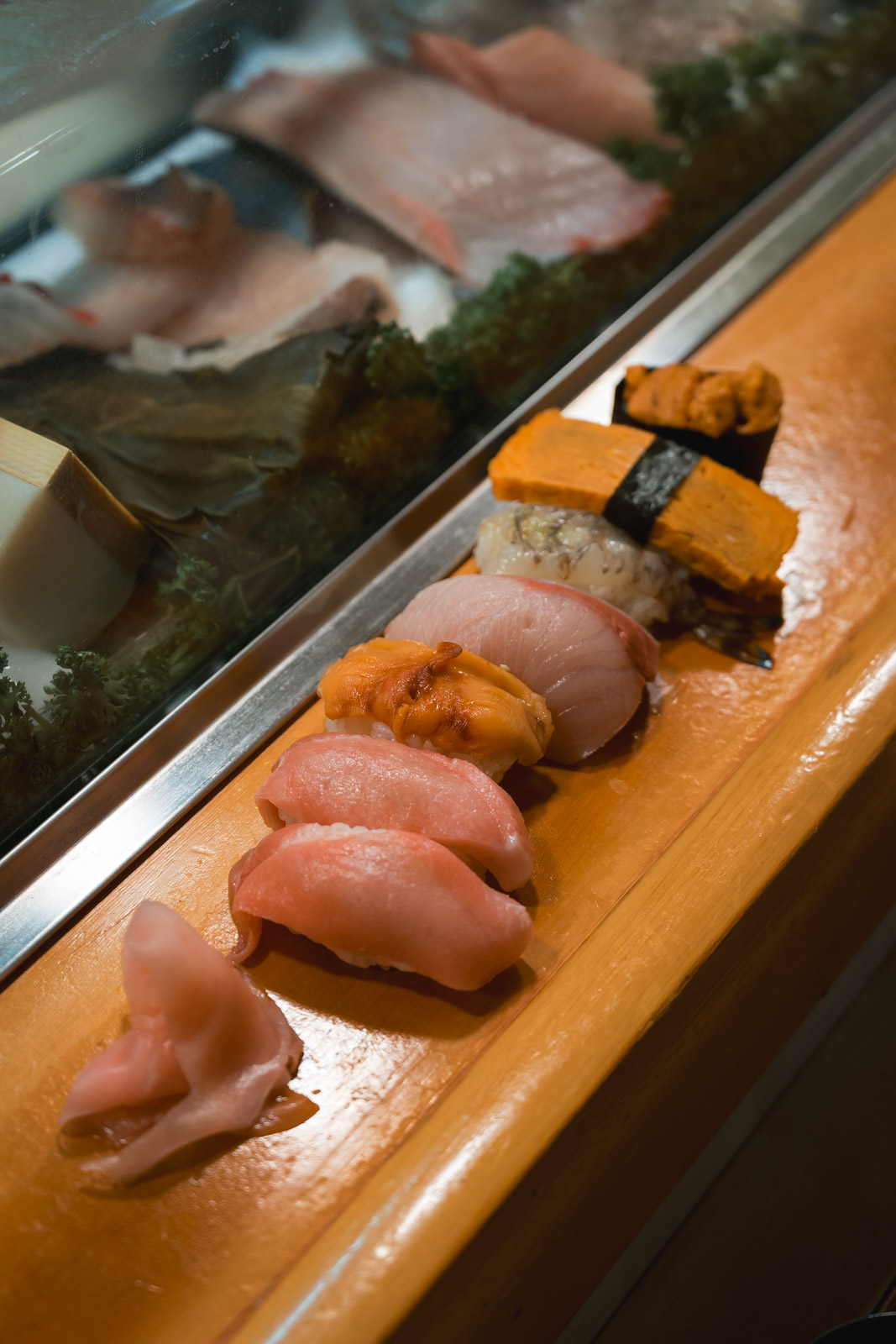
From there we moved to Nakano for lunch at Shouei Sushi Nakano. It’s located upstairs inside Nakano Broadway and run by an elderly woman with a very simple menu. No English, cash only (again), and sushi served directly at the counter. One of the most authentic meals of the trip.
Nakano itself has a special atmosphere if you know Haruki Murakami’s work, since the area appears in some of his books. That made it feel even more familiar to me somehow.
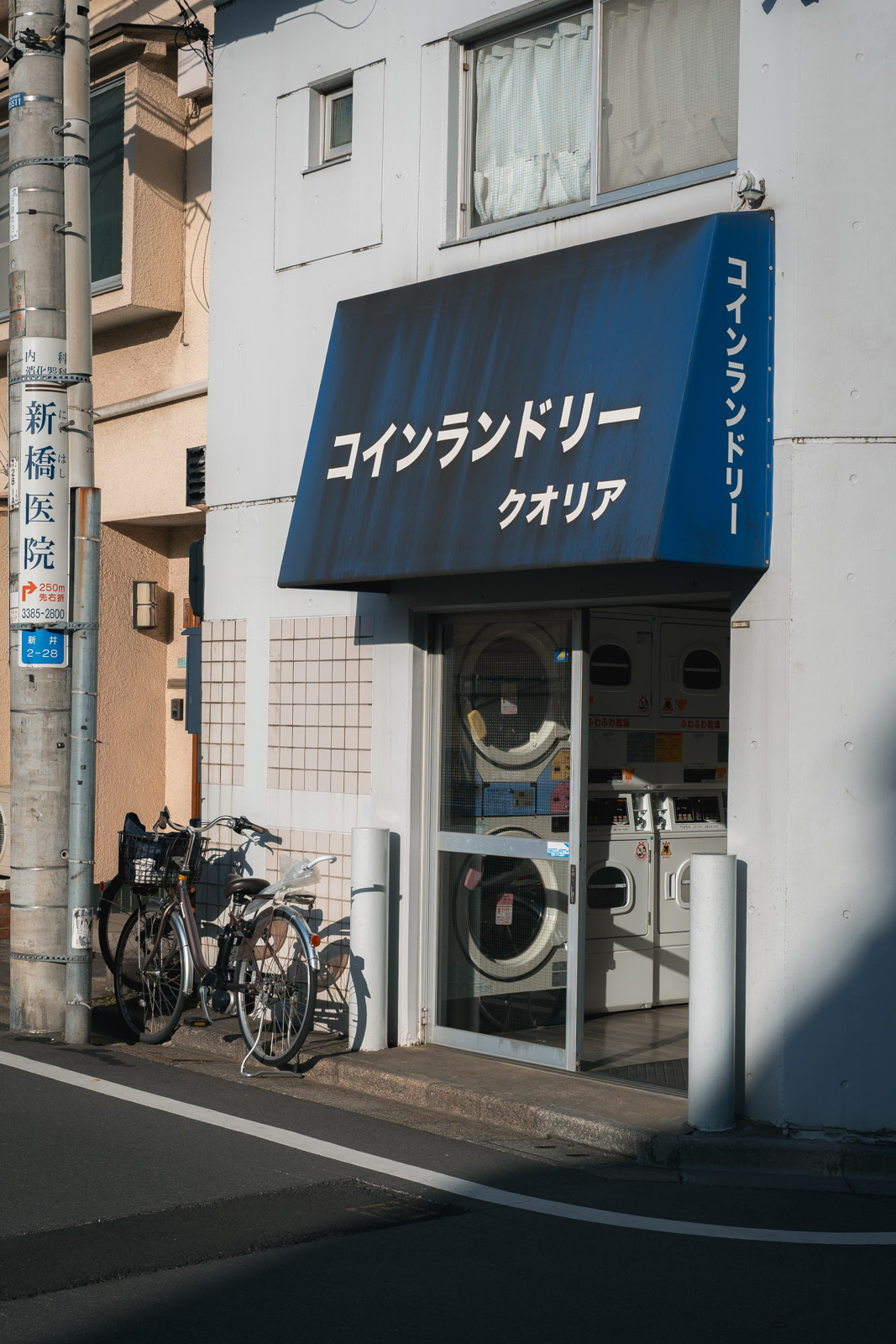
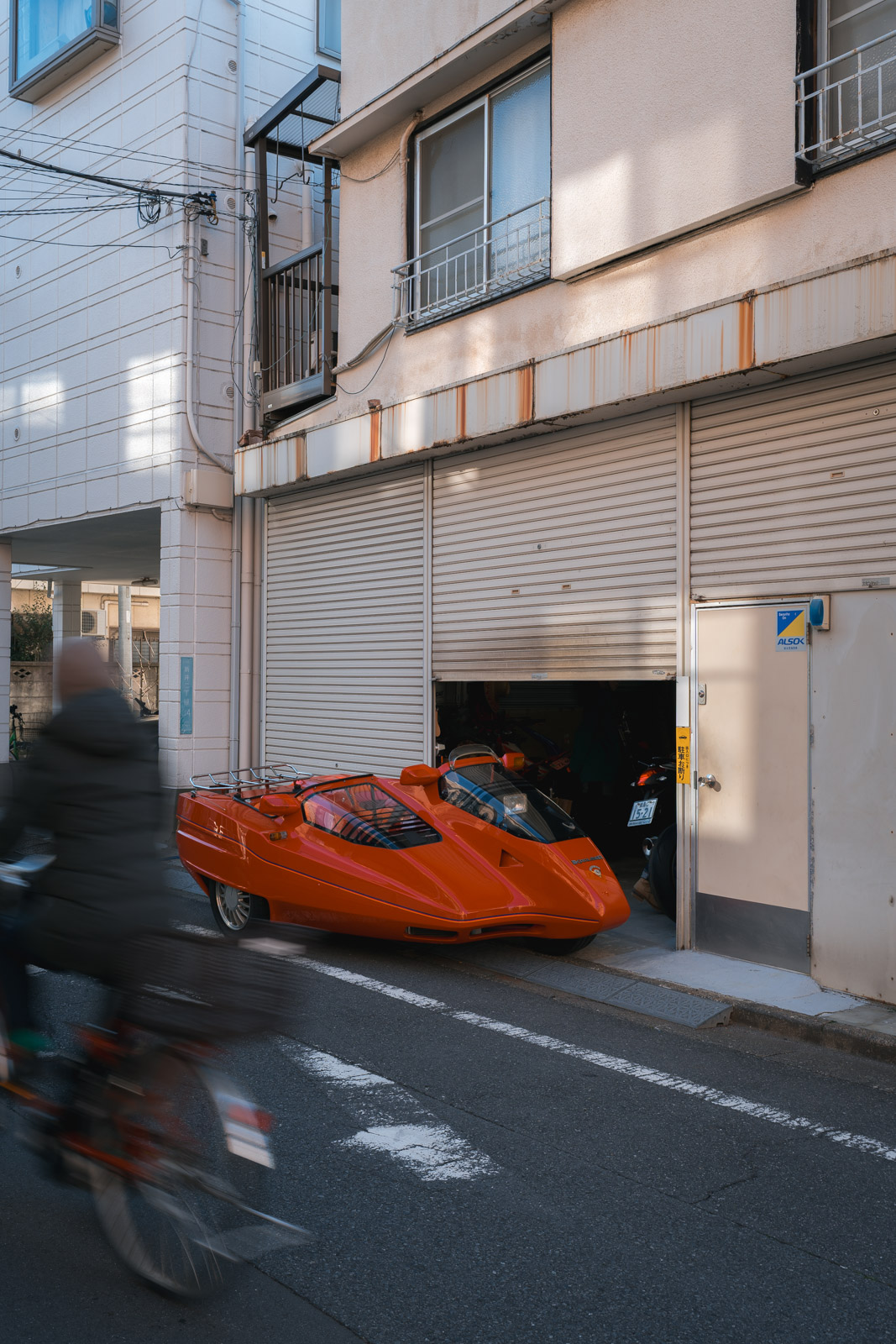
After lunch we walked about 30 minutes through residential streets towards Nogata Station. This walk ended up being one of the nicest parts of the day, just seeing everyday Tokyo life away from central areas.
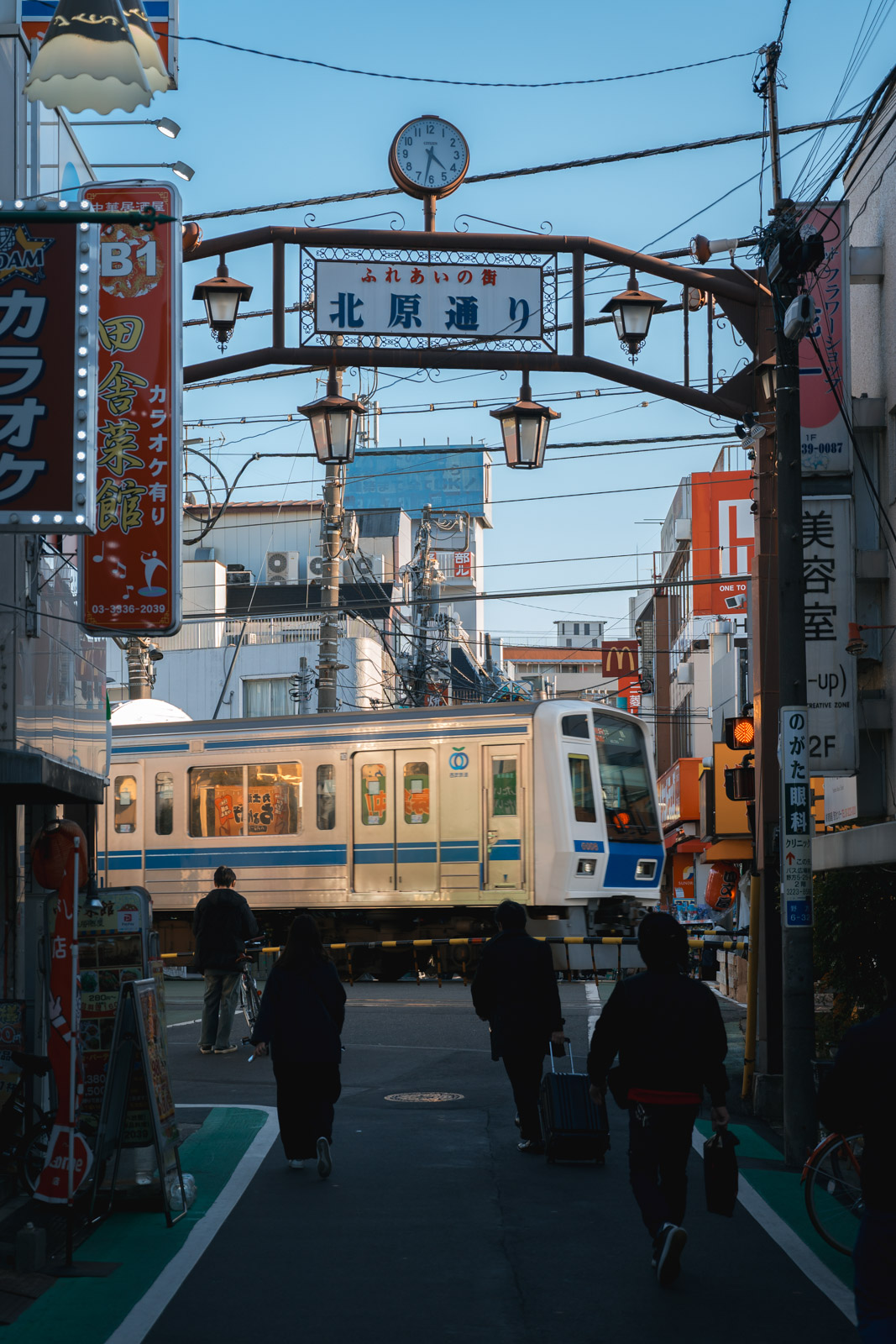
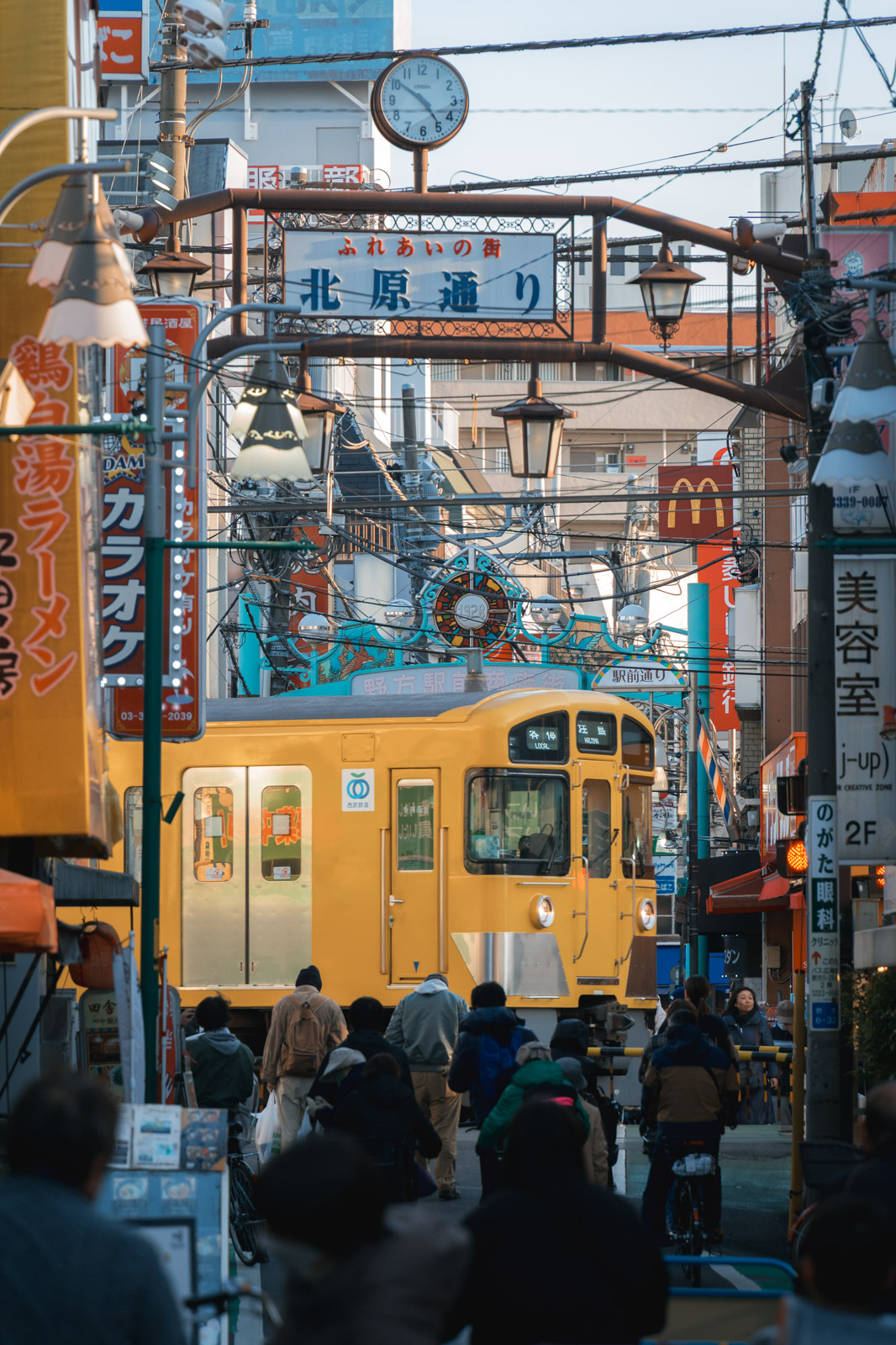
At Nogata Station we photographed trains passing through the the typical Japanese crowded commercial street next to the station. A bright yellow train passing through made it especially photogenic. We also stopped at Daily Bakes in the same street for a custard filled donut.
Uonami Fish Bar: sunset photography spot
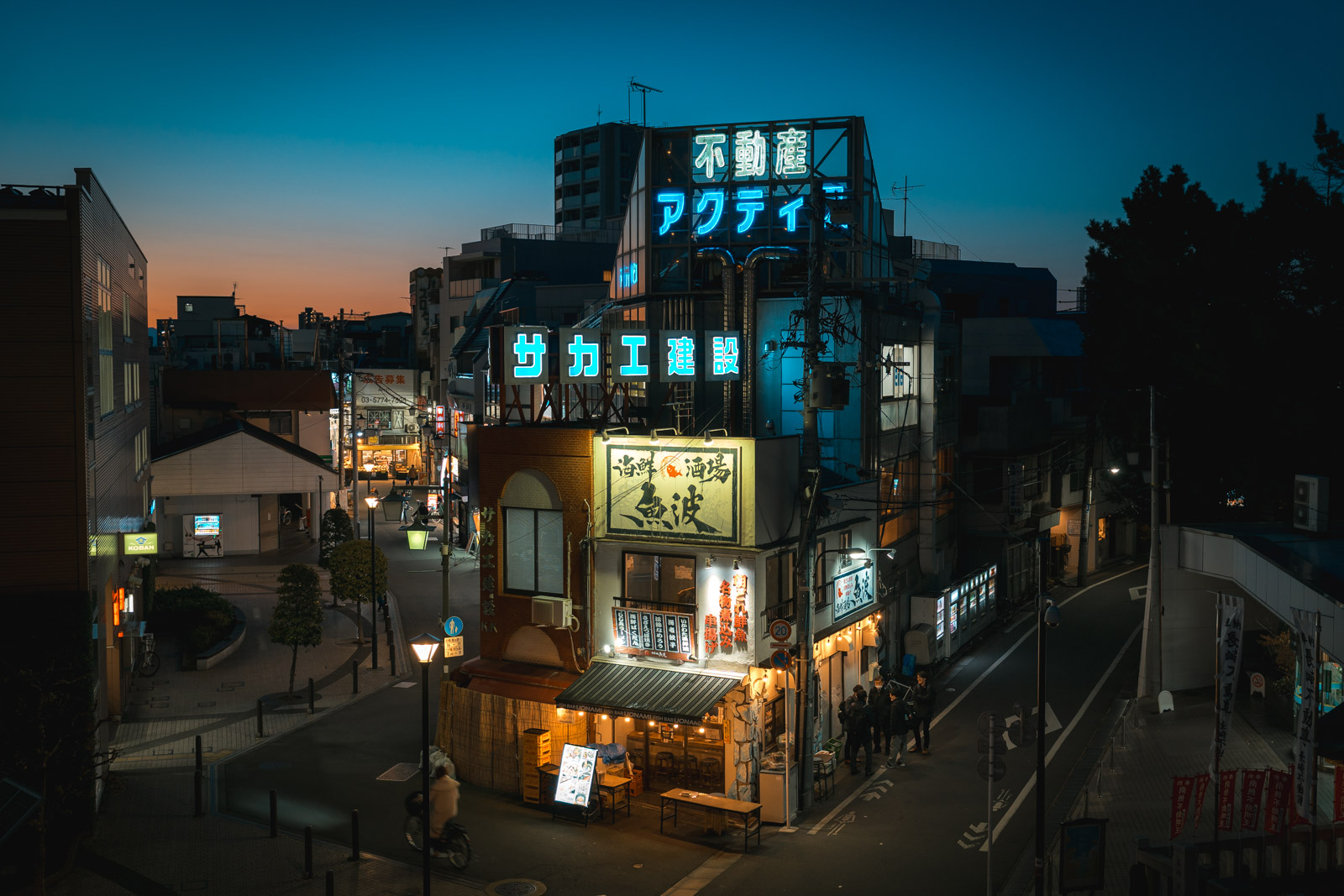
Later we moved to Uonami Fish Bar, an izakaya style corner spot near Shiinamachi Station. We came here mainly to take pictures of this famous izakaya, as it’s one of these iconic Tokyo shots we saw all over the internet. It was already getting dark, which made it perfect for low light photography with David’s new lens.
We love taking photos in Tokyo. On a separate trip, we explored and mapped out some of our favourite spots to photograph Tokyo Tower, which you can find here:
For dinner, David convinced me to try carbonara ramen at Udon Shimboru. We walked over from Shinjuku Station, passing Tokyo Hands and Nitori along the way. Both shops are favorite stops of ours in Japan, so we ended up stepping inside briefly before continuing on to the restaurant.
About the carbonara ramem. I was skeptical at first and assumed it was just another TikTok-driven trend with a long line. I was wrong on both counts. There was no hype crowd, barely any foreigners, and no line at all. And I definitely judged it too early. The carbonara ramen was genuinely excellent, and something I’d happily recommend.
Day 3: Temples, Shibuya & rainy Tokyo moments
We started with breakfast at Cawaii Bread & Coffee near our hotel. Camembert bread, almond croissant, and coffee. Camembert strangely slowly became a pattern in Tokyo mornings.
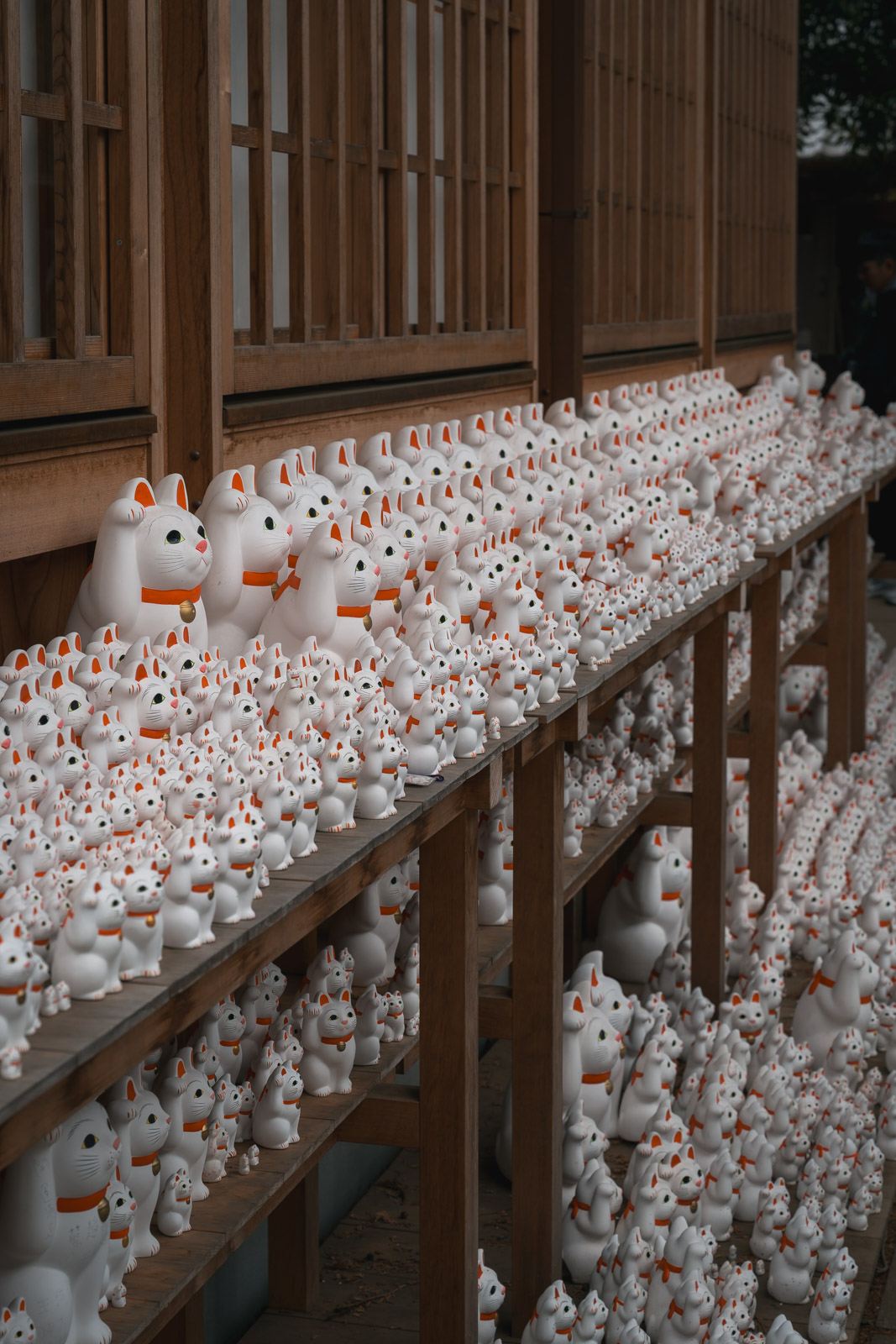
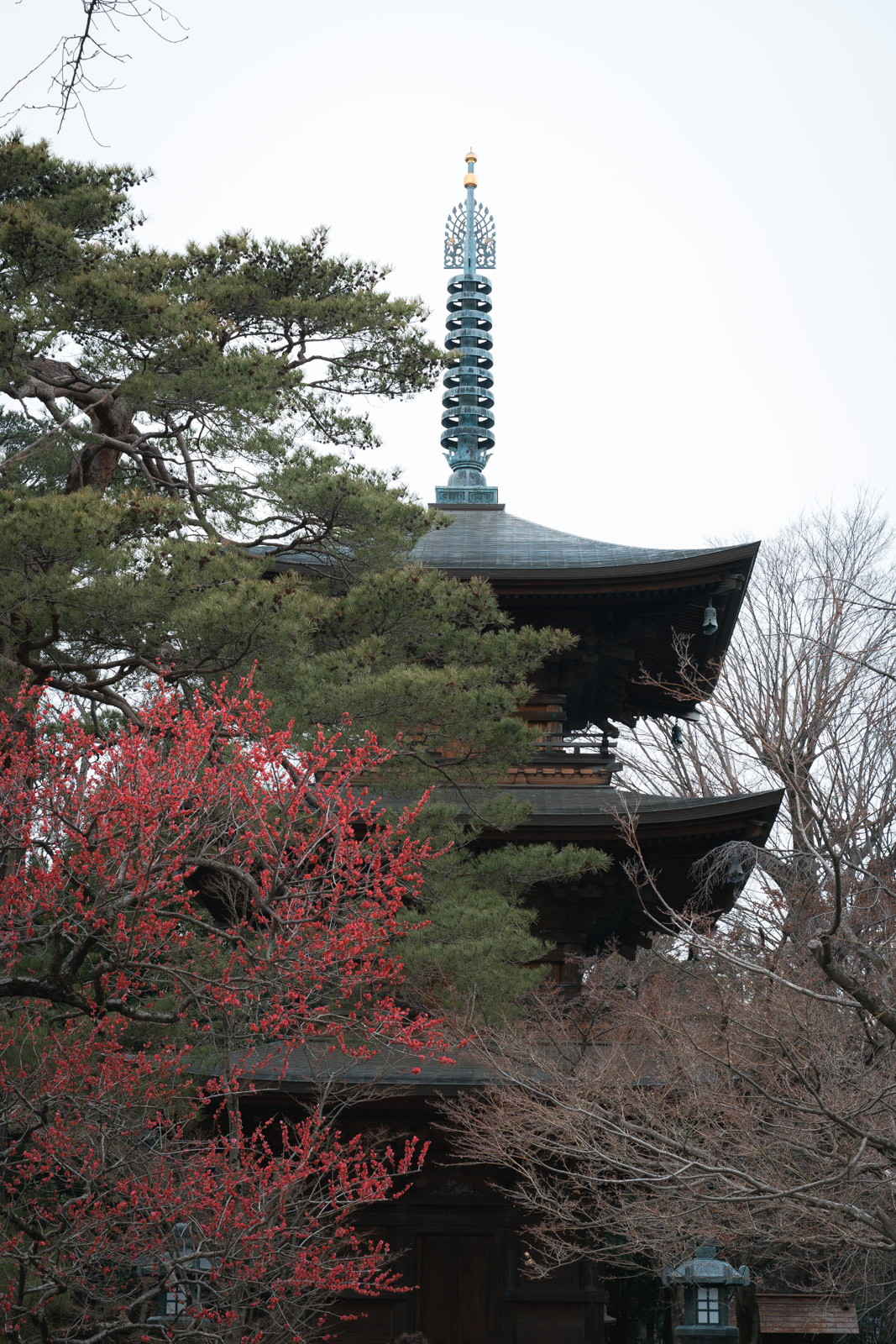
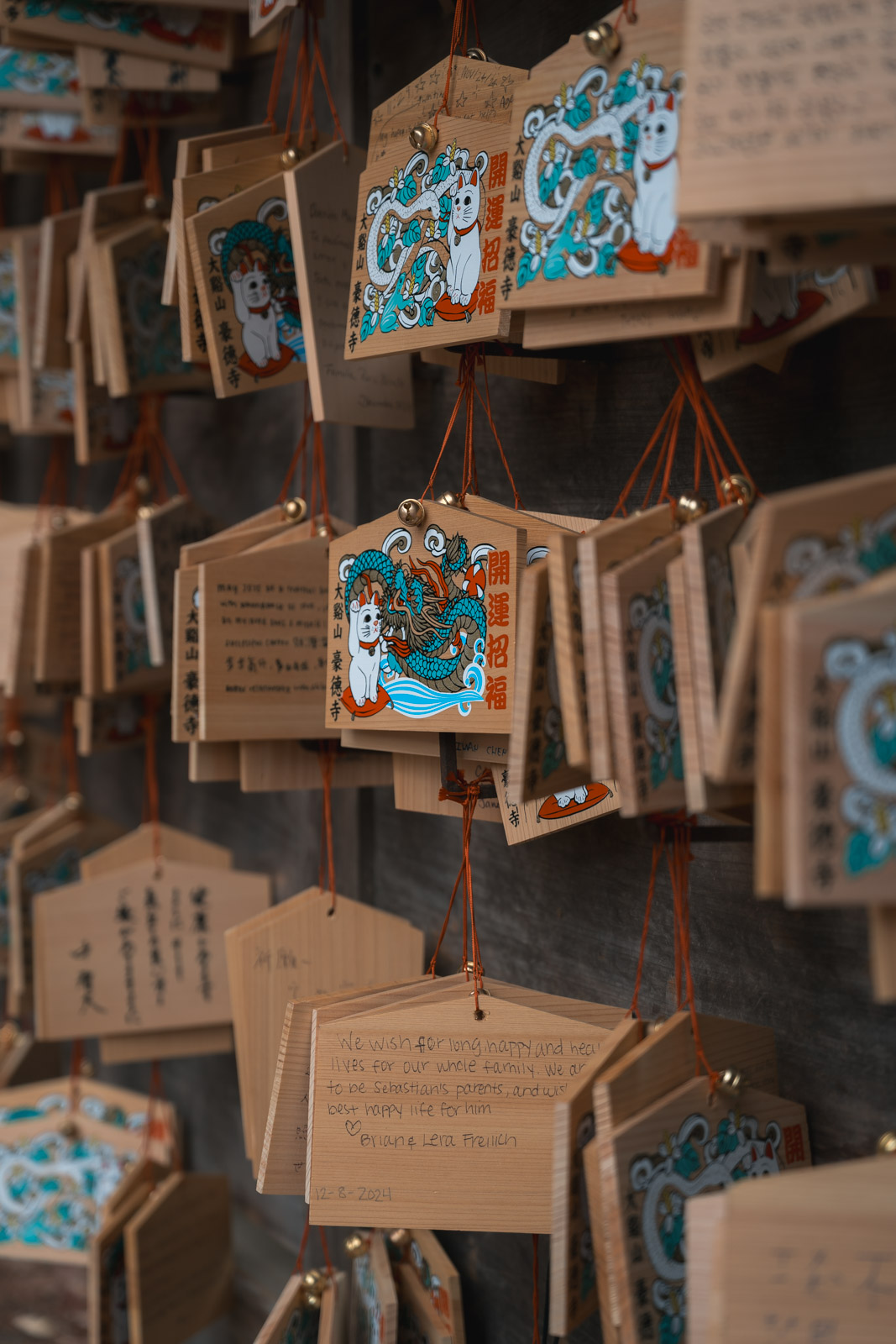
Then we went to Gōtokuji Temple, also known as the cat temple. The entire temple is filled with small cat statues. From there we took the small cat themed tram back towards Setagaya.
Lunch was at Umimachi Don in Sangenjaya. A tiny place with only a few seats (we had to wait for a bit outside), but extremely good seafood bowls. Everything felt super fresh, simple, and well executed, the kind of place where you immediately understand why people queue for it despite the size.
Shibuya rooftop viewpoint
In the afternoon we headed to Shibuya. Even though we had already been before, it’s one of those places you don’t really skip on a Tokyo trip, so we wanted to see the famous crossing again.
This time we went up to a rooftop terrace overlooking the intersection. The view itself was great, watching the constant flow of people from above gives a completely different perspective on how chaotic yet organized it all is. The overly sweet matcha latte was easily the worst one of the trip. Still, the view made up for it.
From there we dropped into Don Quijote (if you know, you know). It was extremely crowded and a bit overwhelming this time, so we didn’t stay long before continuing on foot towards Harajuku.
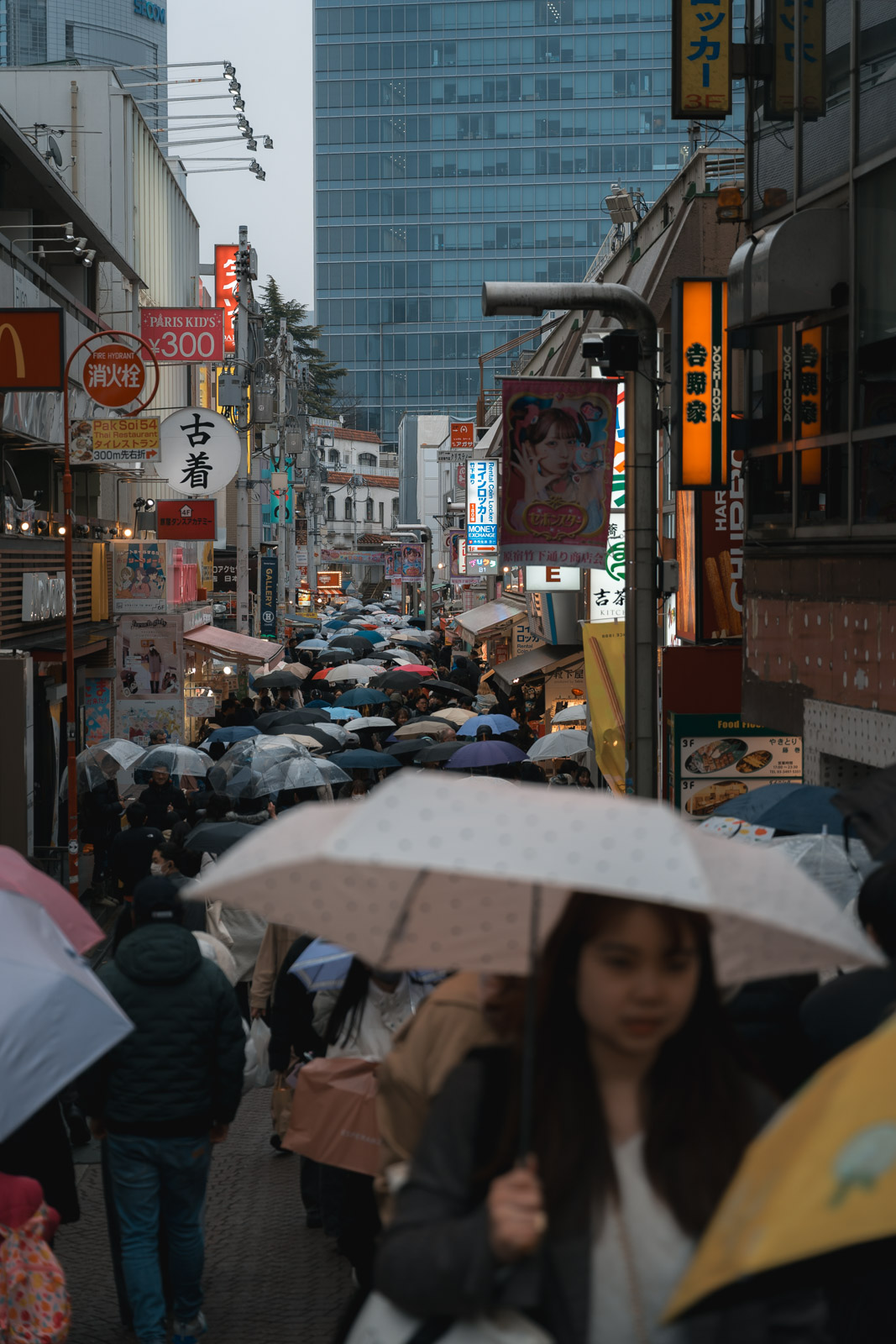
On the way, the weather suddenly shifted and it started raining heavily, so we cut our visit to Harajuku short and decided to go to another photo spot we had on our wishlist instead.
Yoyogi train crossing photography
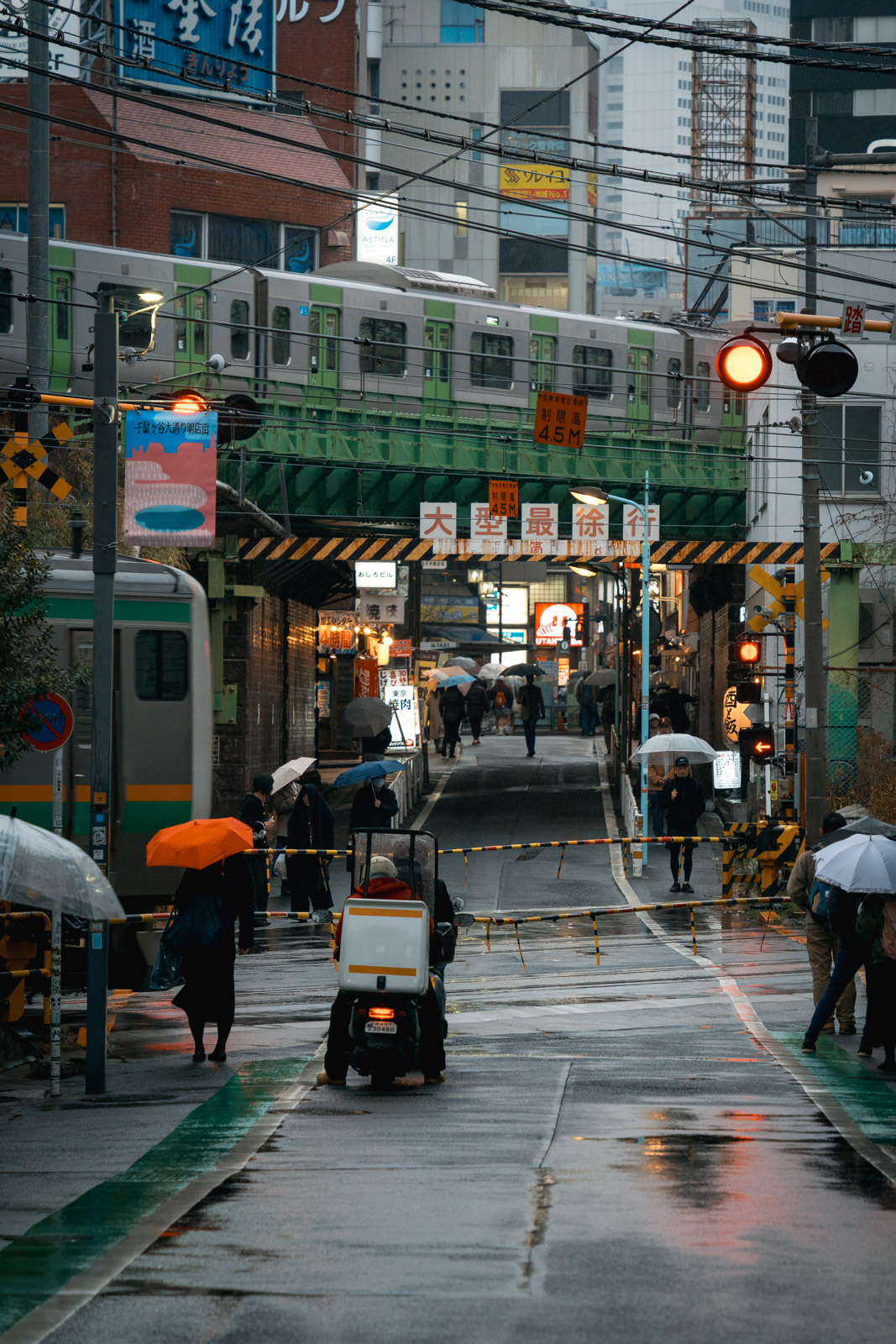
That spot was near Yoyogi Station, where two train lines cross above each other. We spent a while there trying to capture both trains in the same frame at the right moment, which sounds simple but actually requires quite a bit of patience and timing. We would run to the middle of the road each time a train passed by, luckily it was not a busy road and cars had to slow down anyway for the railroad crossing. The rain actually created a nice atmosphere for the photos here.
While heading back towards the metro later, we randomly spotted a cherry blossom tree already in bloom. It was a small but unexpected surprise, especially since we thought it was still too early in the season.
Rainy detours & Tokyo takeout night
For dinner, the plan slowly turned into a mix of takeout and escaping the rain. We stopped by AGE 3 for their famous fried sandwiches, including crème brûlée and matcha, and picked them to have later for dessert. After that we went to Tonkatsu Maruschichi nearby for some quality kastu, but the rain was coming down so hard and the wait was around 45 minutes that we decided to skip dining in as well. To escape from the rain while waiting for our take out, we went to a nearby Family Mart.
So in the end, we brought everything back to our hotel loft room and had dinner there instead. In a way it turned out even better than expected: simple food, a proper table, and no rush, just hearing the rain outside while eating.
Day 4: Tokyo to Mount Fuji road trip begins
This was the transition day. We picked up our rental car in Tokyo and had to change it last minute because of winter tyre requirements. Safety first in Japan is very strict and the staff insisted, as it had been snowing in the Mount Fuji area the past few days.
Driving out of Tokyo was surprisingly easy. Within a short time we were on the highway from where we drove straight towards Mount Fuji. This was also David’s first time driving on the left, but it quickly felt natural.
We followed a flexible route around Mount Fuji, you can find the full itinerary with detailed locations of every spot we visited in our separate article here:
Lake Yamanakako and Oshino Hakkai
Our first stop was Lake Yamanakako. The view of Mount Fuji was already visible through partial clouds. The lake was quiet, with snow still present from previous days.
From there we went to Oshino Hakkai, a traditional village with clear spring water ponds and Mount Fuji in the background. It is one of the most photographed places in the area and also one of the busiest. Tour buses arrive constantly, but the setting still feels beautiful.
We had lunch along lake Kawaguchiko at a restaurant called Tsujiya, David had Katsu again and I had Hoto noodle soup with vegetables.
Lake Shoji and the quiet side of Fuji
We stayed at a small traditional hotel near Lake Shoji. Our room was a typical Japanese one, with mattresses on the floor. This part of the trip felt completely different. Much quieter, more remote, and with direct views of Mount Fuji from the room.
The owner immediately and very enthusiastically welcomed us by insisted to take a whole bunch of photos of us once we arrived. The sky was blue and Mount Fuji was clearly visible. He told us we must do it now, because we don’t know if later or tomorrow the view will still be as good. That moment summed up the Fuji experience. Weather changes quickly so you don’t wait, you move.
Later in the day we drove around Lake Saiko and Lake Kawaguchiko, stopping wherever the view opened up and visiting a small shrine with the view on the mountain.
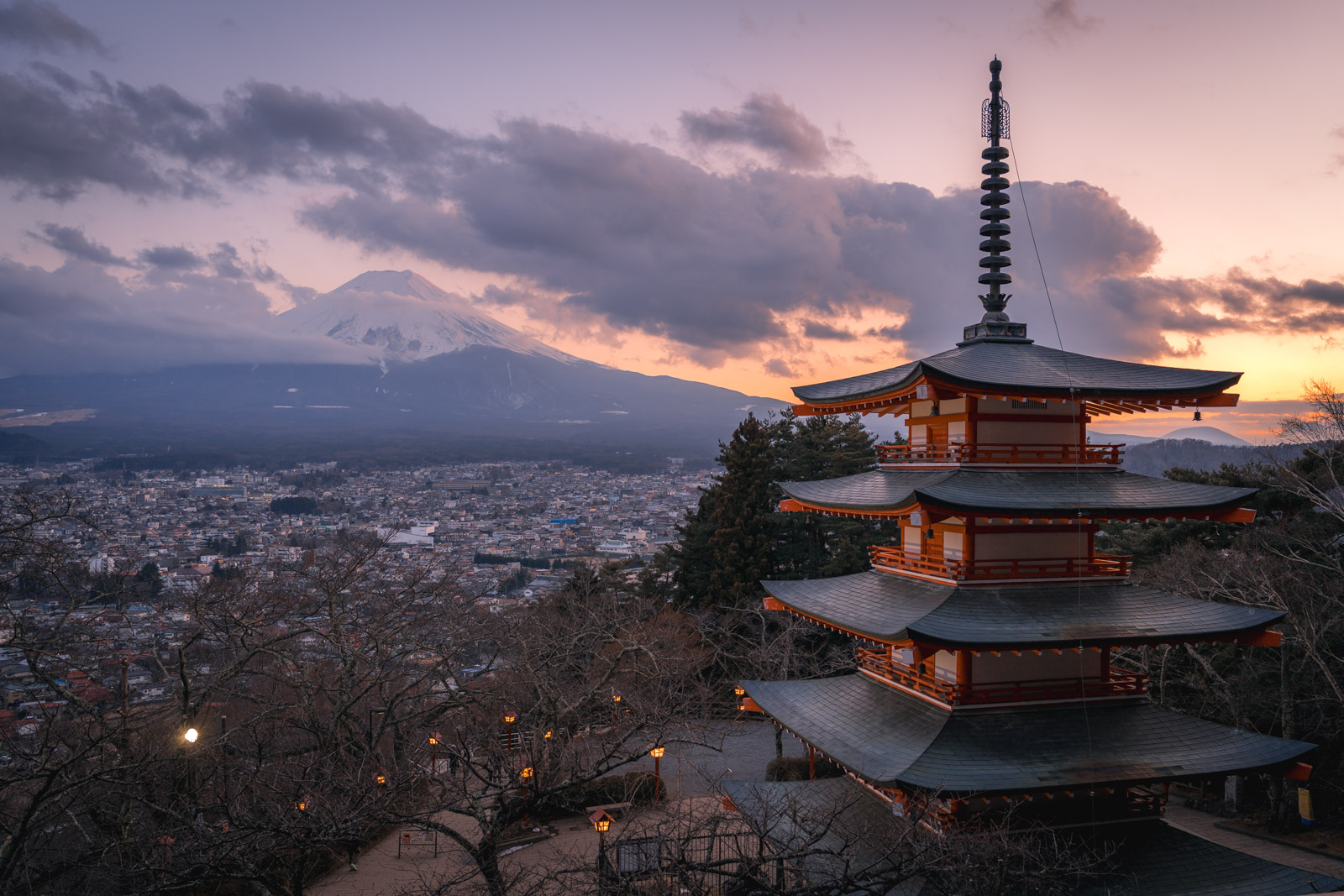
We ended the day at Chureito Pagoda, one of the most famous viewpoints of Mount Fuji. It was busy and we lost some time trying to find (free, you can’t take the Dutch out of me) parking, but we still made it just in time for the sunset and blue hour after quickly climbing the stairs. The sky never fully opened, but the atmosphere and partial clouds around Mount Fuji were worth it.
That night, back at the hotel, the clouds cleared completely and Mount Fuji appeared reflected in the lake outside our room.
We woke up at 5am and walked to the beach of Lake Shoji opposite of our hotel. The morning was calm, and we enjoyed the sunrise while looking at Mount Fuji.
From there the day turned into a loop of driving and stopping.
Convenience stores, overpass and trains with Mount Fuji views
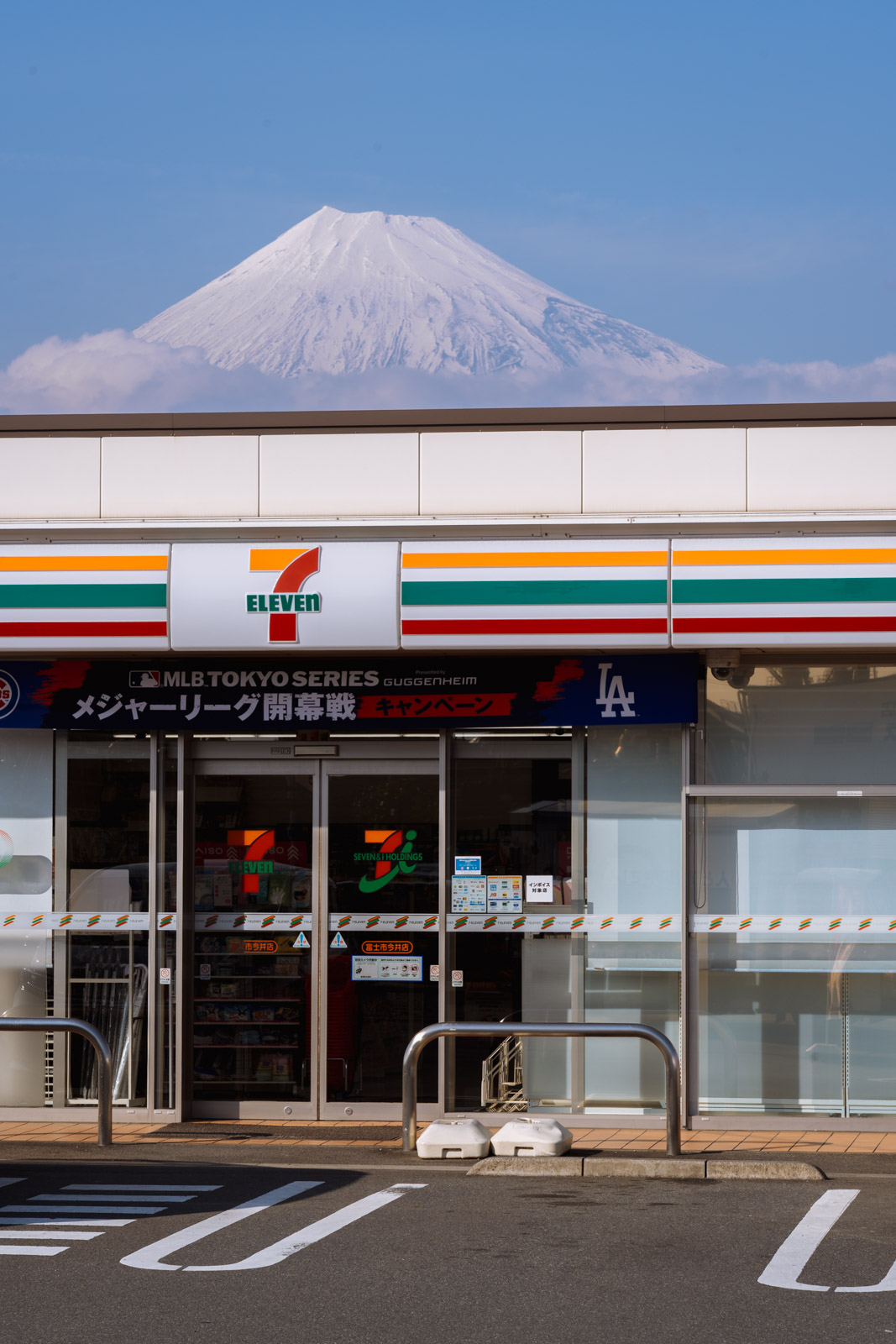
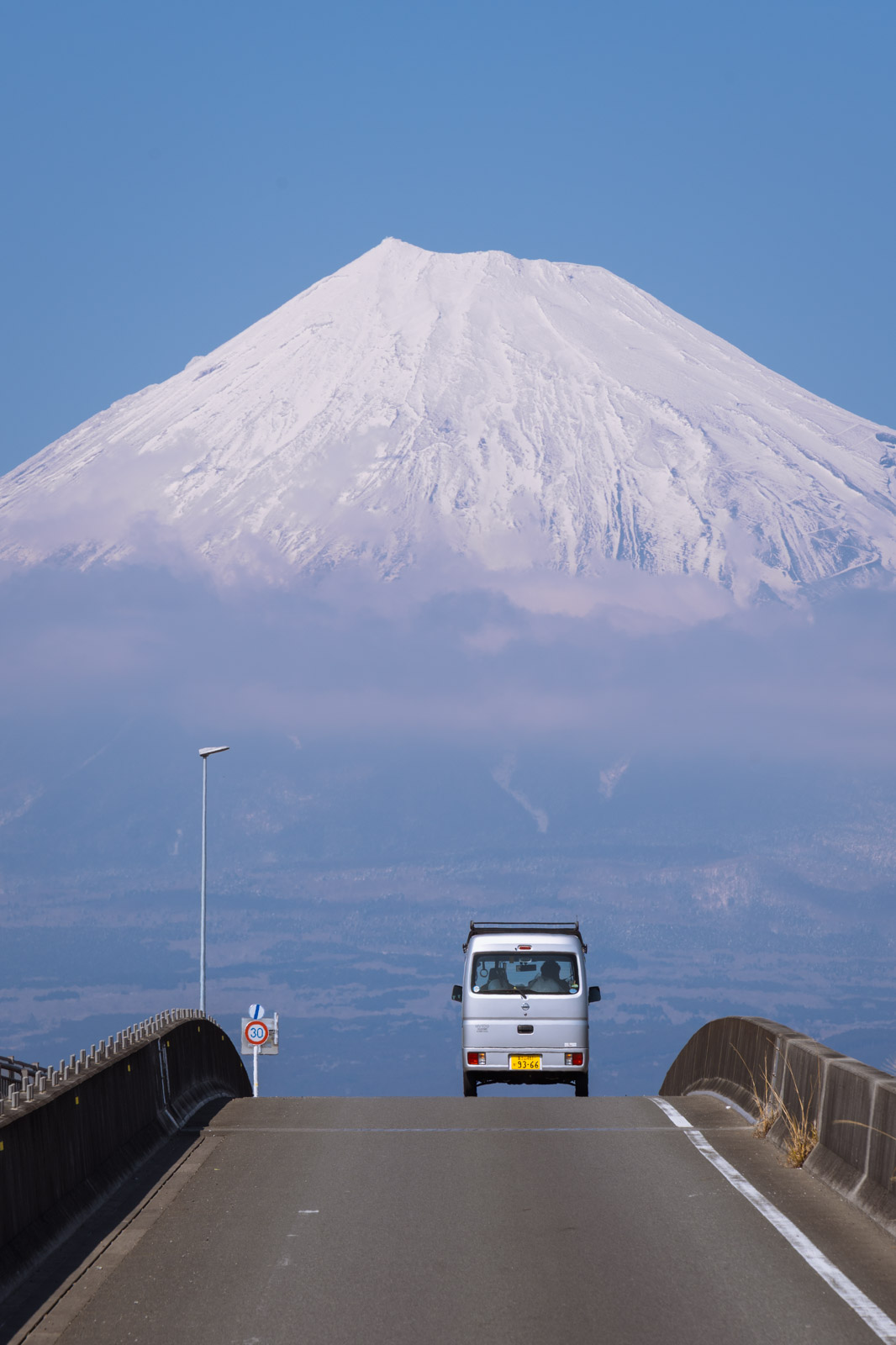
We visited multiple Lawson and 7-Eleven locations with Mount Fuji in the background. These convenience stores are surprisingly popular photography spots in the area.
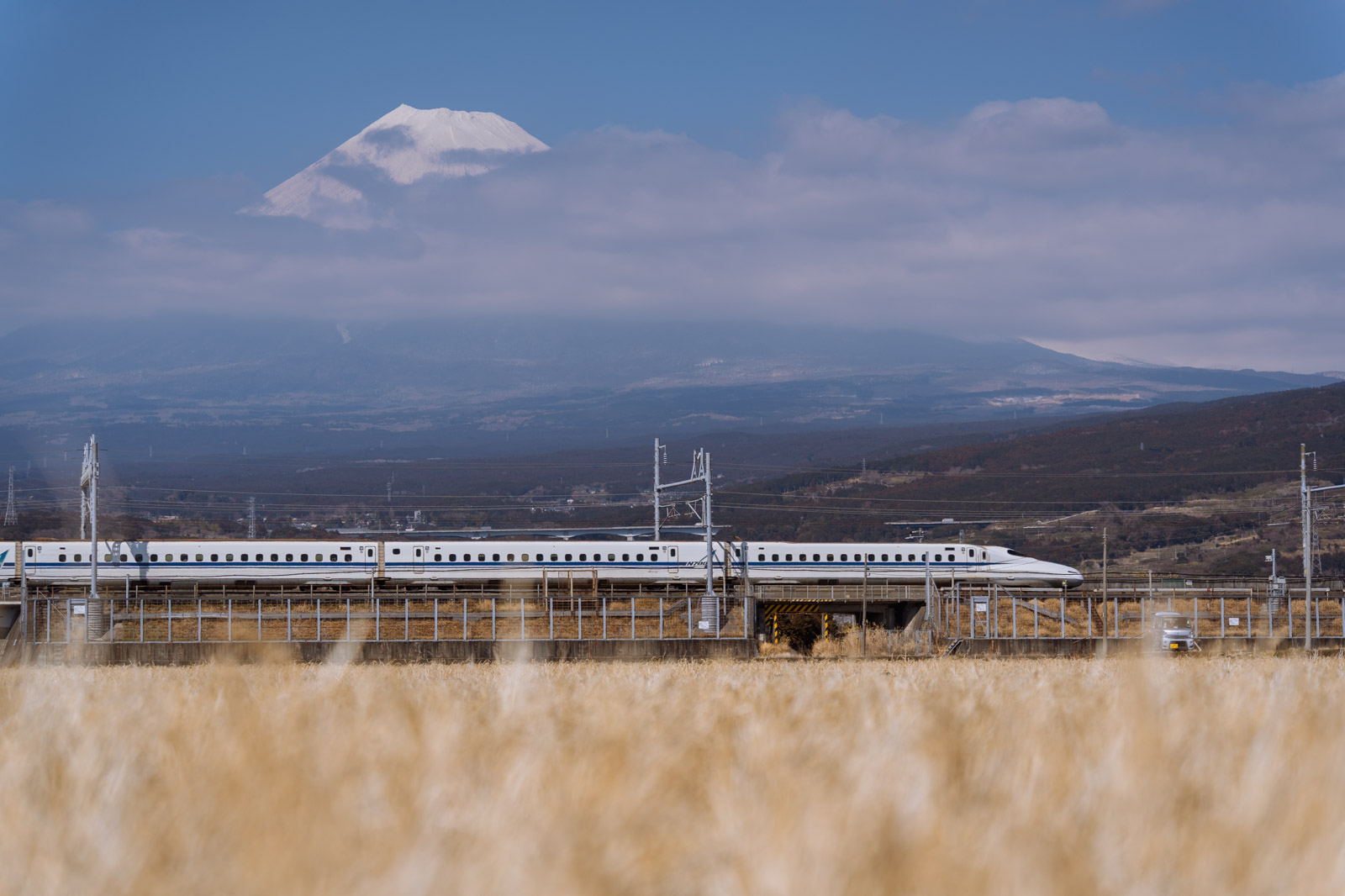
We also stopped at train viewpoints, both the Kawaguchiko station area as well as a famous photo spot where Shinkansen lines pass through the countryside with Mount Fuji behind them.
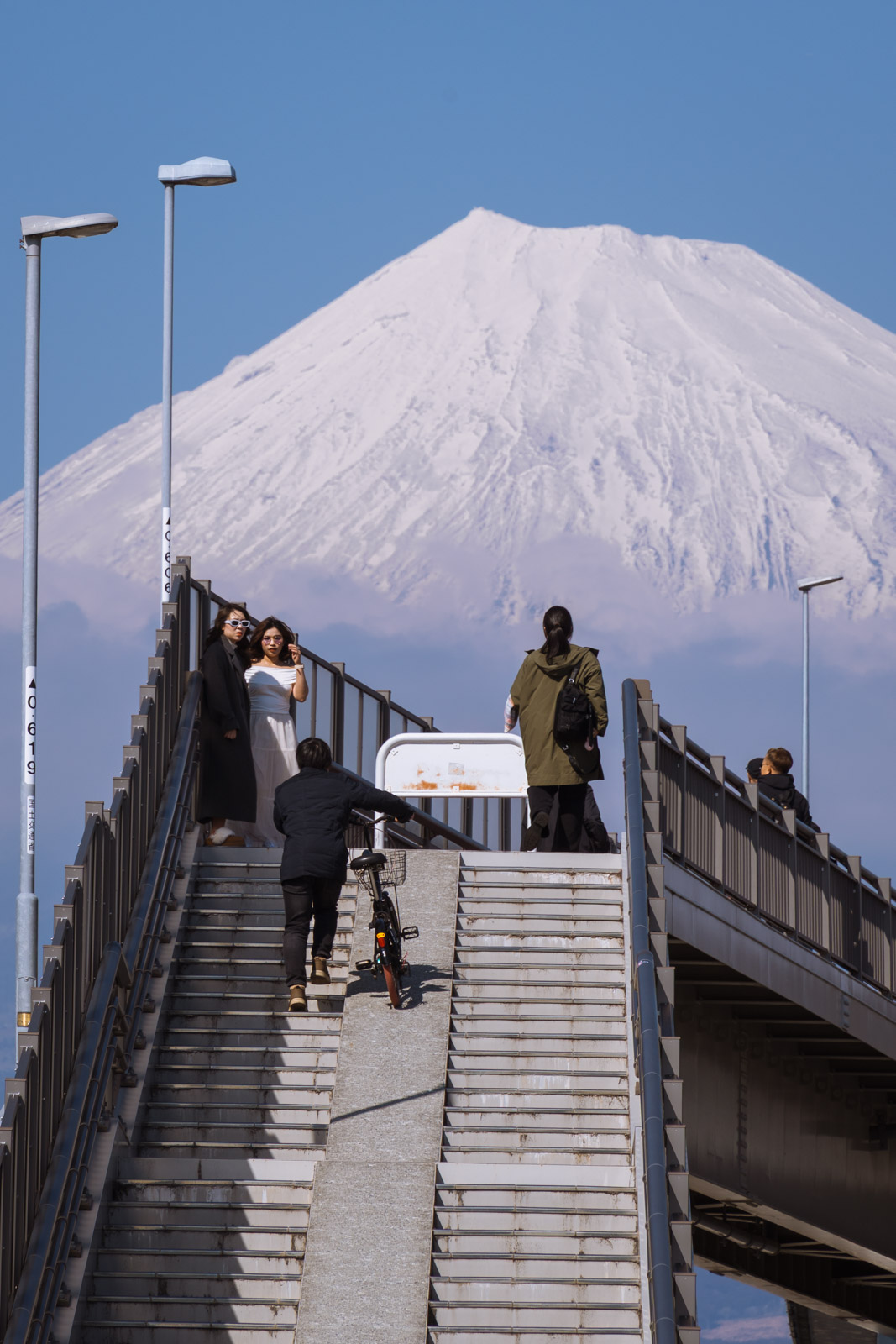
Another interesting spots was the famous overpass with Mount Fuji in the background, groups of Chinese tourists were all taking the same picture, while the stairs on the other side had the same beautiful view and were completely empty. We found parking close to the overpass at a large Uniqlo. This quickly turned into an unexpected shopping spree! Who knew Uniqlo’s outside of Tokyo had way more items on sale?!
Rural Tea Plantations and Shiraito Falls
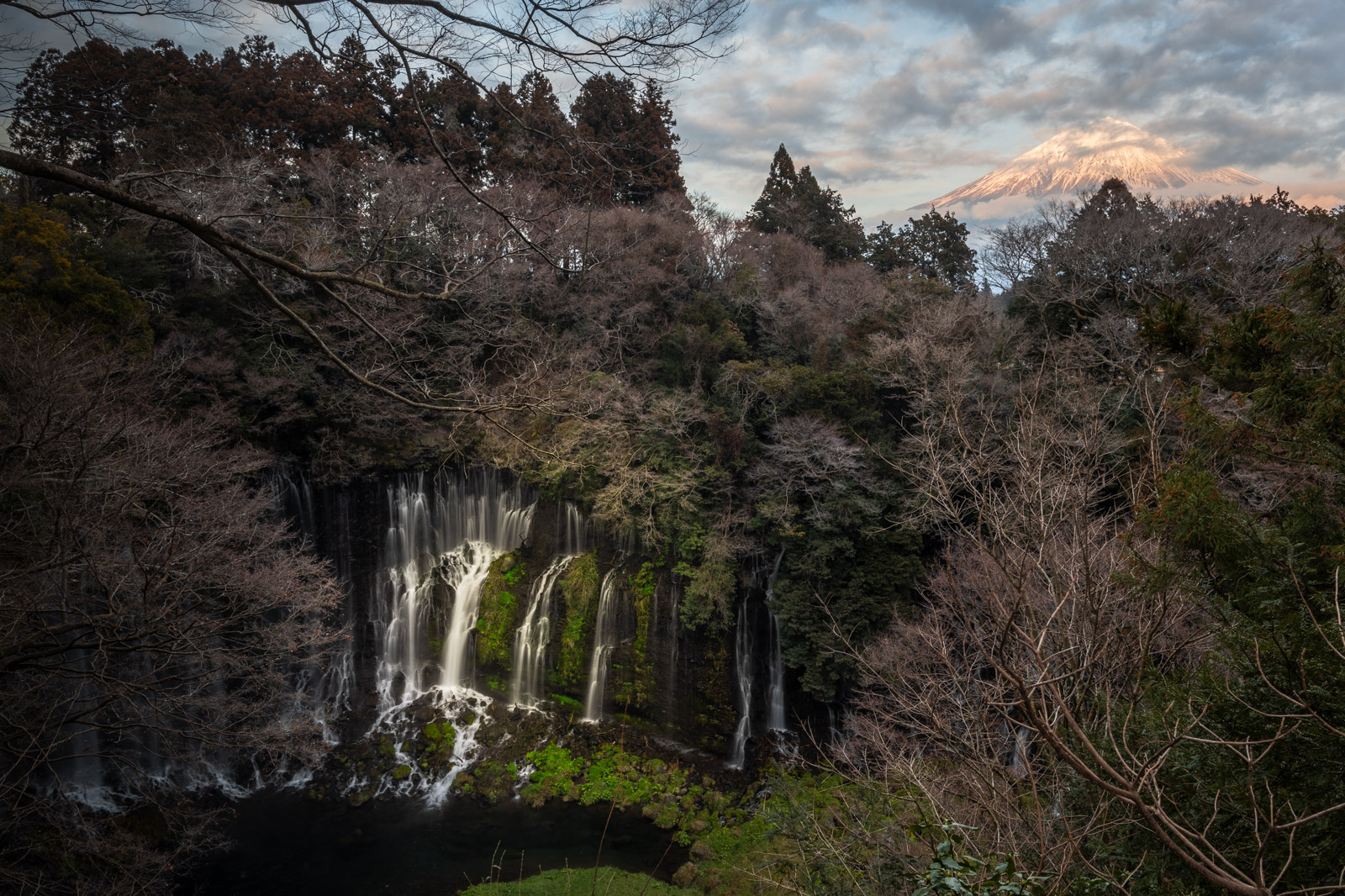
Afterwards we drove through tea field on rural roads and stopped at Obuchi Sasaba Tea Plantation. A very peaceful place where we walked through the tea plantations while enjoying the view of the mountain. Our next stop, right before sunset, was Shiraito Falls. This was one of the highlights of the entire trip. A wide waterfall with Mount Fuji visible behind it.
The final stop of the day was Lake Tanuki, but by then clouds had completely covered the mountain again and it started to get dark already. The lake itself was still peaceful, we went for a small stroll along the lake and saw some locals doing the same, except that they were picking up all the trash they encountered during their walk (gotta love Japan!).
Day 6: Returning to Tokyo (Ueno, Shiba Park & izakaya nights)
We originally planned to stay longer, but heavy rain and full cloud cover made Mount Fuji invisible that morning.
We decided to drive back to Tokyo early. On the way we stopped at ZEIT Bakery Cafe near Lake Yamanakako for breakfast (no camanbert this time).
Back in Tokyo we checked into Grand Prince Hotel Shin Takanawa, located near Shinagawa Station where we handed in our car.
Shiba Park & Ueno Park cherry blossoms
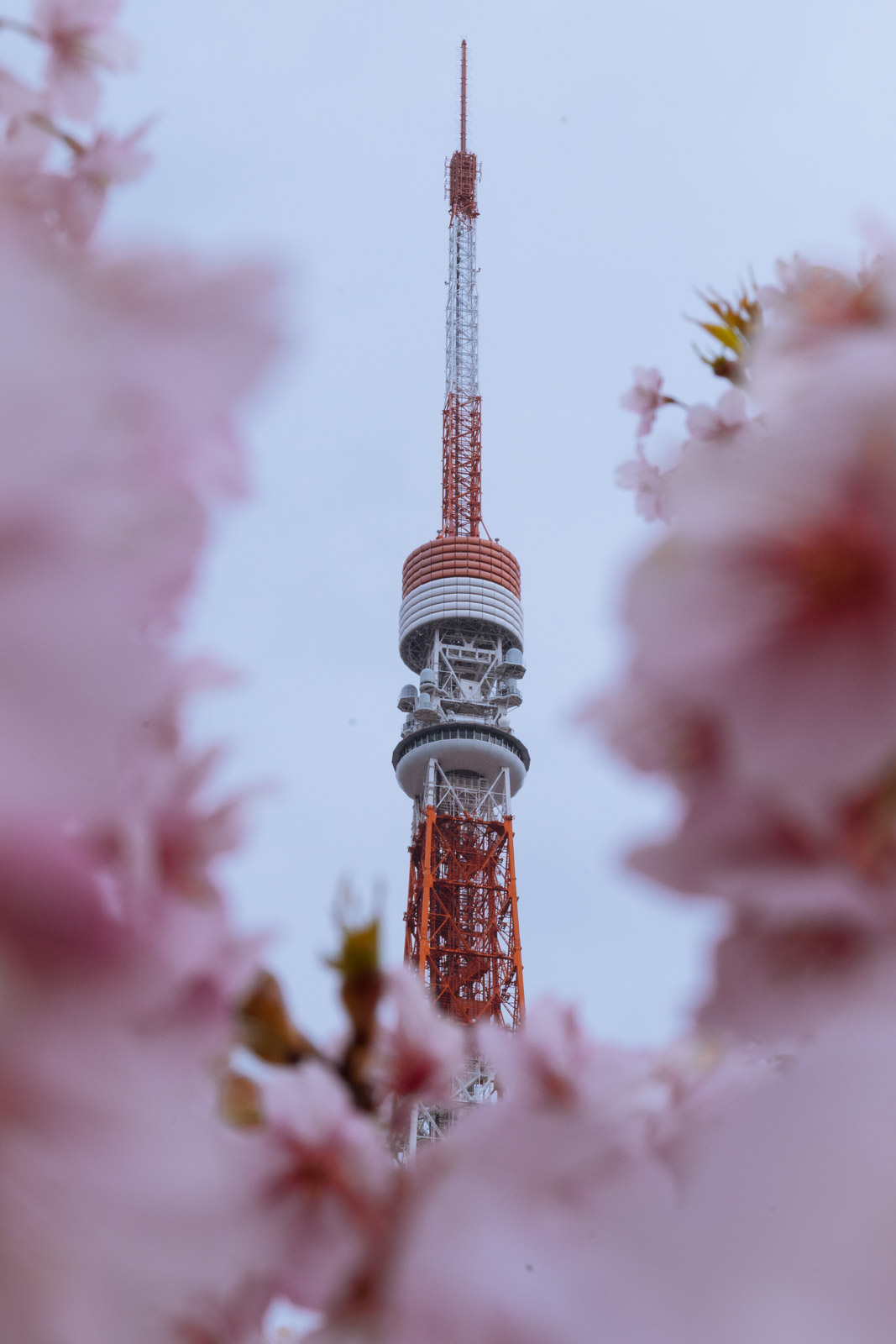
That afternoon we went to Shiba Park near Tokyo Tower, hoping for cherry blossoms. We did actually see many cherry blossoms in full bloom, right in front of the Zojo-Ji temple. Unfortunately the weather stayed grey and hazy.
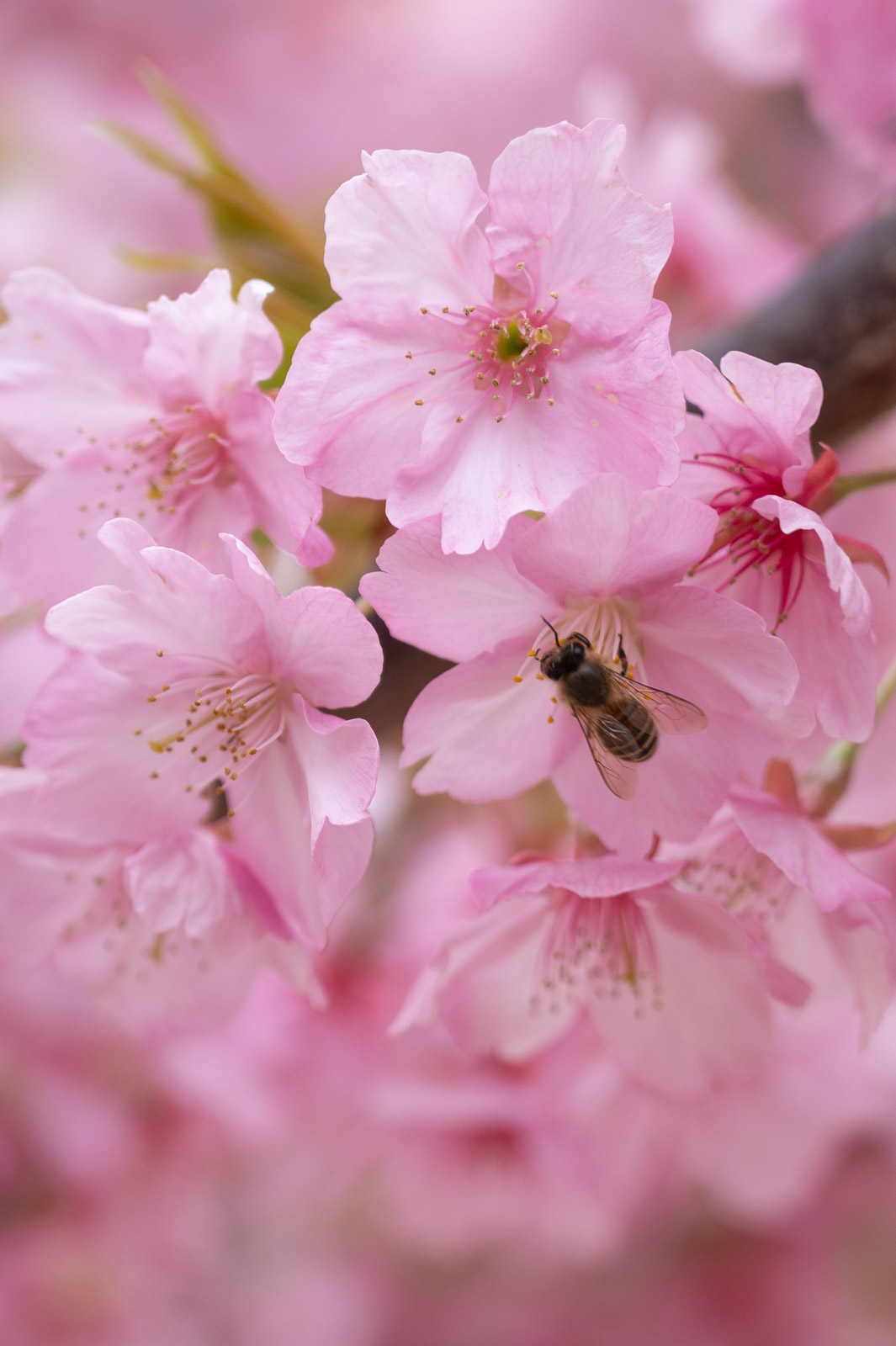
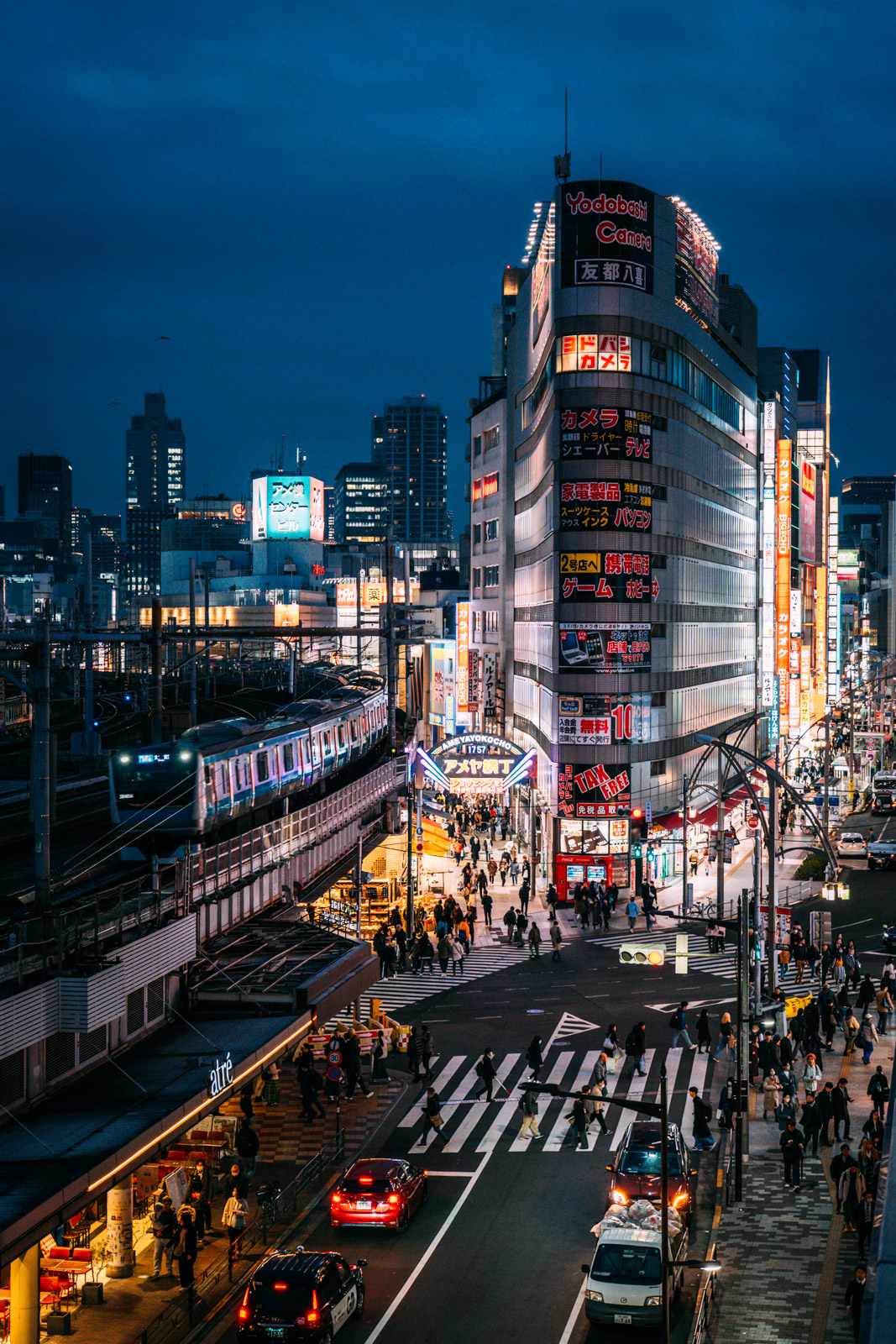
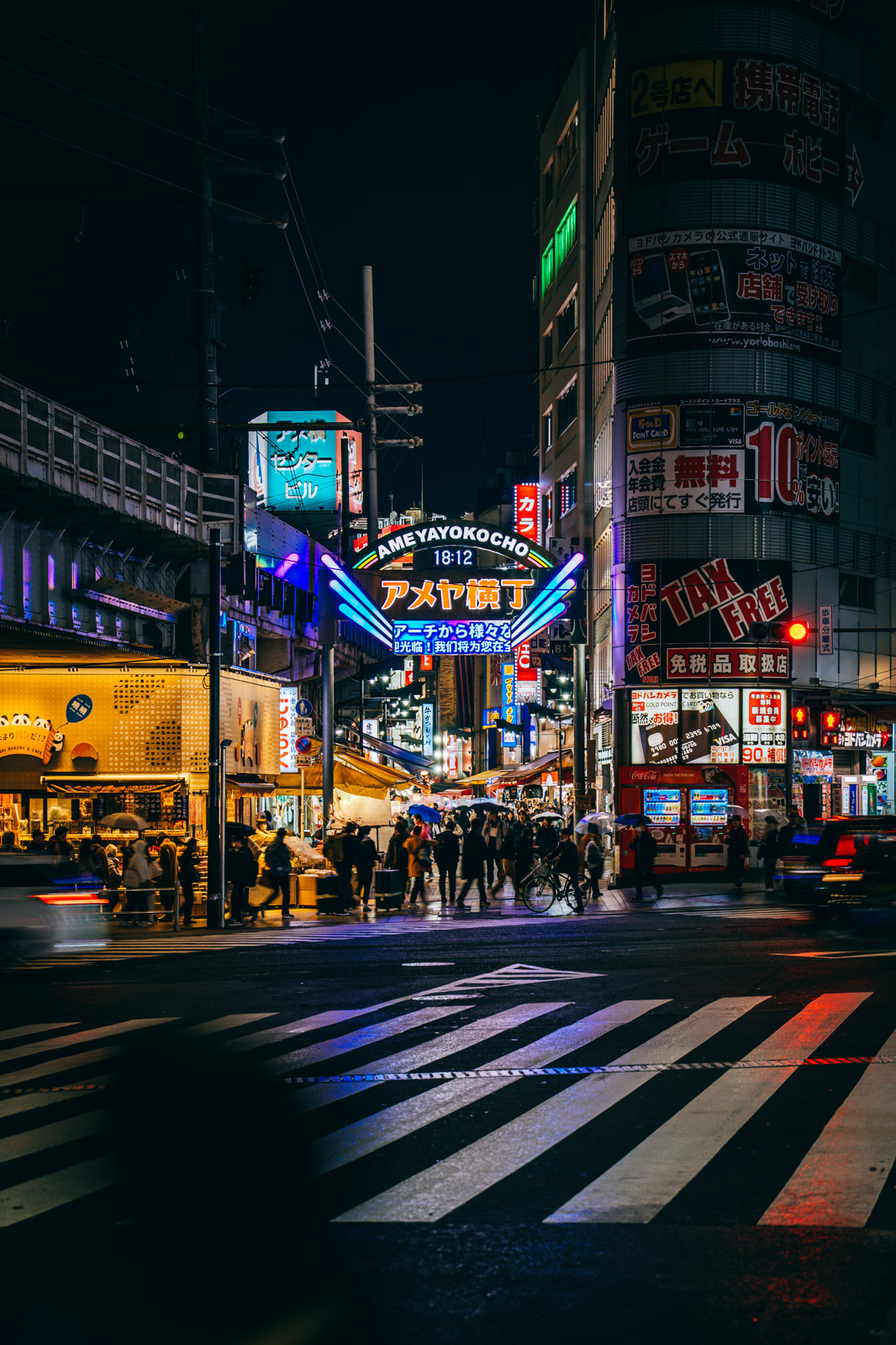
Later we explored Ueno, where we found one of the most interesting viewpoints over the train tracks and Ameyoko market. We also explored Ueno Park, behind the station. While the cherry blossom in the main park area was not in bloom yet, we walked further towards Shinobazu Pond and suddenly found clusters of dark pink and almost purple blossoms that were completely open. This turned into an unexpected beaitiful photography spot with the temple in the background!
Ueno Station blue hour viewpoints
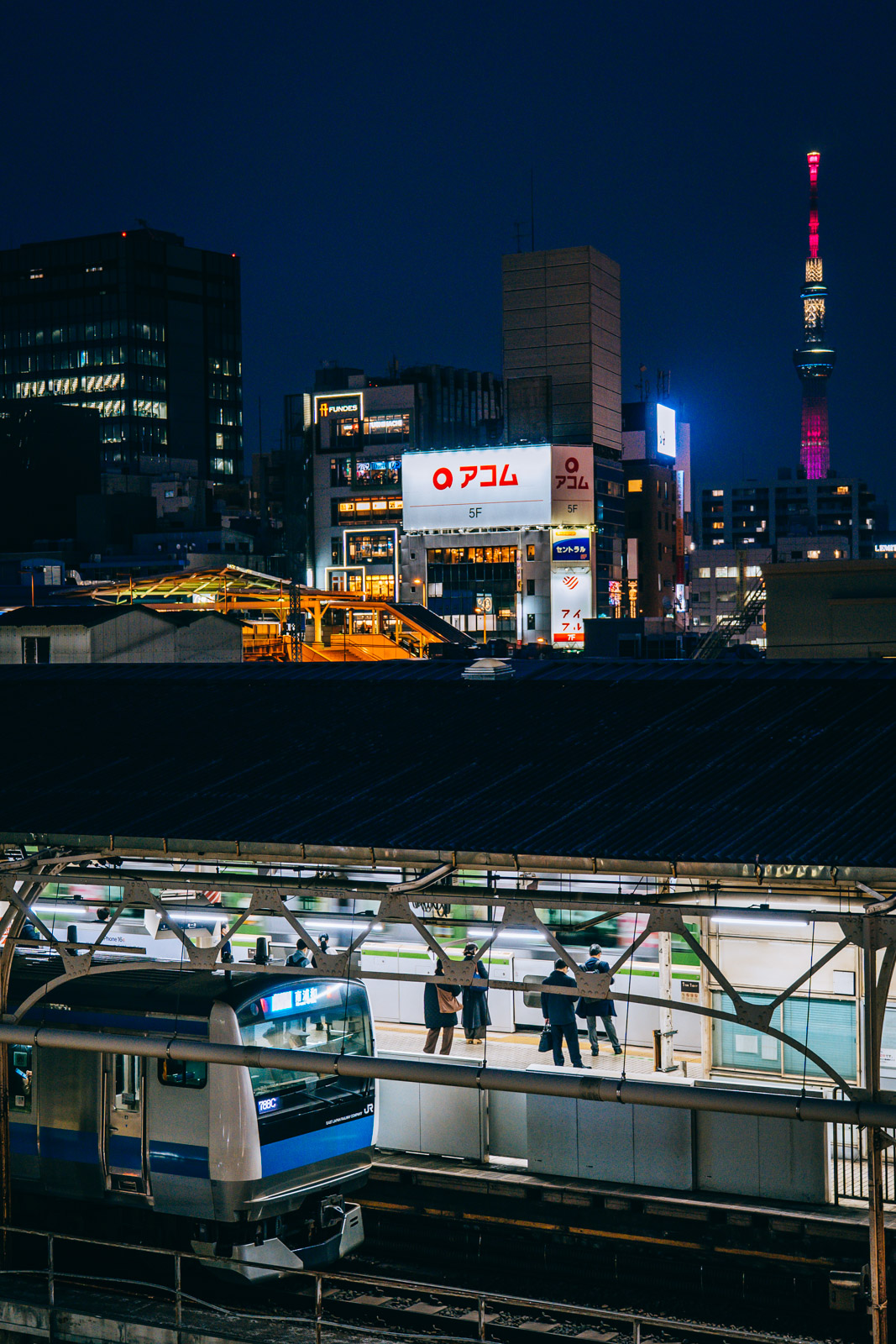
As the blue hour started we made our way back to Ueno Station to take photos from the famous viewpoint above the station. From there you can see the crossings and the entrance of Ameyoko market, with trains constantly moving through the frame. We spent some time there just shooting and waiting for the right moments.
After that we walked into Ueno Loft nearby. Loft is one of those places in Japan that is hard to describe properly. It is basically a mix of lifestyle store, design shop, stationery heaven and home goods store all in one. You go in thinking you’ll just have a quick look and somehow end up walking through every floor because everything is either useful, clever or just nicely designed.
At that point we were quite tired already so we sat down to figure out dinner. The most interesting thing we had saved was an izakaya called Kappore, something David had found on Instagram. It was located in a quiet residential alley just behind Shibuya station, so we quickly hopped on the metro.
Shibuya dinner & cocktails
Arriving there it was busier than expected and we had to wait a bit outside since we didn’t have a reservation. Inside we were the only foreign customers. The staff still took time to explain everything and recommend dishes, which made it feel very welcoming without being touristy at all.
The food ended up being one of the highlights of the trip. It felt like one of those places you would probably never find again unless someone showed it to you. I would describe this place as a “Gourmet Izakaya”, if that’s a thing. It felt way more elevated and posh than your regular neighborhood Izakaya, and we loved it.
On the way back, very close to the izakaya, we found Flamingo’s Cocktail Parlor. A small cocktail bar with a lot of character. The cocktails were genuinely interesting and the staff all had tattoos, which stood out in Japan where that still carries a different cultural meaning.
The owner was there and talked a bit about the bar and the concept behind it. We also tried Nikka Coffey Gin there, which we liked so much that we ended up buying a bottle the next day to bring back to Dubai.
Day 7: Rainy Tokyo cafés, Akihabara & Ginza exploring
Today was another very cloudy day, starting with a light drizzle. We started the morning at Single O Ryogoku Roastworks/Cafe for coffee and breakfast. The area has open views towards Tokyo Skytree, you can tell this would be a great sunrise or sunset spot on a clear day.
Akihabara wandering & electronics streets
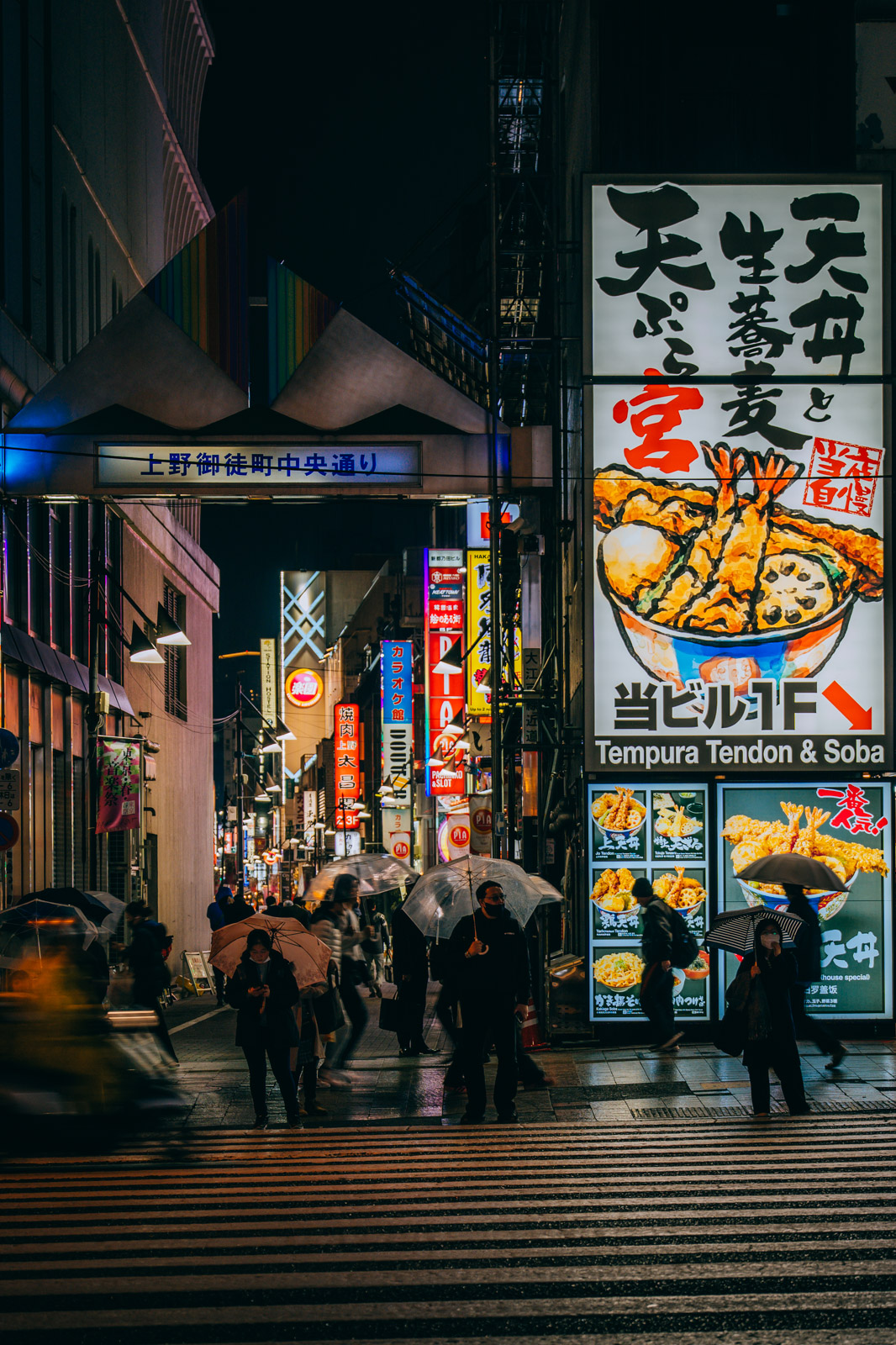
Afterwards we went to Akihabara to wander around the electronics district. We just walked around the different streets, small side alleys and shops. Electronics, anime stores, random gadget shops, arcades, everything mixed together.
We also went into “General Store Railyard” inside Akihabara Station. A small shop with random travel and train related items. We bought a keychain that plays the Tokyo metro arrival sound when you press it.
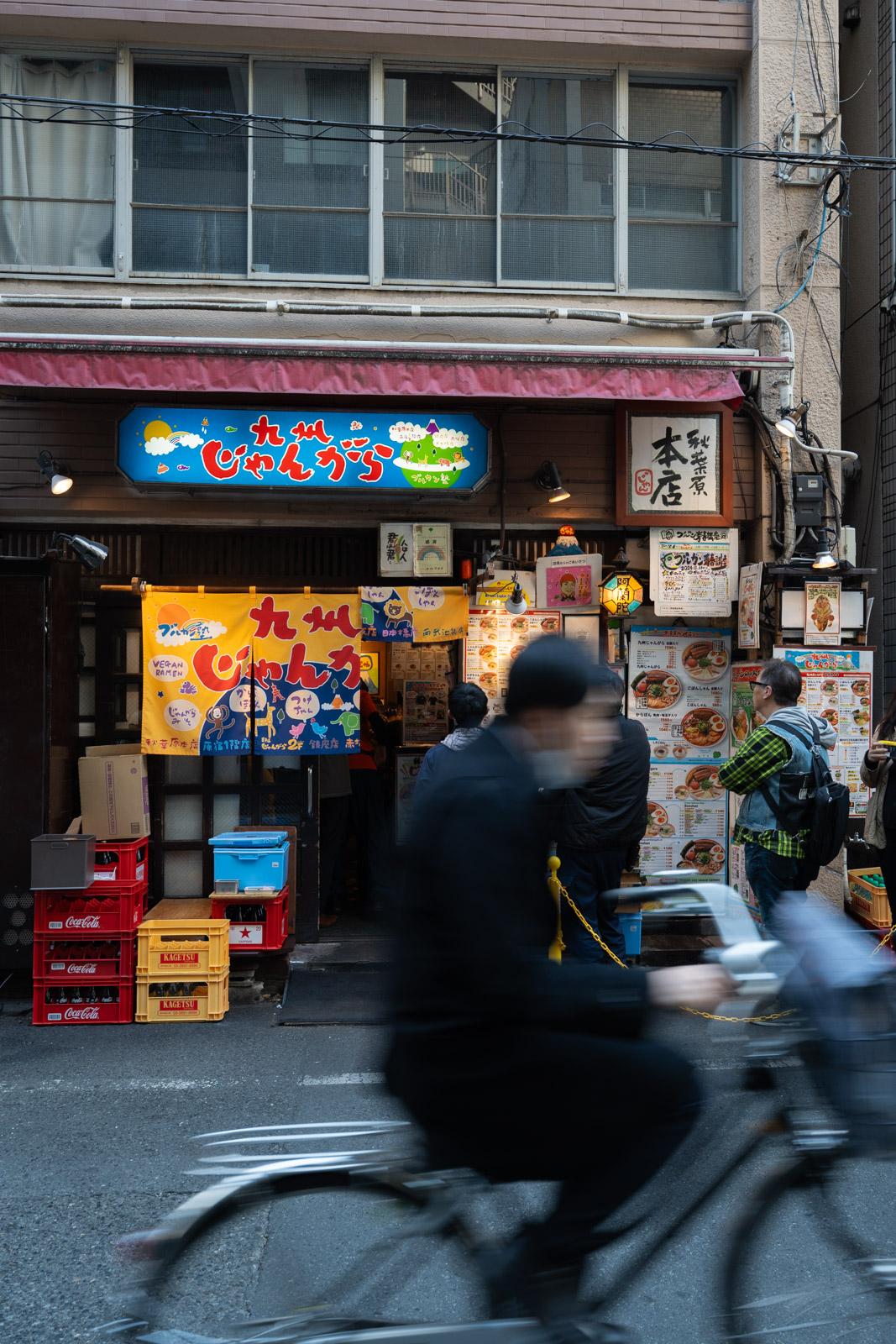
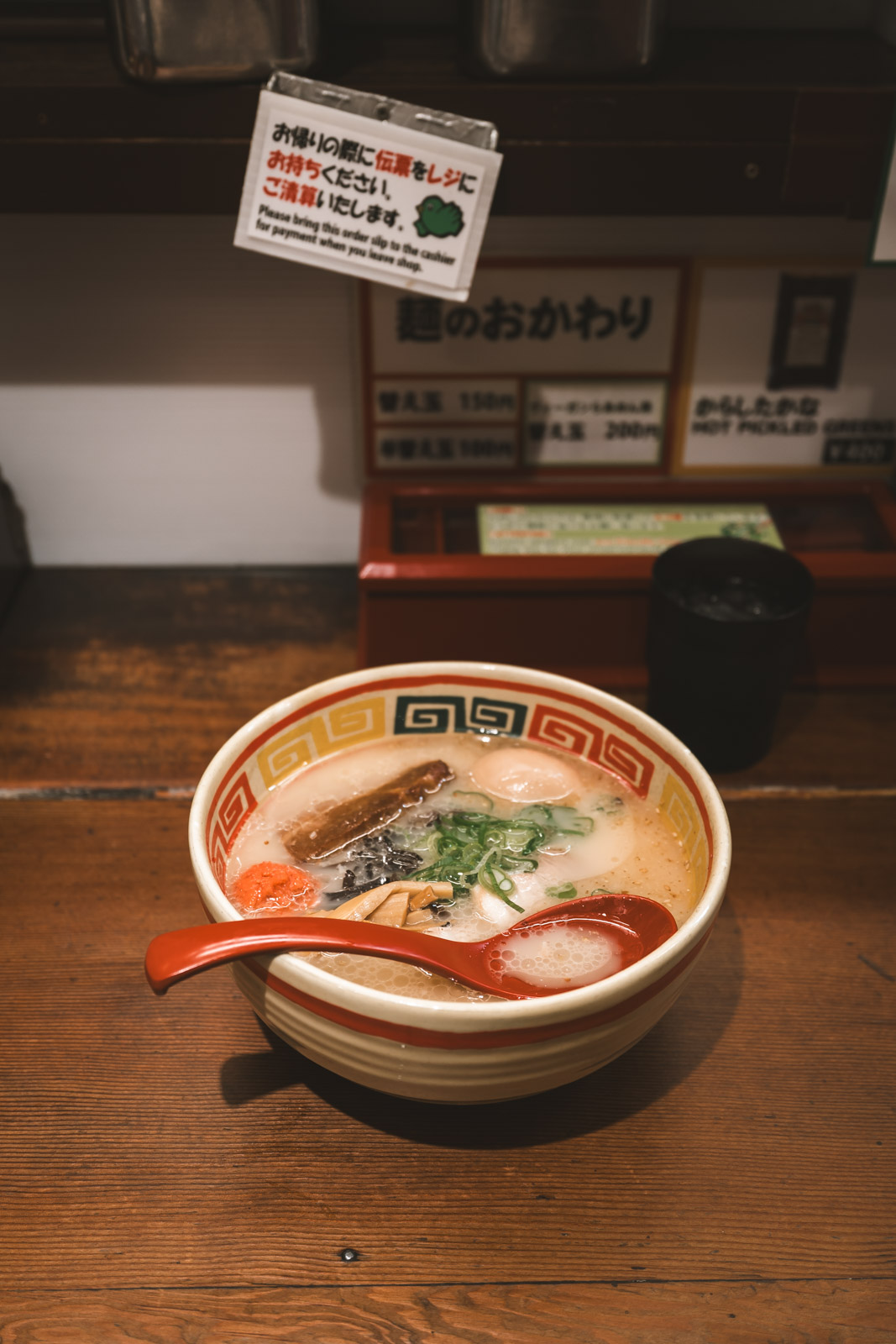
Lunch was at Kyushu Jangara Akihabara, a small ramen place we really liked. Very tight space, especially with camera bags, but the ramen is really good and comes out fast.
After lunch we walked to the bridge in front of Ochanomizu Station, known for the view of multiple train lines crossing at different levels. It is also a location from the anime Suzume. We arrived just as it started raining heavily, so we could not stay long and had to move on quickly.
Otonari Coffee & Kanda book district
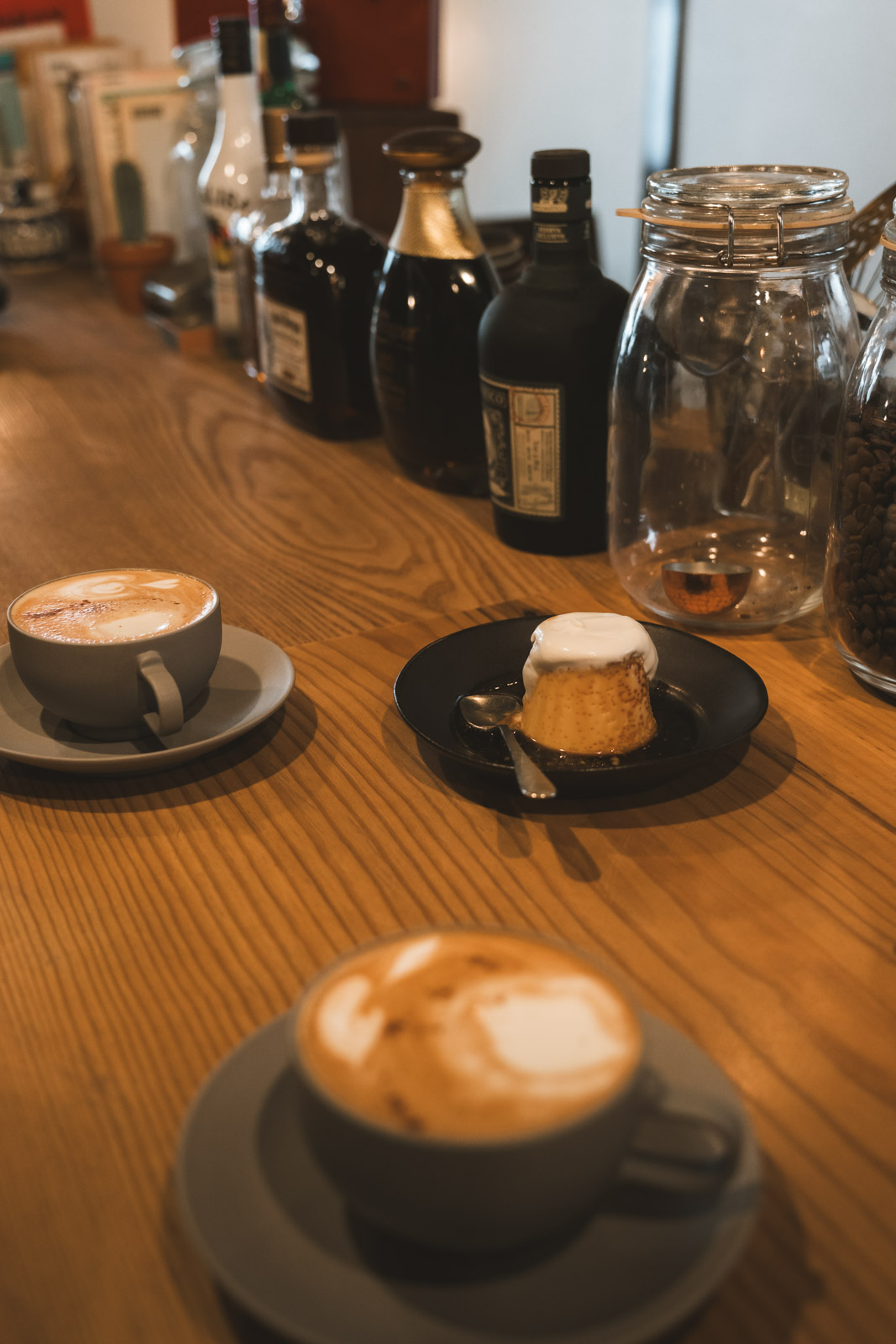
We ended up at Otonari Coffee, hidden above a laundromat. The Google reviews are bad, which is exactly why it stood out. The owner actually tells people to leave the lowest rating possible, as a statement against how online reviews work. It is a small coffee shop in Kanda, an area with a lot of second hand book shops and record stores. Good area to just walk around a bit, even in the rain.
Ginza shopping & sando break
As the weather kept getting worse we used the rest of the day for indoor stops. We went to Ginza for Uniqlo, Muji and Loft, just to finish a few things.
Later we went to Grill Bon (also located in Ginza) for sando’s and beer at the counter. Simple, but really good. Before heading back we picked up the same gin we had tried the night before at Flamingo’s Cocktail Parlor, Nikka Coffey Gin.
Local izakaya night in Shinagawa
Dinner was at a small izakaya called Danta near our hotel in Shinagawa. No English menu, shoes off, sitting on the floor, and no other foreigners. We ordered with Google Translate and just had a mix of comfort dishes before going back to the hotel.
Day 8: Cherry blossom finale in Tokyo
Skytree cherry blossom morning
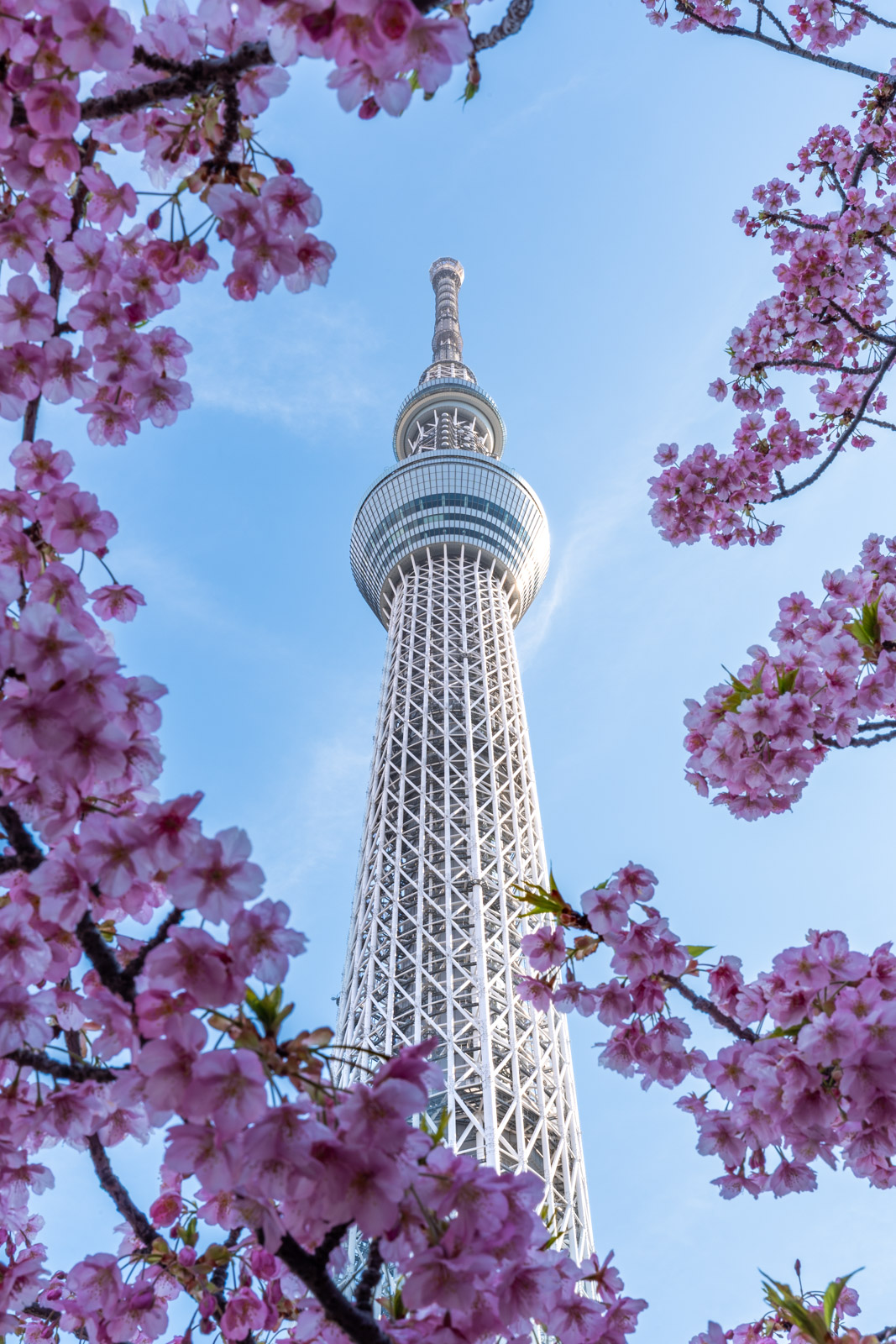
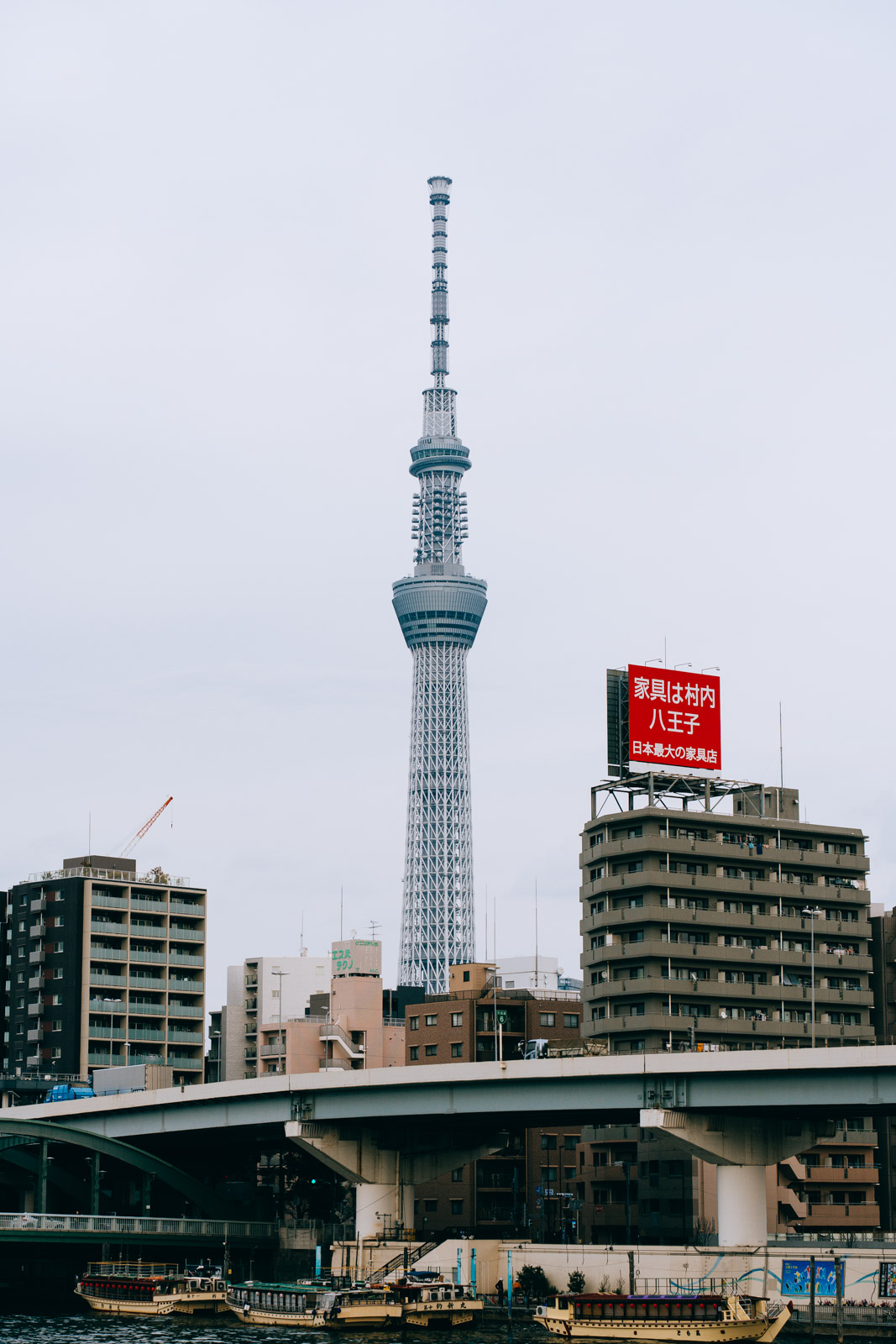
Our last day in Tokyo we woke up with clear blue sunny skies. We made our way to the Tokyo Skytree where we spent a lot of time photographing the cherry blossom with the Skytree in the background. The trees were in full bloom and the combination with the blue sky made it a very different feeling compared to the rest of the trip. It was one of those perfect mornings where everything just works.
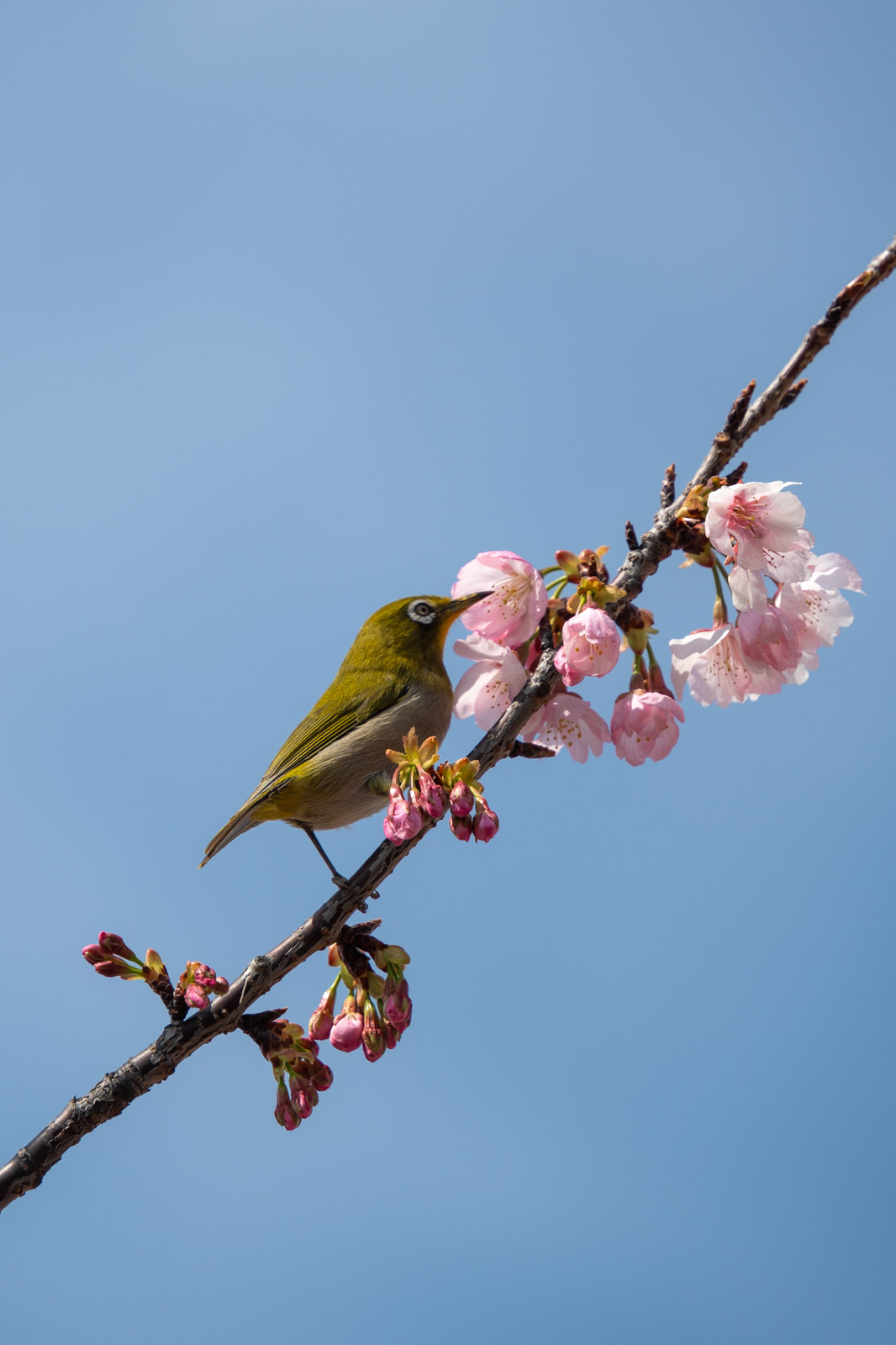
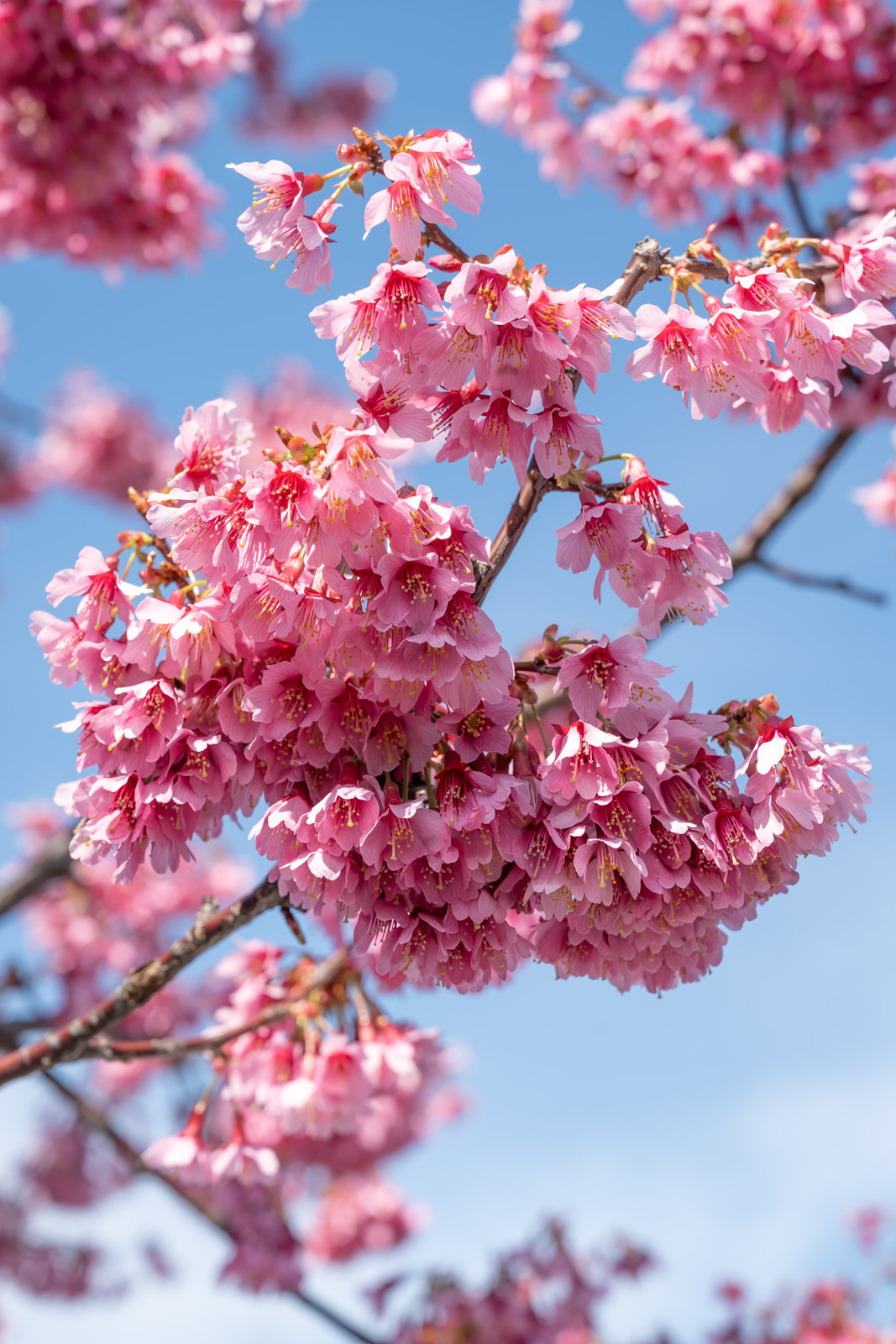
We walked to the nearby Sumida Park afterwards, which was also fully in bloom. Lots of cherry blossom, people sitting under the trees, and birds moving through the branches. We stayed there for a while just walking around and taking photos in different sections of the park.
On the way we also stopped at a few gachapons, which ended up taking more time than expected, before heading to breakfast.
Asakusa food stops & Kuramae Shrine
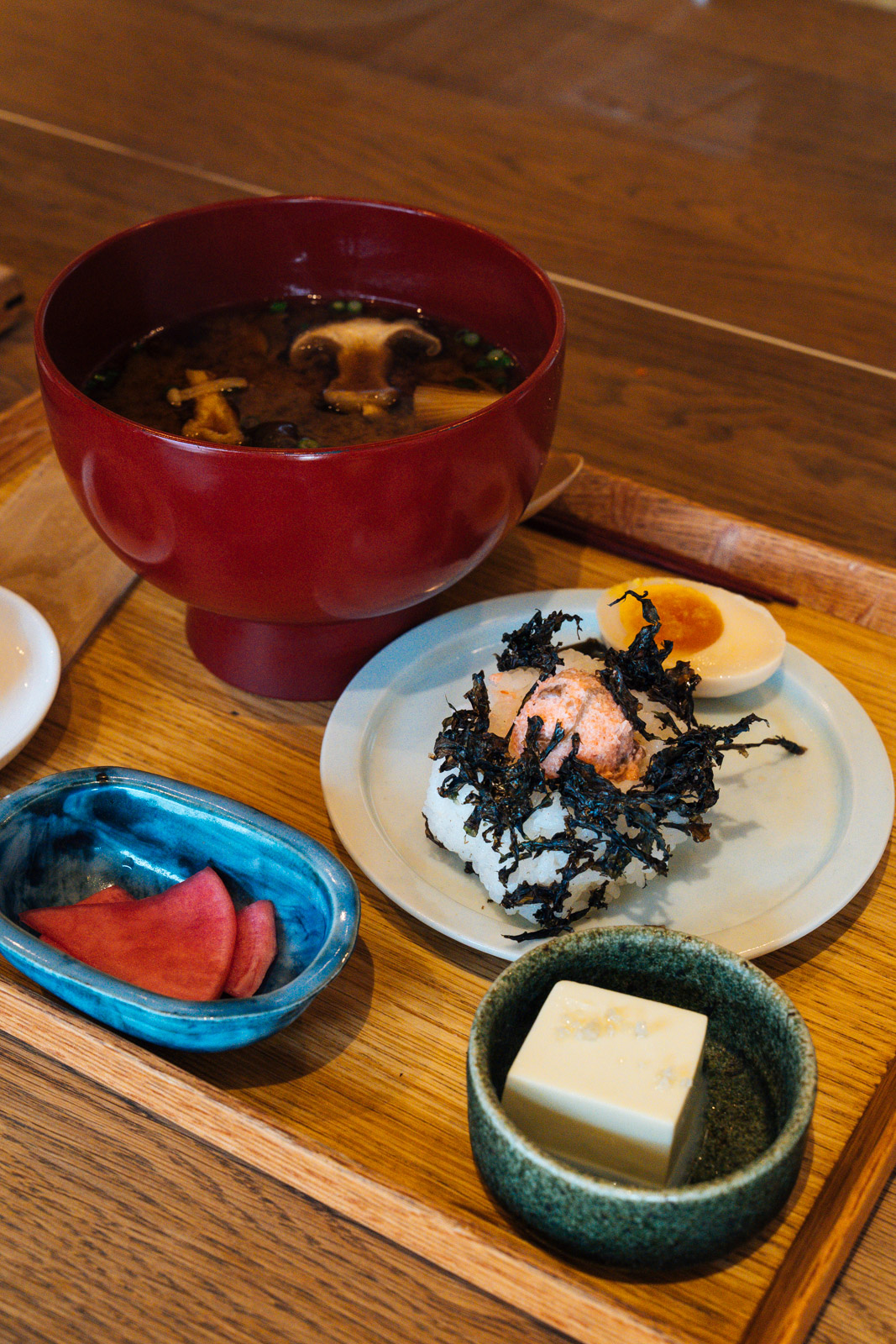
Breakfast was at Misojyu, a small place known for its miso based breakfast sets and freshly made onigiri. We arrived just in time before the queue started forming outside.
After breakfast we kept walking through the area, passing more smaller parks with cherry blossom still in full bloom. We ended up at Asakusa Taiyaki Guraku where we had freshly made taiyaki. Taiyaki is a Japanese fish-shaped pastry, usually filled with sweet fillings like red bean paste, custard, chocolate, or matcha cream, and cooked until the outside is crisp and warm. They also offer a taiyaki making experience, which looked interesting but we just went for the regular ones.
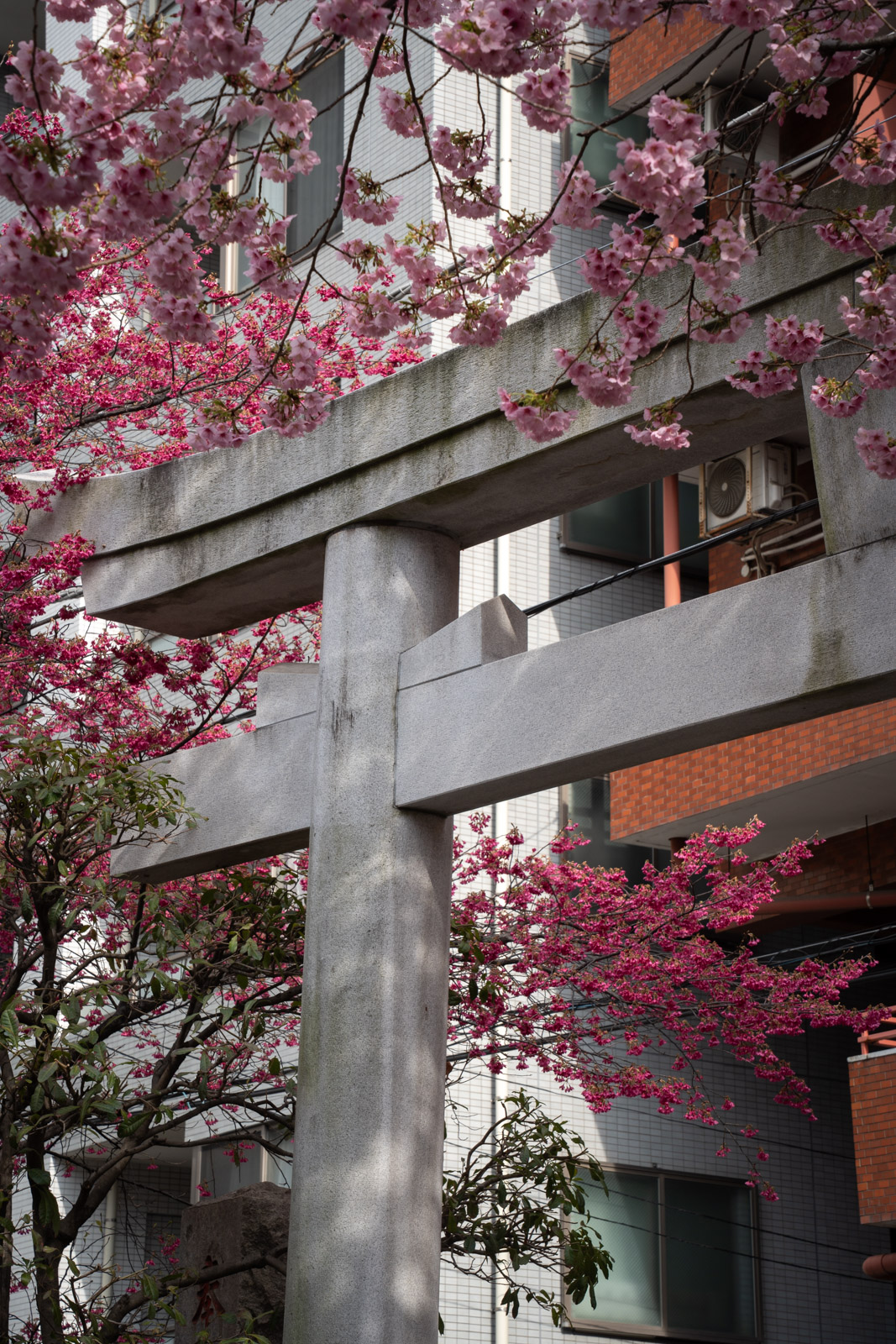
From there we walked to Kuramae Shrine. The whole area around the shrine was also full of cherry blossom, so we ended up stopping again for photos there. It was a bit unexpected how much we ended up enjoying the cherry blossom in general, especially since we originally thought it would not be a big focus of the trip. We planned the timing to avoid peak season crowds, and did not expect to catch this much bloom, but it turned out differently.
Final matcha by the river
We ended the day and the trip with one last matcha at Hatoya Asakusa by the Sumida River. It was a calm moment sitting there before heading back. The weather had already started to shift again and by sunset it was cloudy, so there was no real sunset in the end.
After picking up our luggage we made our way to Haneda Airport for our flight back to Dubai. A quick stop at duty free for some last minute gin and Royce chocolate, and that was it.
Final thoughts
What stayed with us most from this trip wasn’t a single landmark or photo spot, but how quickly everything changed. In Tokyo, entire days can shift from structured to completely unplanned. Around Mount Fuji, the mountain can disappear and reappear within hours.
That flexibility shaped the way we experienced both places. We stopped chasing perfect conditions and just moved with what was happening in front of us.
One of the biggest surprises came at the very end of the trip: the cherry blossom. We had honestly not planned for it at all. We thought we were too early in the season and specifically timed the trip to avoid peak crowds. But somehow, parts of Tokyo were already in full bloom. It completely changed the last days of the trip in a way we did not expect.
For anyone planning a similar trip, a few things made a big difference for us:
- Having flexibility in your schedule, especially around Mount Fuji
- Staying close to the areas you want to photograph instead of commuting long distances
- Keeping space in the day for unplanned stops (some of the best photos came from those moments)
- And not underestimating seasonal and weather changes
Japan has a way of rewarding curiosity. You just need to keep walking.
Where we stayed
Planning a trip to Tokyo & Mount Fuji?
We’ve put together a few helpful resources based on this trip that might help you plan your own itinerary or photography route through Japan.
- Tokyo Photography Guide: Free Photo Spots, Trains & Food Stops in the City
- A Week in Tokyo & Mount Fuji: Photography, Food & Travel Itinerary Through Japan
- Mount Fuji Photography Spots: 2-Day Photo Road Trip Itinerary
- Guide to Buying Second-Hand Camera Gear in Tokyo
- Best Tokyo Tower Photography Spots & Instagram Locations