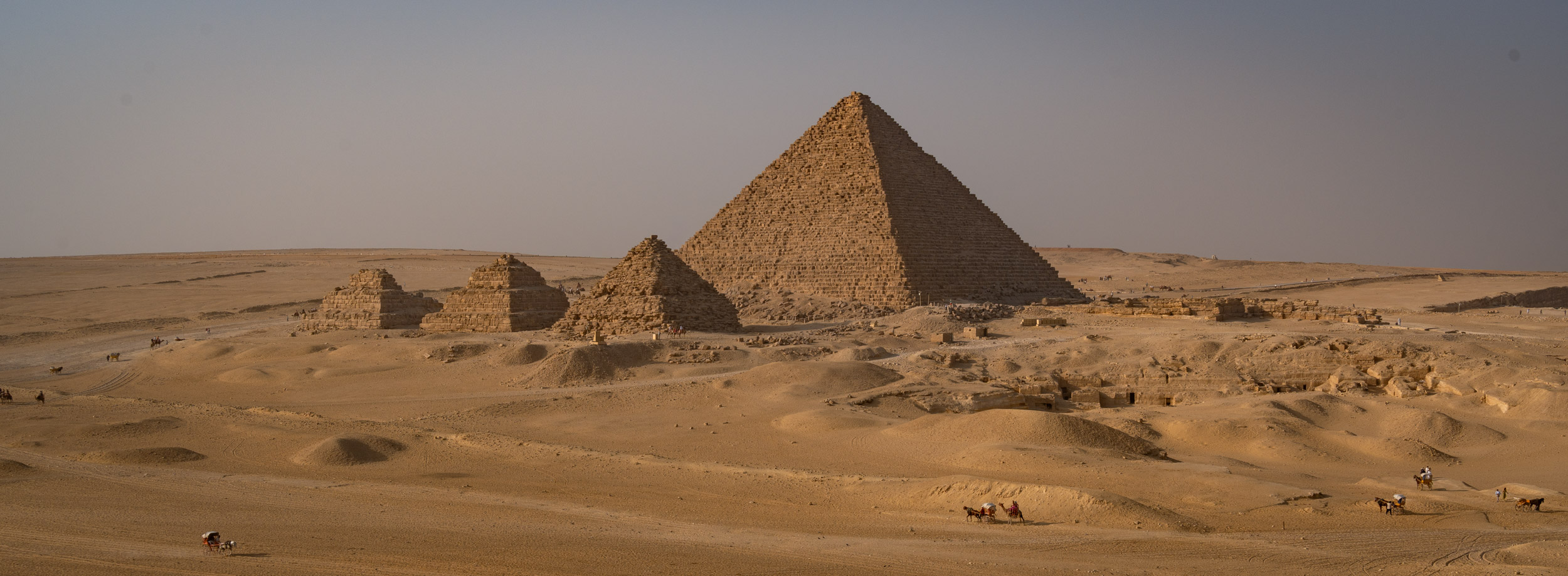
After sailing the Nile, we flew to Cairo for the final part of our Egypt trip. Luxor felt like an open-air museum, but Cairo? Pure energy, chaotic, loud, and very much alive.
Our mission here was simple: see the pyramids, visit the new museum and getting lost around Old Cairo and that’s exactly what we did.
If you’re planning a 2 days in Cairo itinerary, this is exactly how we spent our time in the city.
2 Days in Cairo Itinerary: What to See and Do
Day 1 — Historic Cairo Walking Tour
Arrival in Cairo
From Cairo Airport to our hotel in Zamalek
After breakfast in the airport lounge in Aswan (which consisted out of no more than 4 tables only!), we flew to Cairo. Arrival at Cairo airport can be very chaotic. After reading quite a few horror stories, we decided to pre-book an airport transfer in advance, and honestly, this was one of the best decisions we made.
The arrival area is hectic, and having someone waiting for us made everything smooth and stress free. It’s also surprisingly affordable, especially compared to the hassle of negotiating a taxi after landing, when you just want to get to your hotel. We booked our airport transfer through Booking.com.
Pre-book your airport transfer in advance here.
After a smooth ride we arrived at the Novotel Cairo El Borg. Our room featured a panoramic view over the city and the Nile. We debated before whether it was worth staying near the Pyramids. Many guesthouses offer beautiful views, however we later discovered that the area and guest house quality isn’t the best. So unless your budget allows you to stay at the Marriott Mena House Oberoi, we do not recommend staying near the Pyramids.
Once we arrived and checked into our hotel, we headed straight out for a walking tour through the old town, where the streets were filled with energy, honking cars, street vendors, people and pure chaos. We had heard that Old Cairo can be chaotic and overwhelming.
Since we didn’t have much time in Cairo and wanted to actually understand the history behind what we were seeing, we decided to book a guided walking tour instead of exploring on our own. Looking back, this completely changed how we experienced Old Cairo.
We booked this walking tour in advance here.
Tip: Staying in downtown Cairo or near the Nile in Zamalek gives easy access to major sights like Al-Muizz Street and Khan el-Khalili.
Bab al-Futuh
We took a Careem to the starting point of our walking tour at Bab al-Futuh, one of the historic gates of old Cairo.
It almost felt like entering a medieval fortress rather than a city. Built in the 11th century during the Fatimid period, this gate once marked the northern entrance to the walled city of Cairo.
Our guide led us through the inside of the complex, explaining how the Egyptians defended themselves against intruders and showing us around, guaranteeing that we had exclusive access to this area.
Not sure how true that was, but one thing was certain: we were the only people inside the complex.
After some flights of stairs, we reached the top of the fortress which gave us a beautiful view over the Al-Hakim Mosque from above.
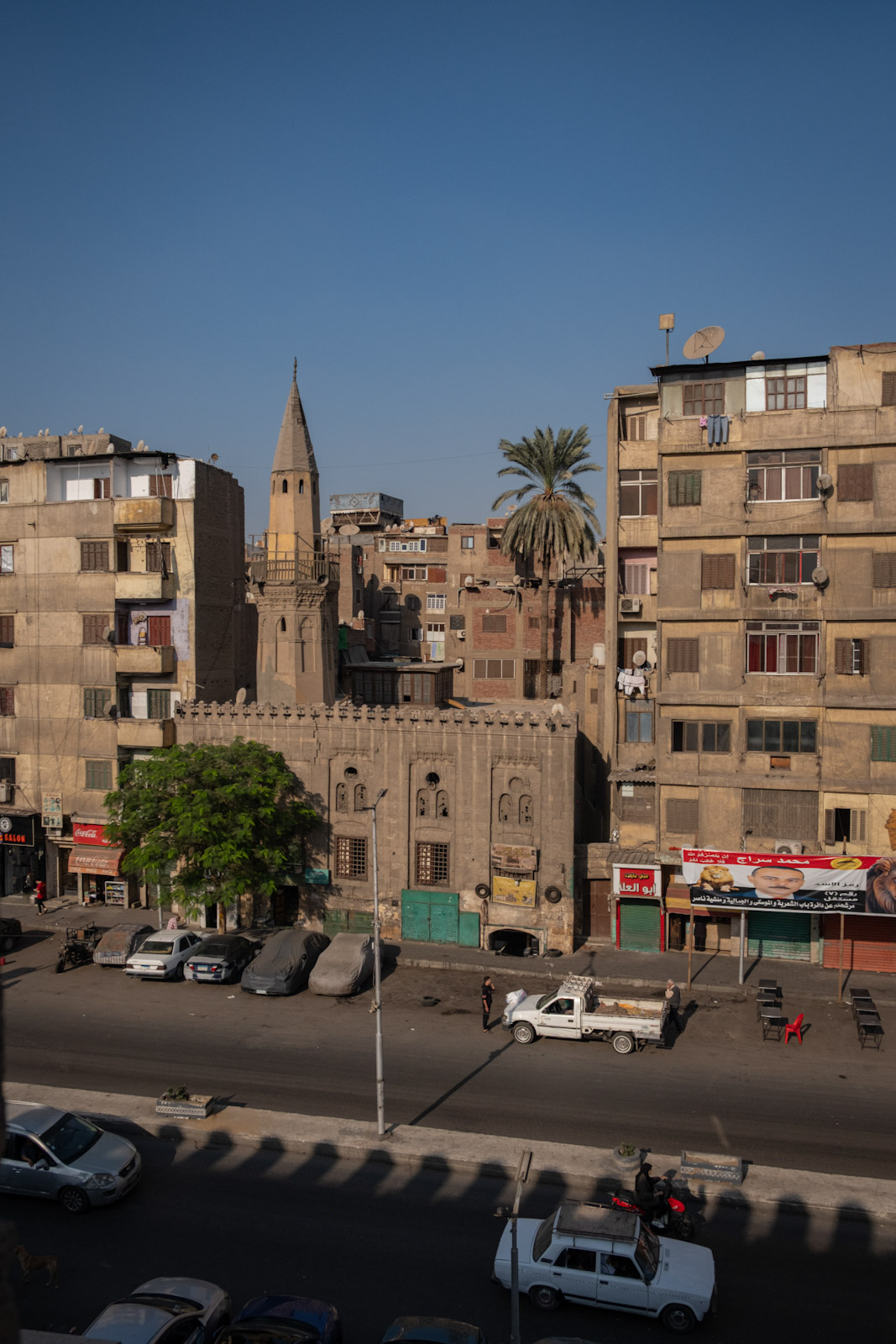
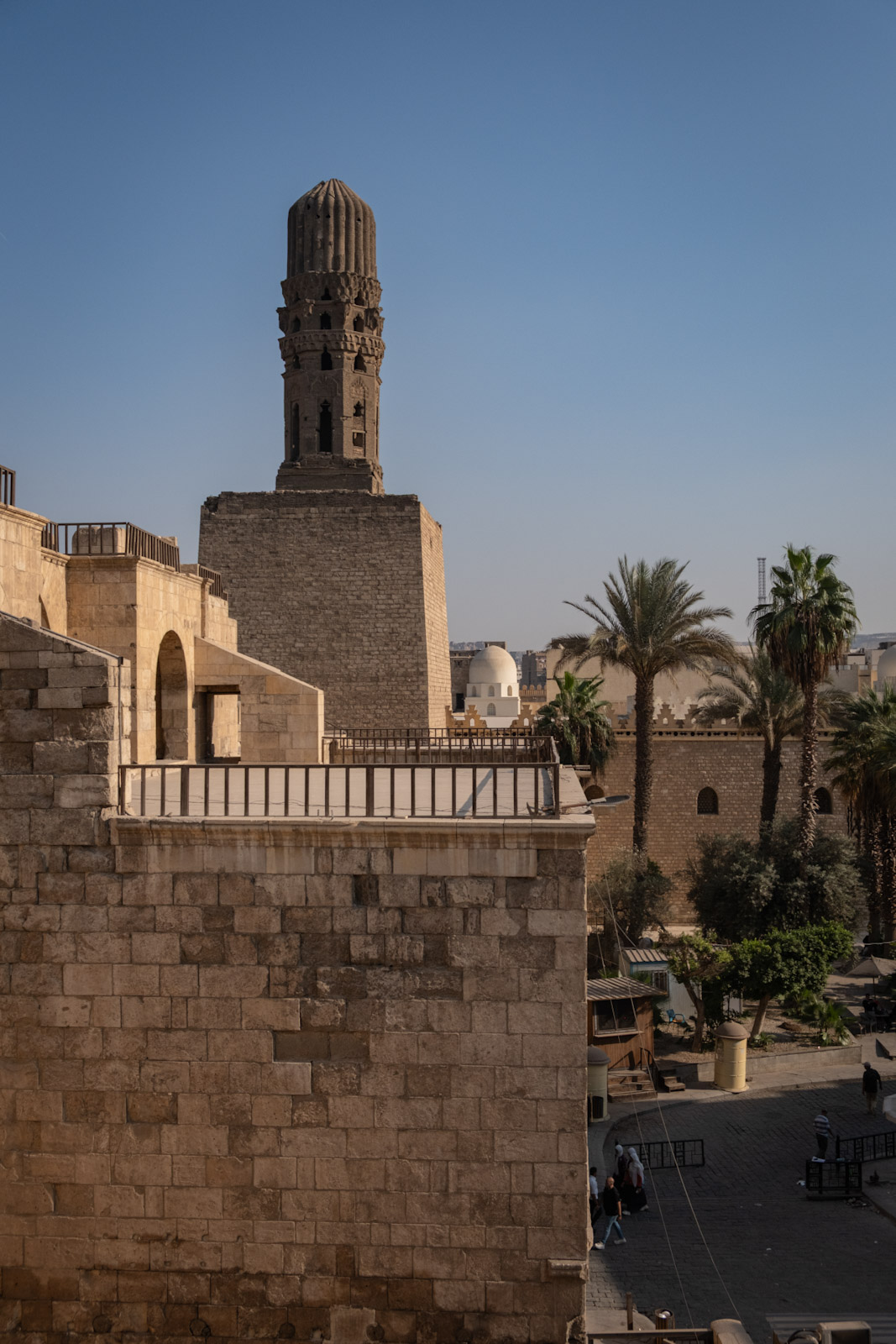
Al-Hakim Mosque
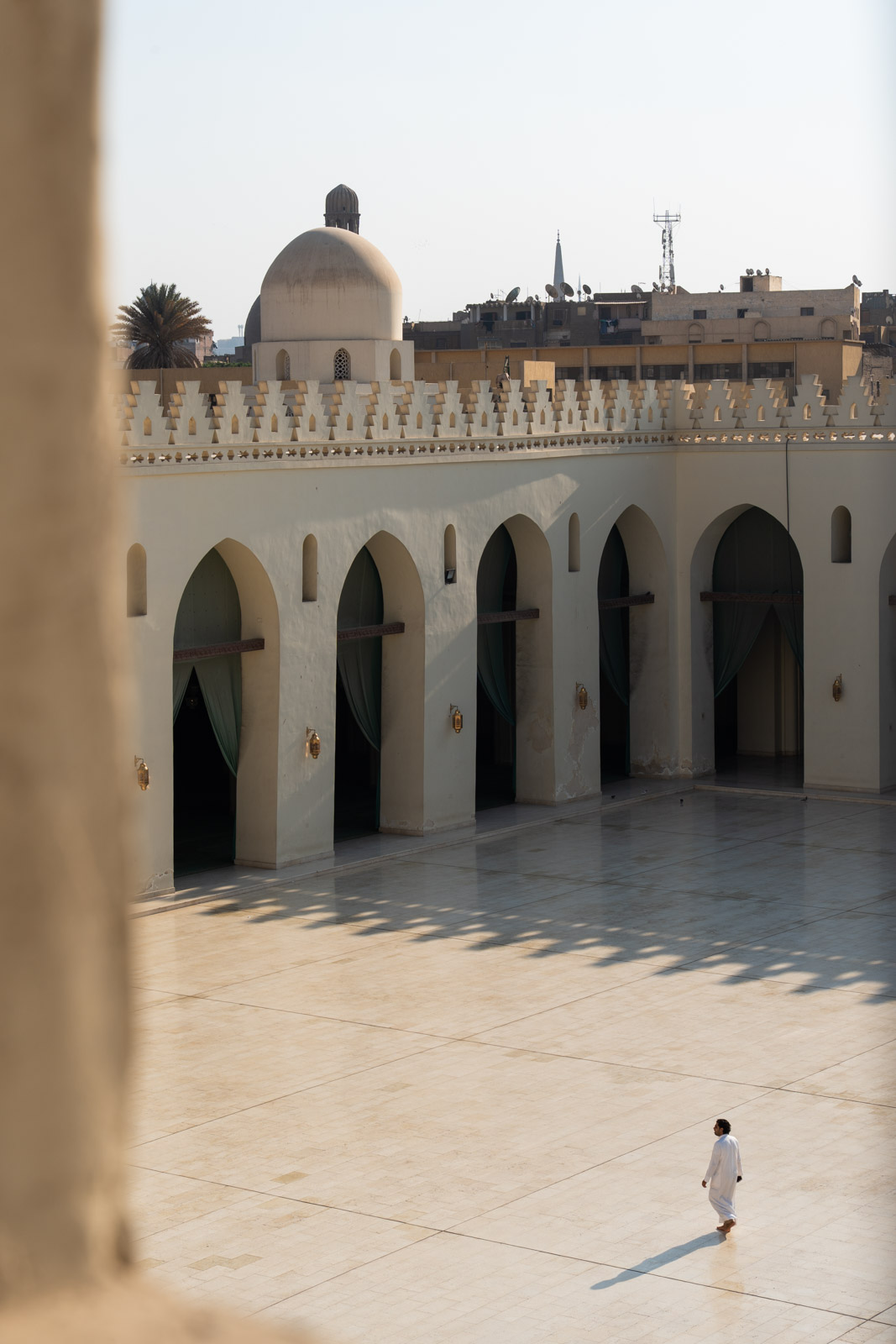
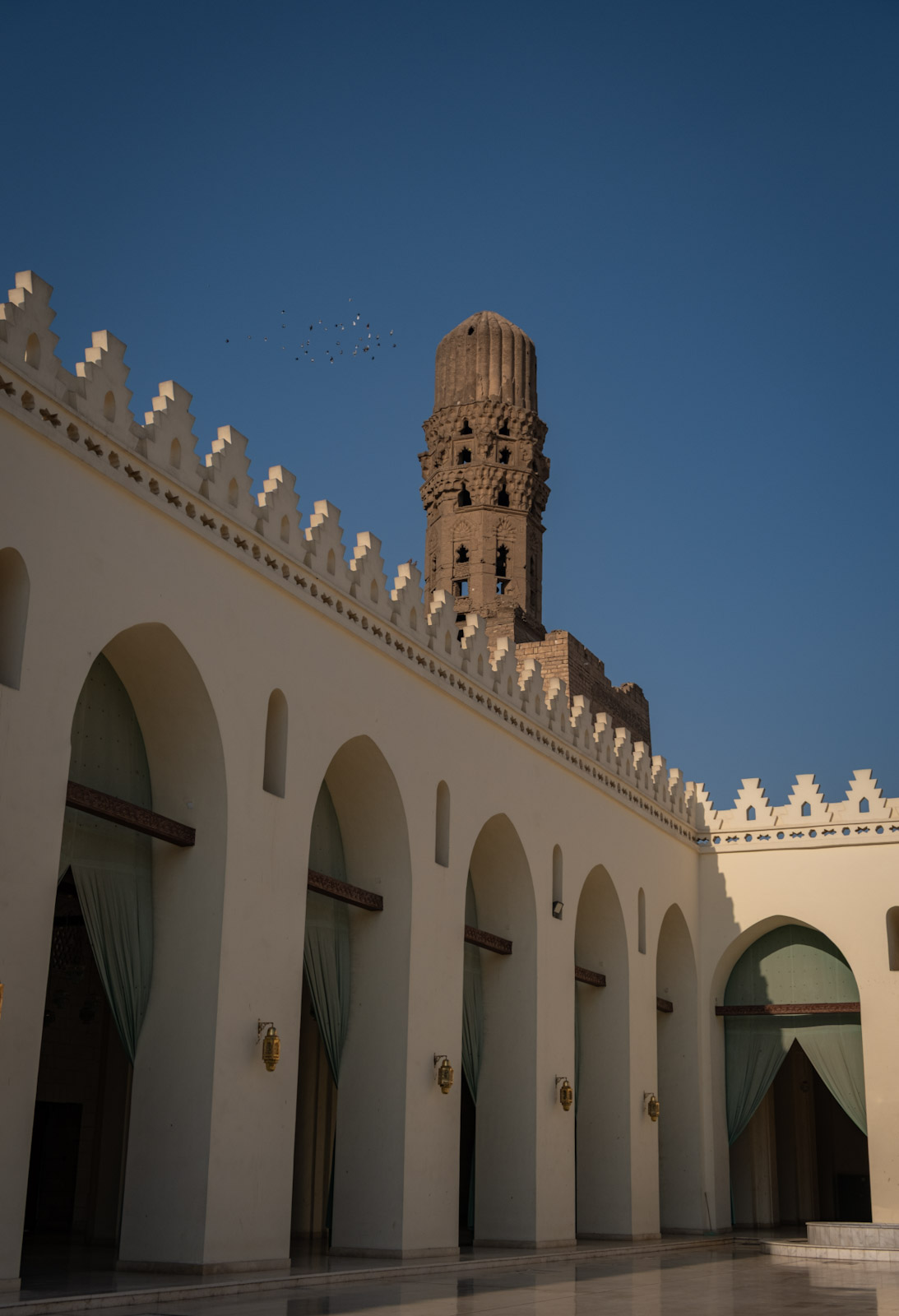
After enjoying this bird’s-eye view perspective, we made our way down and visited Al-Hakim Mosque.
Built more than a thousand years ago, this mosque is one of the oldest in the city. Walking through its large courtyard felt surprisingly calm compared to the busy streets outside.
While we were at the mosque, we sat down for a moment and listened to the call to prayer. Living in an Islamic country, this is nothing new to me, but it was my first time seeing the imam performing it live, singing the adhan, which made the whole experience feel even more special.
Al-Muizz Street
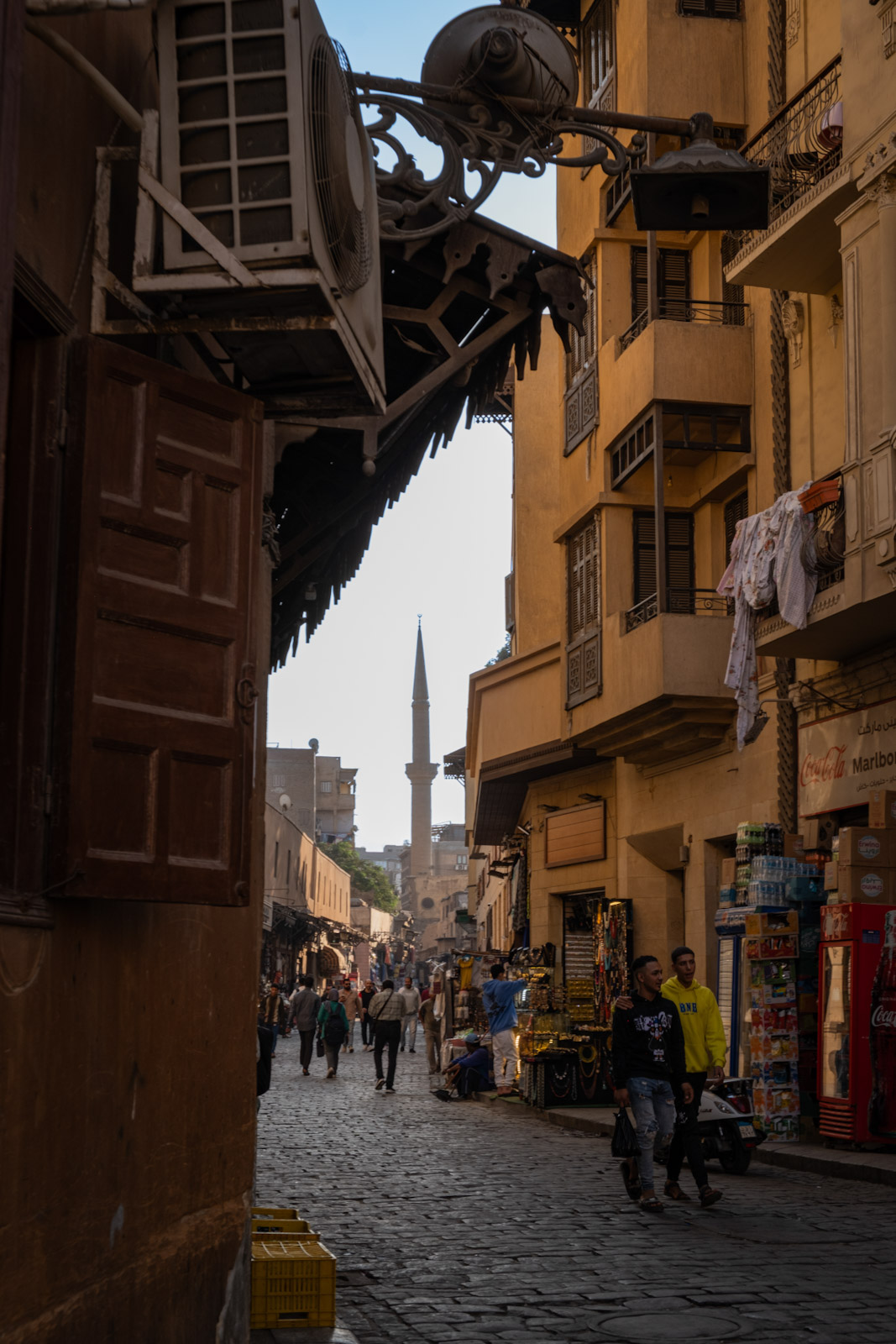
From there we continued along the historic Al-Muizz Street, often considered one of the oldest and most beautiful streets in Cairo. In just about 1 km, the street is home to around 50 historic mosques and Islamic monuments, alongside several ancient churches, making it a remarkable showcase of Cairo’s religious and architectural history.
As we walked, we passed several mosques and historical sites. The street was really lively, with lots of shops, restaurants and street vendors.
Our guide explained that these complexes were not just mosques, but multifunctional institutions that included schools, hospitals and mausoleums.
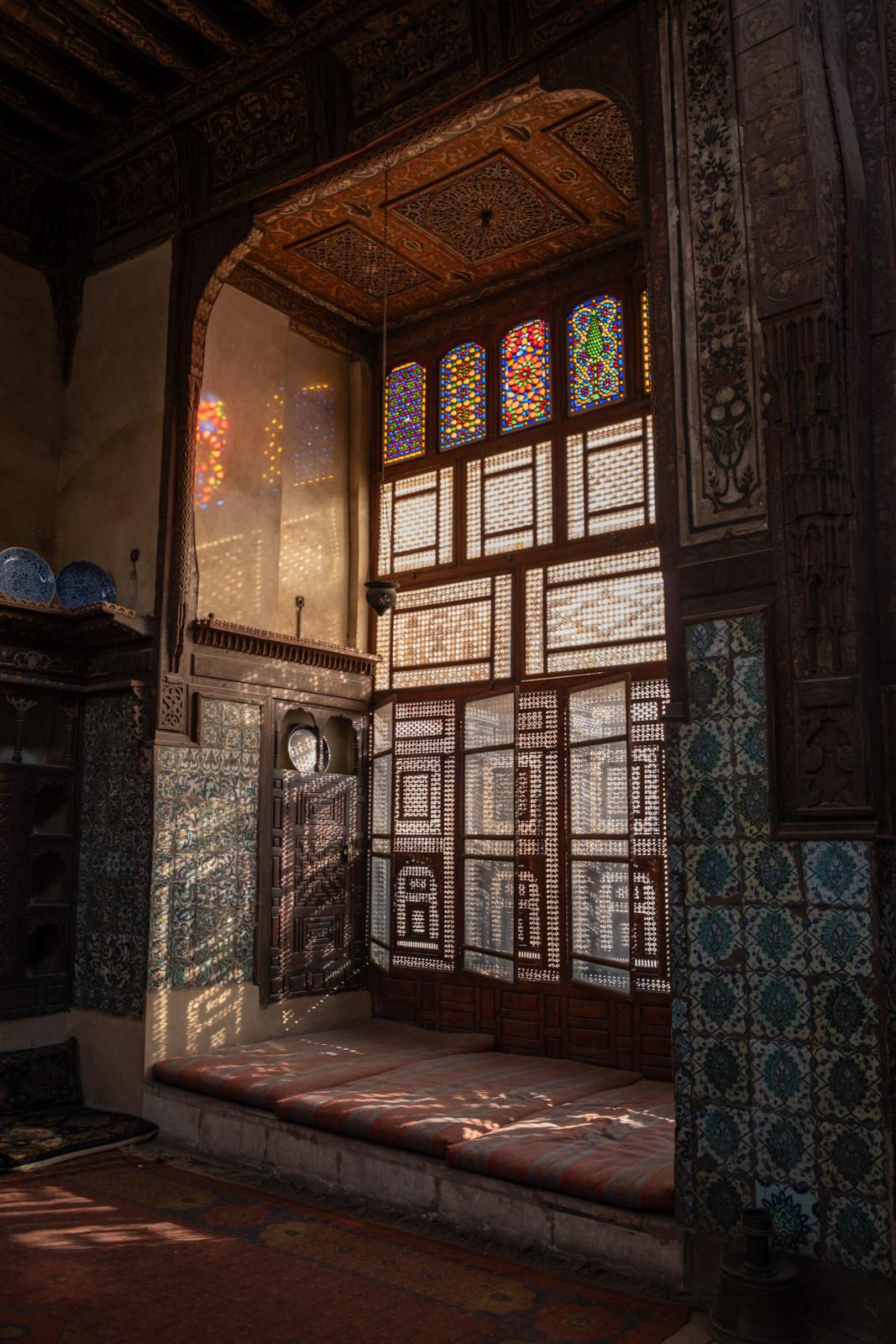
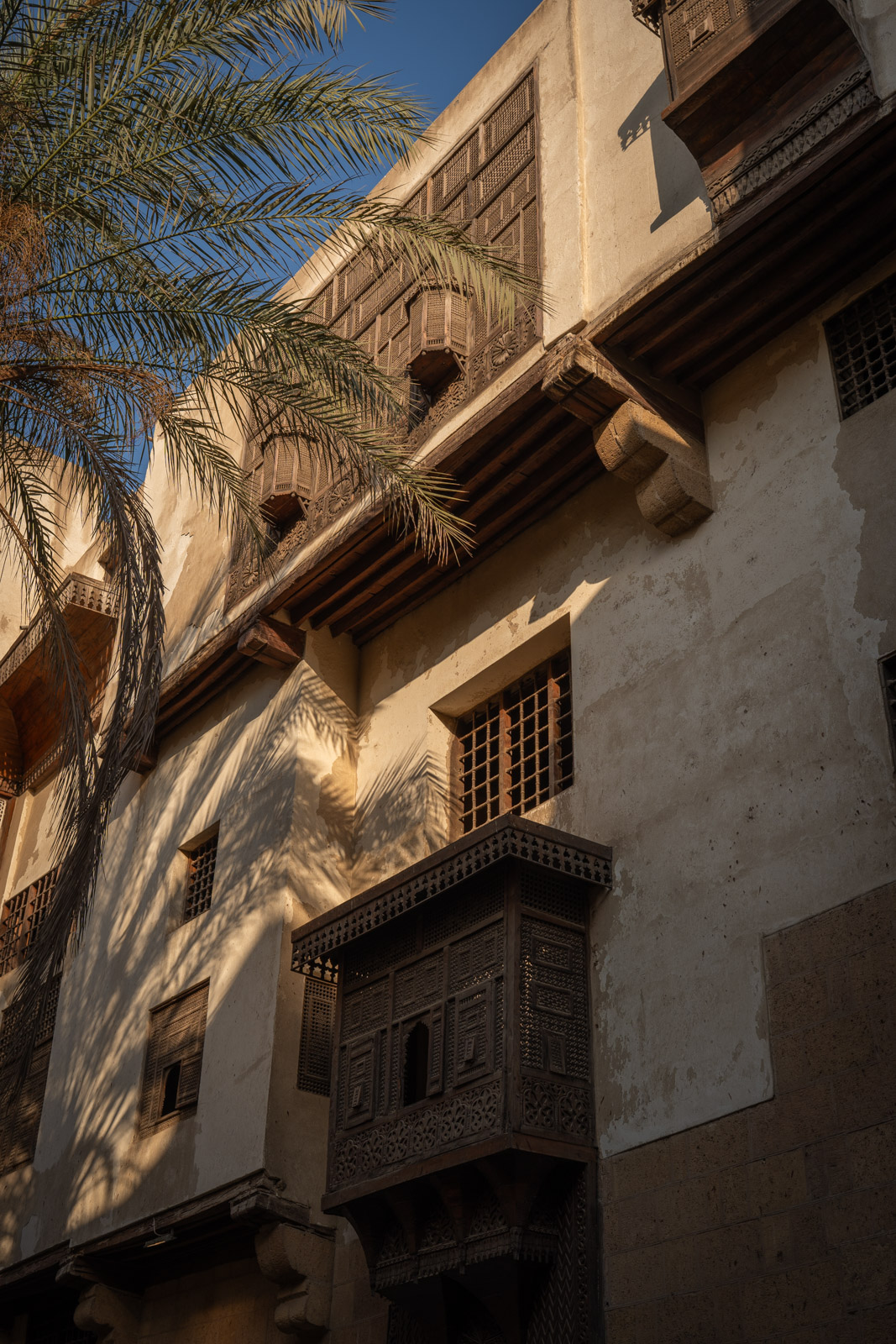
As we continued through the narrow, crowded streets, we passed by Bayt al-Suhaymi. This beautifully preserved house shows how wealthy families lived during the Ottoman period. As part of our tour we actually had a chance to visit this house. What made it extra special is that some of the chambers that are normally not accessible for the general public, were opened especially for us. Our guide explained that these rooms had been a movie decor for various Egyptian films. It was amazing to see how well the interior was preserved.
The wooden lattice windows, called mashrabiya, were designed to keep the house cool while allowing people inside to observe the street without being seen. Perfect for those nosy neighbors.
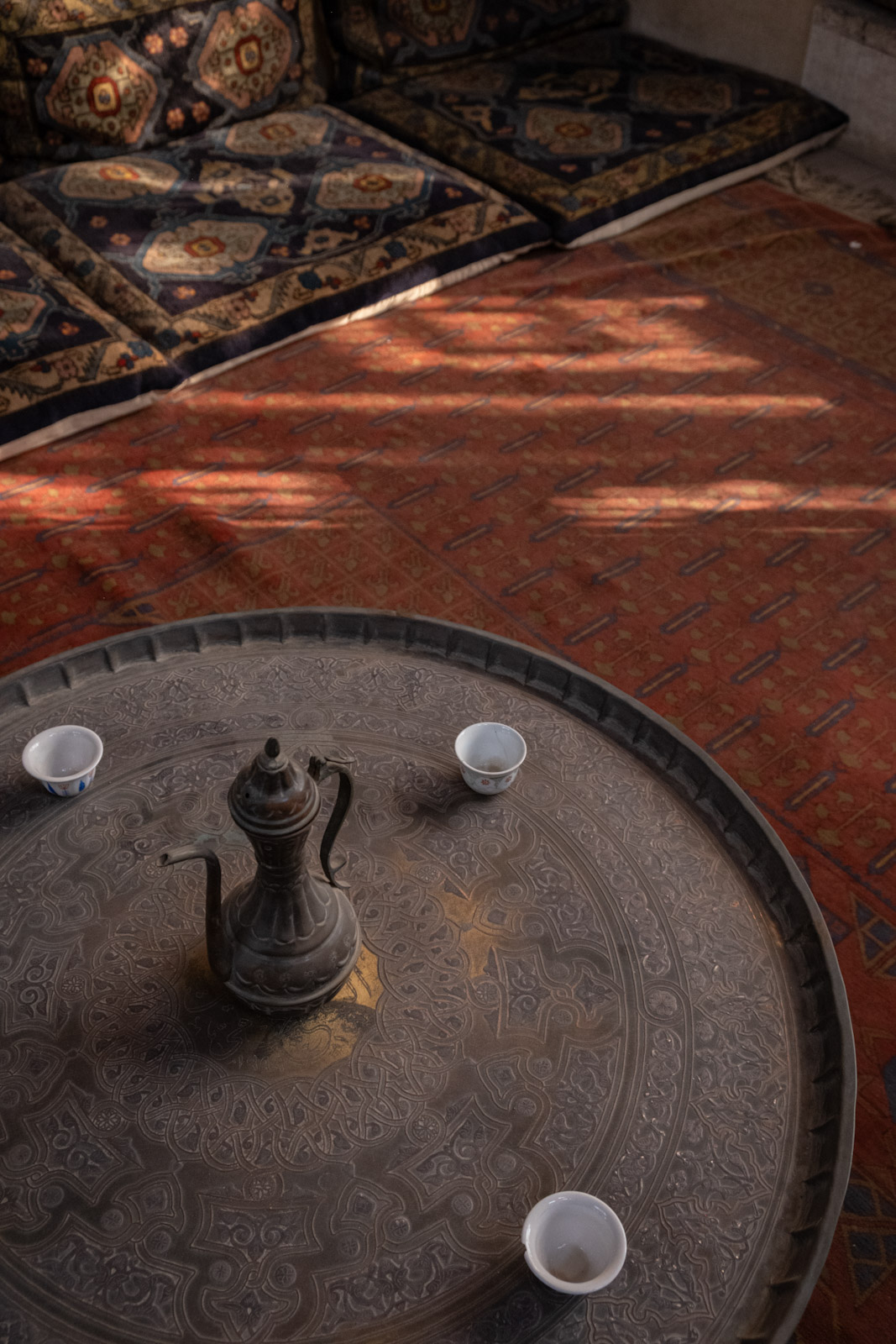
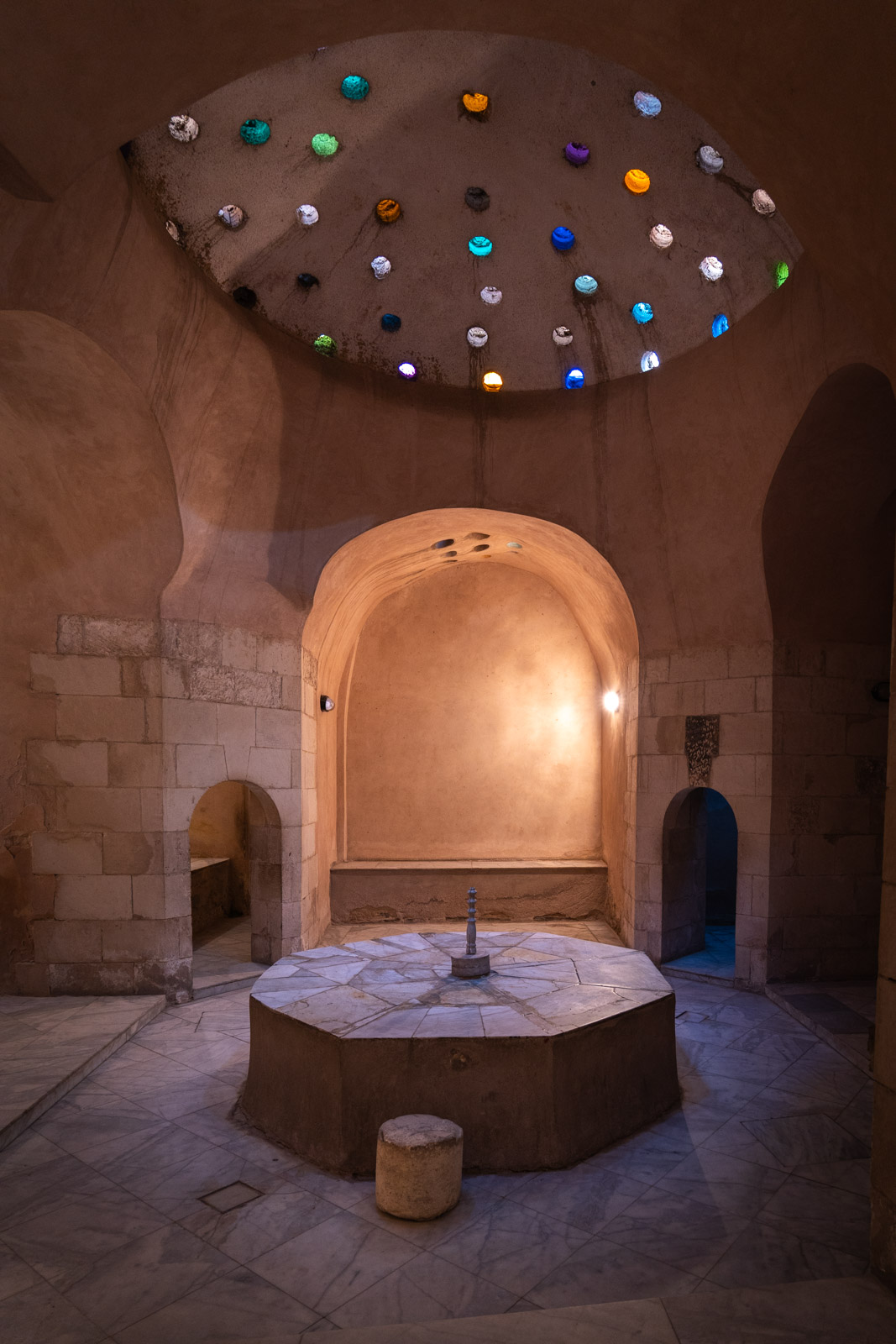
Our next stop was the Hammam of Sultan Inal, built in 1456. Back in the day it was a luxurious bathhouse exclusively for the sultan’s family and high ranking officials.
Complexes and Kittens
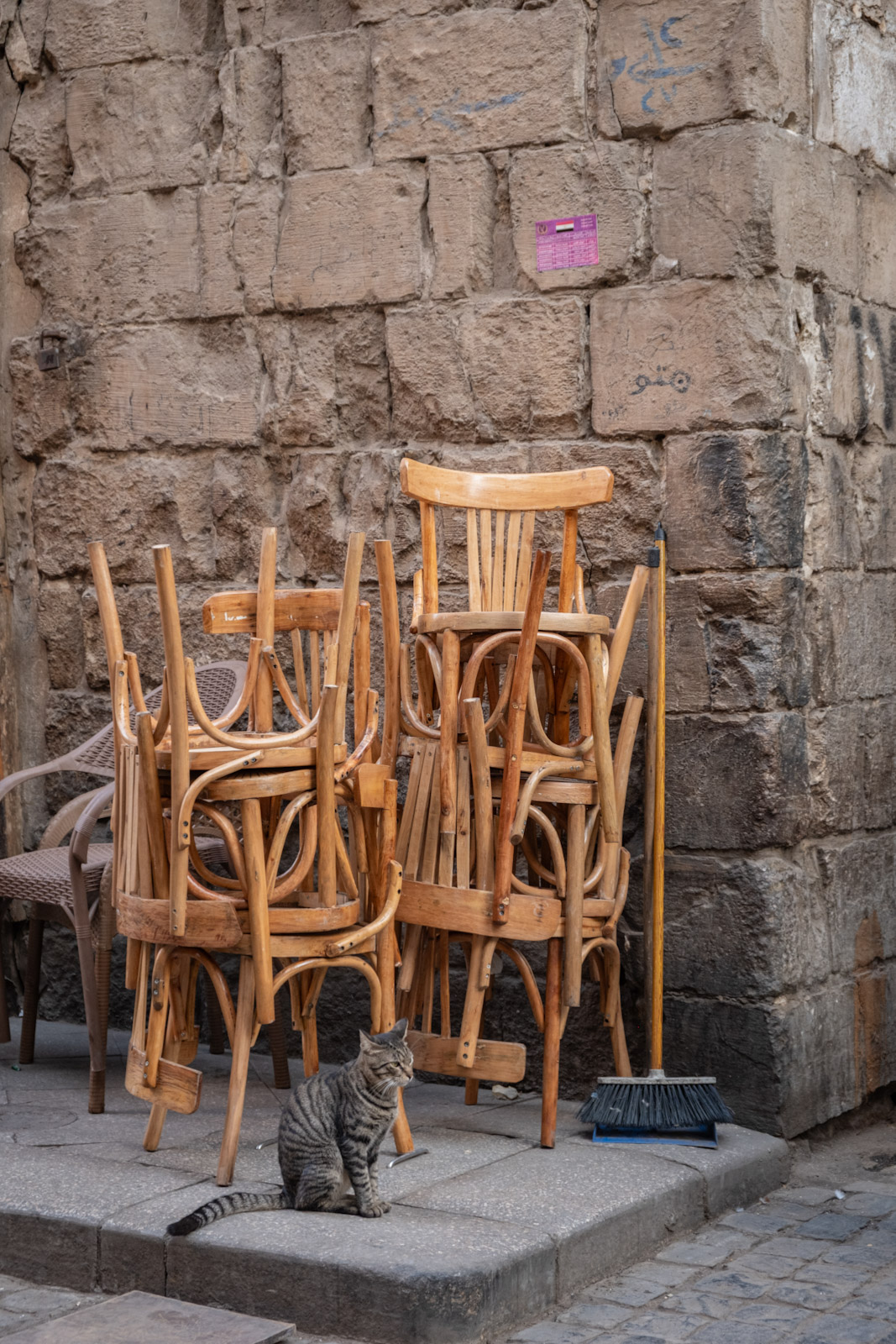
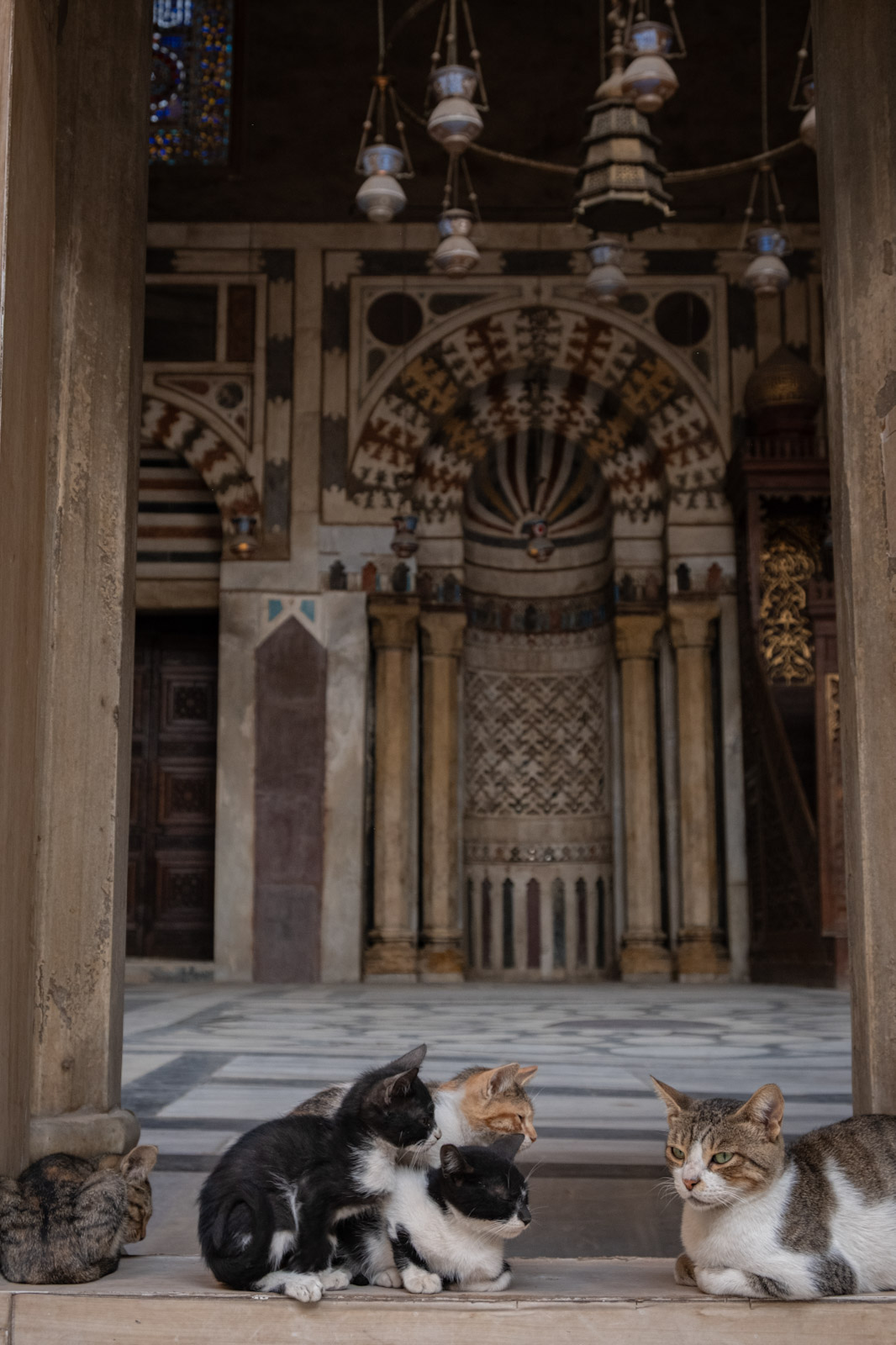
We made our way to the funerary complex of Sultan Barquq, with its elegant outdoor courtyard. But the real stars here were a litter of tiny kittens and their mother. Barely awake to the world, they had only just opened their eyes and were all snuggled up in a soft, sleepy bundle.
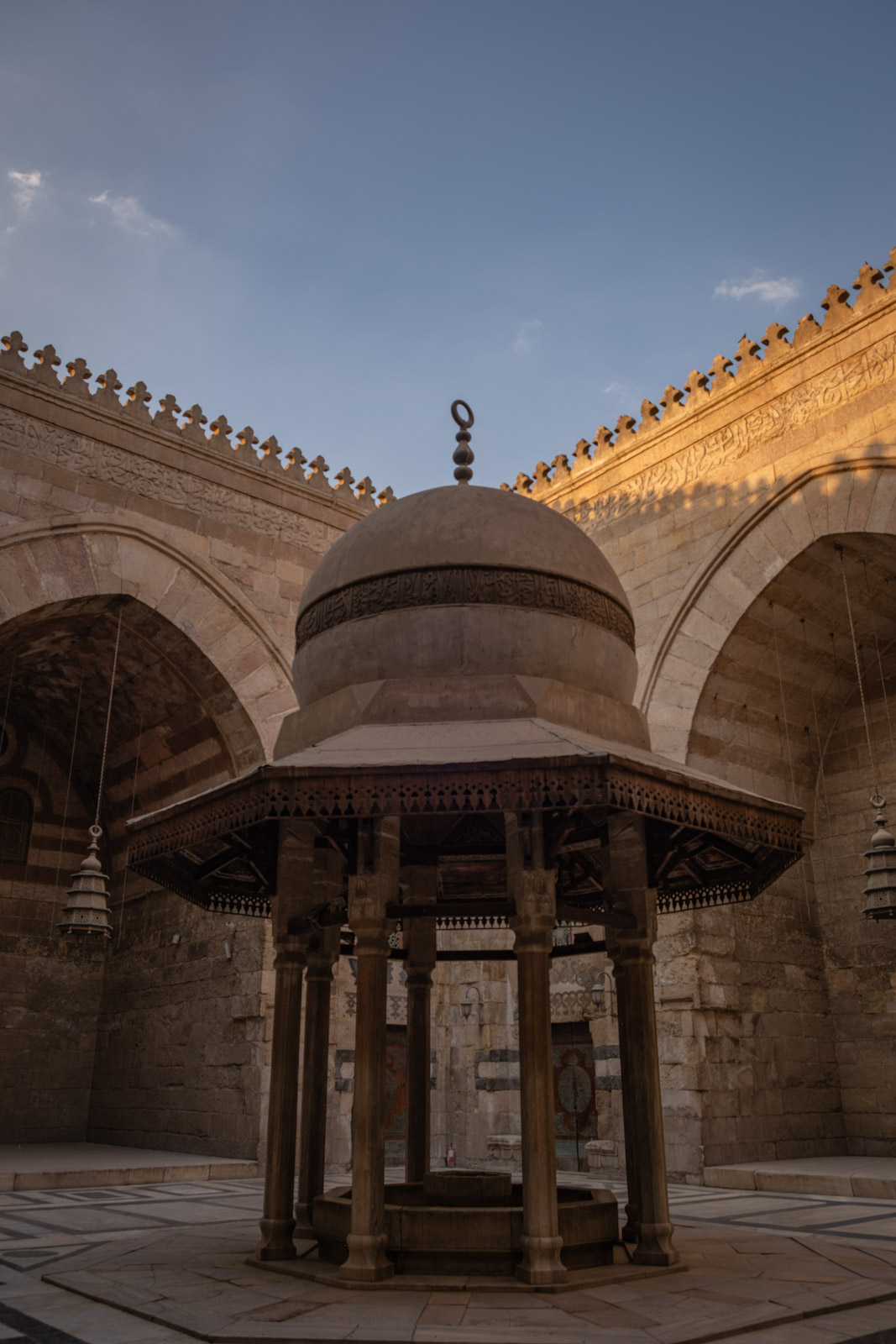
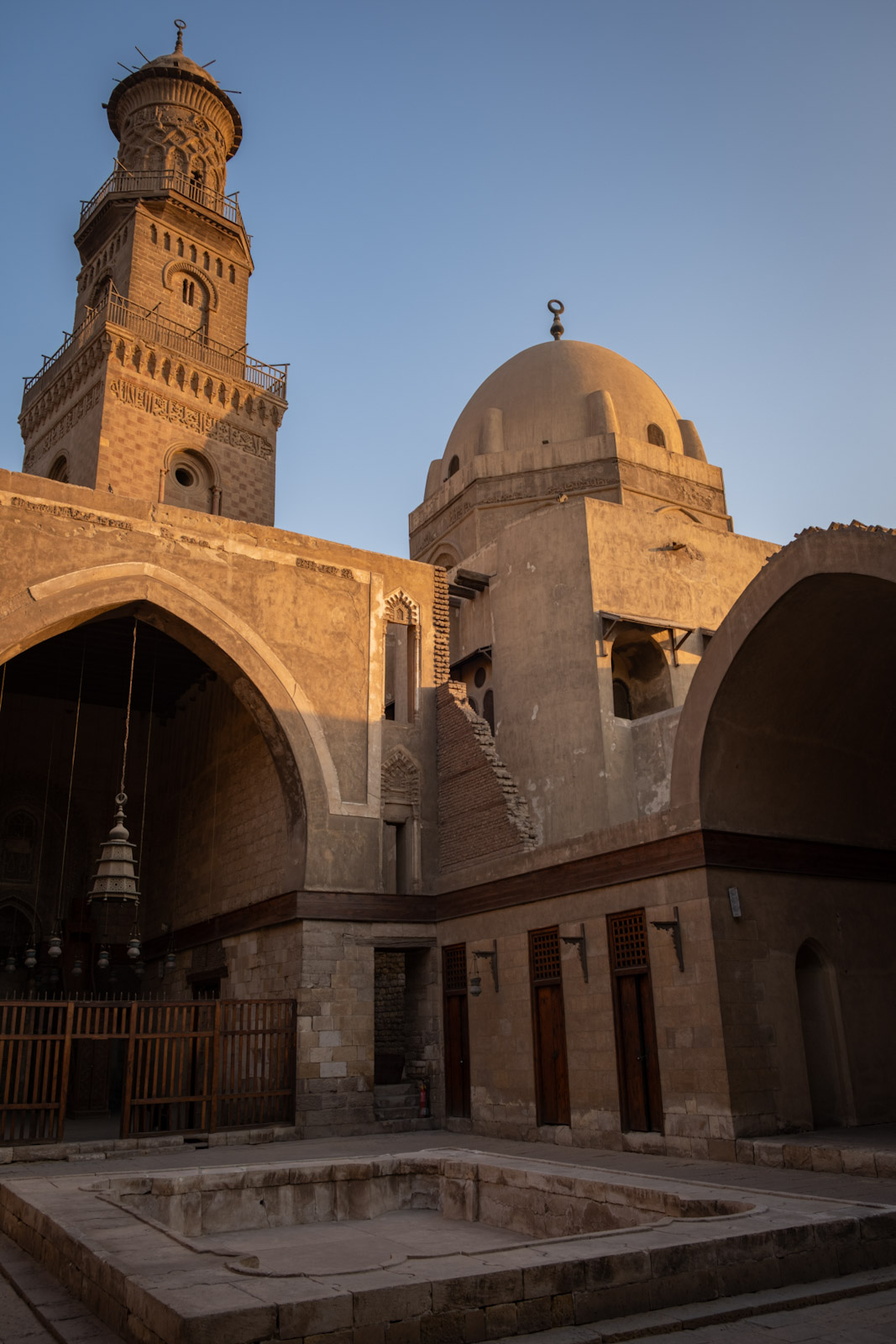
Our last stop in Al-Muizz street was Qalawun Complex. Dating back to the late 13th century, this impressive complex combines a hospital, madrassa, mosque, and mausoleum, making it one of the standout architectural highlights of Islamic Cairo. It was also a really nice location to take photos, especially the inside of the complex was beautiful.
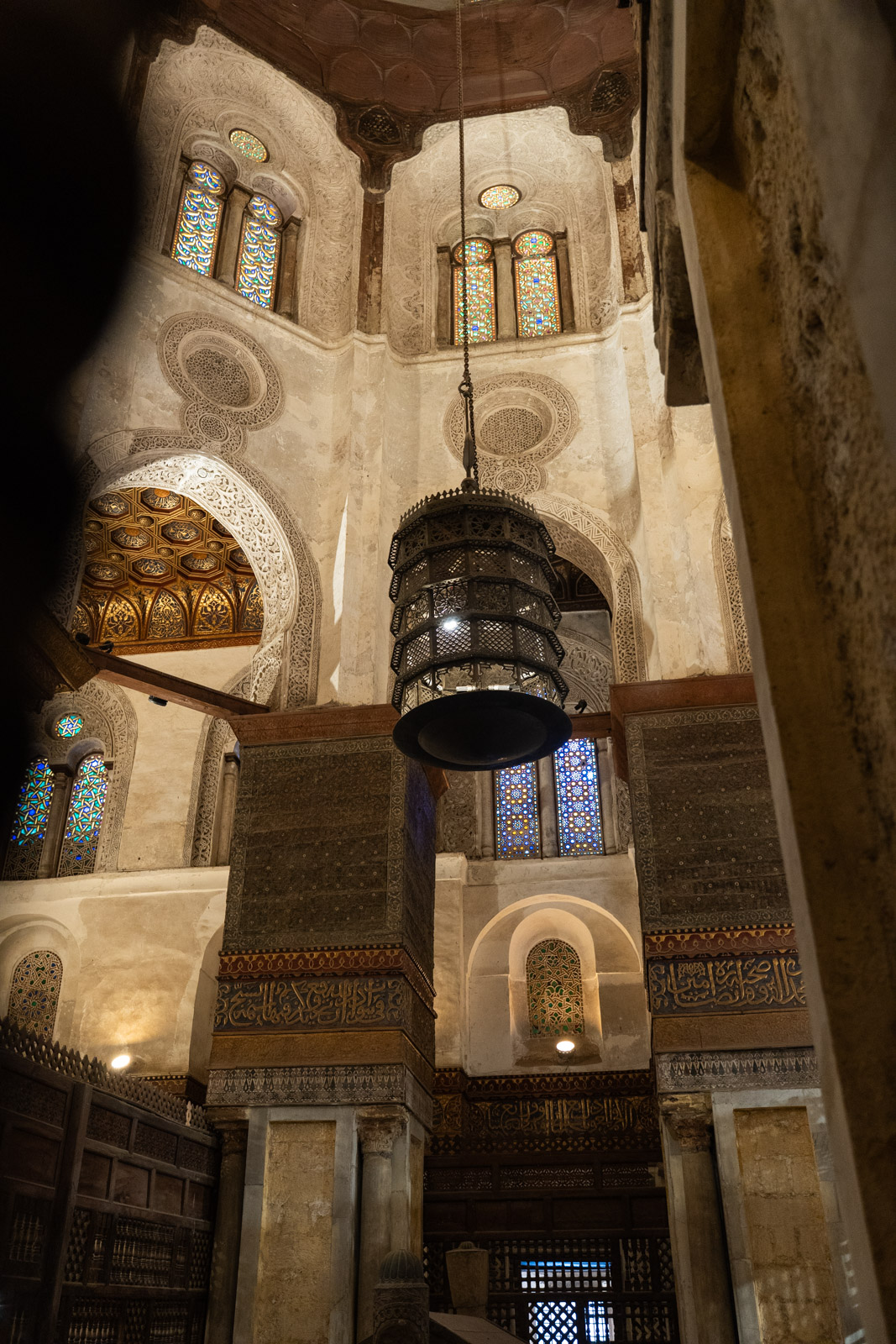
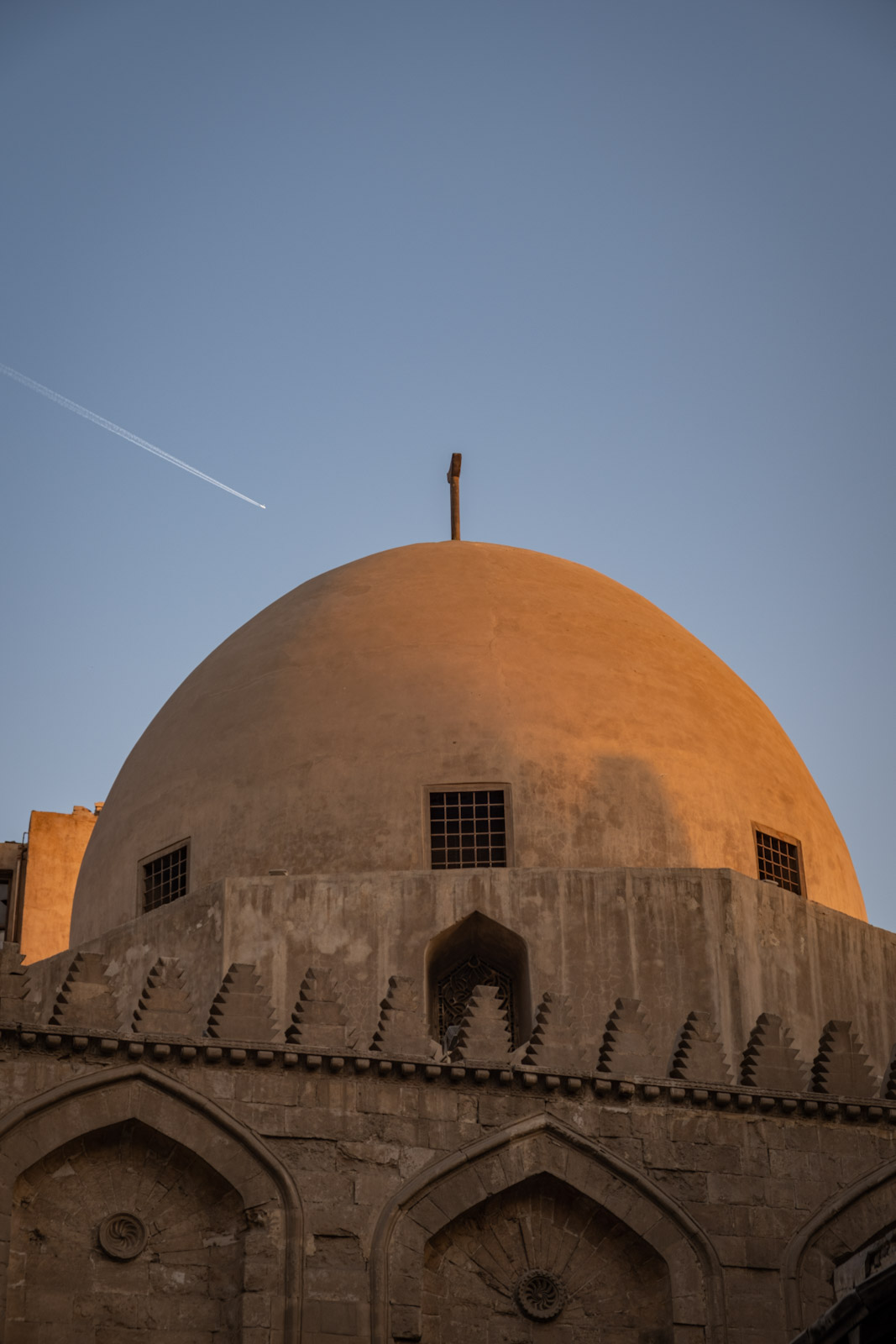
Khan el-Khalili Bazaar
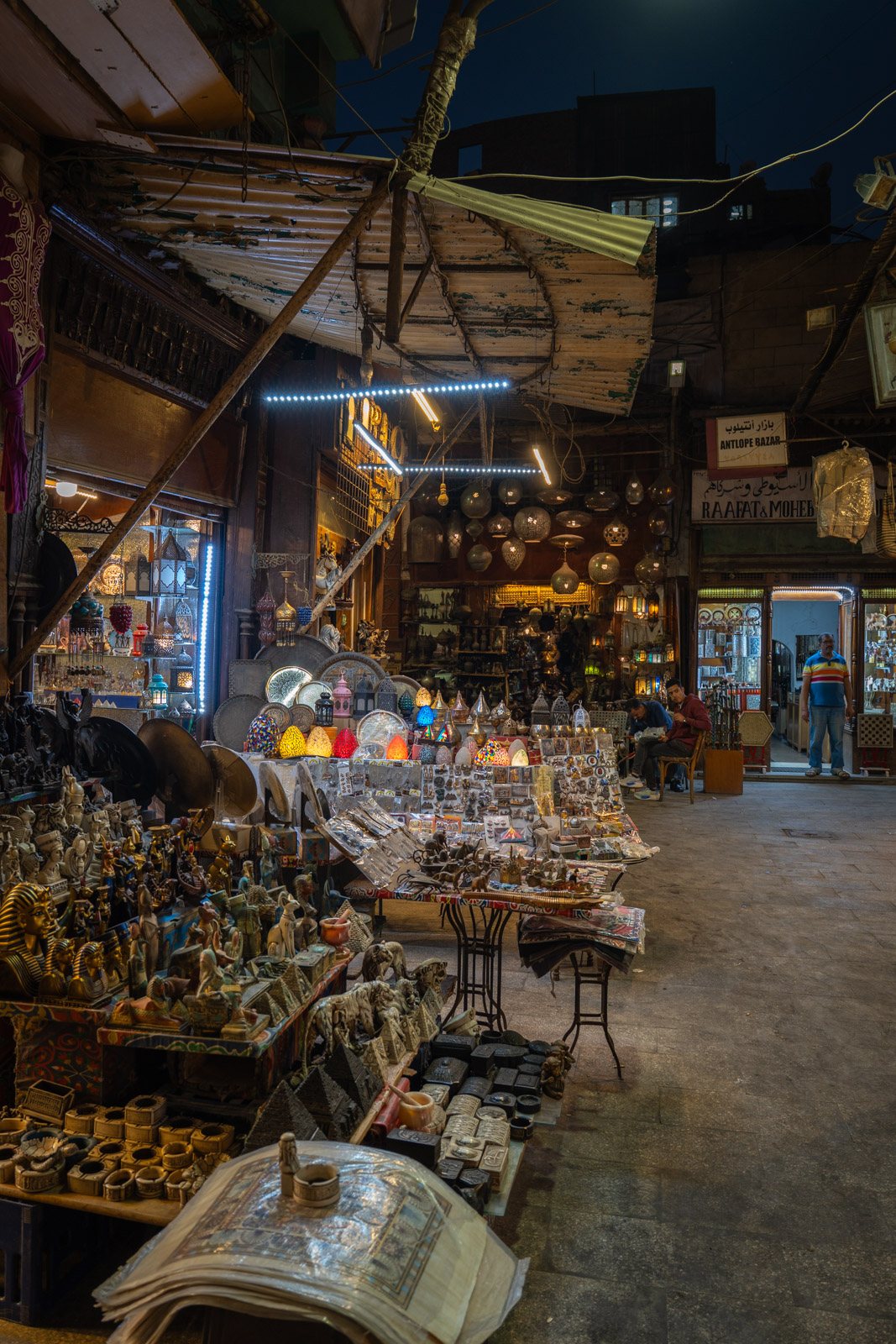
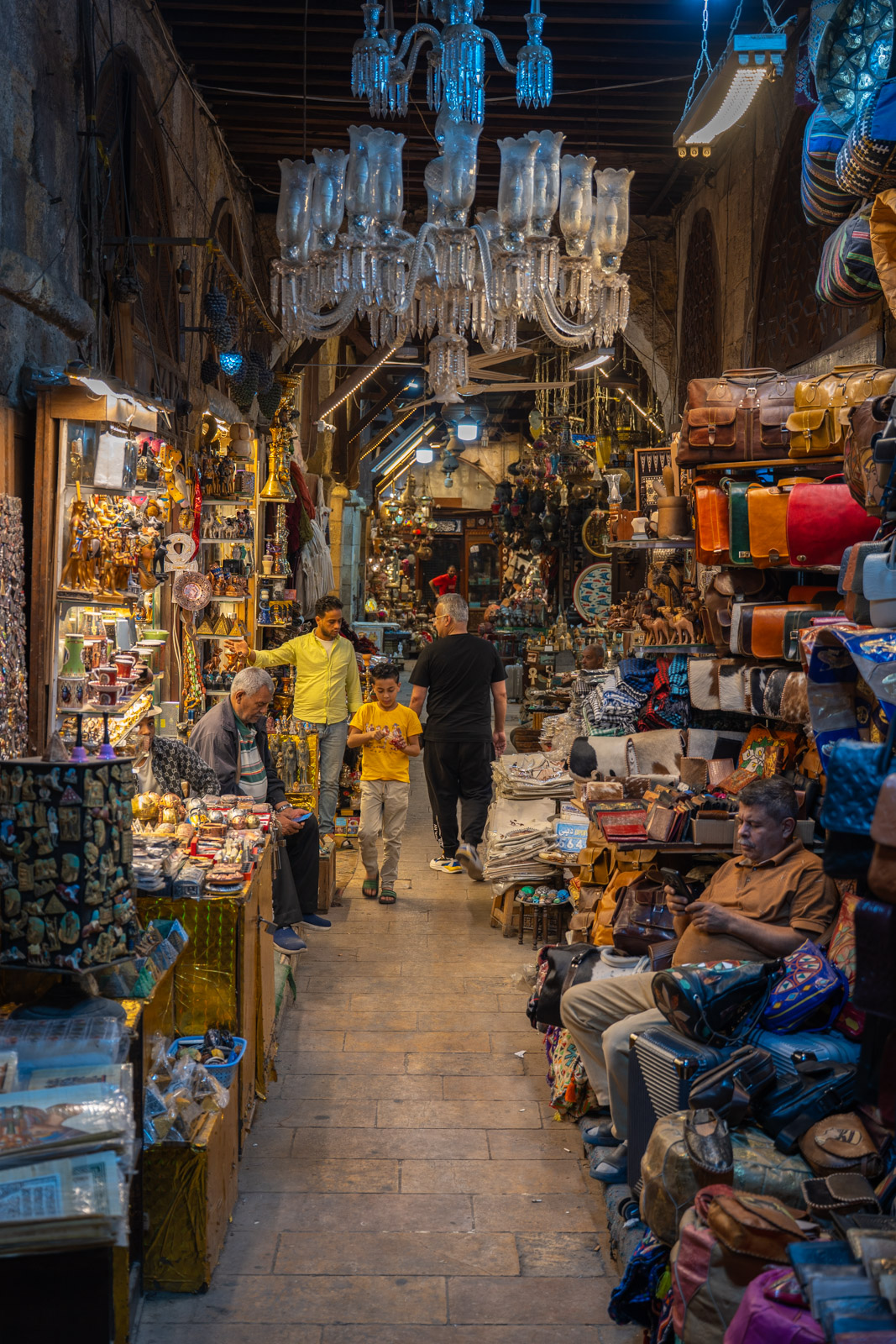
Eventually, our walk led us into the lively maze of Khan el-Khalili Bazaar.
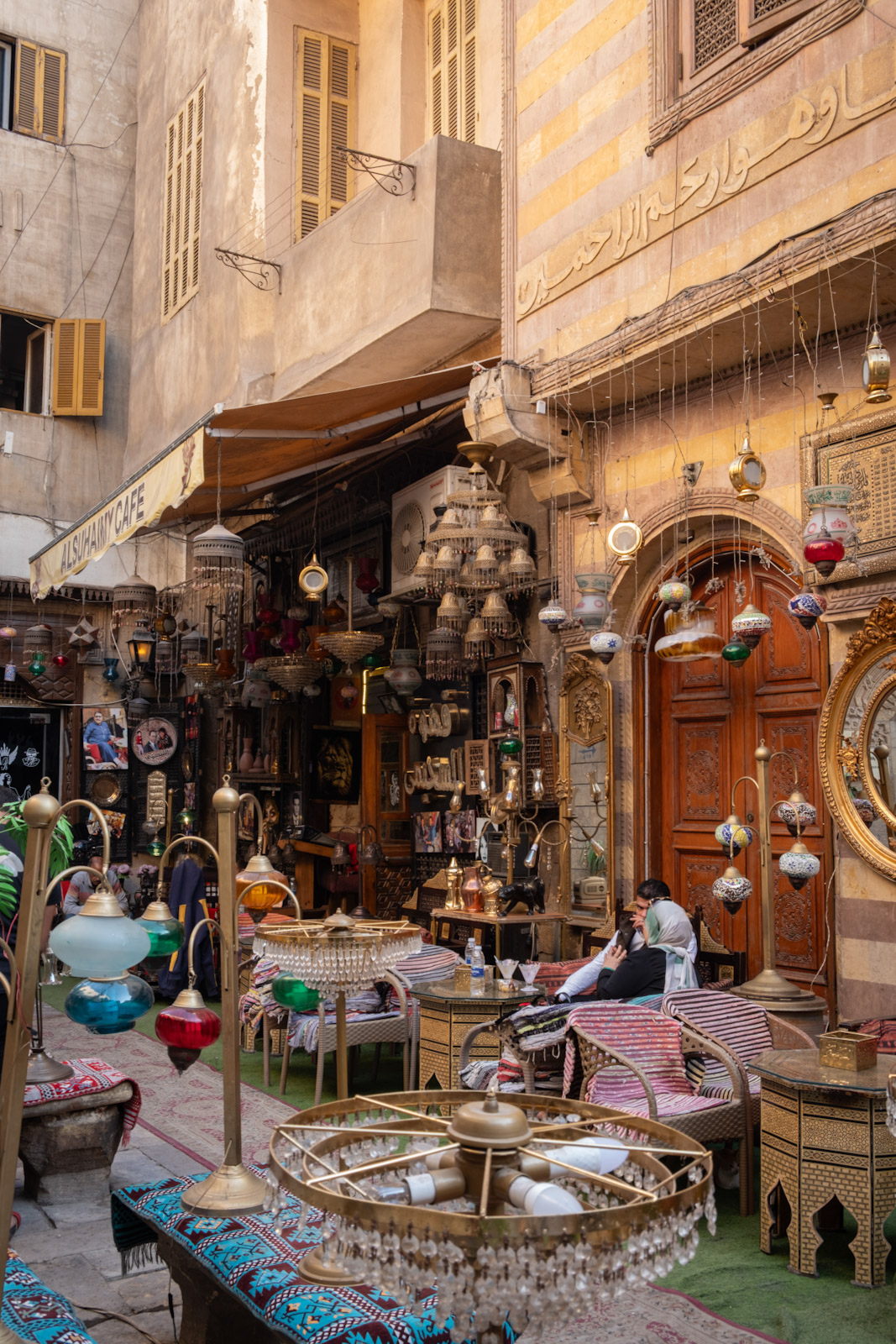
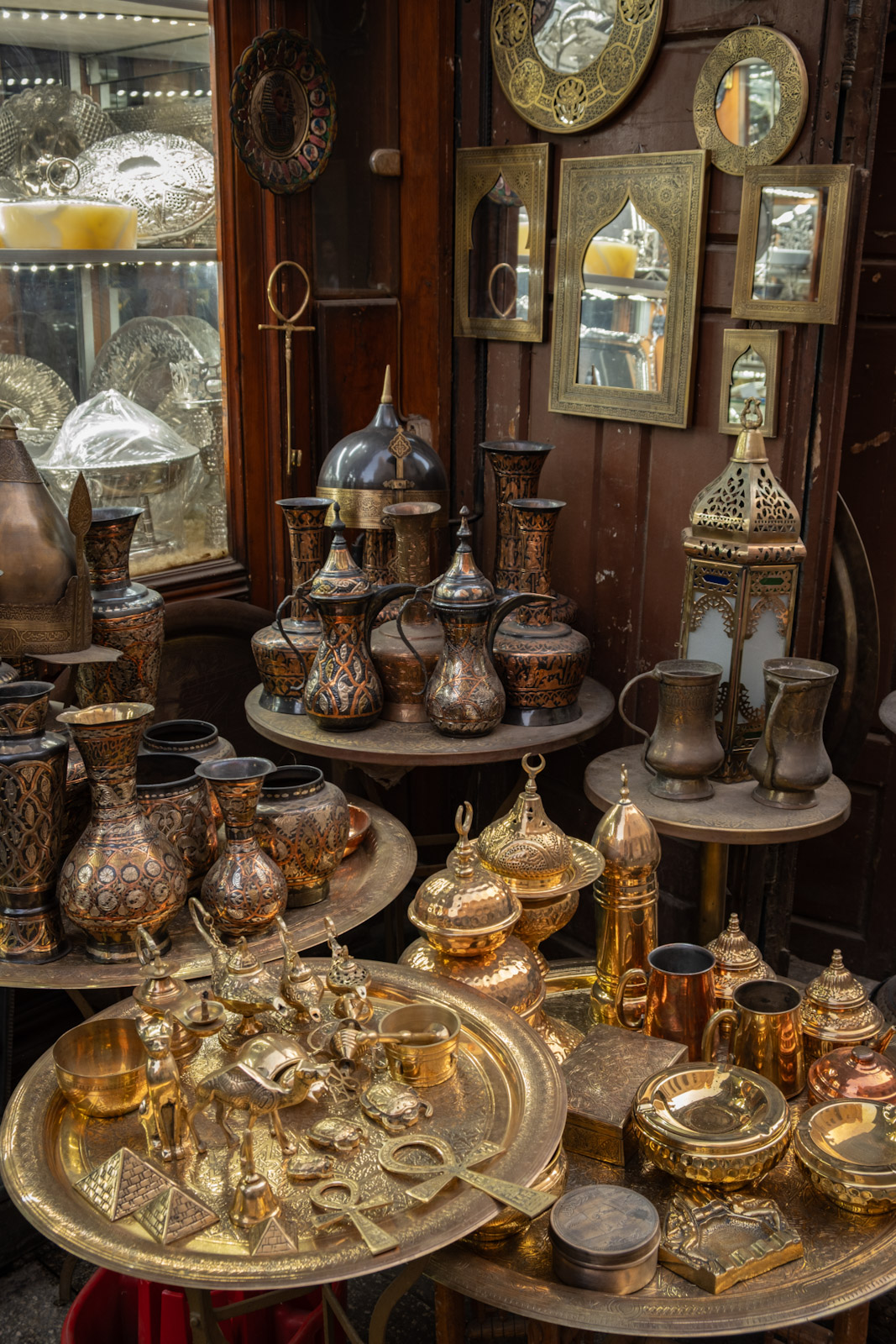
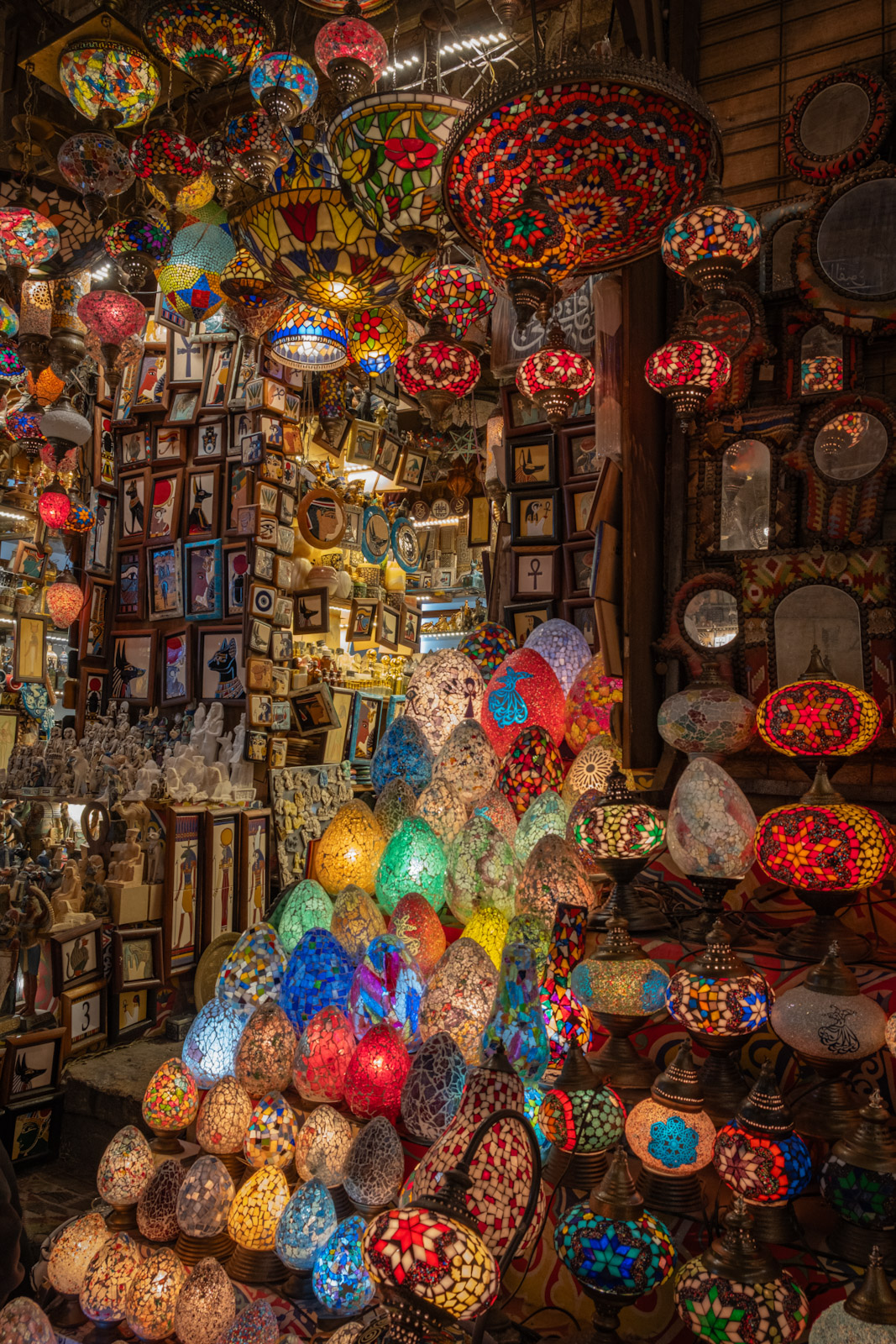
The atmosphere immediately changed. Narrow alleys filled with colorful lamps, spices, perfume and souvenirs surrounded us while vendors invited us to visit their shops.
We finished the tour the best way possible: sitting down in a small local coffee shop in the middle of the bazaar, enjoying mint tea and a shawarma while watching the endless movement and loudness of the market around us.
After the tour ended, the real fun started: we decided to stay in the bazaar and get lost in the narrow streets by ourselves. Two hours later we left the bazaar with a beautiful new carpet to take back home.
Tip: Cash is essential in the bazaar, and small bills make bargaining easier. Some shops accept card, but not everywhere.
Dinner at Koshary Abou Tarek
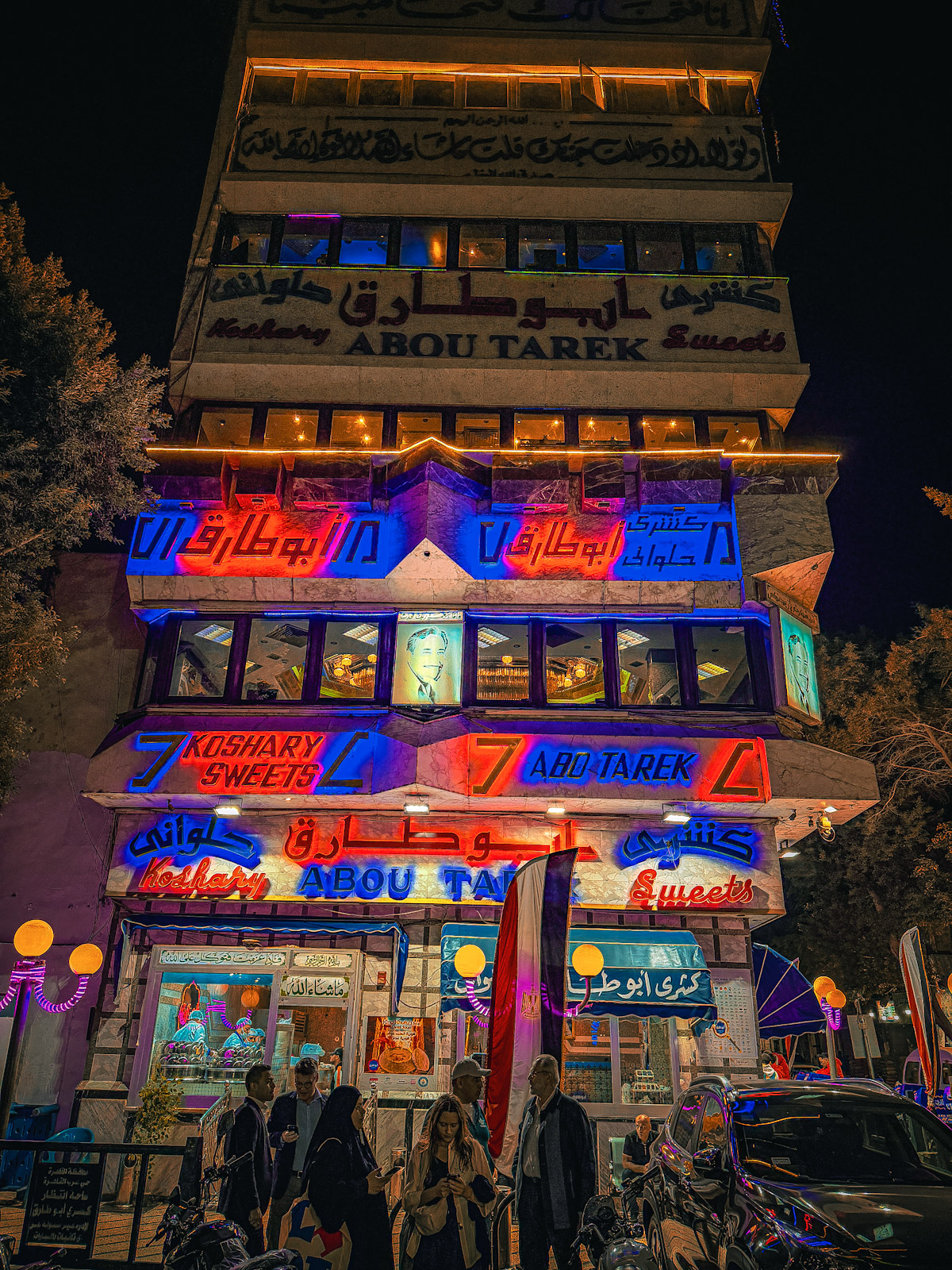
For dinner, we tried one of Cairo’s most famous local dishes: koshary at Koshary Abou Tarek.
Located in downtown Cairo, this restaurant has been serving this dish for decades.
This multi-story restaurant is usually busy from morning until late at night, and we can confirm that.
Let me tell you, don’t expect any of the staff to find a table for you. We walked into the restaurant, looked around, and couldn’t find a single free table. Completely confused, we noticed people heading upstairs… so we did the same.
Floor after floor, we kept searching with no luck. By the time we reached the 4th or 5th floor, completely out of breath, we finally found a tiny table that we had to share with locals.
Staff moved quickly between tables carrying huge bowls of koshary, adding, in the best way possible, a frenetic and chaotic atmosphere to the restaurant.
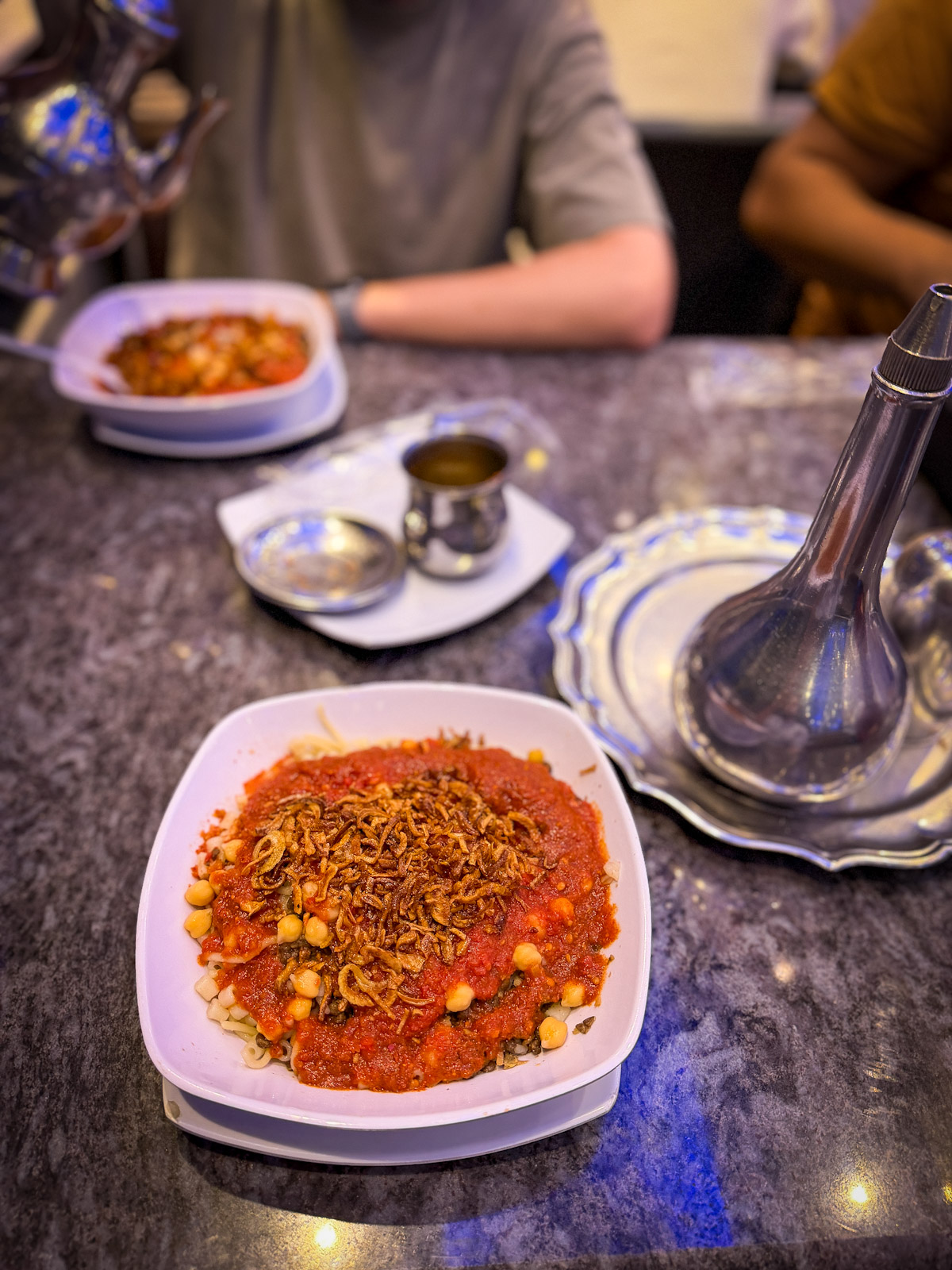
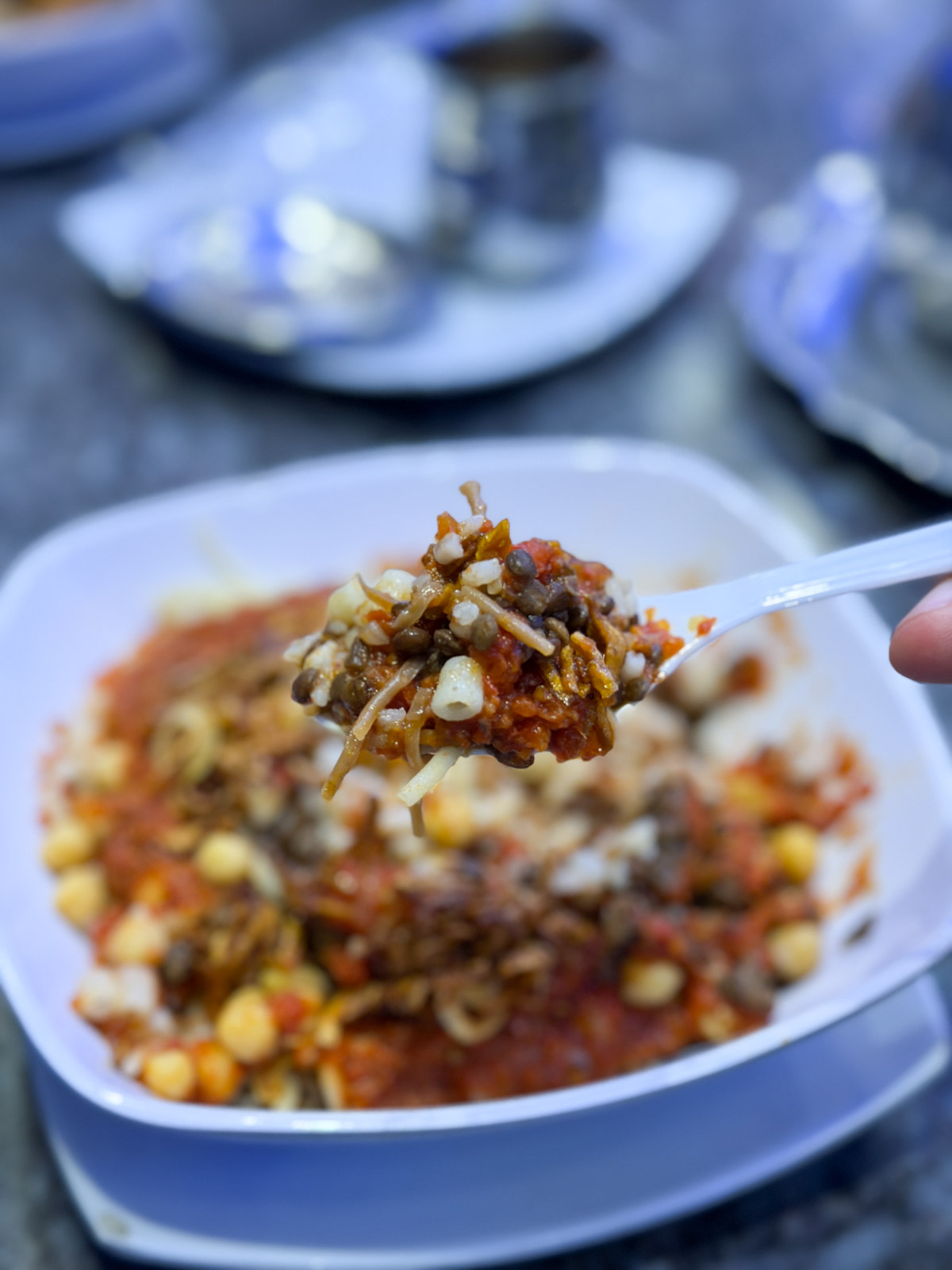
Koshary is often considered the national dish of Egypt, and it’s a very unique combination of ingredients: rice, lentils, chickpeas and pasta, all topped with a rich tomato sauce, garlic vinegar sauce, chili sauce and crispy fried onions. It was a very nice dish but I feel like it’s a dish that you only eat once in awhile, as it’s a very heavy bowl of carbs that will probably fill you up until next Monday.
Of course, we couldn’t leave without dessert: rice pudding, the perfect sweet ending.
We finished the night walking back to the hotel, pretending that the walk might burn at least some of the carbs we had just eaten.
Getting around the city was actually easier than expected, once we figured out a few basics.
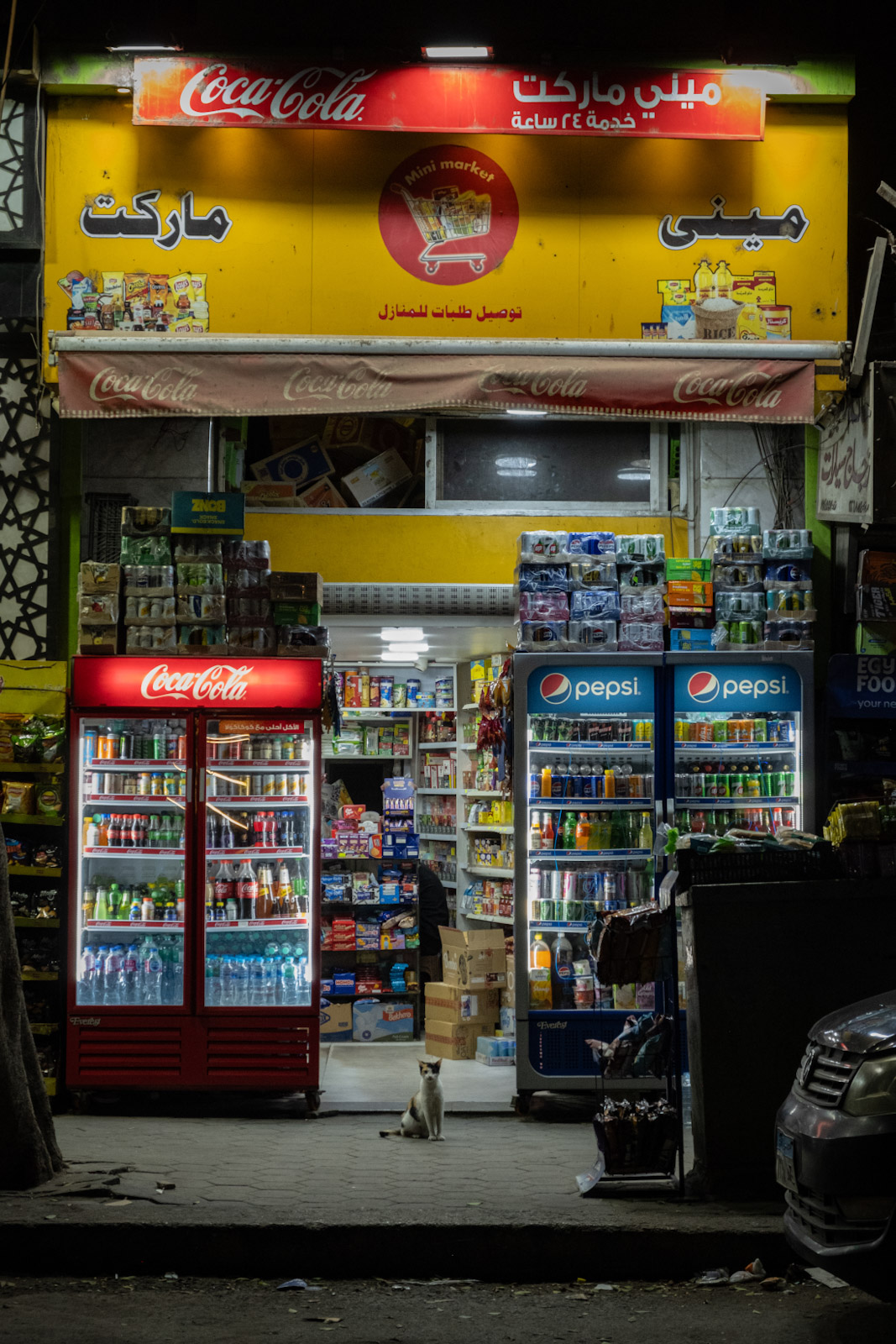
Getting around Cairo
Getting around Cairo can feel overwhelming at first, but in reality it’s quite straightforward.
The easiest and most reliable way to move around the city is by using ride-hailing apps like Uber, Careem, or InDrive. They’re affordable, easy to use, and save you the hassle of negotiating with taxi drivers.
Traffic in Cairo can be intense, so expect travel times to be longer than they look on the map.
For shorter distances, walking can be an option in areas like Zamalek (where we stayed), but most of the time you’ll rely on cars.
If you’re feeling adventurous, you can also try the Cairo metro: a fast and very cheap way to get around, although it can get quite crowded.
Day 2 — Pyramids & Grand Egyptian Museum
Grand Egyptian Museum (GEM)
No trip to Egypt is complete without visiting the Grand Egyptian Museum and, of course, the pyramids, so that’s exactly what we did.
We booked our tickets to the GEM online, ahead of time. On the official website of the museum, you can select a time slot for your visit and opt for a guided tour as well. We choose to do this, as we felt we would learn way more about the museum with a guide rather than just wandering around by ourselves.
It’s worth noting that the tour moves at a fairly fast pace, with the guide covering the museum’s main highlights in around 1.5 hours. Once the tour ends, you’re free to stay inside and explore the rest of the museum at your own pace.
Tip: Book online in advance and select a time slot. You can also add a guided tour, which is highly recommended to fully appreciate the collection.
Ramesses II Statue
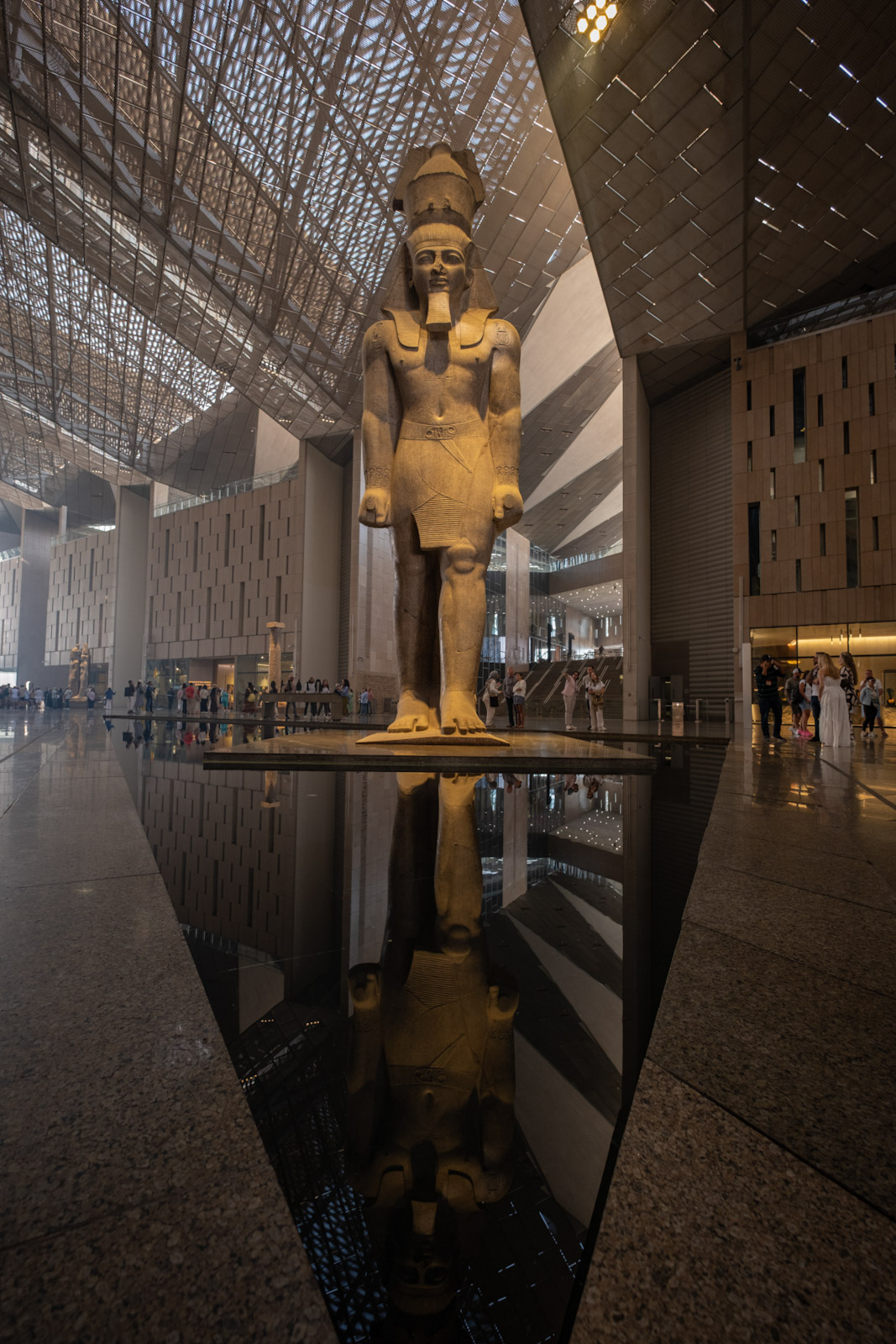
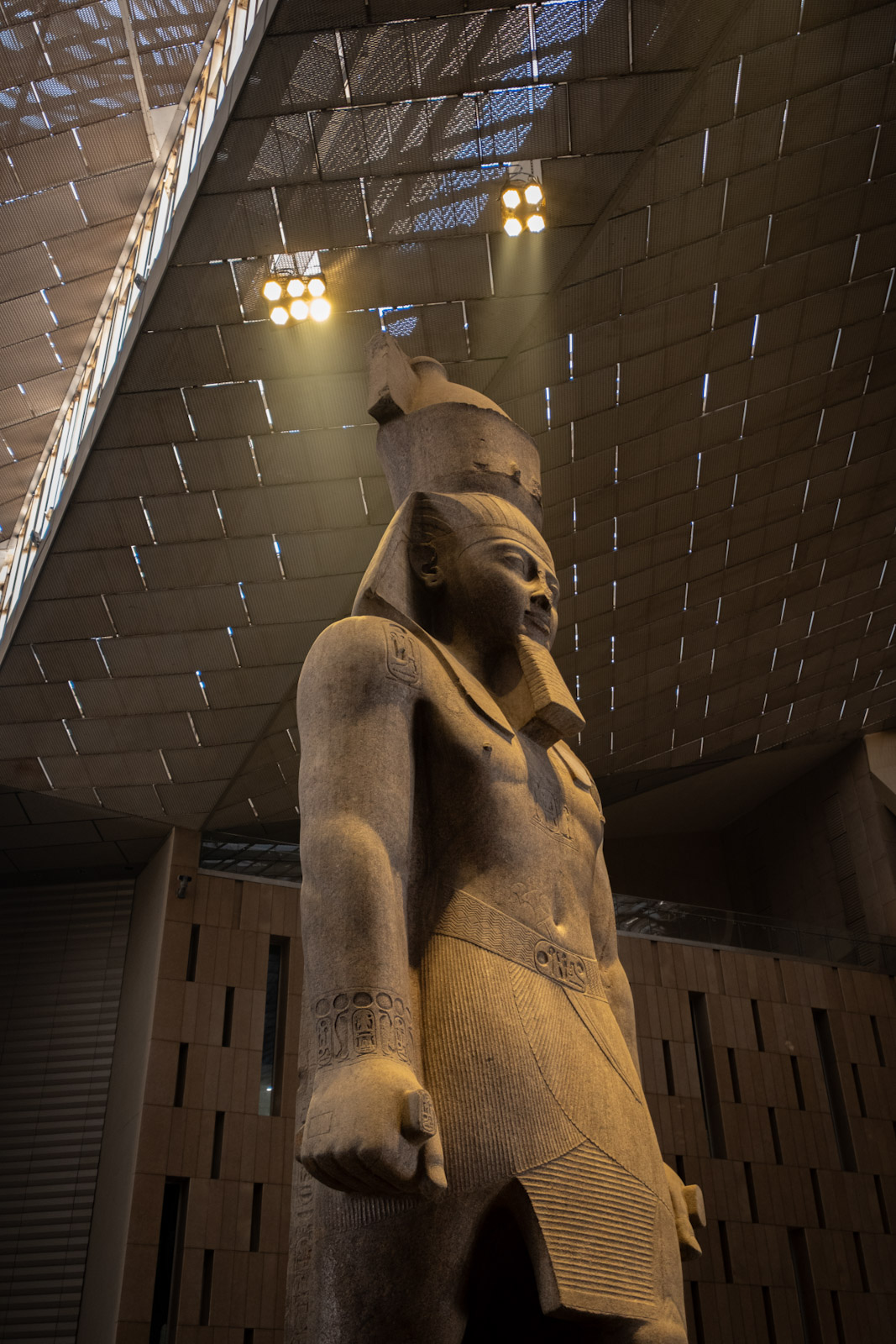
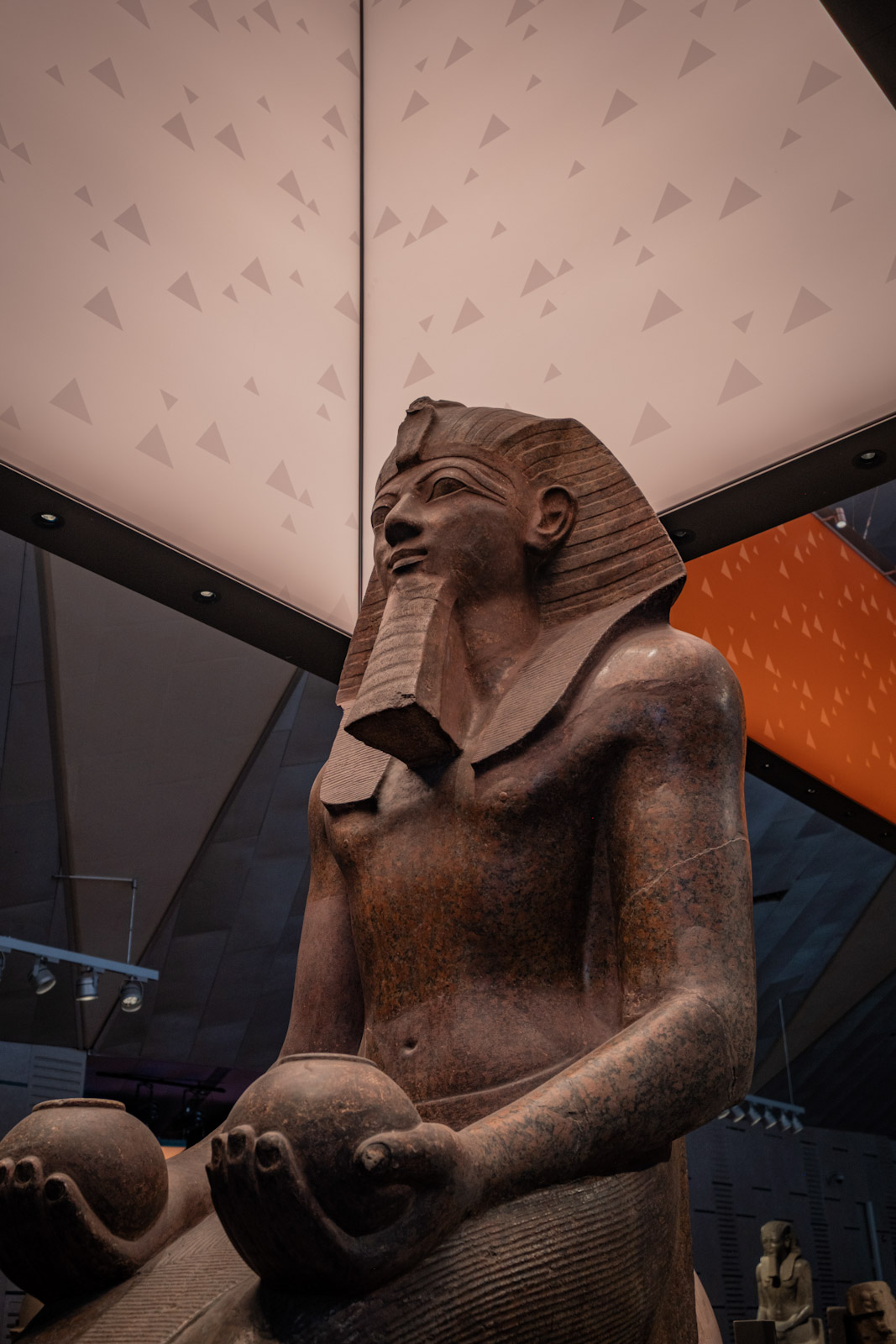
As soon as you enter the GEM, you’re welcomed by a colossal statue of Ramesses II standing in the museum’s main hall. Carved from a single block of red granite more than 3,000 years ago, the statue is about 11 meters tall and immediately gives you a sense of the scale and power of ancient Egyptian rulers. Originally discovered near the city of Memphis, the statue stood for many years in Ramses Square in Cairo before being moved to the museum.
Until today, I don’t understand how Egyptians managed to move entire temples and 83-ton statues across the country. Now it greets visitors at the entrance, almost as if Ramesses II himself is welcoming everyone into the museum.
Exploring the GEM
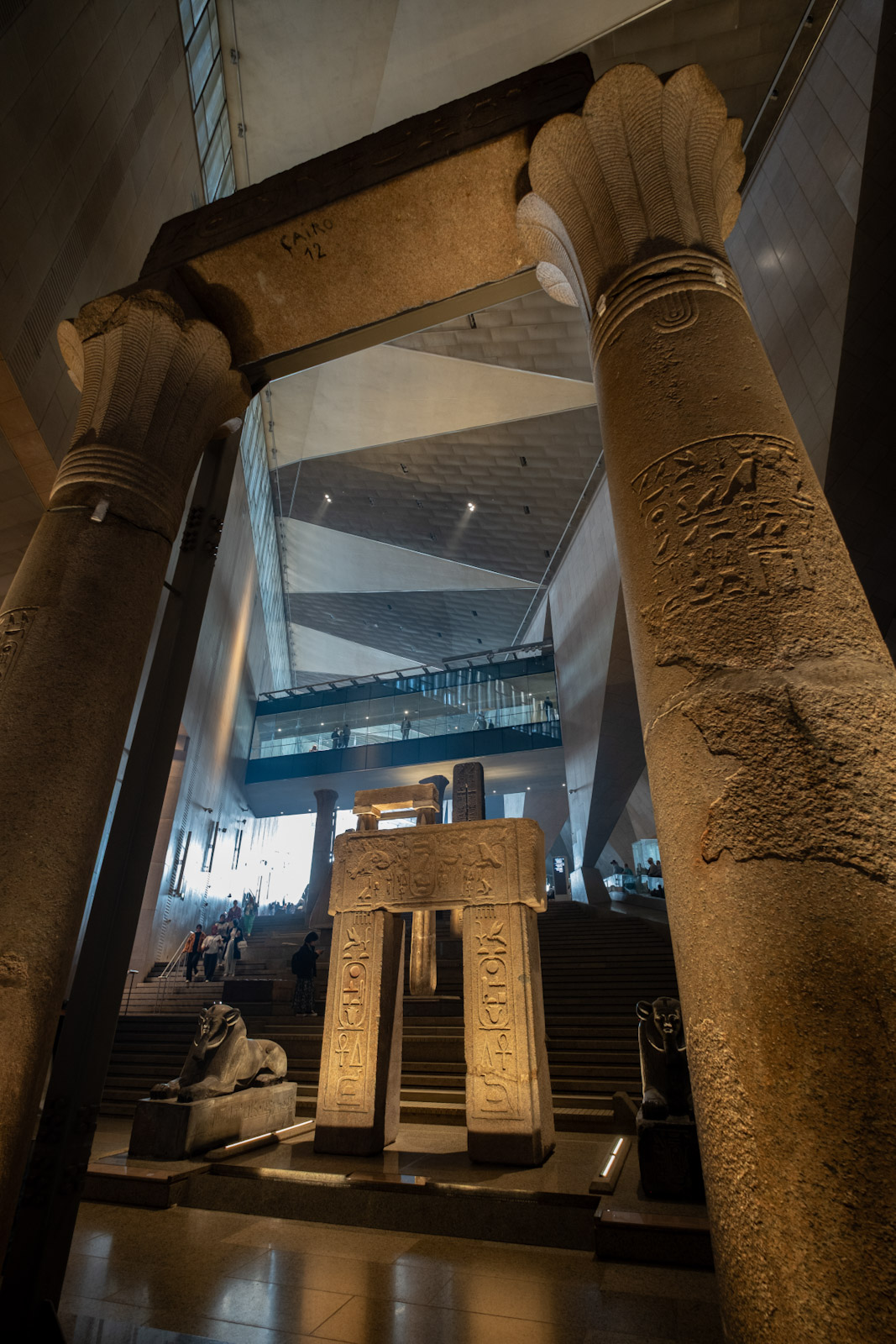
The museum was designed to house more than 100,000 ancient artifacts, many of which had never been displayed before.
Our guide was extremely knowledgeable and clearly passionate about ancient Egyptian history. This made the experience even more interesting. Listening to her explain the stories behind the objects reminded me of my favorite subject at school: history of art.
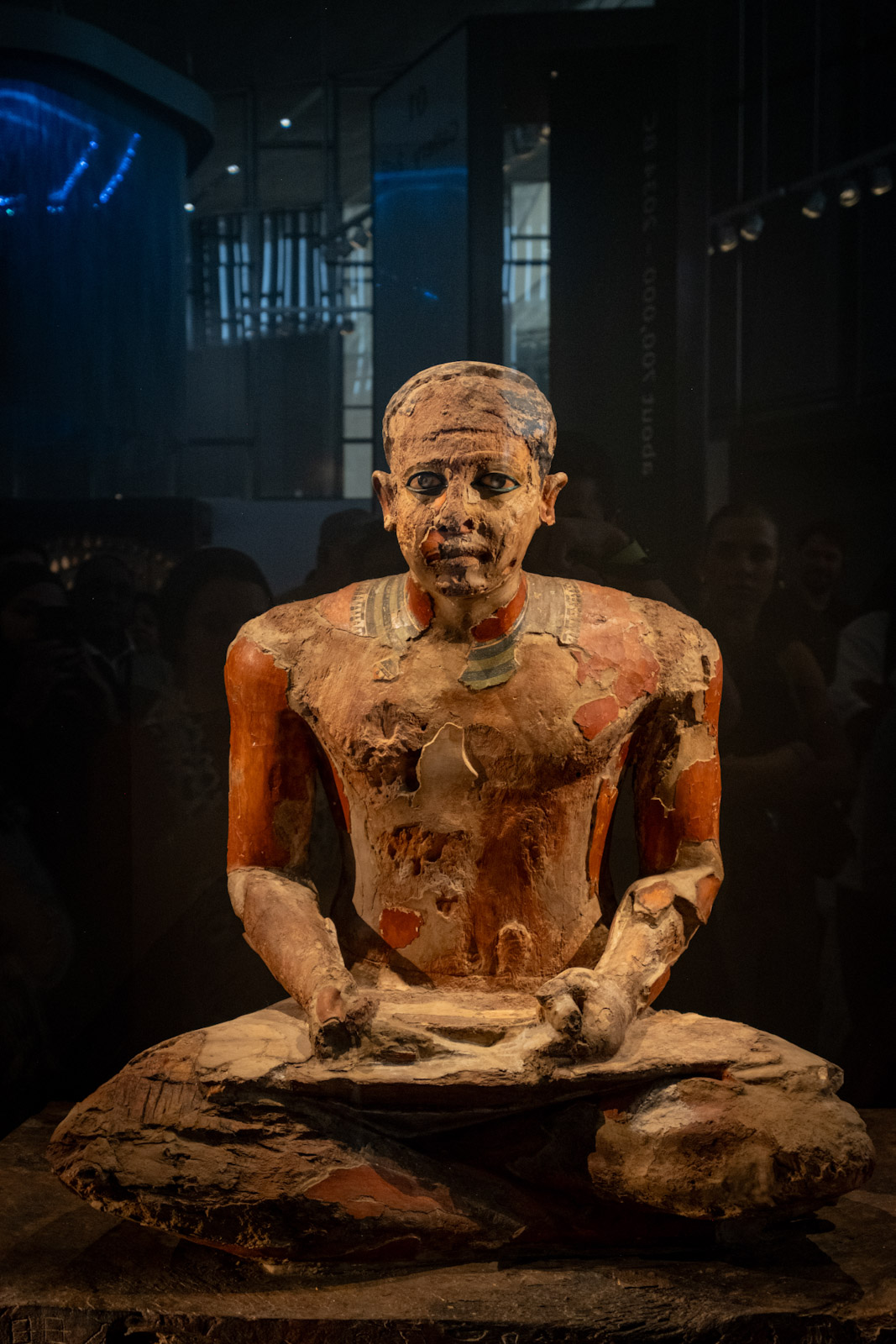
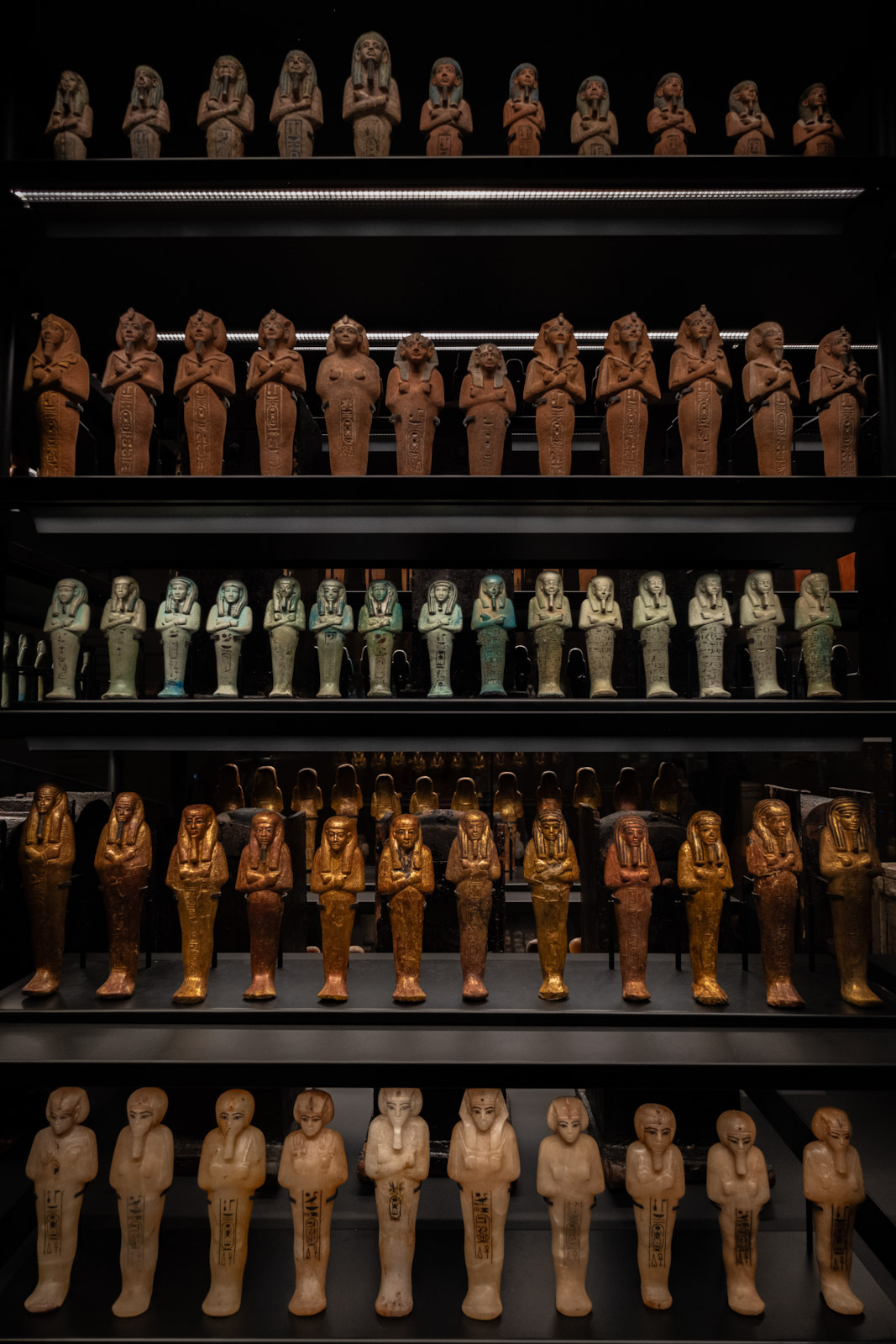
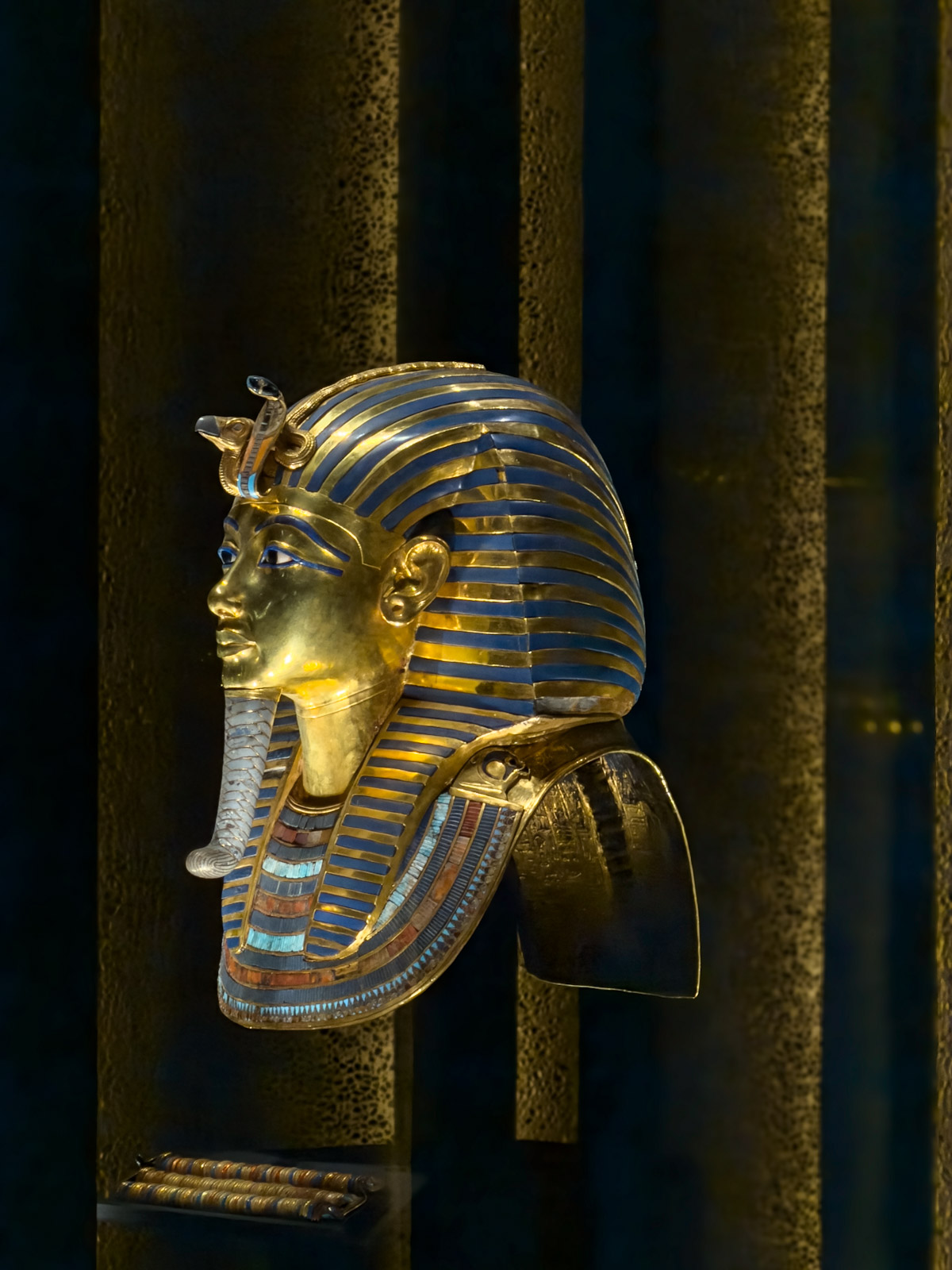
One of the most fascinating parts is the collection of treasures belonging to Tutankhamun. For the first time, the entire collection discovered in his tomb is displayed in one place.
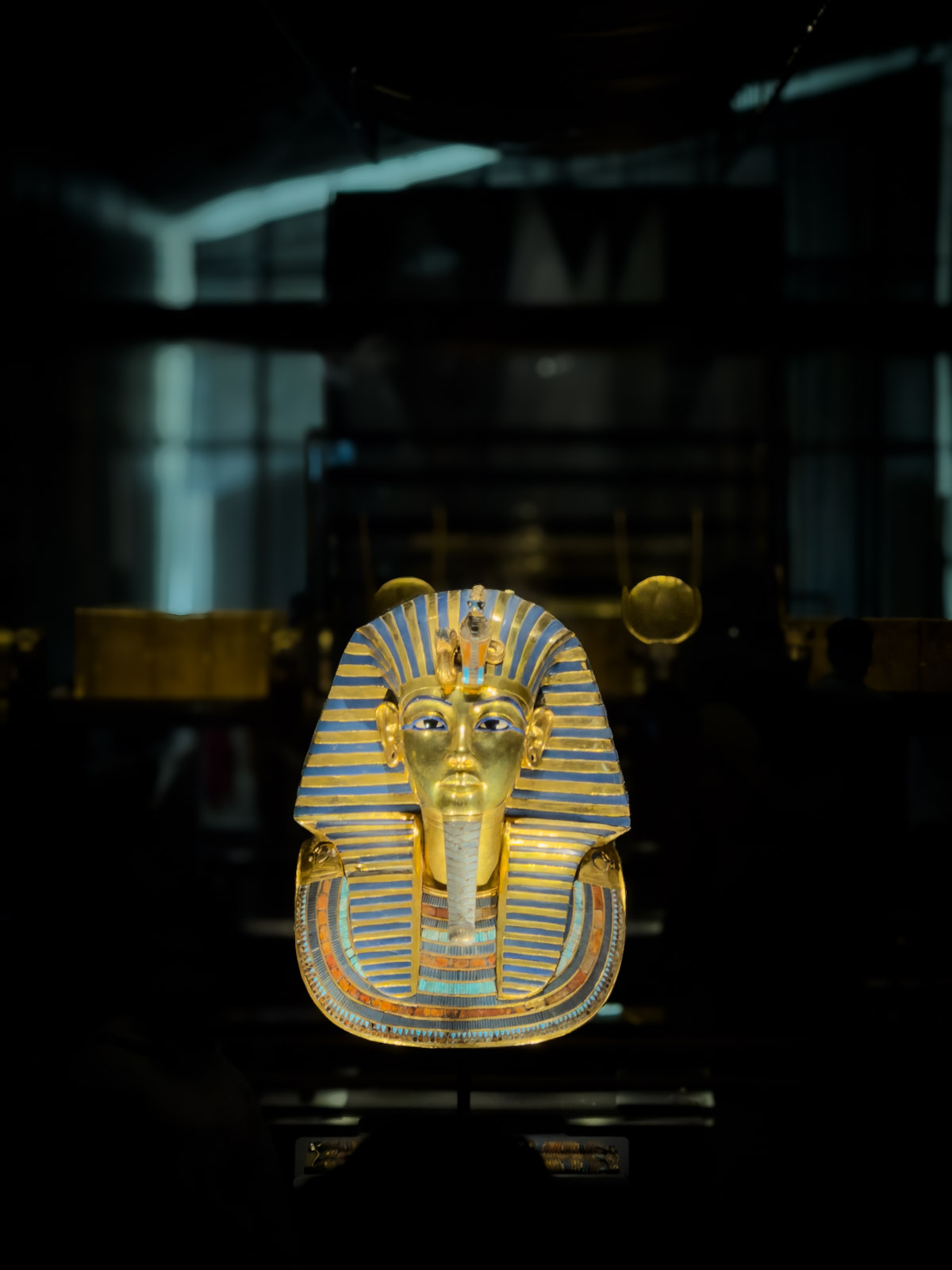
Of course, the highlight for many visitors (including myself) is seeing the famous golden funerary mask of Tutankhamun. Made of solid gold and inlaid with lapis lazuli and precious stones, the mask is one of the most iconic objects from ancient Egypt. After studying it in school, standing in front of it feels quite surreal and almost like meeting a celebrity.
After visiting the tomb of Tutankhamun in Luxor, this section felt especially meaningful. In the Valley of the Kings, the tomb itself was almost completely empty, as its treasures (over 5000 pieces) had long been moved to Cairo. Standing here, surrounded by an entire collection of objects from the very tomb we had just explored, really brought everything full circle.
If you’re planning a similar route, we covered our full Nile cruise itinerary, including Luxor and the Valley of the Kings, in a separate guide.
The only piece that remained in the tomb was the coffin containing Tutankhamun’s mummy, which we had already seen in Luxor. Ironically, the coffin displayed here is purely symbolic (empty inside) as the real mummy still rests in the Valley of the Kings.
Visiting the Pyramids of Giza
Lunch at 9 Pyramids Lounge
When we visited Cairo, the pathway connecting the GEM to the pyramids was still not open, so we had to take an Uber.
I suggest entering through the new main gate when visiting the Pyramids Complex.
Instead of cars and tour buses driving freely around the plateau like in the past, visitors now enter through a modern visitor center and use free shuttle buses that circulate around the site, similar to what we experienced in Jiuzhaigou National Park in China.
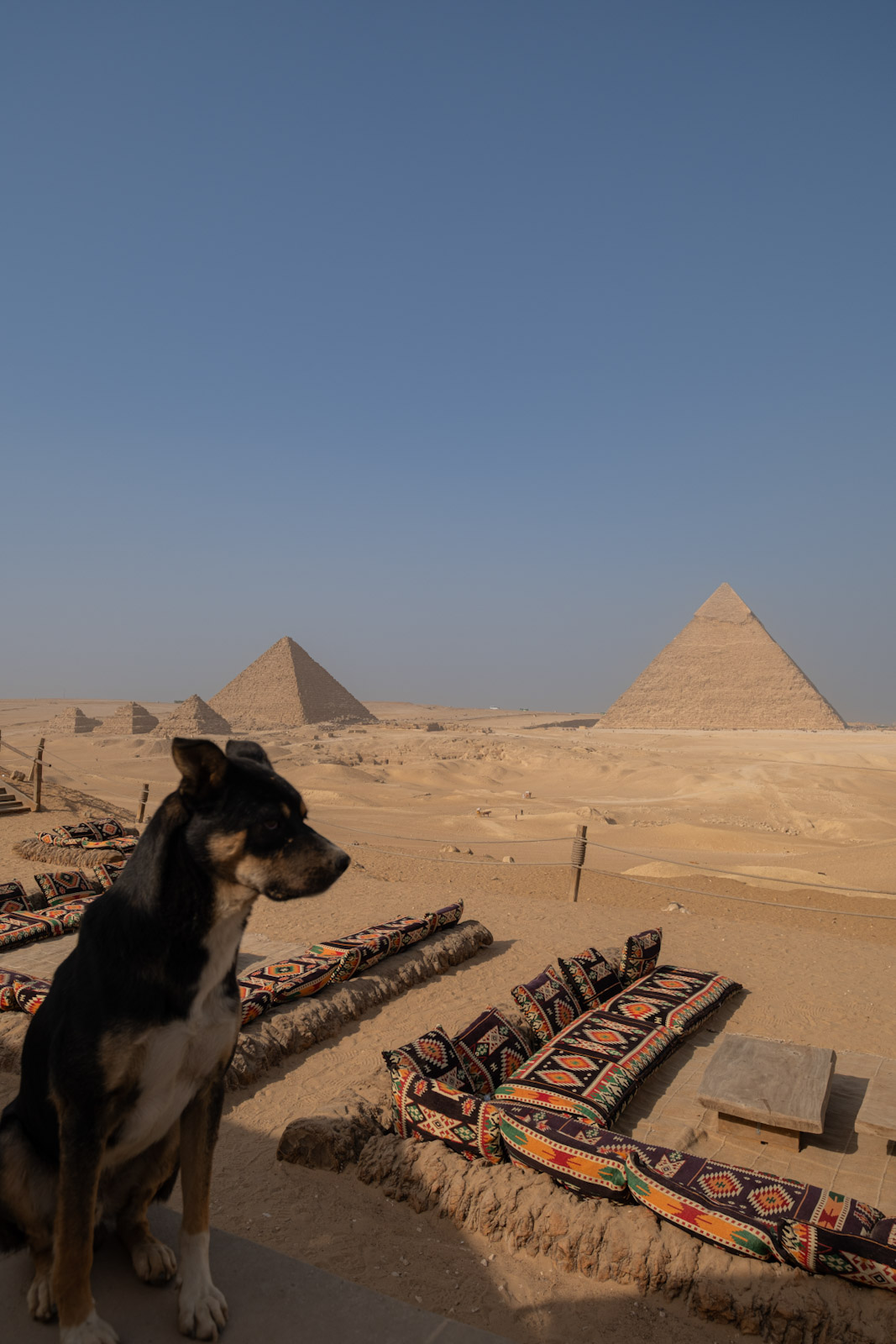
We took the shuttle bus to 9 Pyramids Lounge, where we had a reservation for lunch.
There, we enjoyed a traditional Egyptian meal with what I can only describe as an almost fake backdrop: the pyramids. Seeing them so close while having lunch felt incredible, like a movie set rather than something built more than 4,500 years ago.
Tip: In order to secure a table with a nice view, booking ahead is a must at 9 Pyramids Lounge.
Exploring the Giza Plateau
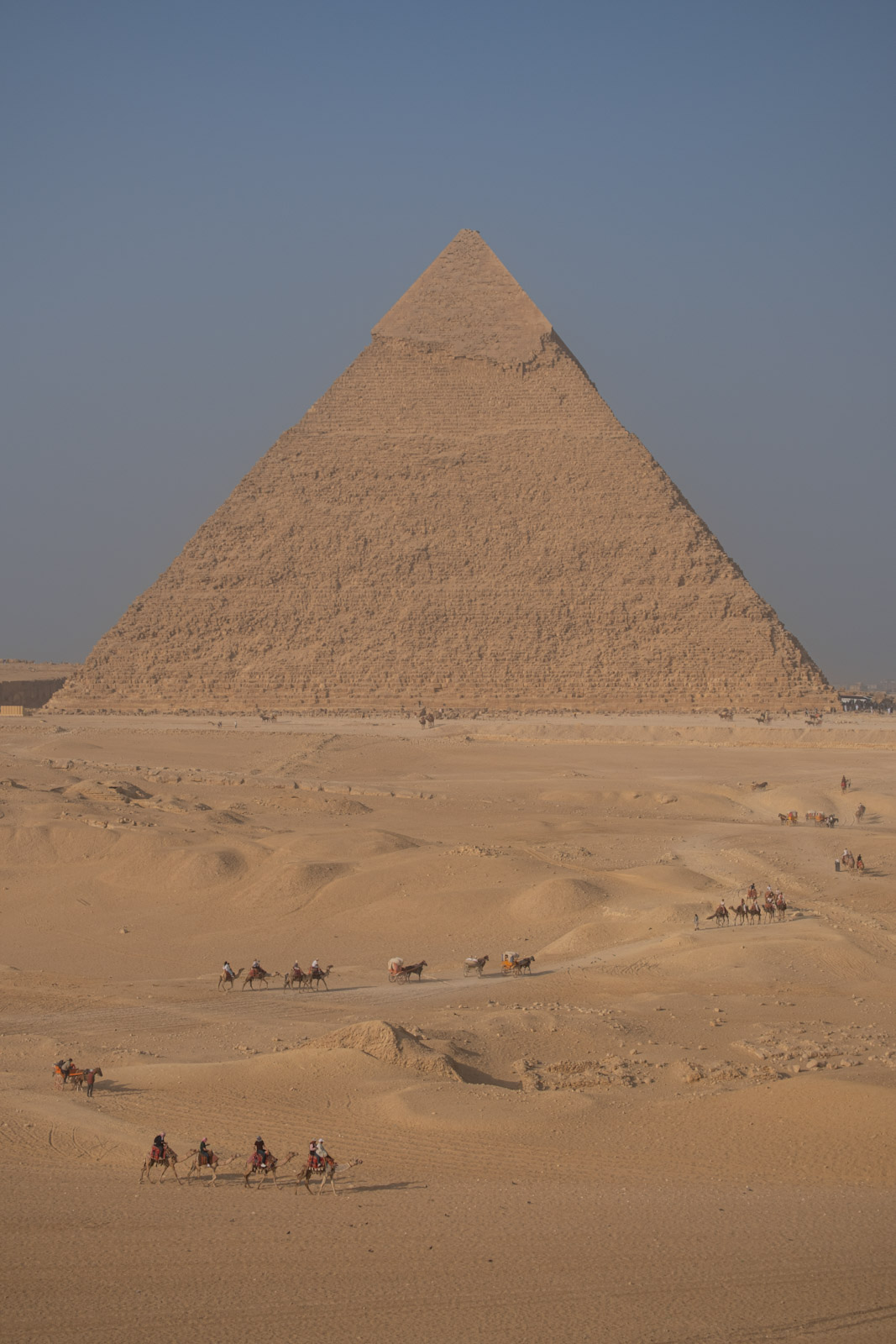
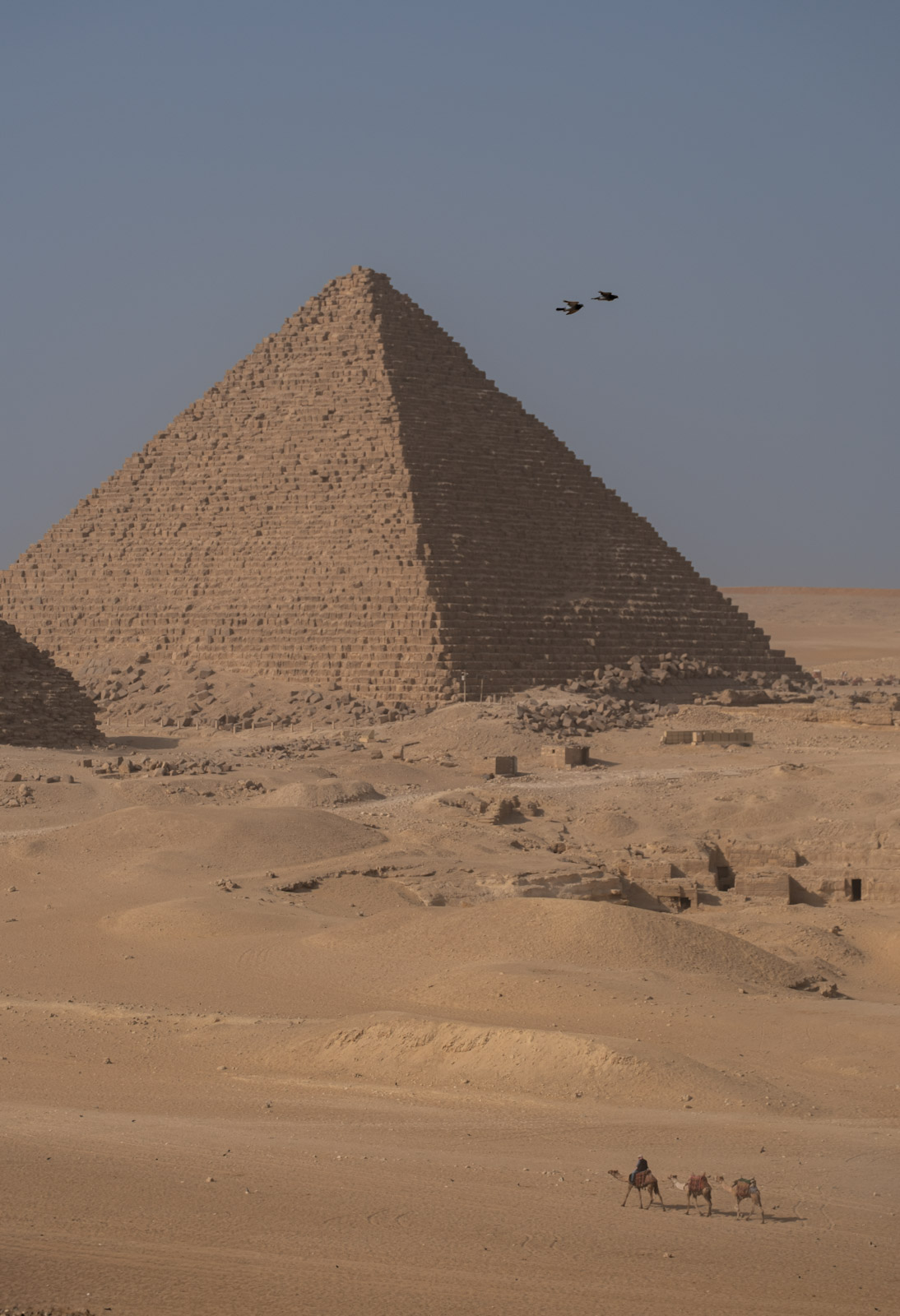
These shuttle buses run continuously and stop at the main points of interest, allowing visitors to hop on and off while exploring the pyramids. The site felt much more organized and with far less traffic than the horror stories we had read online before the introduction of this system. Because of those reviews, we were a bit concerned about scams. We had read stories about locals blocking photos or asking for money.
Let me tell you, that didn’t happen to us at all.
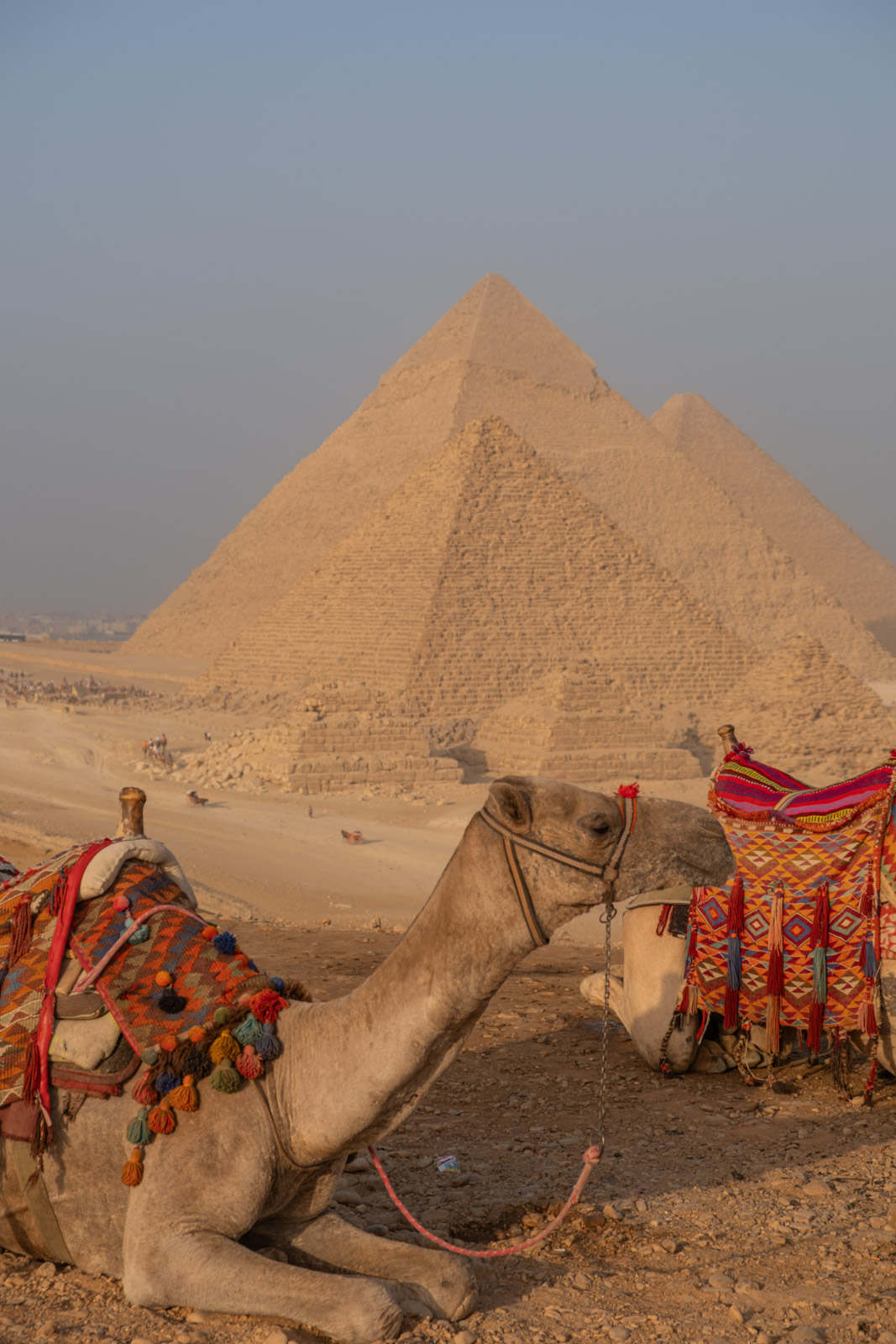
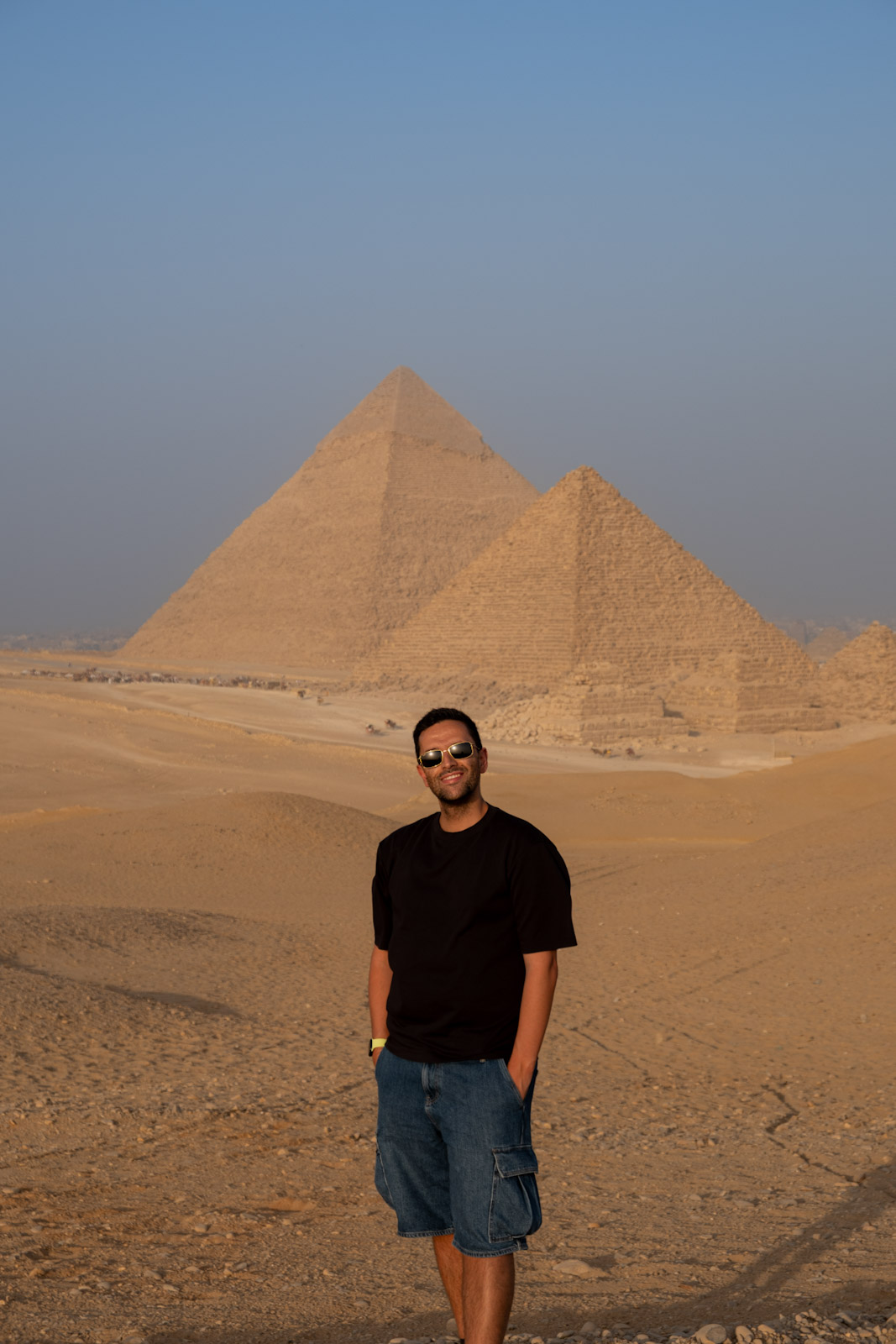
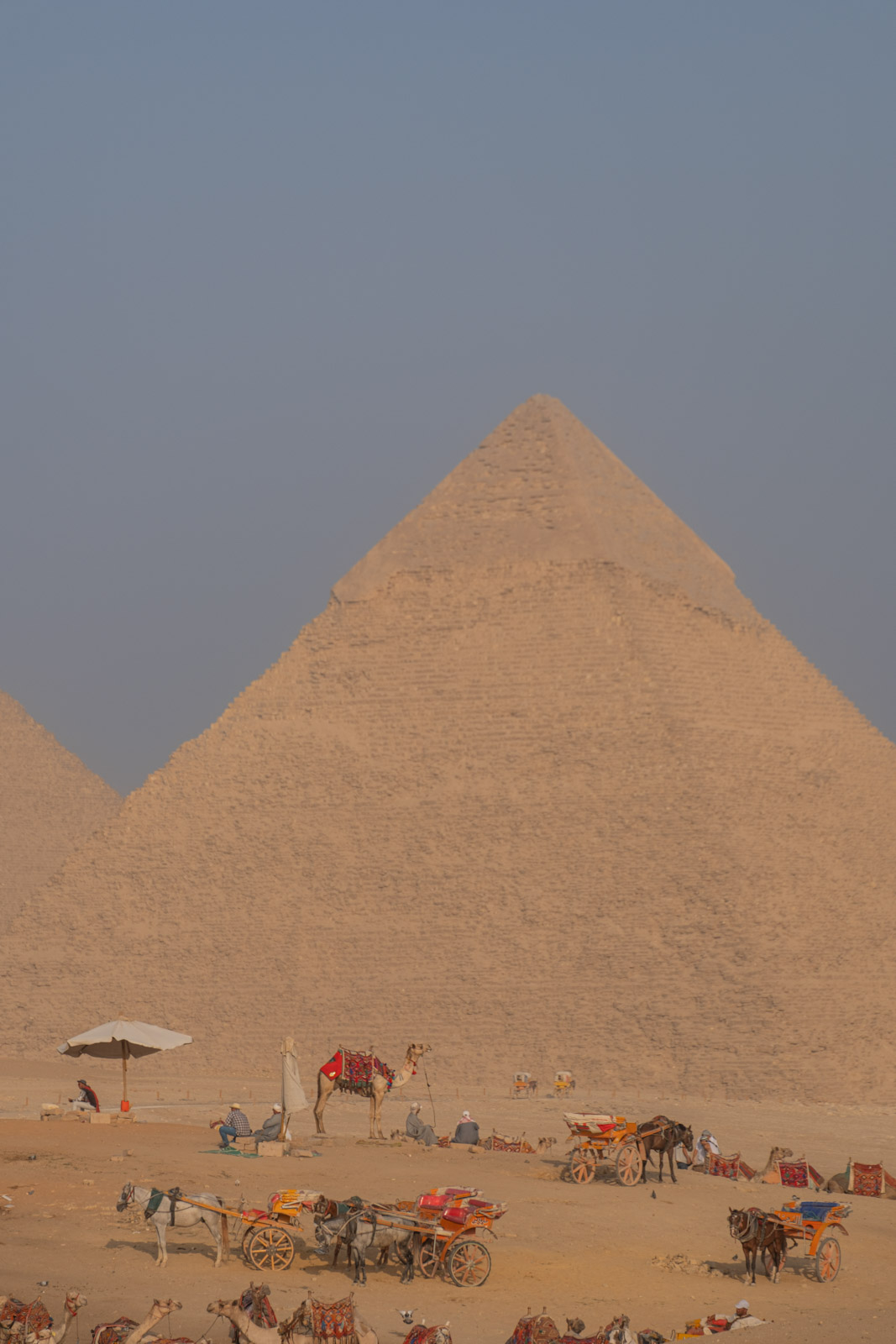
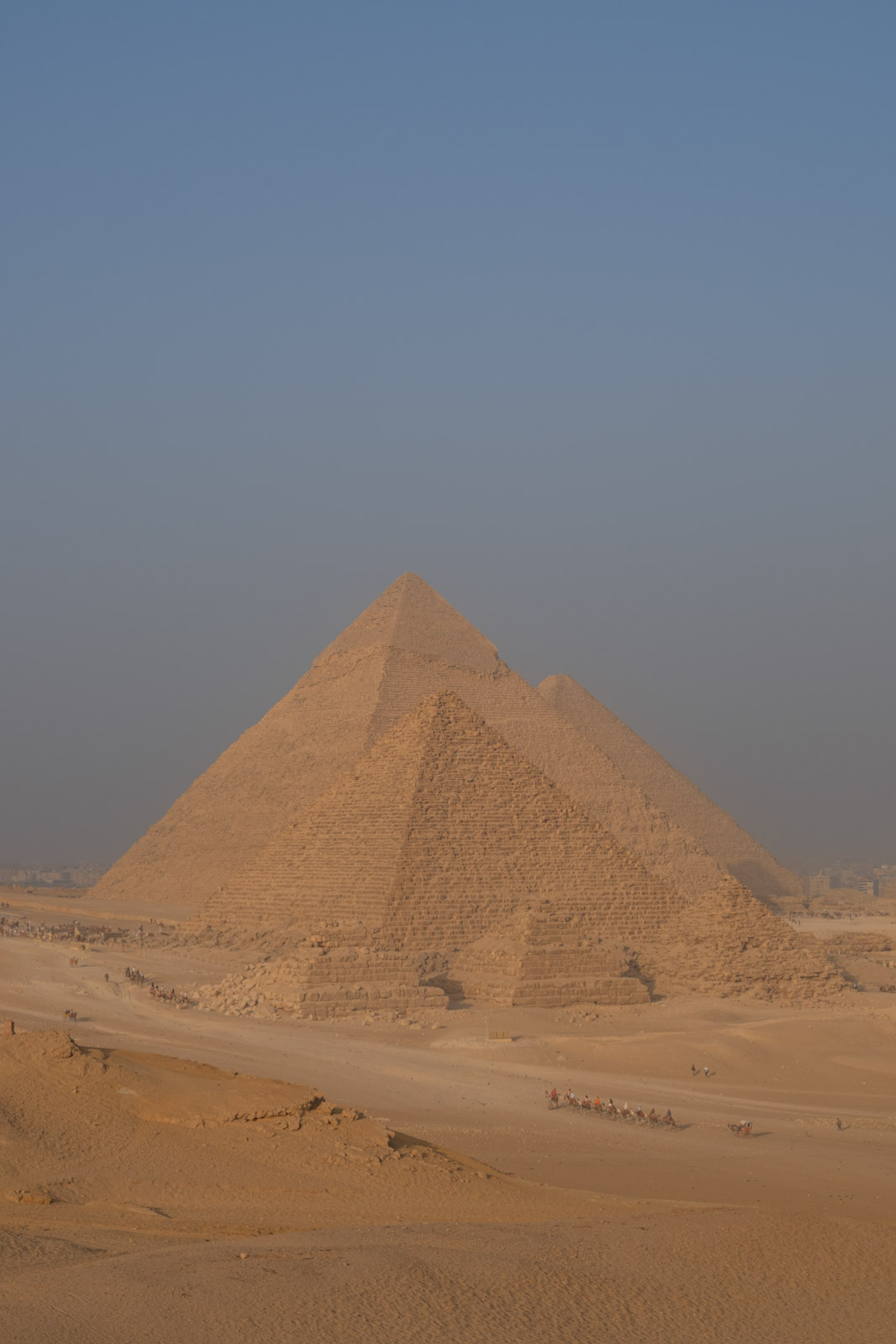
We even walked through the sandy camel paths to take the famous photo with the pyramids and camels in the foreground, and not once were we stopped or blocked. We were approached a couple of times by camel riders offering rides, but they easily left us alone when we politely declined.
The rest of the afternoon we spent walking around the plateau, taking photos and trying to take in the scale of these ancient structures.
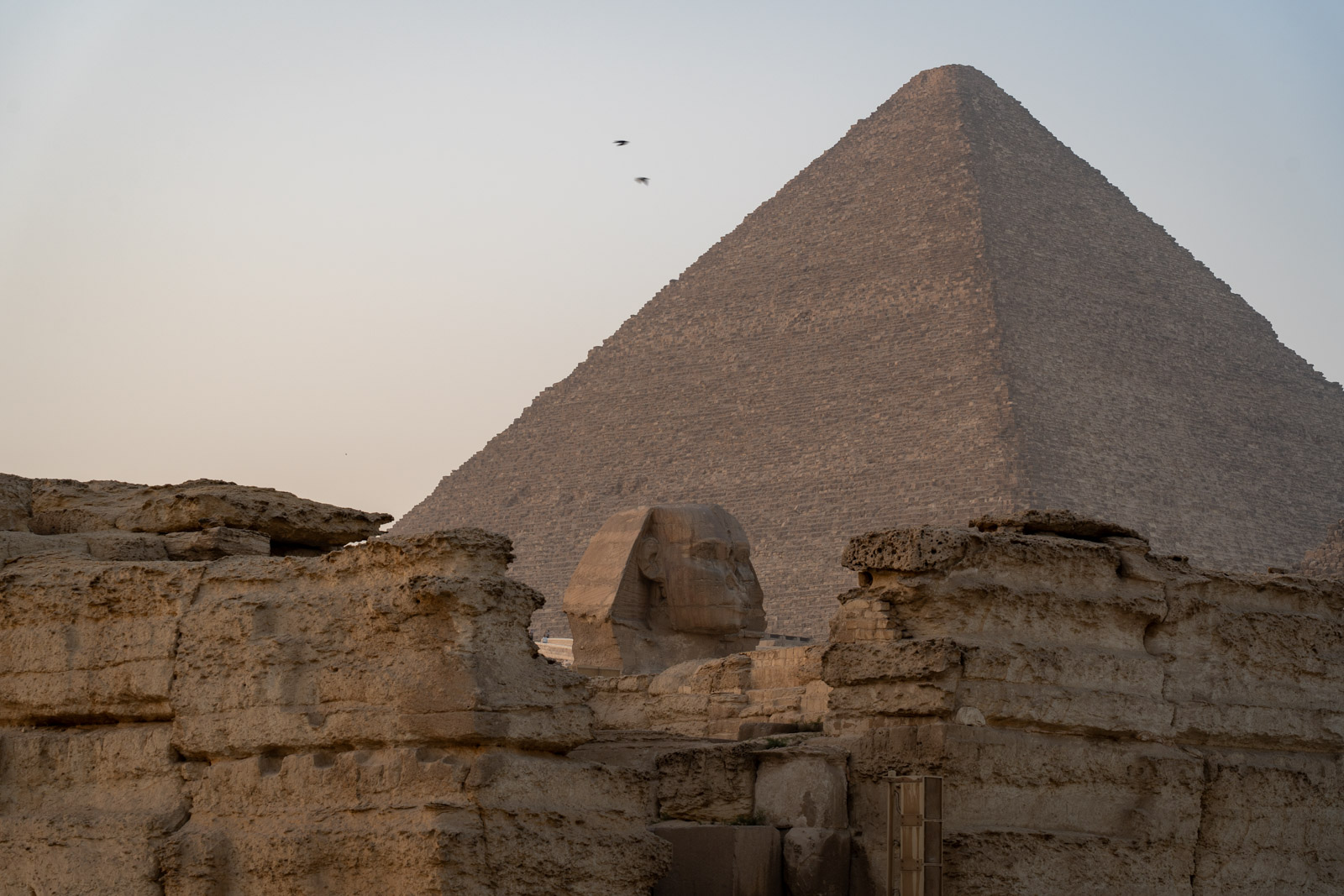
The Great Sphinx of Giza
One moment I had been particularly excited about was finally seeing the Great Sphinx of Giza. From the moment we landed in Egypt, I wouldn’t stop talking about sphinxes and how badly I wanted to see them.
We arrived just in time, with only a few minutes to spare before the closure of the plateau. Standing in front of this enormous statue, with the body of a lion and the head of a pharaoh, felt almost surreal. I know I use “surreal” a lot, but this entire trip felt like that, especially since I studied History of Art and always loved Egyptian history growing up.
Souvenir Shopping Chaos
As we walked off the plateau, we passed through the souvenir stalls and let me tell you, this is where things got interesting.
With vendors packing up and the day coming to an end, we had never bought so many souvenirs in one place. They didn’t seem very interested in negotiating anymore, so we just started blurting out incredibly cheap prices and to our surprise, they were accepting them.
At some point, vendors even followed us, lowering prices more and more, which somehow resulted in us buying double what we had planned. We left the complex happy, slightly poorer and carrying far more souvenirs than expected.
Sunset Over the Pyramids
The day ended in the best way possible: sitting at a rooftop overlooking the pyramids while watching the sun slowly set over the desert.
It felt like the perfect way to close an unforgettable trip to Egypt. Sadly we were expecting to see some sort of light show on the Pyramids, but unfortunately that wasn’t the day. We couldn’t find black and white information about the dates of the show and even after asking some locals, they couldn’t tell too.
Bonus tip: Shopping Handicrafts at Fair Trade Egypt
As you’ve probably realised by now, we love shopping for souvenirs, especially for our home. Michiel came across a shop called Fair Trade Egypt online, which sells locally made handicrafts while supporting Egyptian communities. Naturally, we had to check it out.
We were pleasantly surprised. Prices are fixed, so there’s no bargaining or negotiating. Don’t even try to let them keep the change, because they insist on you taking it. The staff gives you plenty of time to browse without any pressure to buy. It’s also worth noting that most of the items here are quite different from the “standard bazaar souvenirs” you’ll find all over the country. We ended up bringing home a beautiful (and very heavy) alabaster bedside lamp, which we carried in our hand luggage on the flight back later that same night.
One last Meal in Egypt
Just around the corner from the Fair Trade Egypt store, we came across a very cute and small restaurant, called Tayer Ya Fatayer Zamalek. We couldn’t resist trying their fatayer. Fresh out of the oven, the little triangular pastries were warm and soft, stuffed with a flavorful mix of spinach, cheese, and herbs. It was a perfect last taste of Cairo.
Final Thoughts
Cairo was chaotic and loud, but also incredibly enjoyable.
We had great food, discovered new places and I shared my love for history with Michiel, who patiently listened to me talking about all these monuments.
It was not just a visit to Cairo, it was the perfect ending to a journey through Egypt.
Related articles
Interested in traveling to Egypt as well? Check out our other articles that will help you plan your trip:
- Sailing the Nile: Our 4 days from Aswan to Luxor
- 2 Days in Cairo: Our Itinerary Exploring Pyramids, Grand Egyptian Museum & Local Food
- Best Nile Cruise Egypt: How to Choose the Right One
- Nile Cruise Egypt Prices Explained: Real Costs, Tips & Hidden Expenses
- Where to Stay in Cairo: Zamalek vs Downtown vs Giza (Best Areas Explained)
- One Week Egypt Itinerary: Cairo + Nile Cruise (Minimum Time Needed)
Cairo Travel Tips for First-Time Visitors
FAQ – Visiting Cairo
Planning your trip
Yes, 2 days is enough to see the main highlights, including the Pyramids of Giza, the Grand Egyptian Museum, and parts of Old Cairo. It’s a fast-paced itinerary, but very doable. However, if time allows you, we’d suggest staying one more night.
Yes, it’s recommended to book tickets online in advance and select a time slot. Guided tours are also worth it if you want to better understand the highlights in a limited time.
Yes, it’s possible and quite common. Start with the museum in the morning and visit the pyramids in the afternoon. However, if we could do it all over again, we would suggest splitting it over two days. Both places offer a lot to see, and it’s nice to have more time to take it all in without rushing.
Many travelers combine Cairo with a Nile cruise between Luxor and Aswan. We started in Aswan and ended our trip in Cairo, which worked perfectly to finish with the pyramids and museum. If you’re planning a similar route, check out our full Nile cruise guide for the complete itinerary.
Getting Around Cairo
The easiest way to get around is by using ride-hailing apps like Uber, Careem, or InDrive. Traffic can be chaotic, so these apps are more reliable than traditional taxis. And if you are feeling adventurous, you can always try riding the Cairo metro.
While you can use ride-hailing apps, the airport can feel very chaotic. For a more relaxed arrival experience we recommend booking an airport pick up. We booked ours here through Booking.com.
The easiest way is by Uber, Careem or InDrive. Once inside the complex, free shuttle buses take you between the main viewpoints and monuments.
Money, Safety & Practical Tips
Cairo is generally safe for tourists, especially in main areas like Downtown, Zamalek, and Giza. Like in any big city, stay aware of your surroundings and avoid overly pushy vendors.
Yes, cash is essential for markets, small shops, and tips. While many hotels and restaurants accept cards, places like Khan el-Khalili Bazaar mainly operate in cash.
Where to Stay & Experiences
Definitely. Old Cairo can feel overwhelming, and a guide helps you navigate the area while explaining the historical significance of the mosques, streets, and landmarks. We did this tour and recommend it, especially if you have limited time.
We decided to stay in Zamalek, right by the Nile. The area feels very safe and quiet, while it’s only a short ride away from the old town.