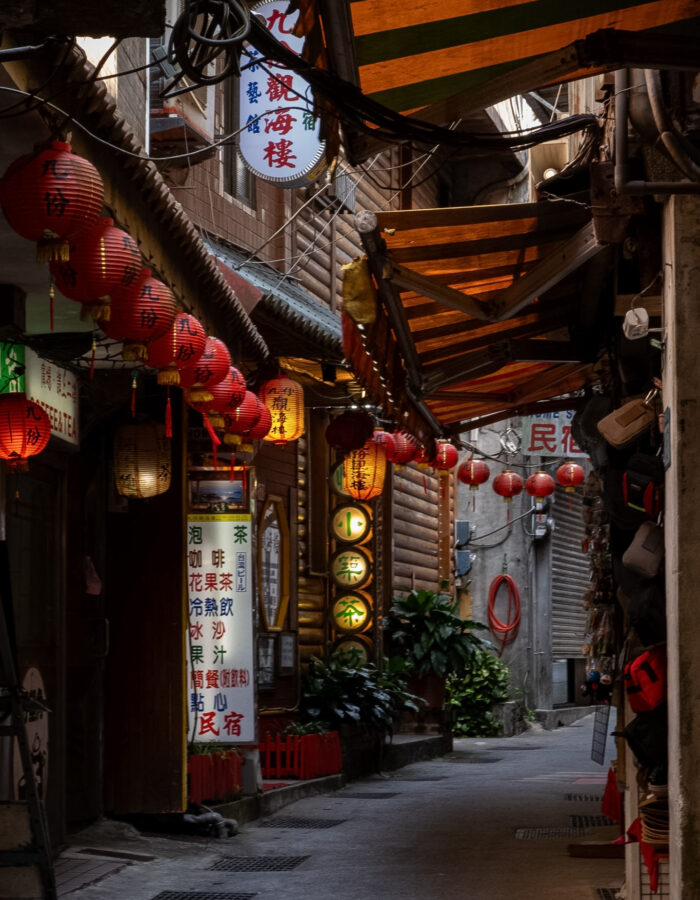
Jiufen was one of those places I had seen countless times before visiting Taiwan. Narrow staircases covered in red lanterns, wooden teahouses built into the mountainside and views stretching towards the sea.
The reality is busier and more crowded than the photographs suggest, but Jiufen still has plenty of charm.
I visited Jiufen independently from Banqiao, spending the day exploring its Old Street, trying Taiwanese street food and walking down the famous lantern-covered Shuqi Road.
Here is how to plan a Jiufen day trip from Taipei and what the experience is really like.
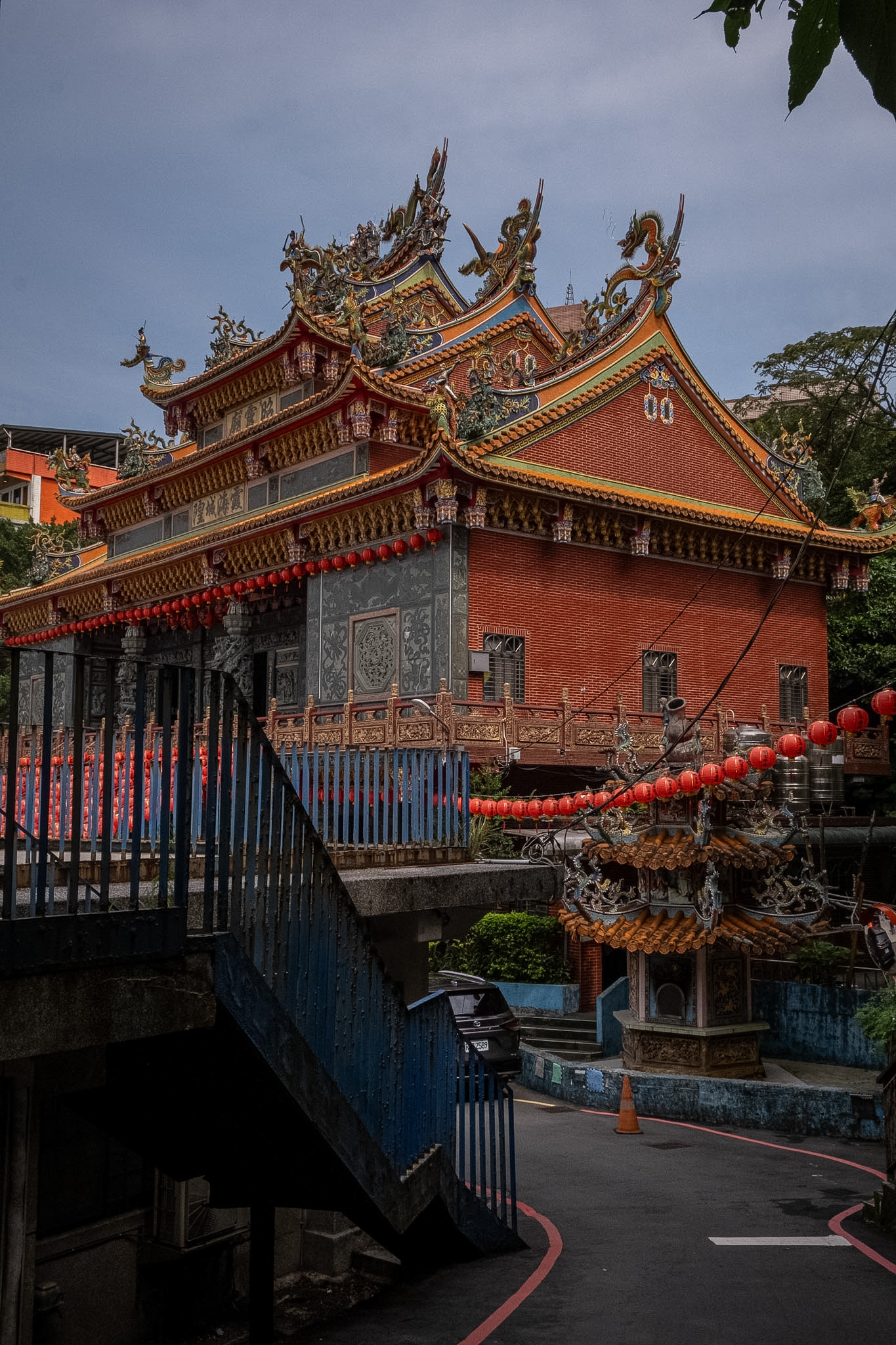
How to Get to Jiufen from Taipei and Banqiao
I took bus 965 directly from Banqiao to Jiufen. It is one of the easiest options because there is no need to take the train to Ruifang and change buses. The journey is roughly 1h45.
The same bus also runs through central Taipei before it heads out to Ruifang and Jiufen, so you do not need to start in Banqiao to use it. It stops at MRT Ximen Station and MRT Beimen Station, which makes it a convenient option if you are staying around Ximending, Taipei Main Station or anywhere on the west side of the city. Boarding in central Taipei rather than Banqiao will shave some time off the journey.
I paid with my EasyCard, just as I would on the MRT. The bus gradually leaves the city behind before climbing into the mountains towards Jiufen.
The bus stops close to the entrance of Jiufen Old Street. From there, everything is explored on foot, although you should be prepared for narrow alleys and plenty of stairs.
Exploring Jiufen Old Street
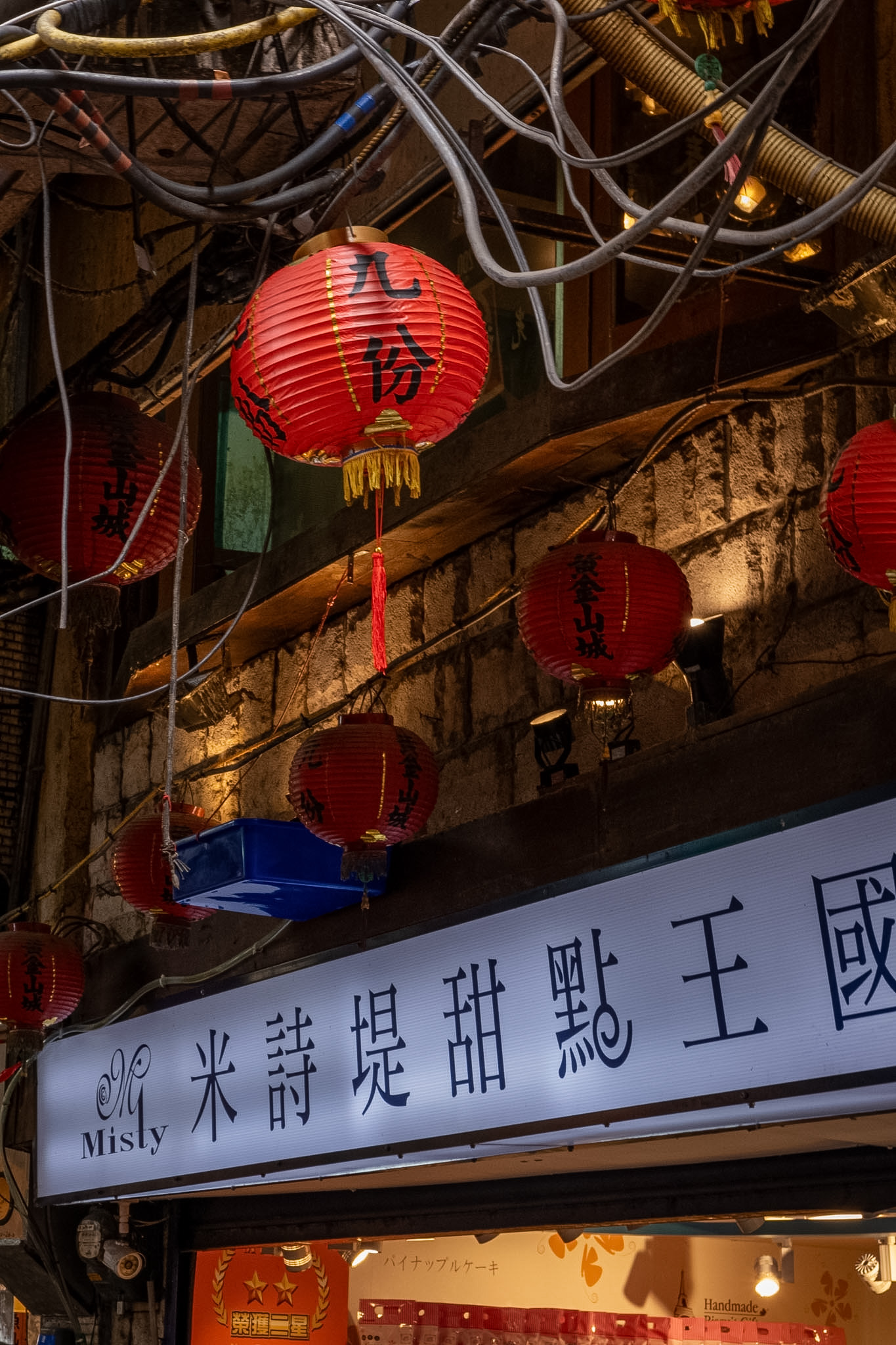
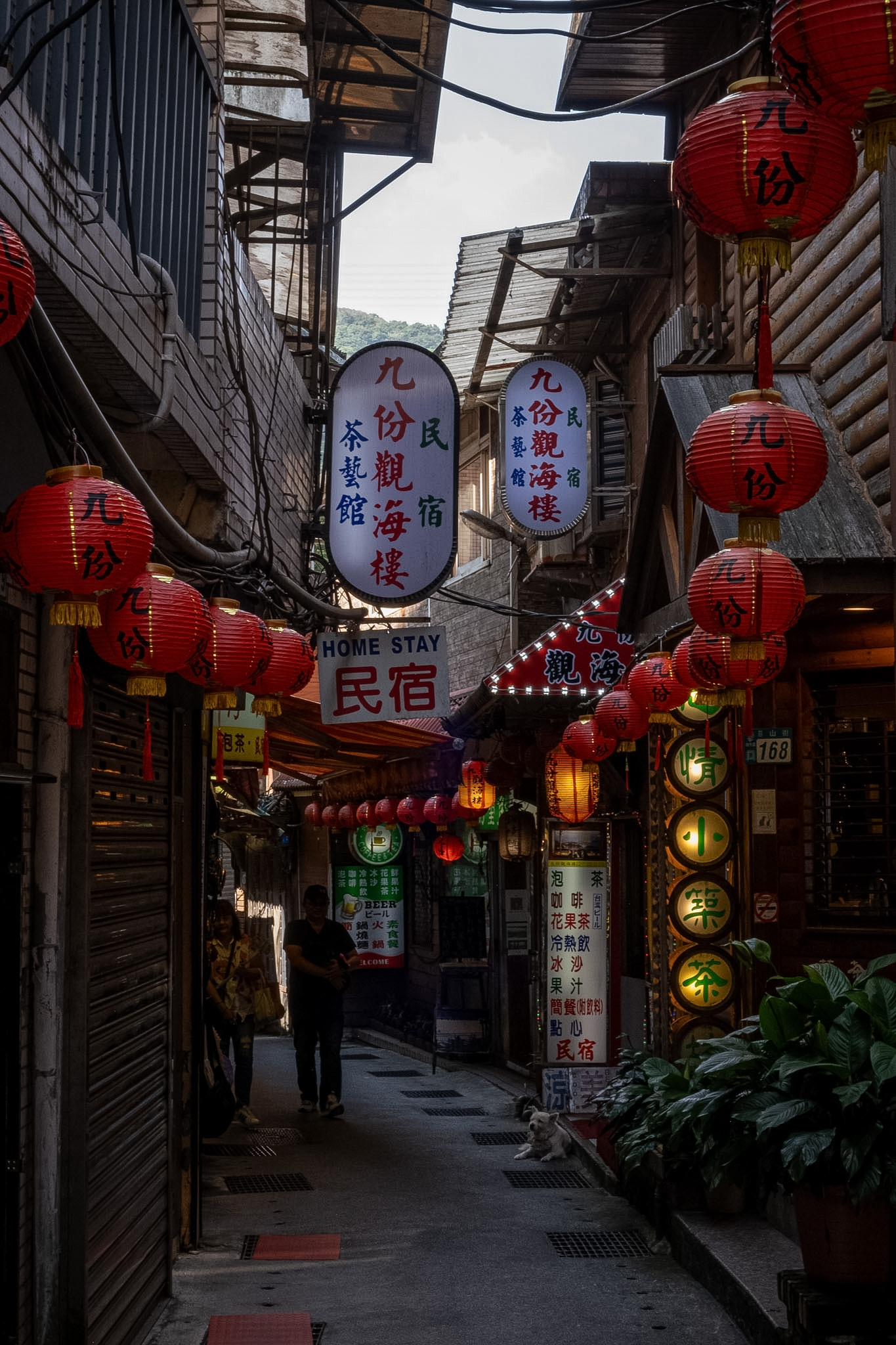
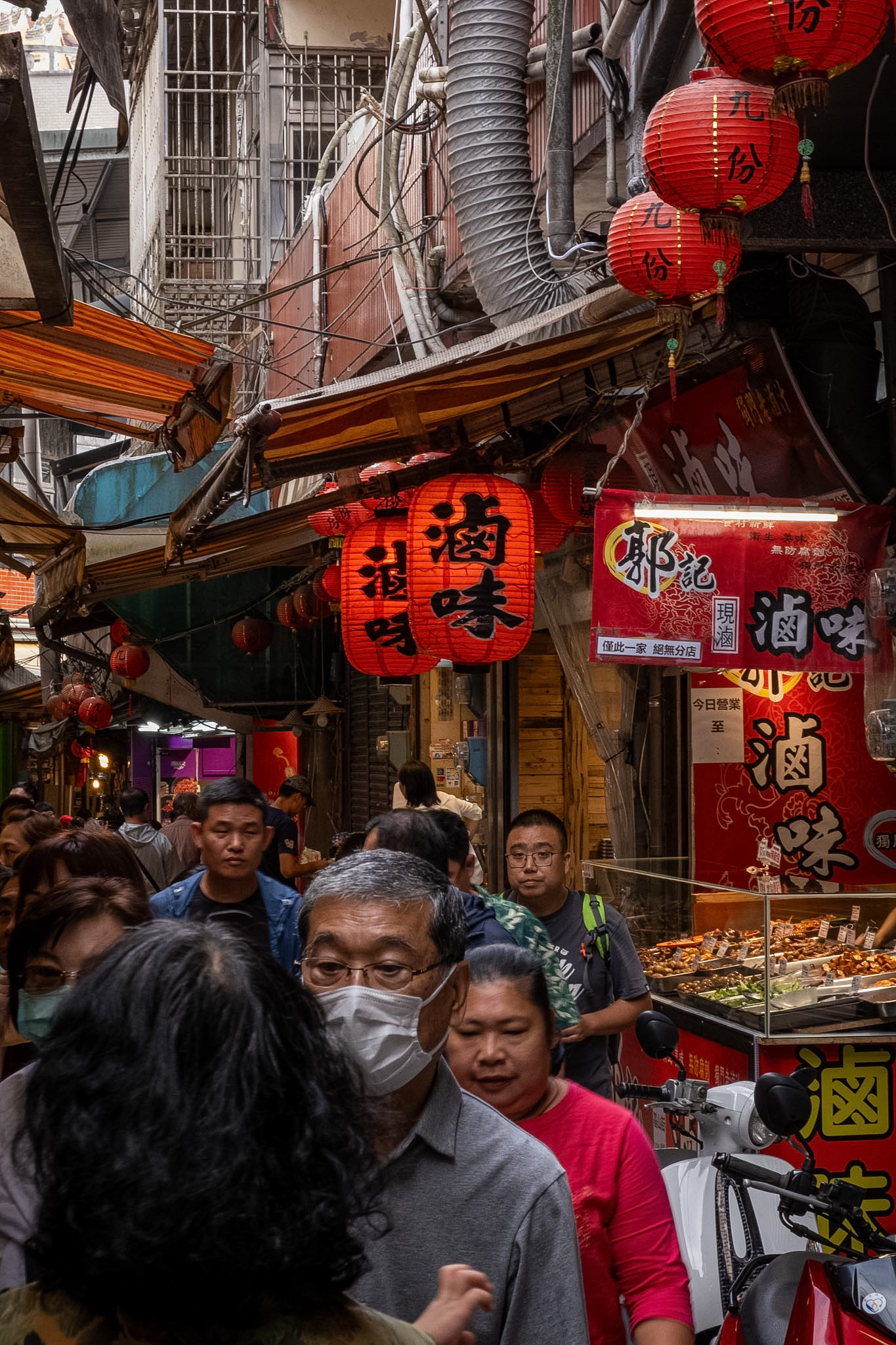
Jiufen Old Street is a long, narrow alley packed with food stalls, tea shops and small souvenir stores.
Steam rises from cooking pots, snacks are prepared directly in front of you and almost every few steps bring a different smell. The street can become extremely busy, with everyone moving slowly through the same narrow space.
It is crowded and commercial, but it does not feel like an open-air museum. There is still plenty of energy and character.
I stopped regularly for food and to look inside the smaller shops. Between the stalls, I found ceramics, tea, postcards, stationery and plenty of cat-themed souvenirs.
Some stores are clearly aimed at tourists, but there are still lovely small gifts that feel different from the usual mass-produced souvenirs.
What to Eat in Jiufen
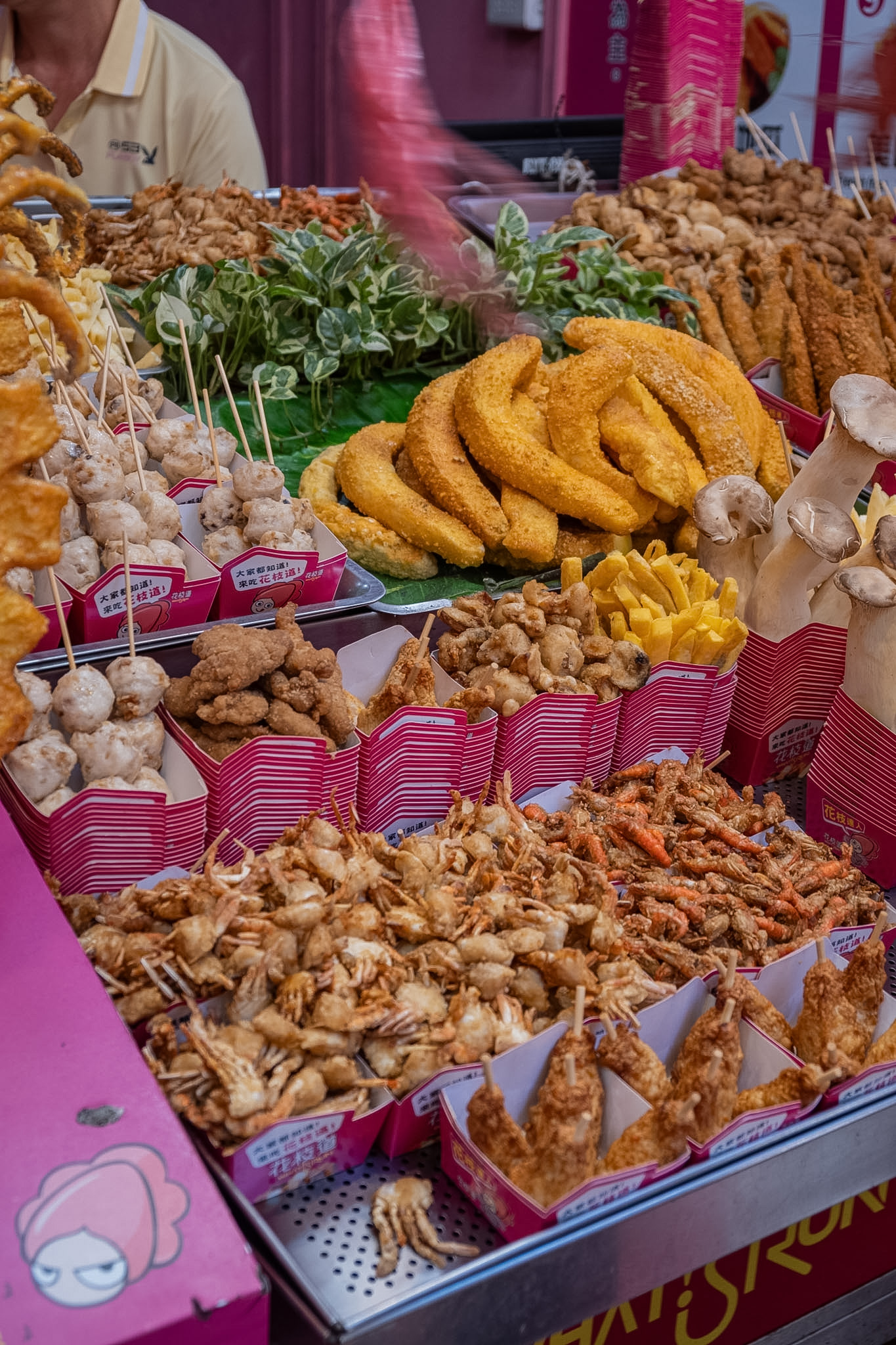
Food is one of the main reasons to visit Jiufen, so arrive hungry. Old Street works perfectly as one long tasting route, with many small dishes to try as you explore.
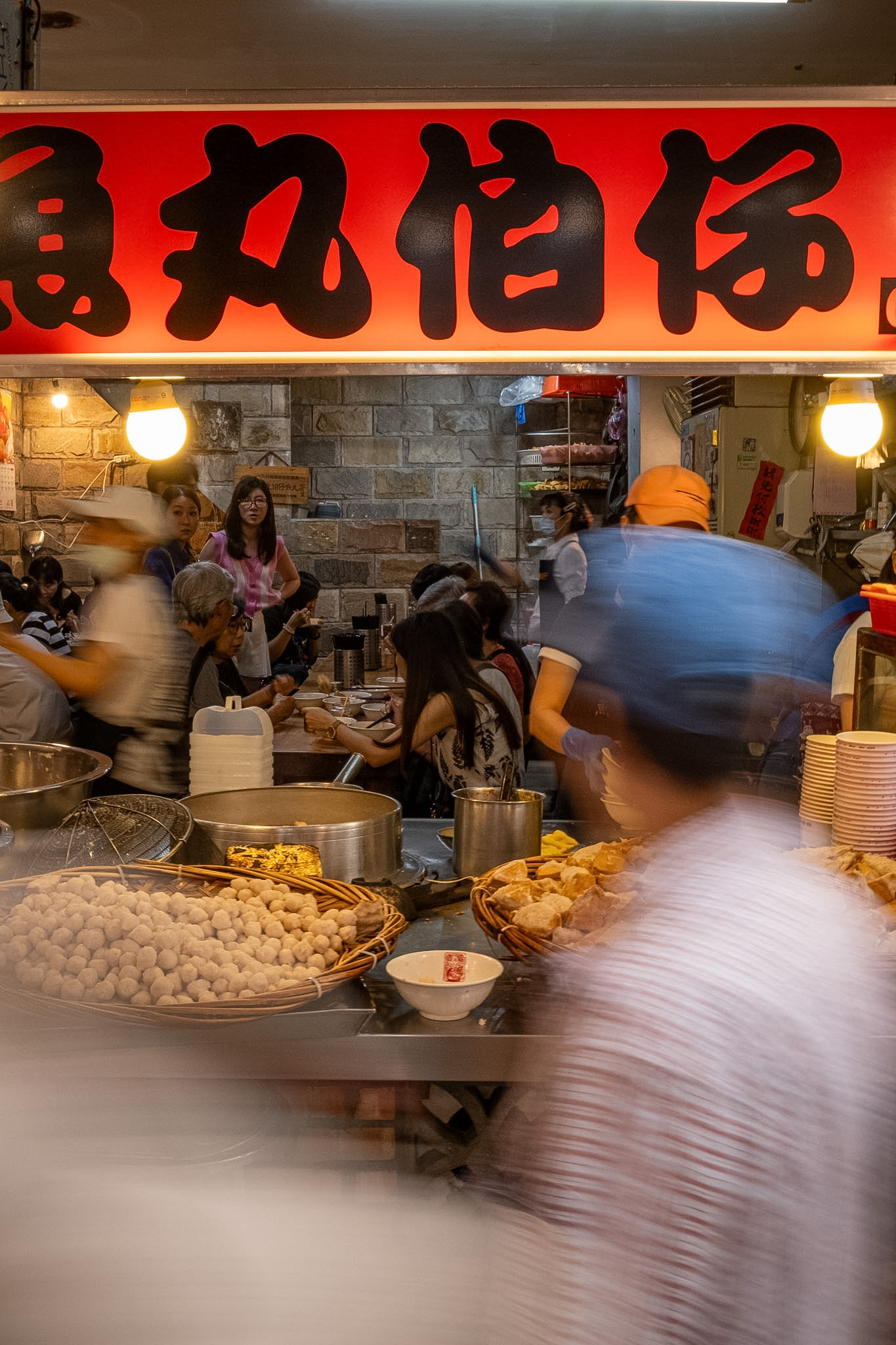
Fish-Ball Soup
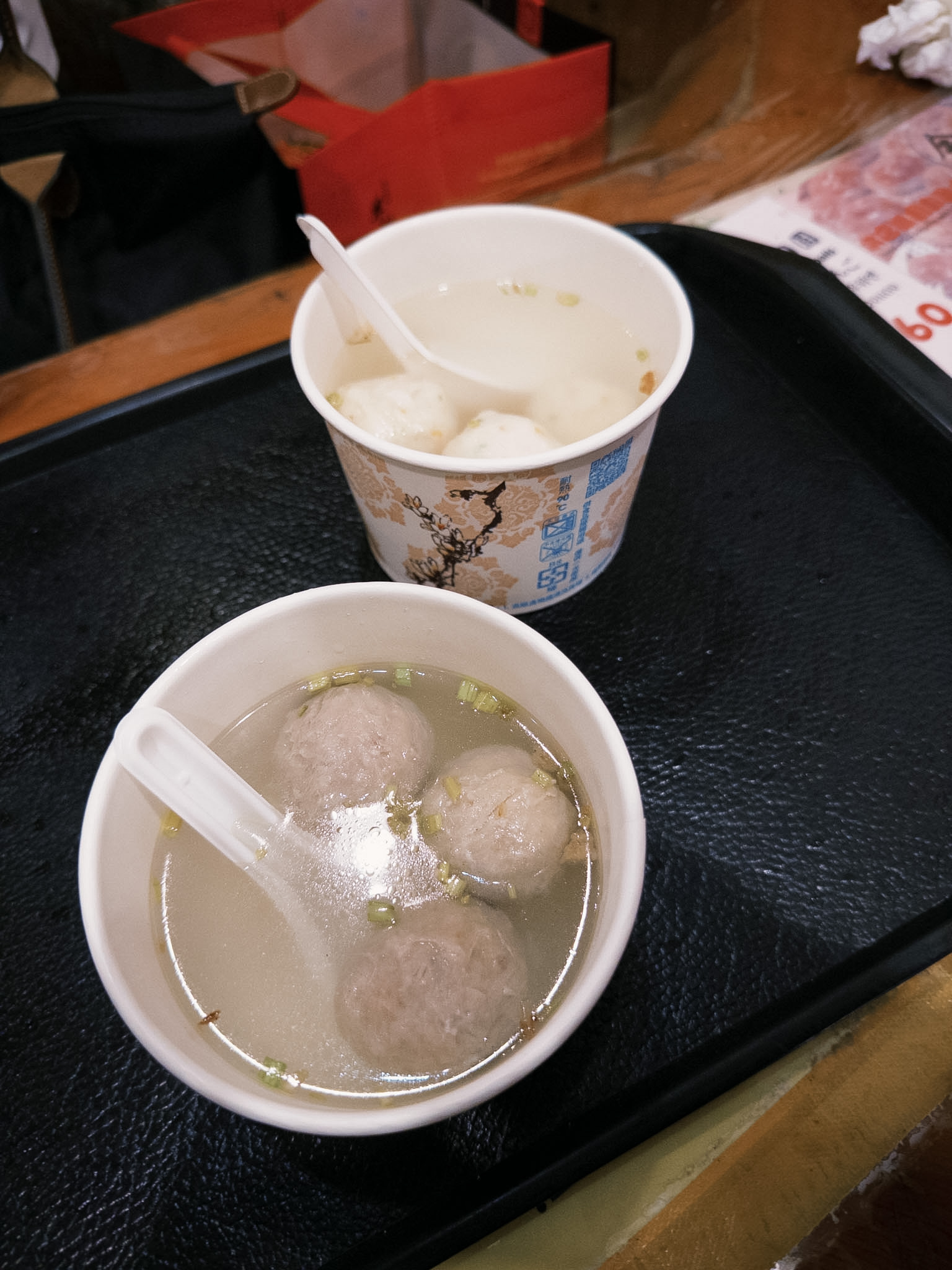
I started with fish-ball soup. The clear broth was light and comforting, while the fish balls had the springy texture commonly found in Taiwanese cooking. A simple dish, but a good savoury start before trying some of the heavier snacks.
Taiwanese Sausage
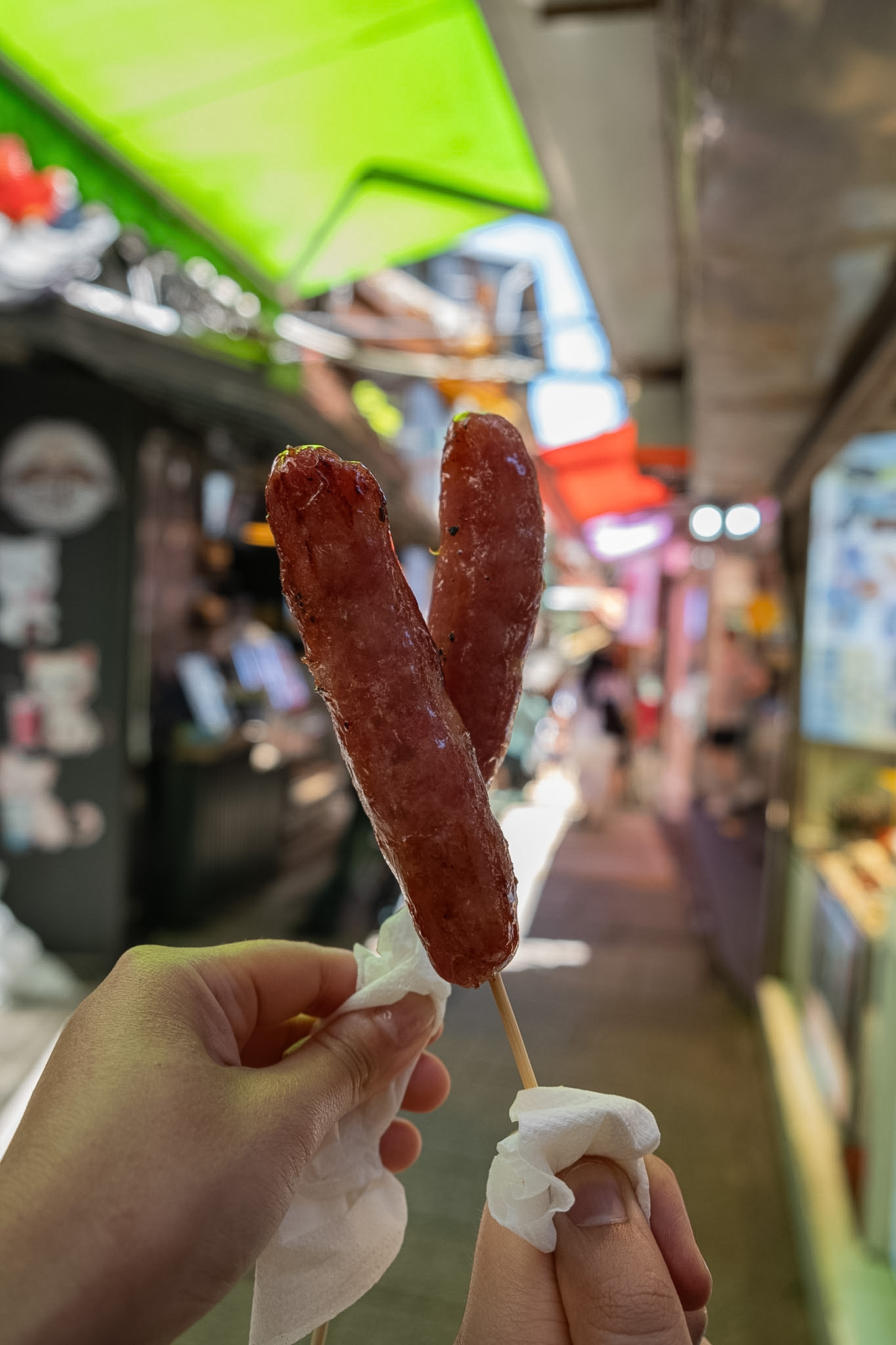
I also tried a Taiwanese sausage served on a stick. Slightly sweet, juicy and charred around the edges, it is an easy snack to eat while walking through Old Street.
Popcorn Chicken
The popcorn chicken arrived hot and crispy in small bite-sized pieces. It may not be unique to Jiufen, but freshly fried Taiwanese chicken is always difficult to resist.
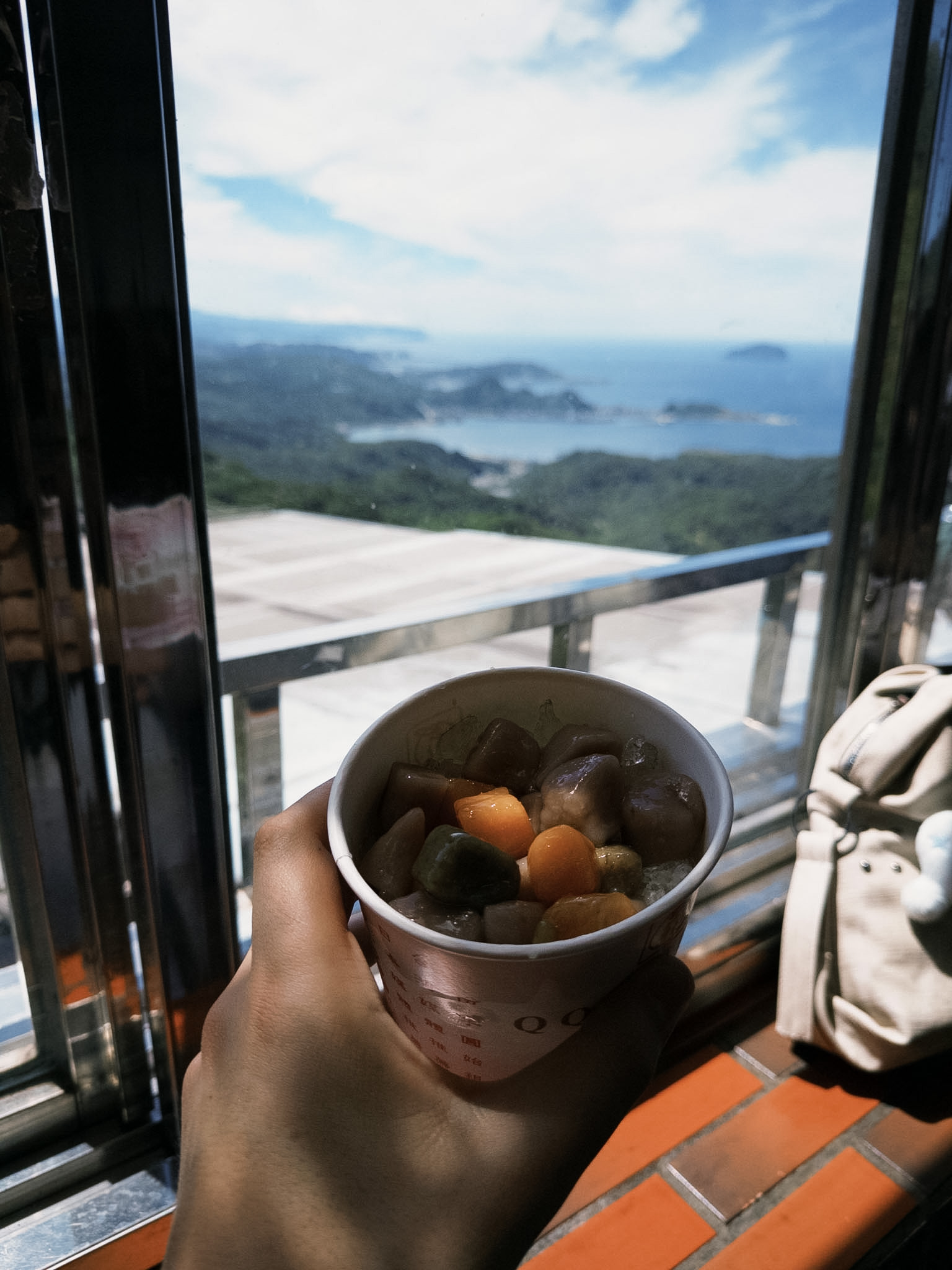
Jiufen Taro Balls
Taro balls are one of Jiufen’s best-known foods and something I could not leave without trying. Made with taro and sweet potato, the colourful balls have a soft and pleasantly chewy texture. They can be served warm in a sweet soup or cold over ice. After several savoury snacks, they made the perfect dessert.
Tea with a Mountain View
After navigating the crowds of Old Street, stopping for tea completely changed the pace of my visit.
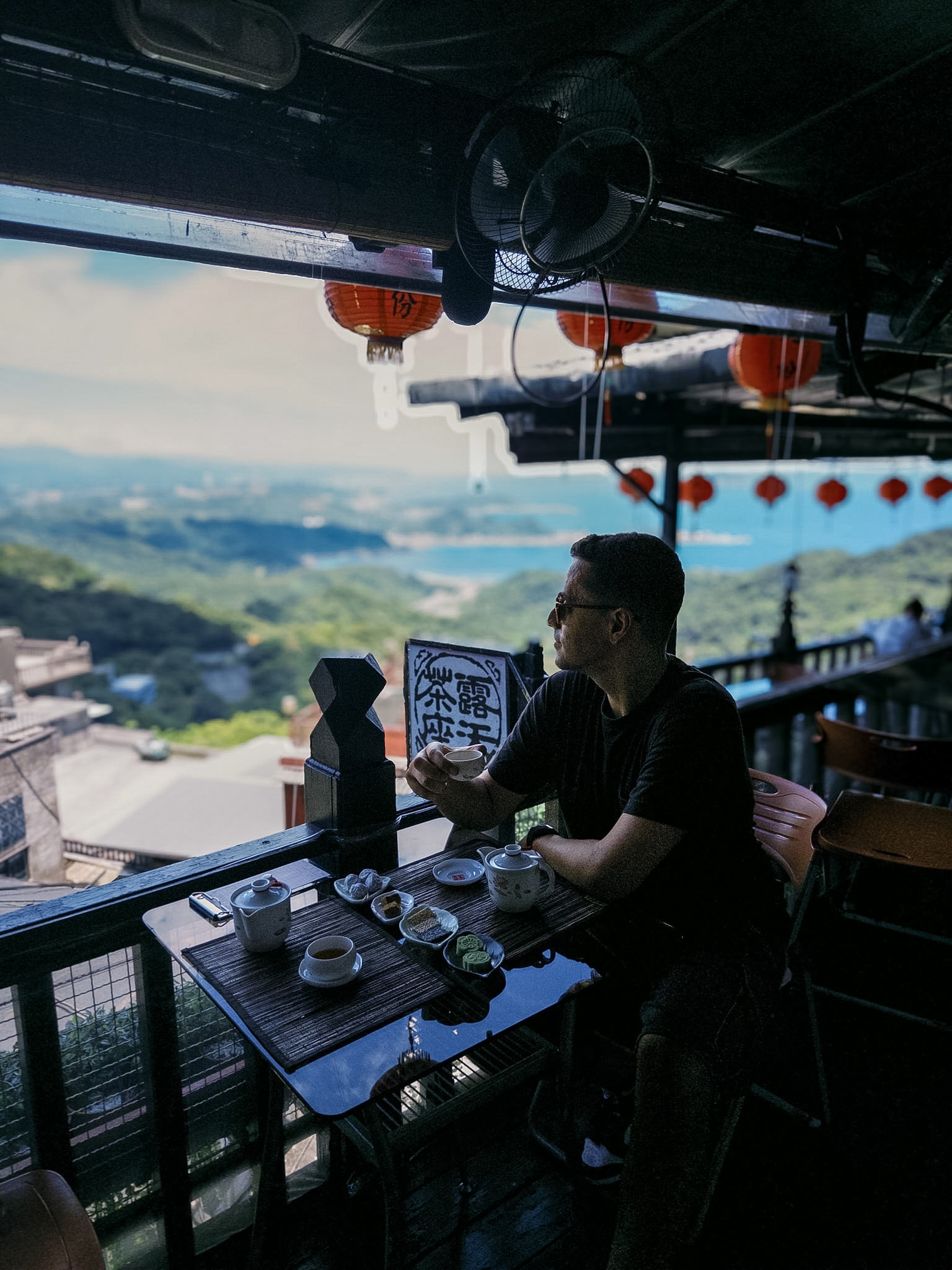
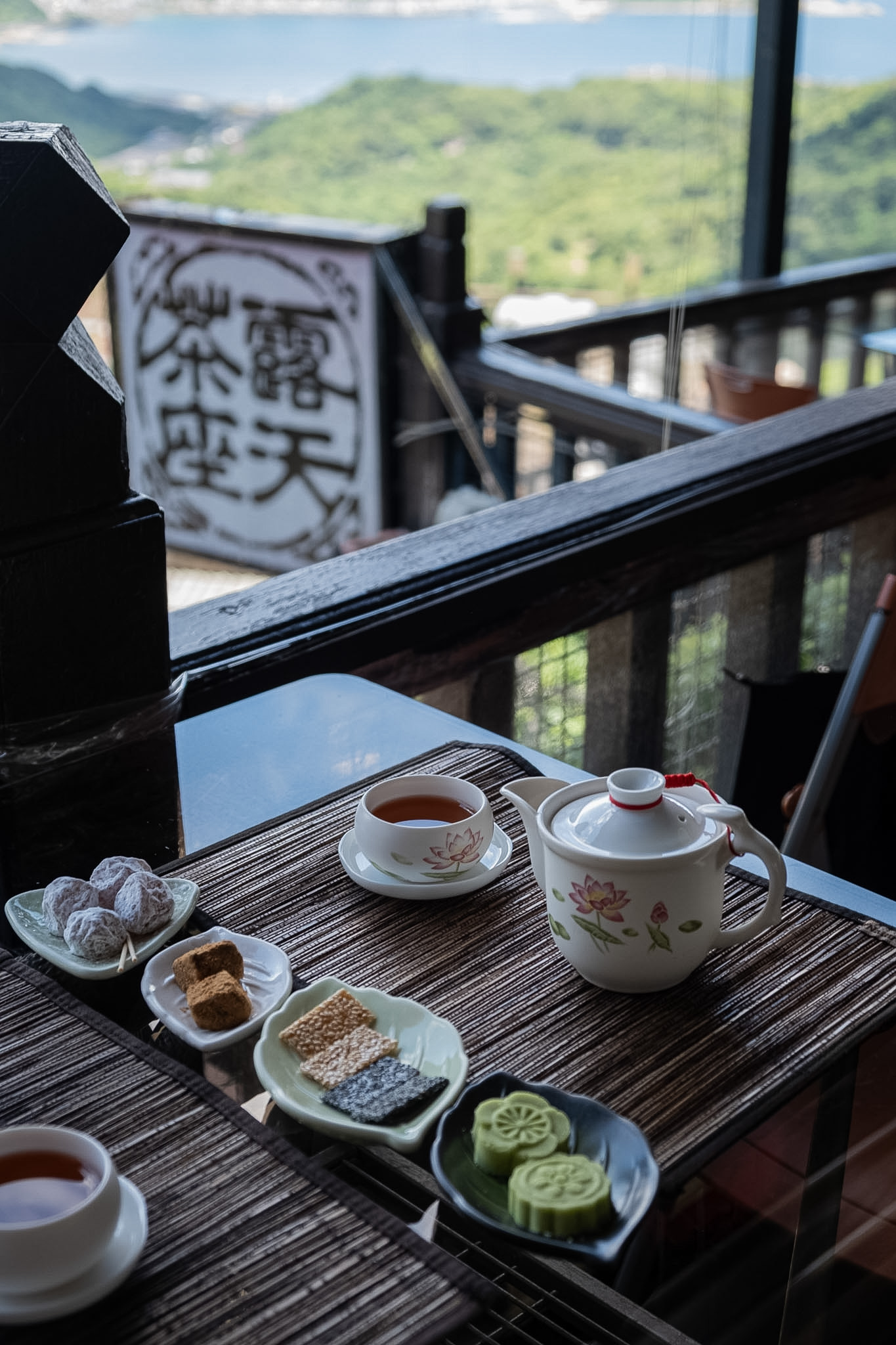
Jiufen’s traditional teahouses are built into the steep mountainside. Many have wooden interiors, terraces and large windows overlooking the green hills and northern coastline.
Sitting down gave me a welcome break from the busy streets. The experience was about more than the tea itself. It was the careful preparation, the small cups and the chance to enjoy Jiufen’s setting without rushing.
Tea here can be more expensive than elsewhere in Taiwan, but I still think it is worth including in your visit. Even one quiet hour inside a teahouse helps you experience a different side of Jiufen.
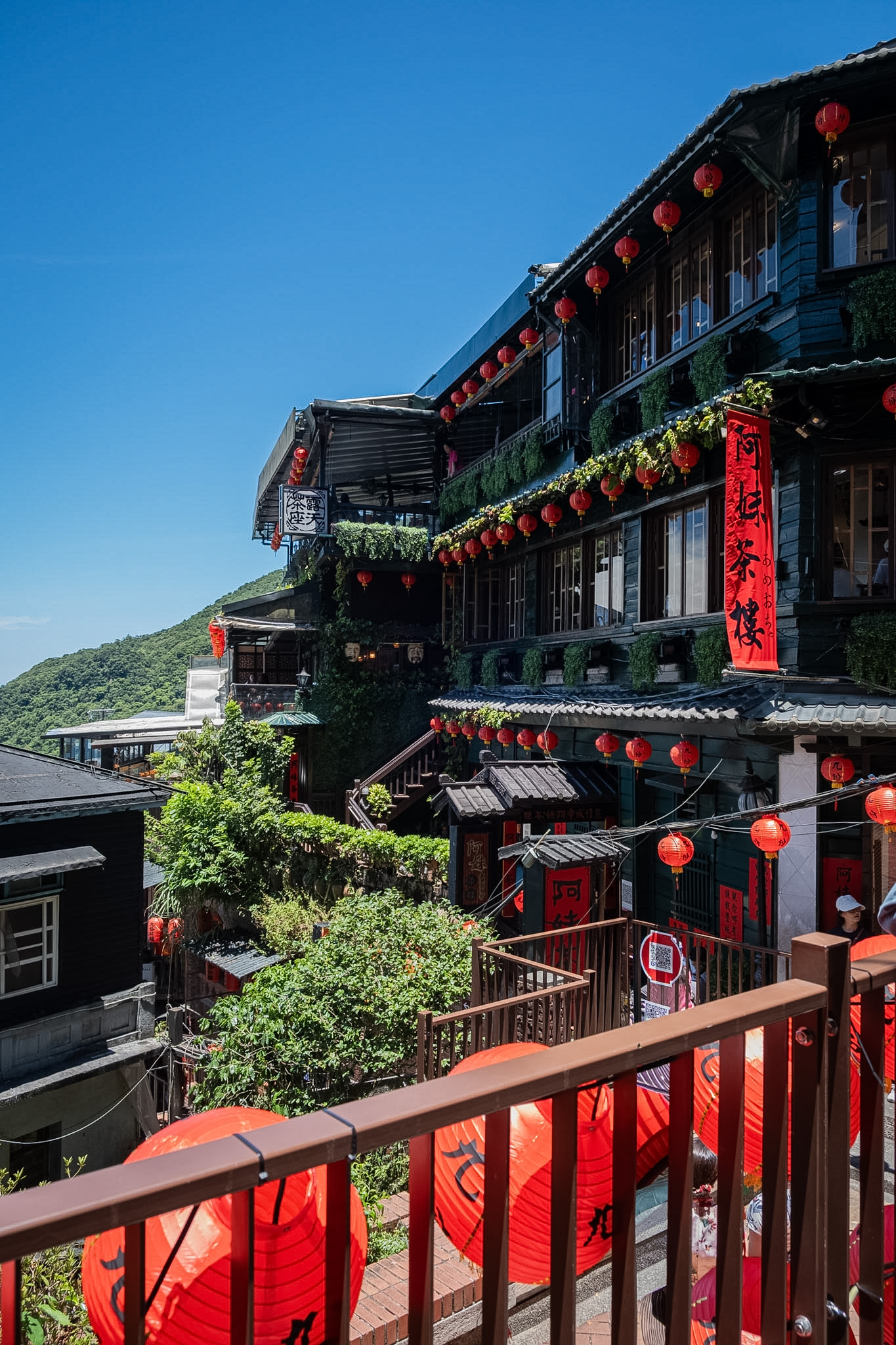
The area around A-Mei Tea House is the most recognisable section. Its dark wooden facade, balconies and lanterns create one of Jiufen’s classic views. It is also one of the busiest places in the village, with people stopping on the narrow steps to take photographs while everyone else tries to squeeze past.
I chose A-Mei Teahouse for my tea break, partly for the view and partly because it is widely believed to have inspired the anime called Spirited Away.
Walking Down Shuqi Road
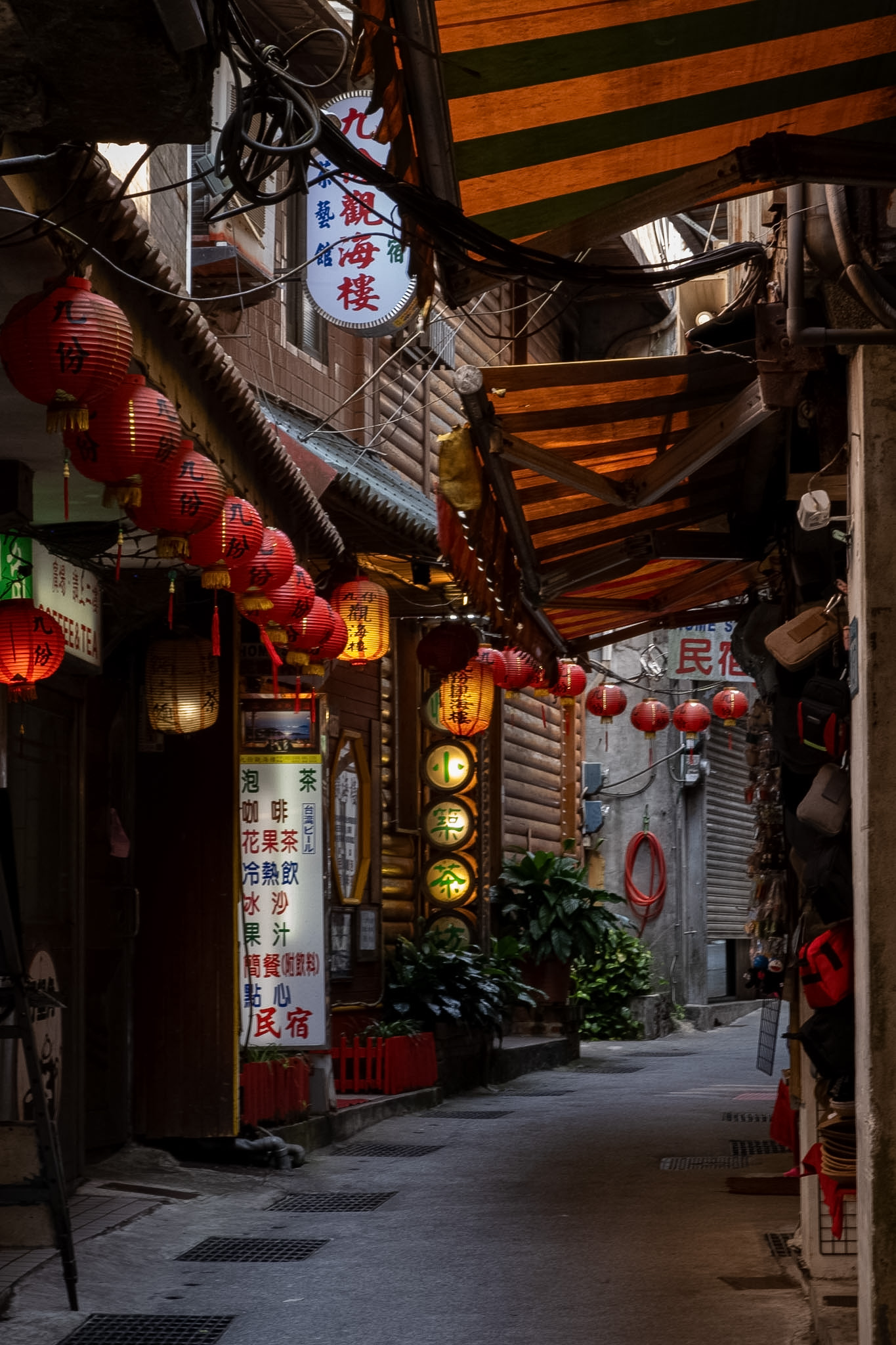
Shuqi Road is the steep staircase seen in most photographs of Jiufen. It is lined with old buildings, wooden teahouses and rows of red lanterns.
The best thing to do is have patience and explore beyond the main staircase. Quieter lanes branch away from Shuqi Road, revealing old houses, cats resting near doorways and occasional views of the mountains and sea between the rooftops.
Jiufen After the Lanterns Come On
Later in the day, Jiufen’s red lanterns begin to glow and the streets become even more atmospheric. This is also when Shuqi Road can become particularly crowded. Do not expect an empty staircase or the perfectly peaceful scene often shown online.
Instead, accept the movement, find a small corner where you can pause and then wander through the quieter streets nearby.
Jiufen is often compared to Spirited Away because of its hillside teahouses and red lanterns. Whether or not you see the resemblance, the town has an atmosphere of its own.
Is Jiufen Worth Visiting?
Yes, but arrive with realistic expectations. Jiufen is popular and the main streets can feel very crowded. It is not an undiscovered mountain village, and tourism has clearly shaped much of the experience.
Still, its setting is genuinely beautiful. Few places combine Taiwanese street food, teahouses, lantern-covered alleys and coastal mountain views in such a small area.
What made my visit memorable was not one particular attraction. It was the combination of small moments: a bowl of fish-ball soup, browsing the shops, looking towards the sea and slowing down over a pot of tea.
- You want the classic lantern and mountain view in person
- You enjoy grazing your way through street food
- You have a few hours to spend on Old Street without rushing
- You want an empty, peaceful village experience
- You dislike crowded, narrow spaces
- You are only chasing the exact photo you saw online
Tips for Visiting Jiufen
- Allow around four to six hours to explore without rushing.
- Use an EasyCard for the bus and keep it ready for the return journey.
- Wear comfortable shoes because Jiufen has many steep staircases.
- Arrive hungry and try several small dishes along Old Street.
- Expect crowds around Shuqi Road and A-Mei Tea House.
- Explore the side streets for quieter corners and different views.
- Stay until the lanterns are illuminated if your schedule allows.
- Check the return bus times before settling in for the evening.
- Carry a light layer or rain protection because mountain weather can change quickly.
Final Thoughts
Jiufen may be one of Taiwan’s most photographed destinations, but it is more enjoyable when you stop trying to recreate the perfect photograph.
The village is busy, slightly chaotic and shaped by tourism, but those imperfections are also part of its personality.
Come for the lanterns and mountain views, but leave enough time for the food, small shops and a slow pot of tea. That is where I found the Jiufen I had hoped to experience: not an empty film set, but a lively hillside town filled with flavour and atmosphere.
Jiufen Day Trip FAQ
How long do you need in Jiufen?
Around four to six hours is enough to explore Old Street and Shuqi Road, try several local foods and stop at a teahouse without rushing.
Can you travel directly from Banqiao to Jiufen?
Yes. Bus 965 connects the Banqiao area with Jiufen and Jinguashi. I used an EasyCard to pay for the journey.
What food should you try in Jiufen?
Taro balls are Jiufen’s best-known speciality. I also tried fish-ball soup, Taiwanese sausage and popcorn chicken.
Is Jiufen very crowded?
It can be, particularly around Old Street, Shuqi Road and A-Mei Tea House. Exploring the smaller side streets gives you a break from the busiest areas.