What to Expect on a Nile Cruise from Aswan to Luxor
Egypt had been on our bucket list for years. When the opportunity finally came, we decided to experience it in the most classic way possible: a Nile cruise from Aswan to Luxor.
Our journey started in Aswan and took us north through Kom Ombo, Edfu and Luxor. Along the way, we explored ancient temples and learned about their history. We spent our afternoons on the deck of the cruise boat, watching the Nile drift by.
Here’s how our five days went by.
Quick Overview of Our Nile cruise from Aswan to Luxor
Duration: 4 days, 3 nights
Route: Aswan → Kom Ombo → Edfu → Luxor
Type: Nile cruise in Egypt
Highlights: Ancient temples, slow travel, river views
Price: Approximately USD 500,- per person including private guide
Table of Contents
- What to Expect on a Nile Cruise from Aswan to Luxor
- Quick Overview of Our Nile cruise from Aswan to Luxor
- Day 1 — Arrival in Aswan
- Day 2 — Nile Cruise Stops: Kom Ombo & Edfu
- Day 3 — Nile Cruise Aswan to Luxor: Exploring Luxor, The World’s Greatest Open-Air Museum
- Day 4 — Luxor & Final Day
- Final Thoughts
- Nile Cruise FAQ
Day 1 — Arrival in Aswan
Aswan High Dam
After a short flight from Cairo to Aswan, we met our travel companions, our dear friends Diandra and Hassan. They joined us for the first part of the trip.
We were picked up at the airport by our guide and we started discovering this new city straight away.
Our first stop: Aswan High Dam, one of Egypt’s most important modern engineering projects. Completed in 1970, the dam controls the Nile’s once unpredictable floods and provides hydroelectric power. It also created Lake Nasser, one of the largest artificial lakes in the world.
Standing on the dam, the view of Lake Nasser feels endless. The water stretches so far that it fades out of sight and it’s almost surreal to think that this vast expanse is completely artificial.
Before the dam was built, the Nile flooded every year. These floods could be beneficial for agriculture but were often unpredictable and destructive. The dam now regulates the river and stores water for drought years. Besides storing water for years of need, the dam produces hydroelectric power and, once completed in 1970, produced half of Egypt’s electricity.
Philae Temple
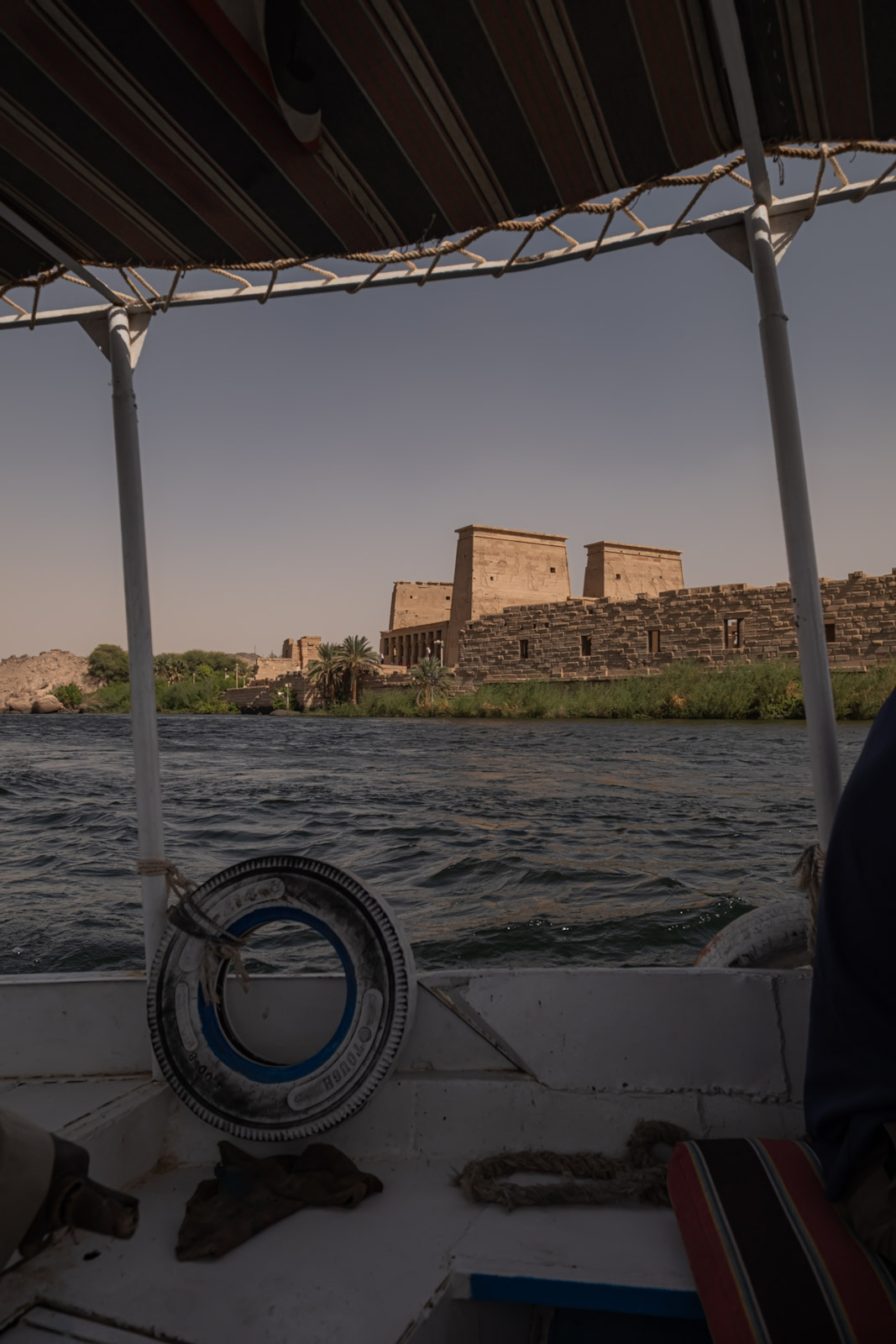
Next we visited the beautiful Philae Temple, dedicated to the goddess Isis. Originally located on Philae Island, the temple had to be relocated in the 1970s when the rising waters of Lake Nasser threatened to submerge it.
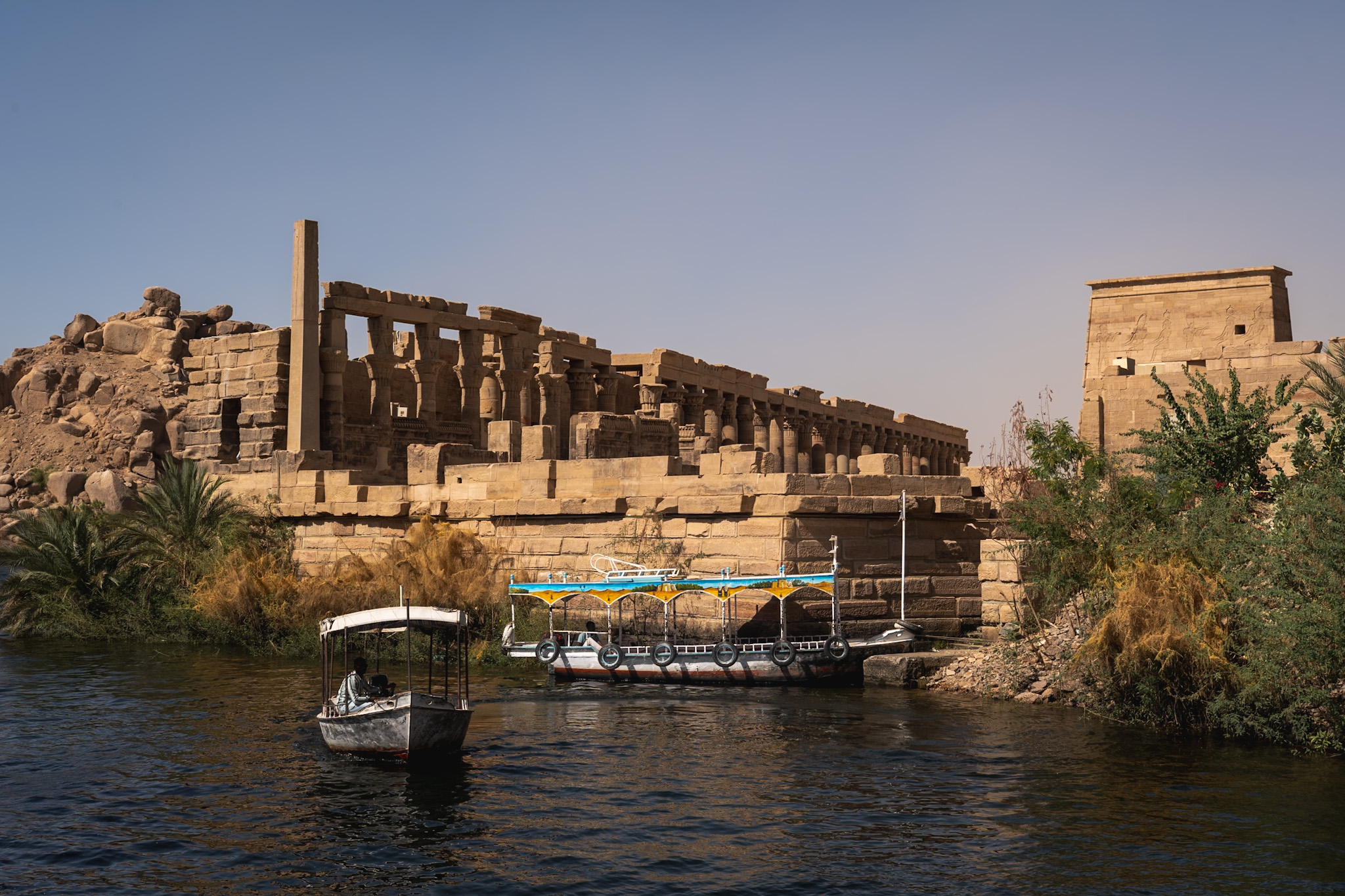
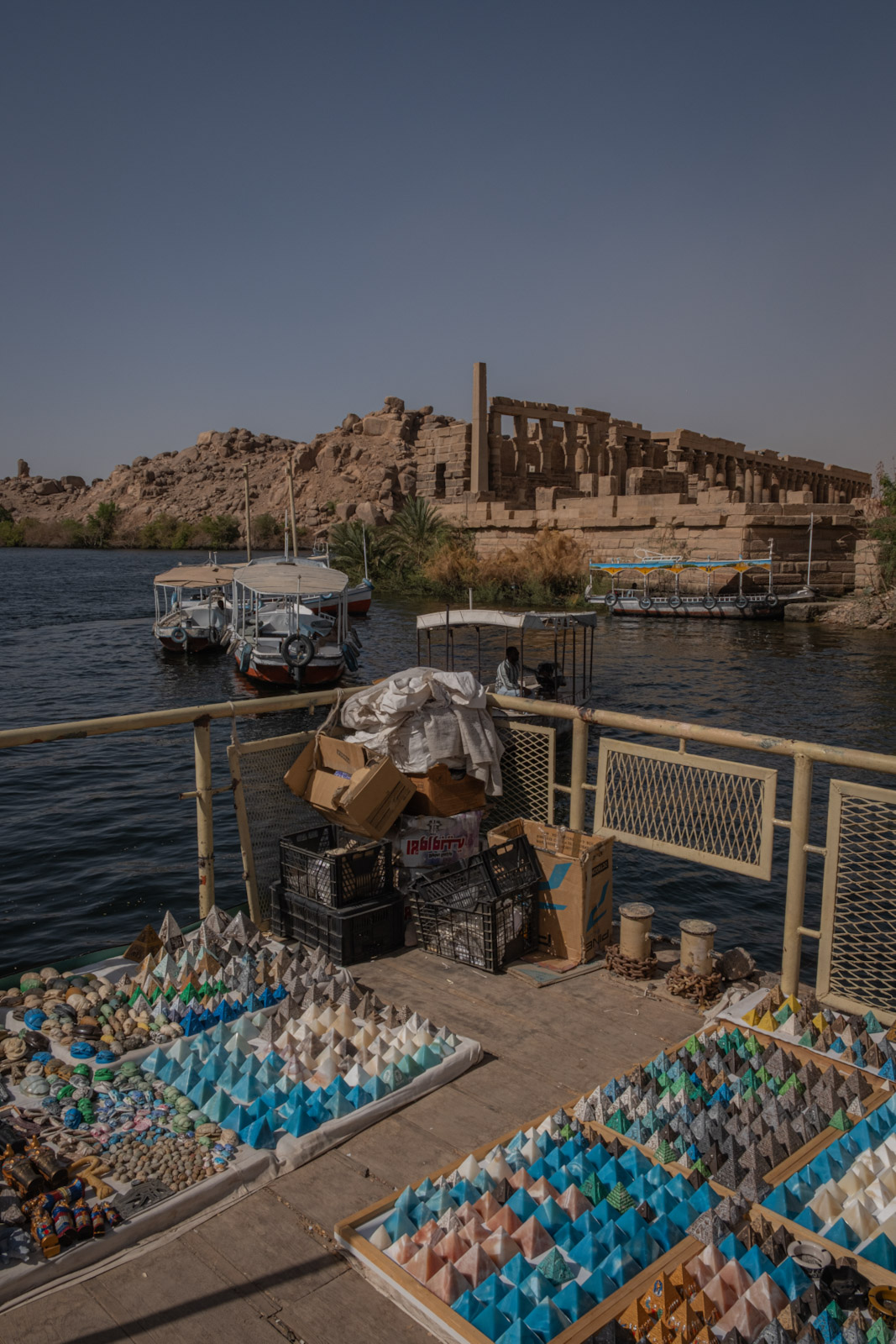
Thanks to a massive UNESCO rescue operation, teams carefully moved the entire complex stone by stone to nearby Agilkia Island. In order to reach the temple, we took a short private boat ride. the boat ride itself is already a very nice experience. This was the first temple we visited on this trip, which made it even more special. We were very excited for what was to come.
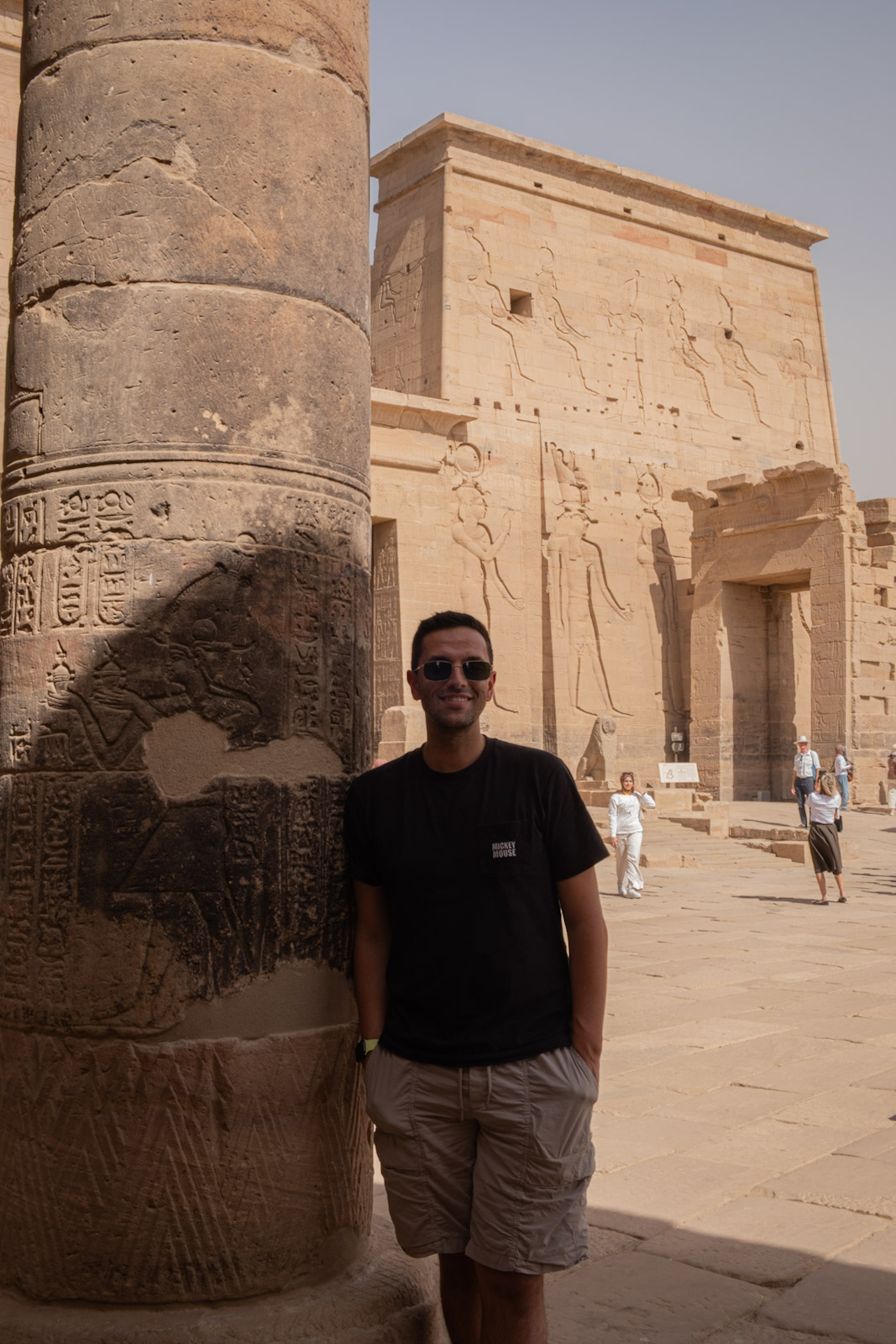
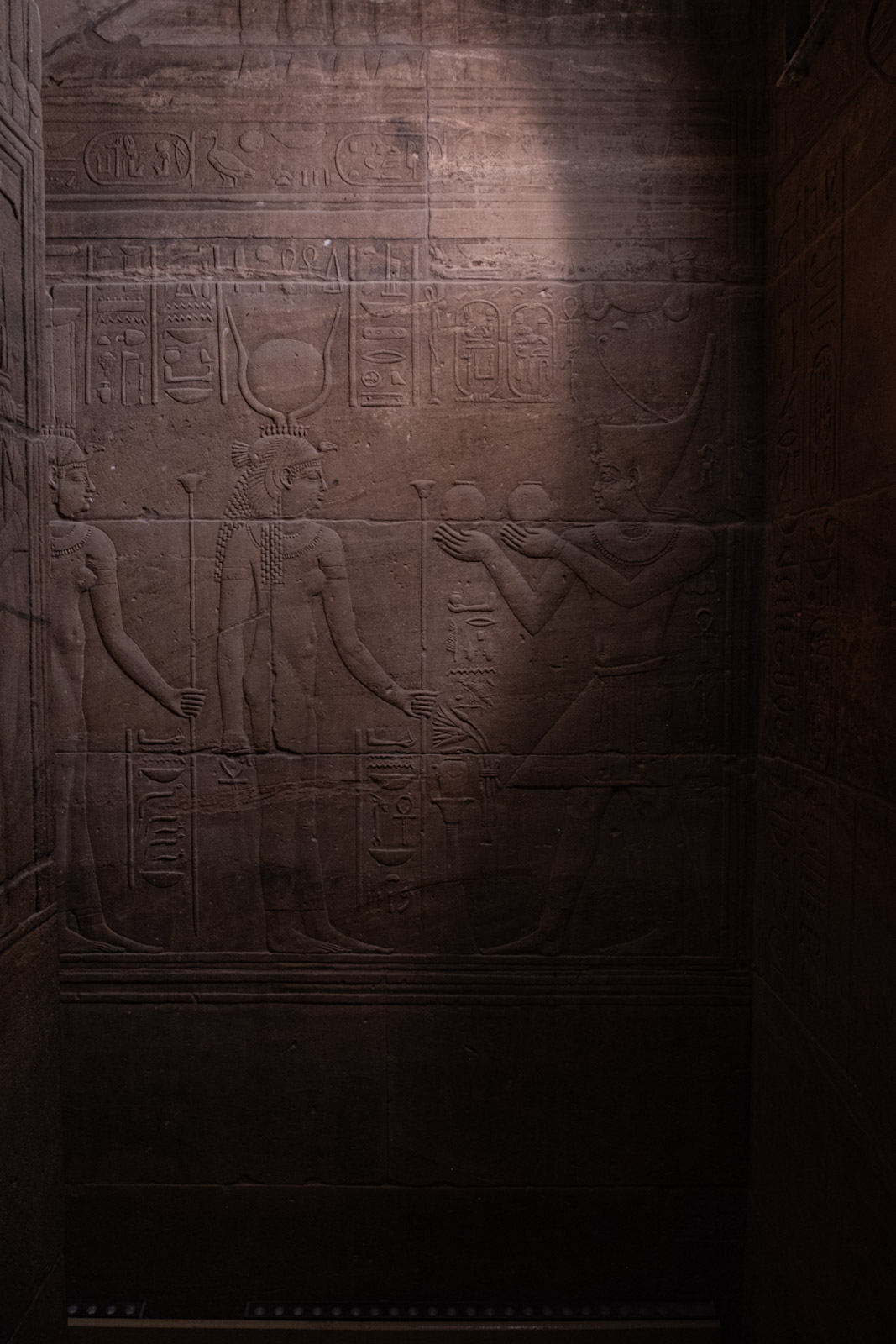
We walked around the temple with our guide, learning all about its history. But apart from the history, we were just very impressed with the architecture. It’s surreal to think that this was built over 2,300 years ago, and then moved to another location. Afterwards we had some free time to just wander with our cameras to take some more photos.
At the piers where we took the small boat to- and from the temple, there were lots of souvenir vendors. Although the souvenirs were very nice, we were not sure about the prices yet and decided to save buying the souvenirs for another day.
A quick stop for Perfume Oils
Before heading to our Nile `Cruise Ship, we stopped at a small oil perfume shop, the kind guides often bring tourists to.
Living in Dubai, we’re already very used to oud and Arabic perfumes (which, by the way, are my favorites), and I already know my go-to shops there, so for us it didn’t feel particularly special. Still, for many visitors, it can be a really nice experience.
They explain the different fragrance notes, how oud works and you can smell and try many perfume oils. Just keep in mind these places are very tourist-oriented, so the prices are usually quite inflated compared to what you would normally pay somewhere else.
Boarding our Nile Cruise Ship: The Nile Plaza
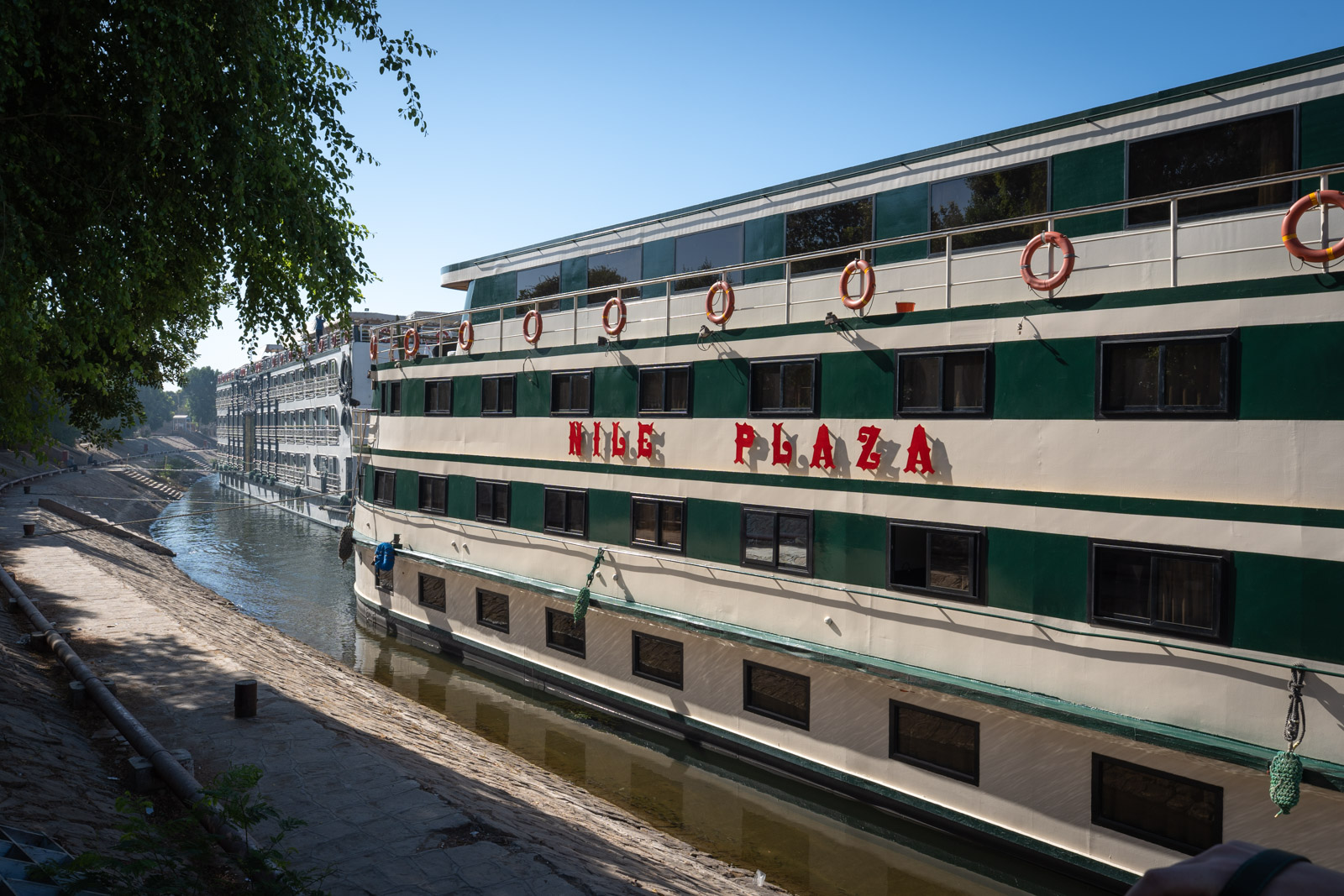
Now it was finally time to board our cruise ship: we were sailing on the Nile Plaza, operated by Presidential Cruises. Our guide drove us to the Nile in the center of Aswan, where our boat was docked.
In all honesty, we did not really know what to expect boat wise. We did know that we had quite a good deal in terms of price, so we did not expect the most luxurious ship. Nevertheless, our eyes and smiles lit up after we boarded the ship as this was our full on titanic fantasy. Lobby full of marble and rococo, bells and whistles.
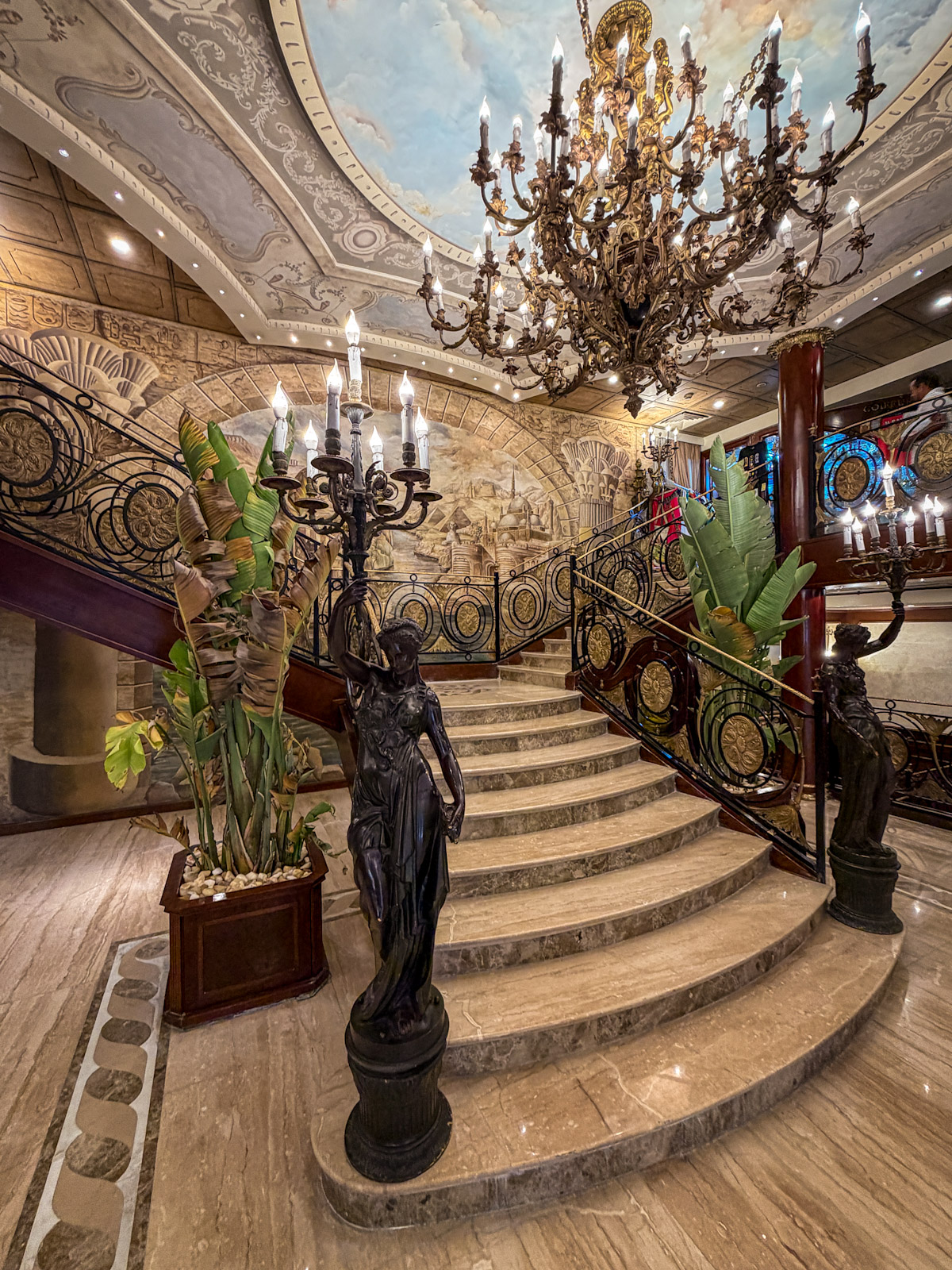
Little did we know that a bunch of boats were docket parallel to each other, and we were just going through this boat in order to reach ours. The same happened with the second and third ship we passed, one even more over the top than the other. Until we reached the final boat: The Nile Plaza.
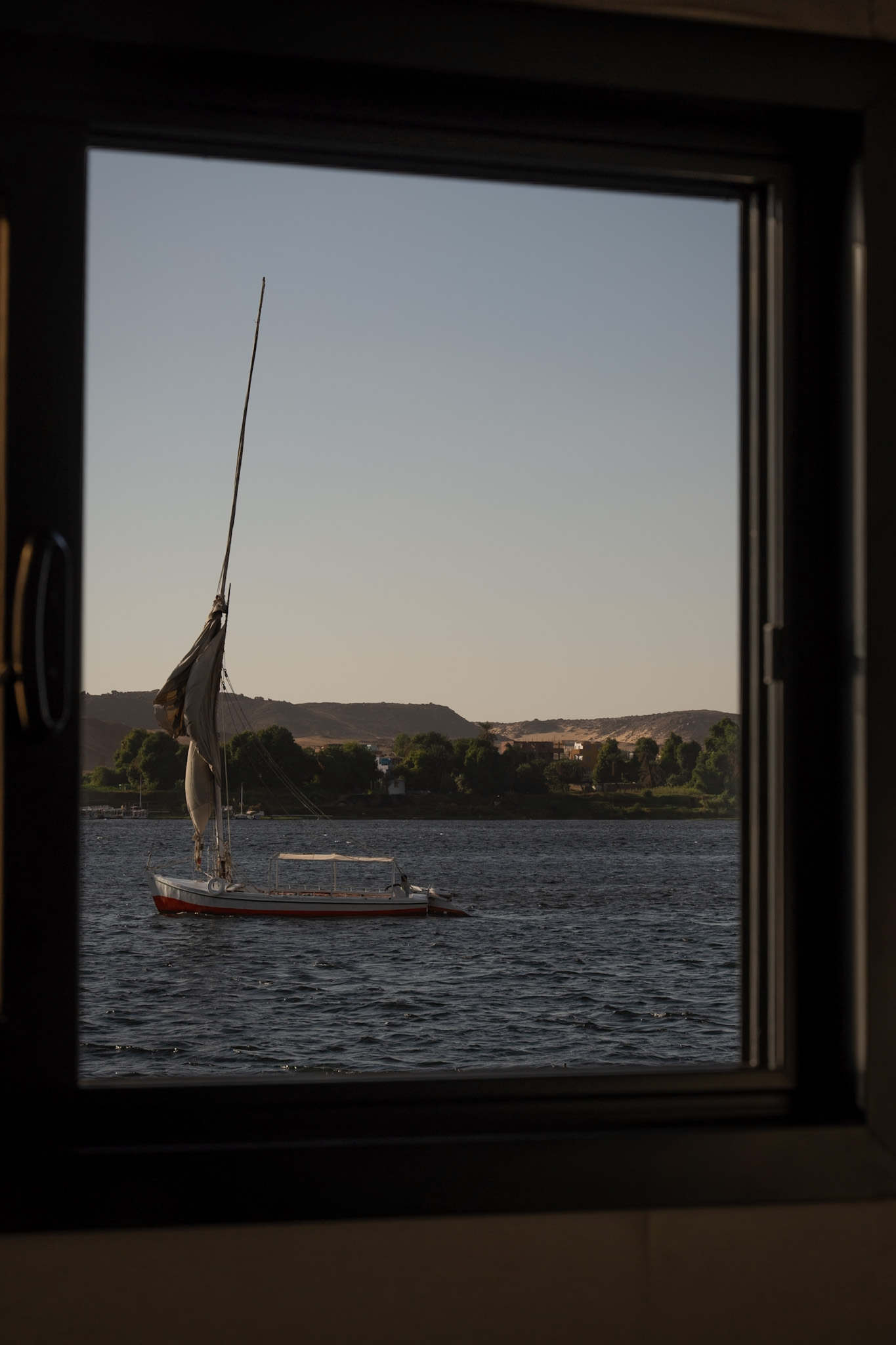
Let’s just say, we were not as excited as the first rococo boat. Nevertheless our boat was still nice, decent, and most of all very clean. We were also pleasantly surprised with the cabin, as it offered a beautiful view over the Nile river.
Before we knew it we went up to the restaurant saloon, and sat down for our first lunch on board.
Exploring Aswan’s Bazaar
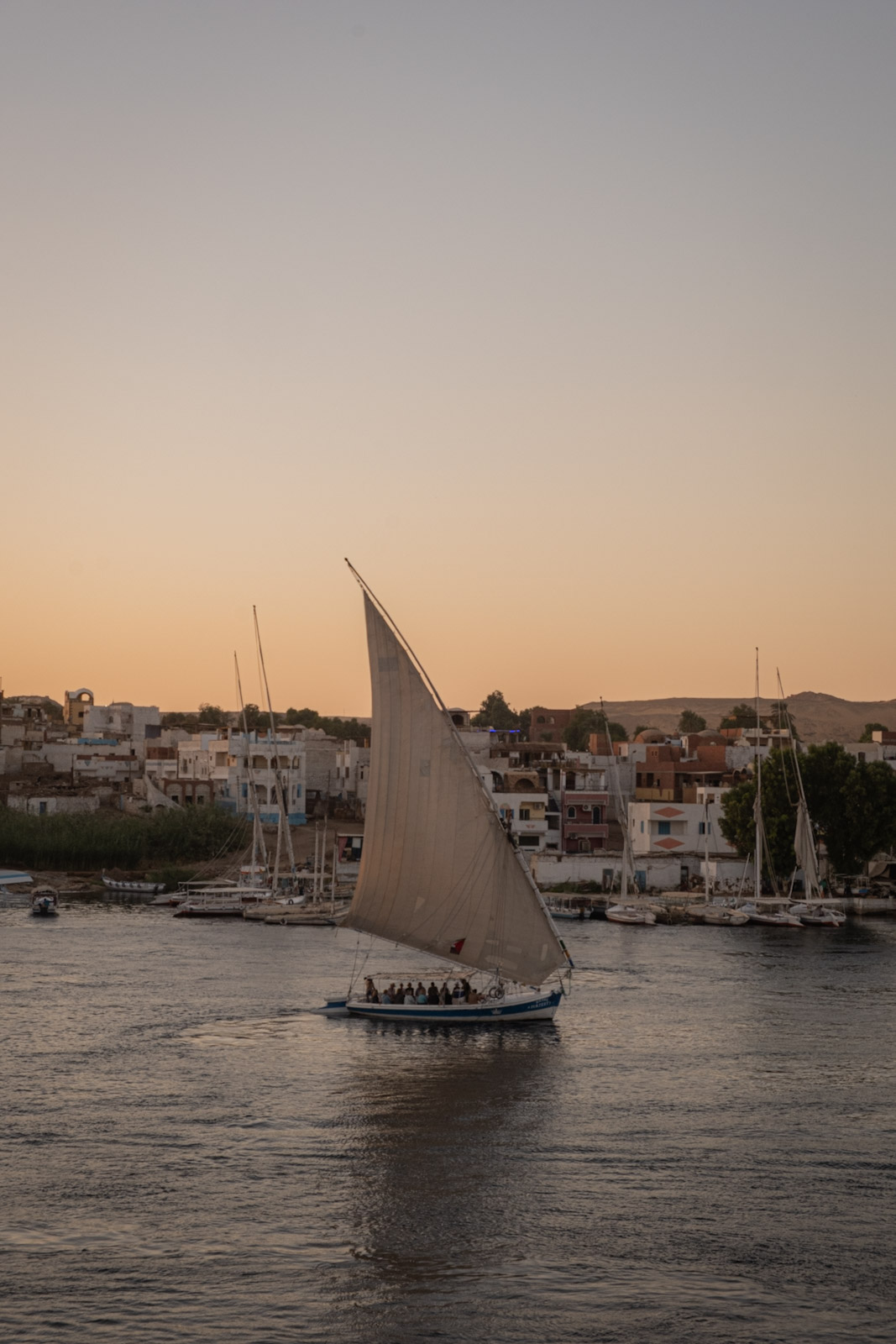
With our bellies full and after a rest on the deck, we headed out for a walk along the Aswan promenade. Our original plan was to go for a sunset drink by the Nile in the iconic Old Cataract Hotel, where many celebrities have stayed before. Unfortunately, there were only indoor seats available at the bar. As this would beat the whole purpose of watching the sunset, we decided to move on and explore the bustling bazaar instead.
We spent the rest of the afternoon people-watching with hibiscus tea and shisha, a recommendation from our fellow Egyptian friend Hassan.
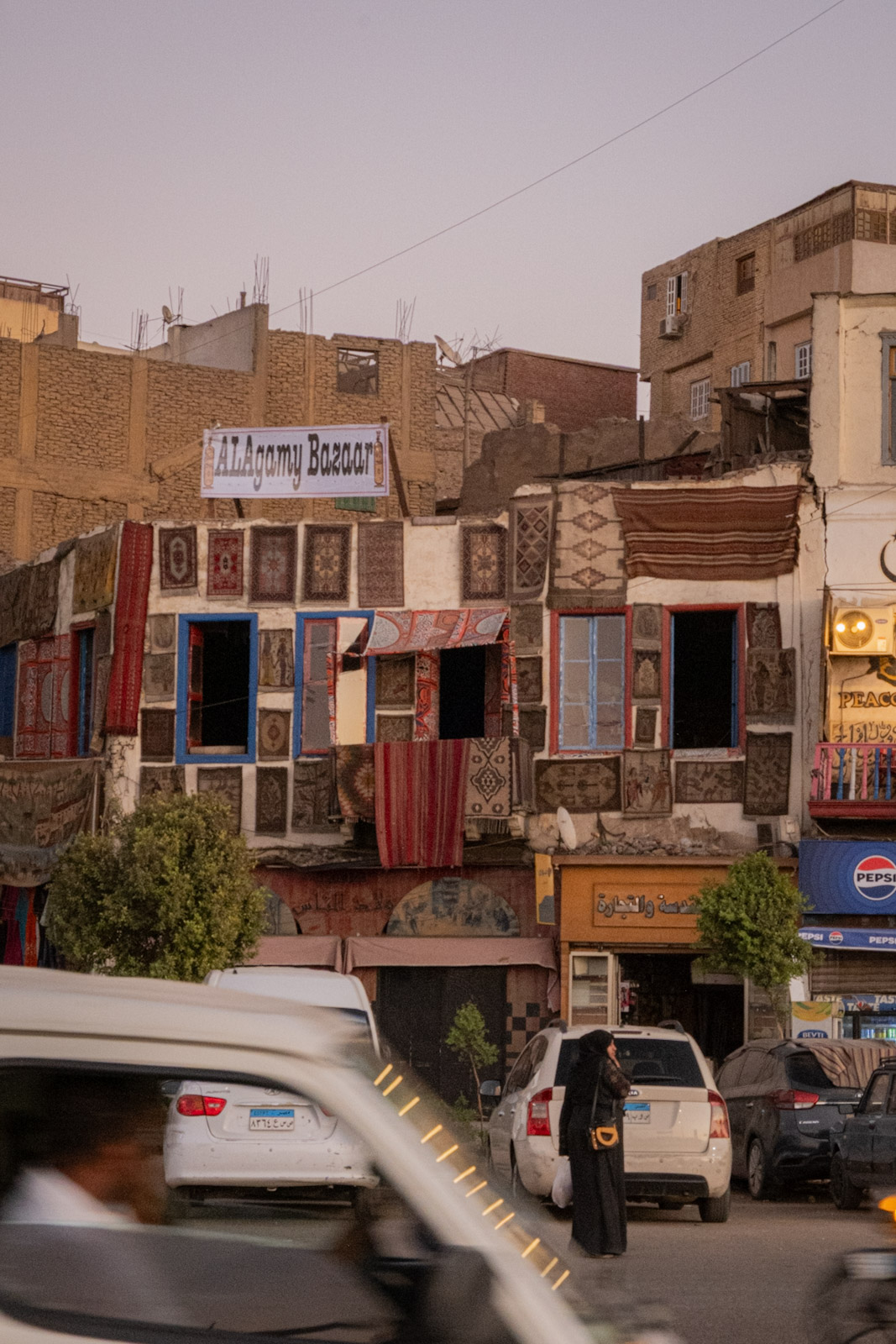
From there, we wandered through the busy bazaar streets, browsing colorful stalls and picking up local goodies: ollas, spices, chia seeds and granola.
I cannot stop hyping how good that granola was, and how incredibly cheap. We should have bought way more.
Sunset in Aswan & Our First Night on the Nile
As the sun set over the Nile, we returned to the boat for dinner and our first night on the river. Starting our Nile Cruise from Aswan to Luxor.
After our liveaboard experience sailing around Komodo National Park, where sleeping felt more like a survival exercise than a relaxing holiday, I was quietly hoping this boat would be a little kinder to us. Thankfully it was, and we had an amazing night of sleep.
Day 2 — Nile Cruise Stops: Kom Ombo & Edfu
Kom Ombo Temple
First Impressions
Mornings on the Nile cruise between Aswan and Luxor quickly became one of our favorite parts of the trip. Breakfast with the river slowly drifting by is hard to beat.
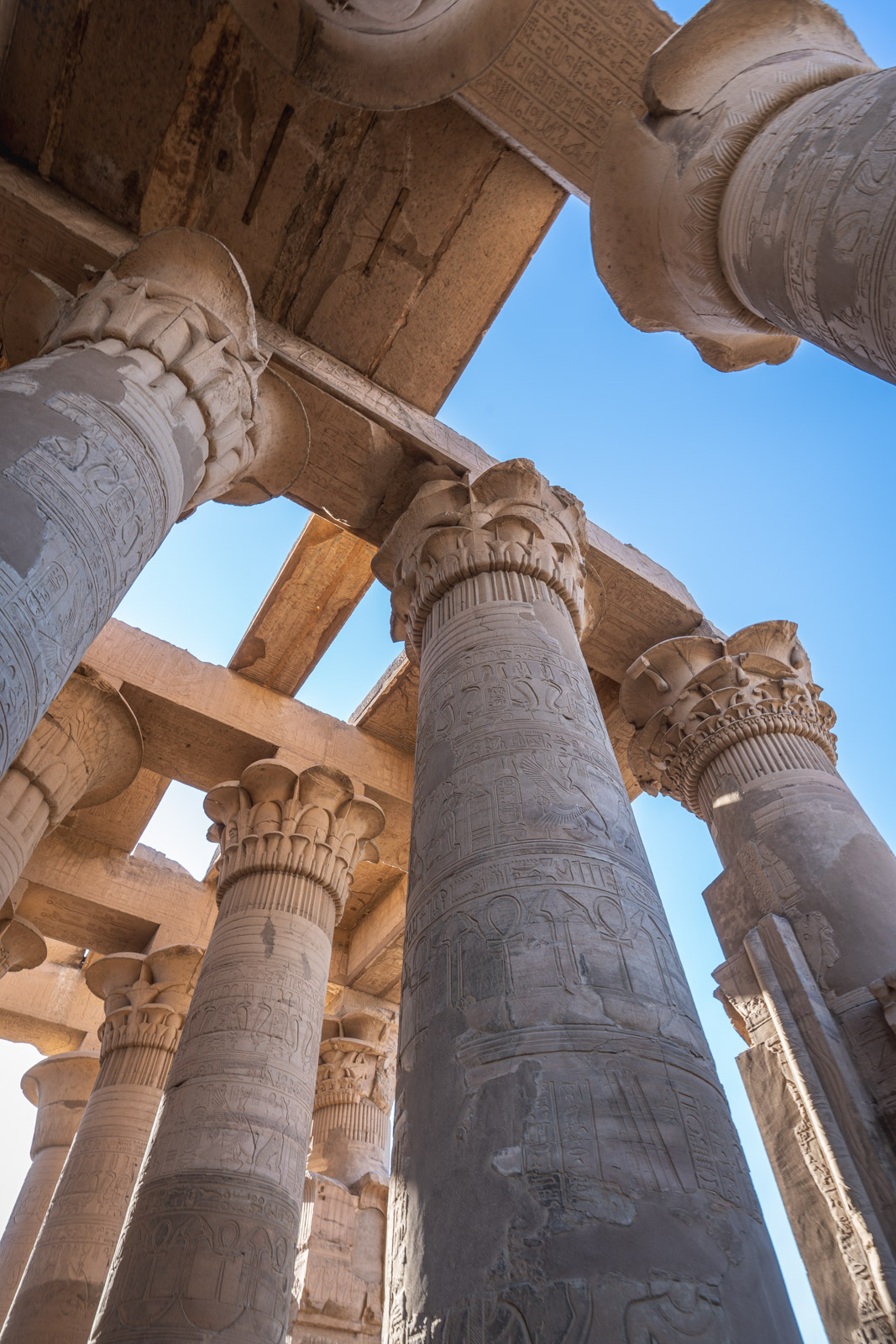
Our first stop was Kom Ombo Temple, uniquely dedicated to two gods: Sobek, the crocodile god, and Horus, the falcon god. The temple’s symmetrical design reflects this dual dedication, with mirrored halls and sanctuaries for each god.
Location Along the Nile
This temple is located in a very beautiful curve of the Nile River. The temple sits slightly elevated above the river, giving wide views of the water and surrounding landscape. Because of its location, the temple became an important stop for boats along the Nile, and still is today.
Ancient Medicine & Carvings
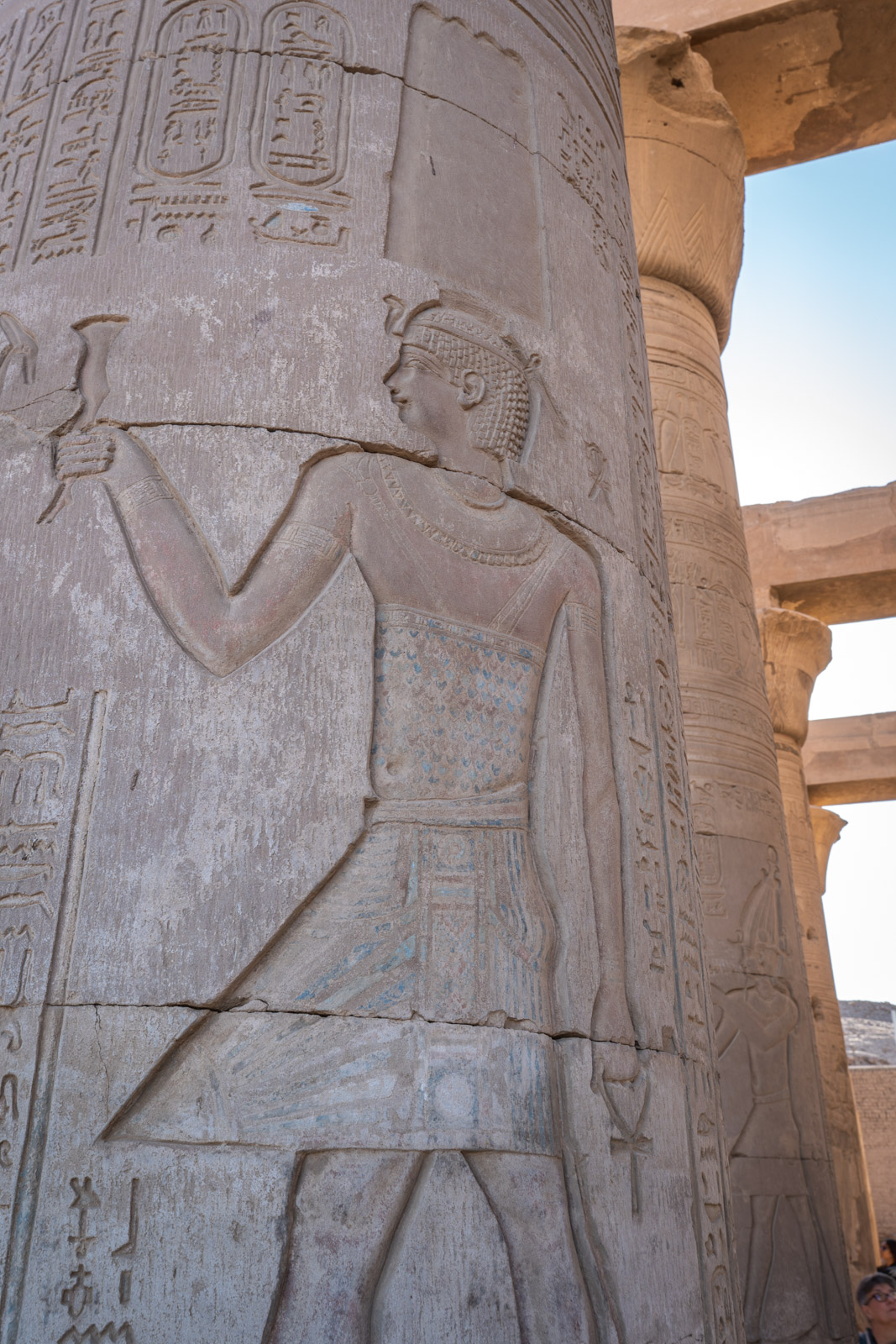
One very interesting thing about Kom Ombo Temple is the carvings on the walls that show ancient medical tools. You can see shapes that look like scalpels, forceps and other instruments that doctors used a long time ago.
Historians believe these carvings represent the tools used by temple doctors in ancient Egypt. It shows Egyptian medicine was already advanced, and people closely linked healing with religion and temples.
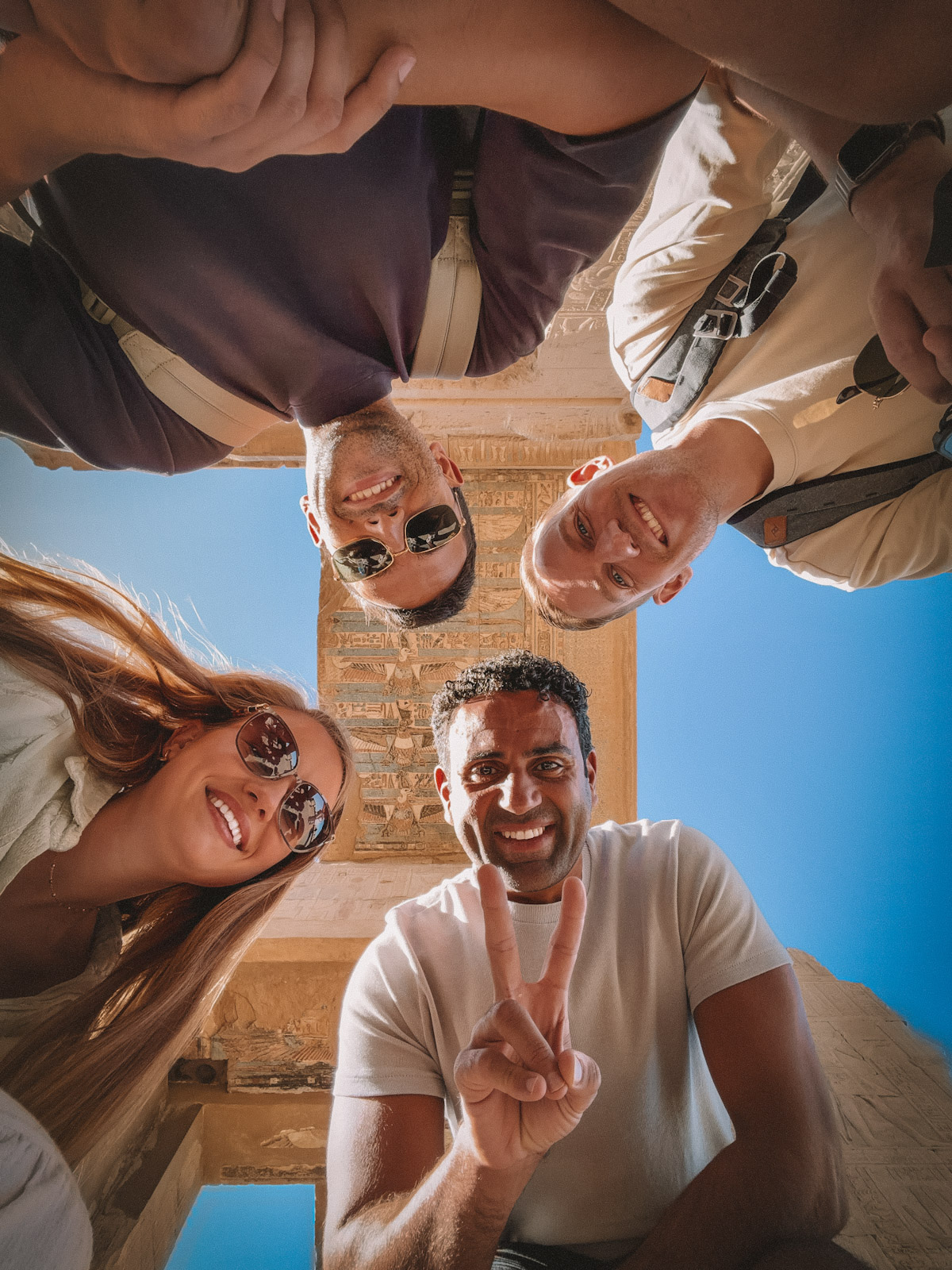
Funny thing about that selfie: Hassan started those angles, and the double chin selfie quickly became our thing. At every temple, he took another one. Soon, even Michiel, Diandra and I were asking for them and reminding each other to take one.
Thank you, Hassan, for creating such a lasting memory and selfies that will haunt us forever.
Sobek, the Crocodile God
Kom Ombo was also strongly connected to the worship of Sobek, the crocodile god. Sobek was associated with fertility, strength and the power of the Nile River.
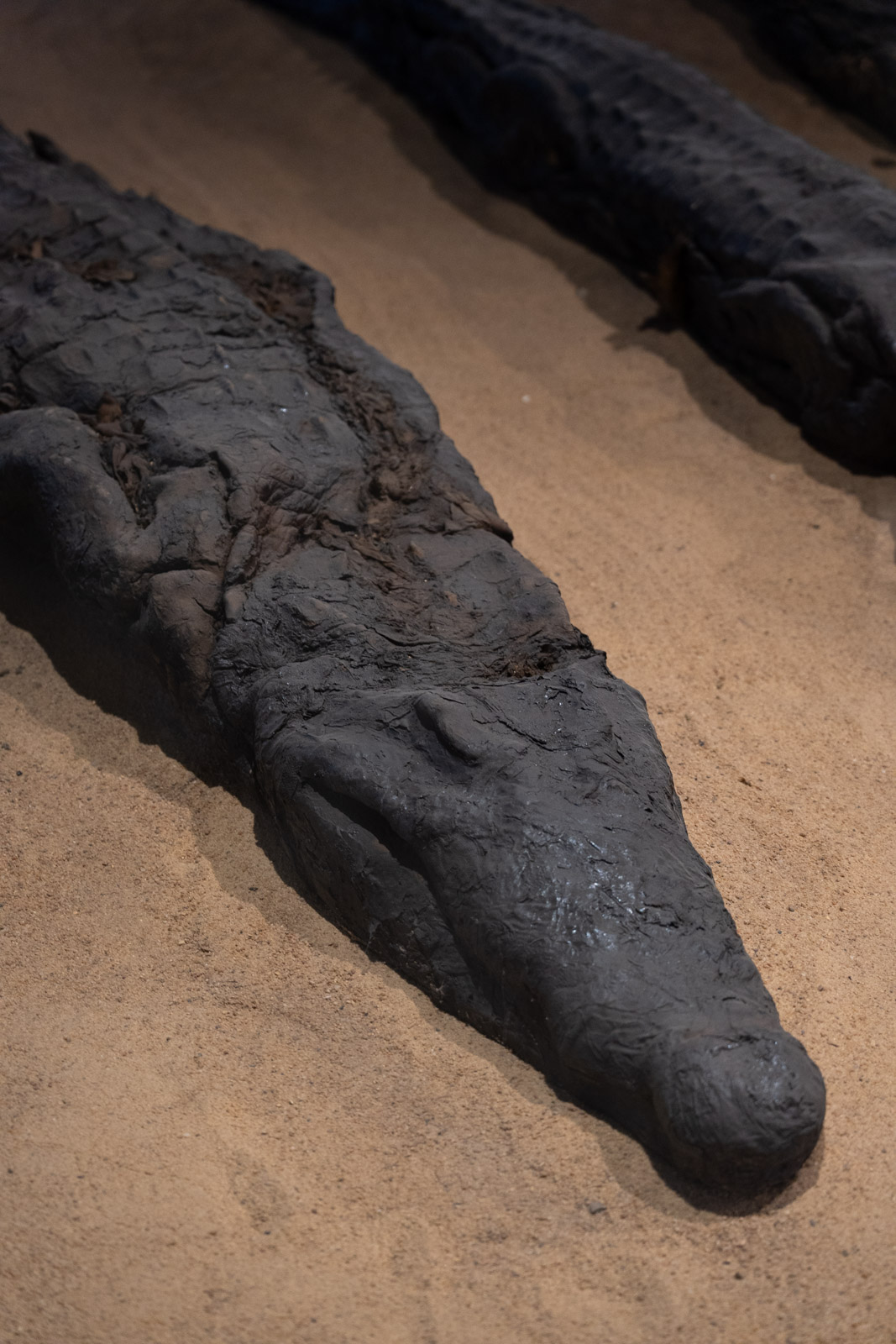
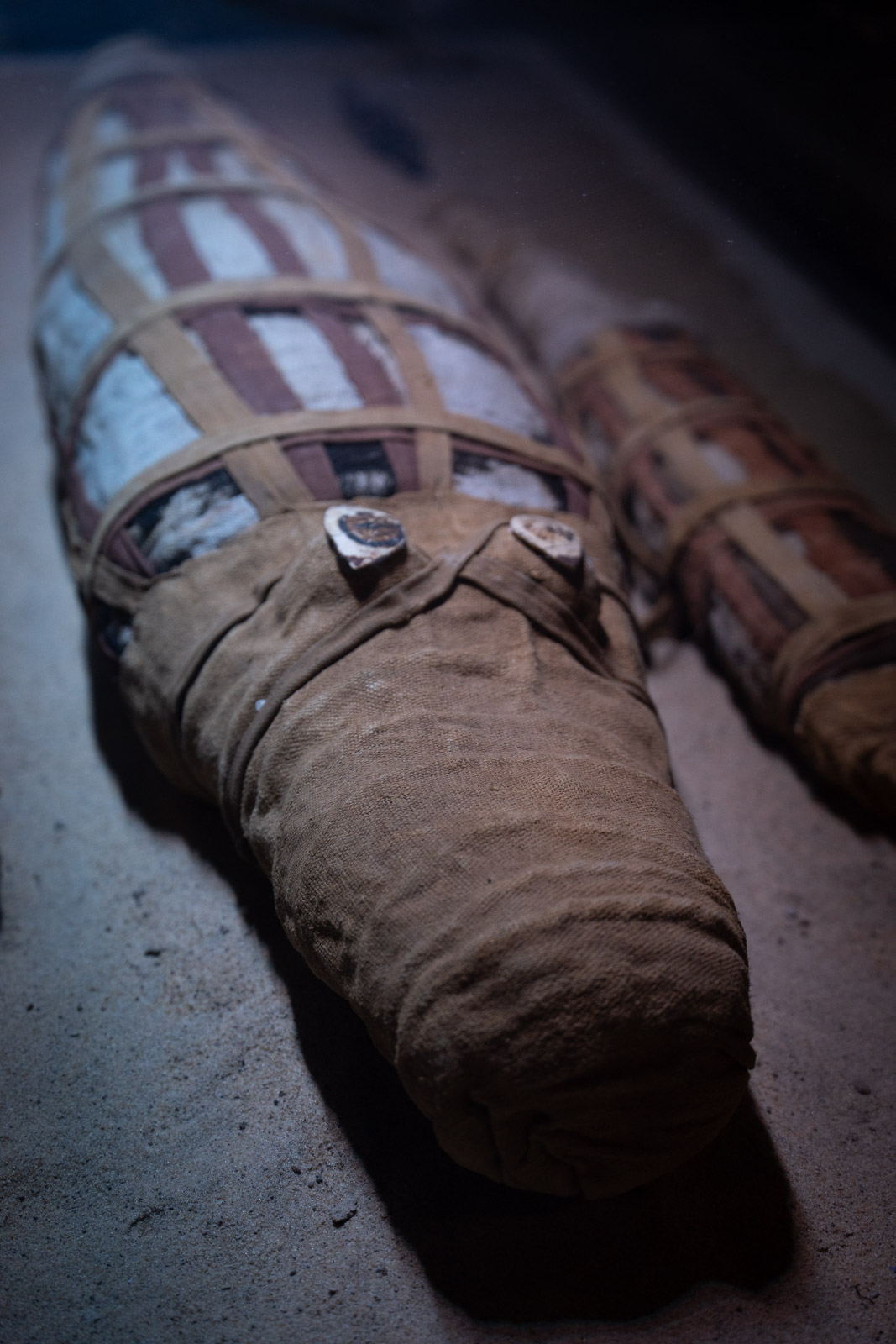
In ancient times, many crocodiles lived in this part of the Nile and Egyptians believed these animals were sacred and represented the god. Priests at the temple even kept live crocodiles in special pools inside the temple complex. At Kom Ombo temple there is also a little indoor museum which we visited, dedicated to crocodiles. I highly recommend not to skip it, as it has some mummified crocodiles inside!
Horus, the Falcon God
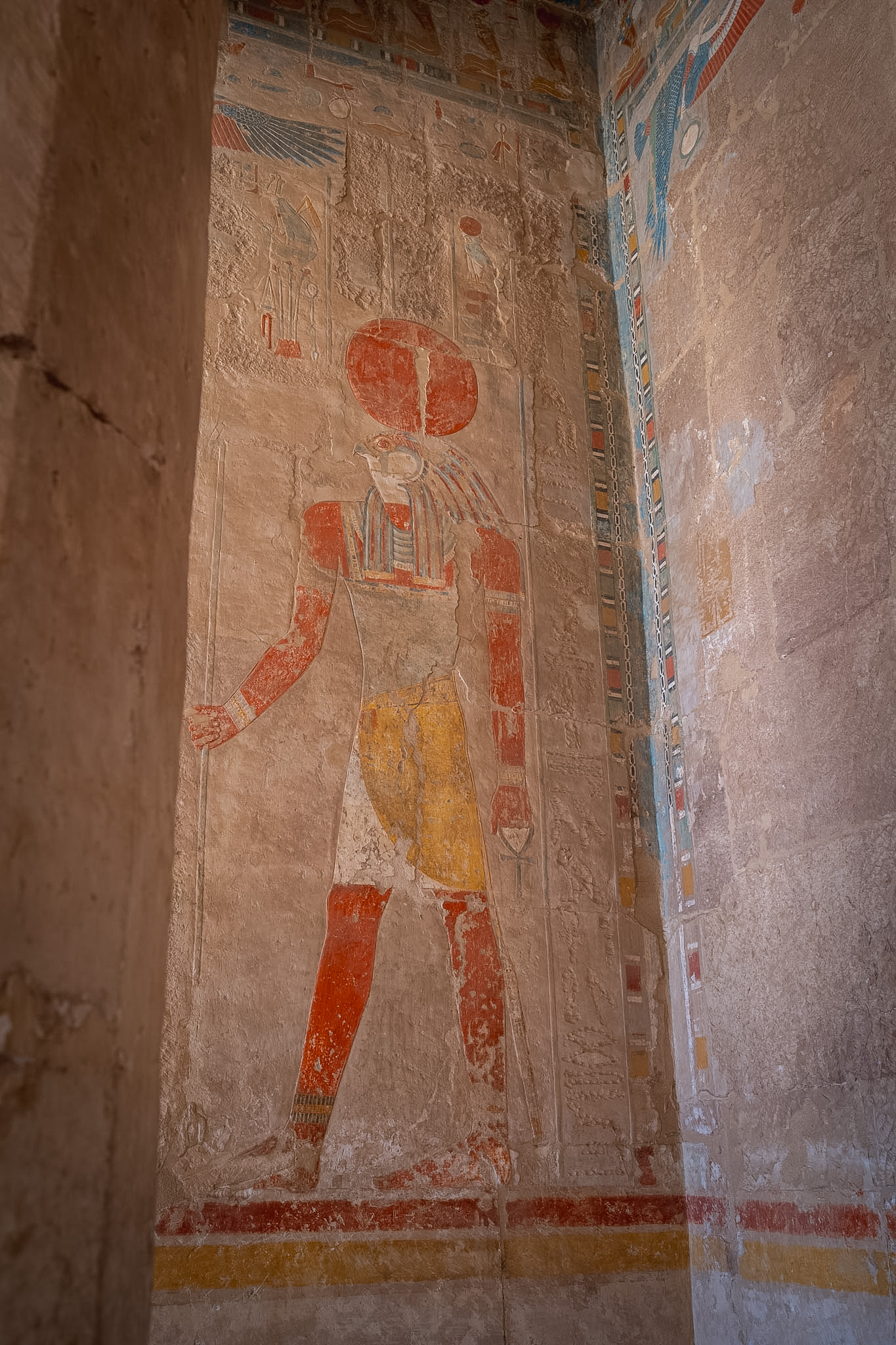
Just like Sobek, the temple also honors another important god, Horus. Egyptians often depicted him with the head of a falcon and linked him to protection, kingship and the sky. They believed Horus protected the pharaoh and kept order in the world.
Afternoon on the Boat
After spending part of our morning here, we returned to the boat and began sailing toward Edfu. Every Nile cruise, sailing between Aswan and Luxor, stops at Edfu in order to visit Edfu Temple.
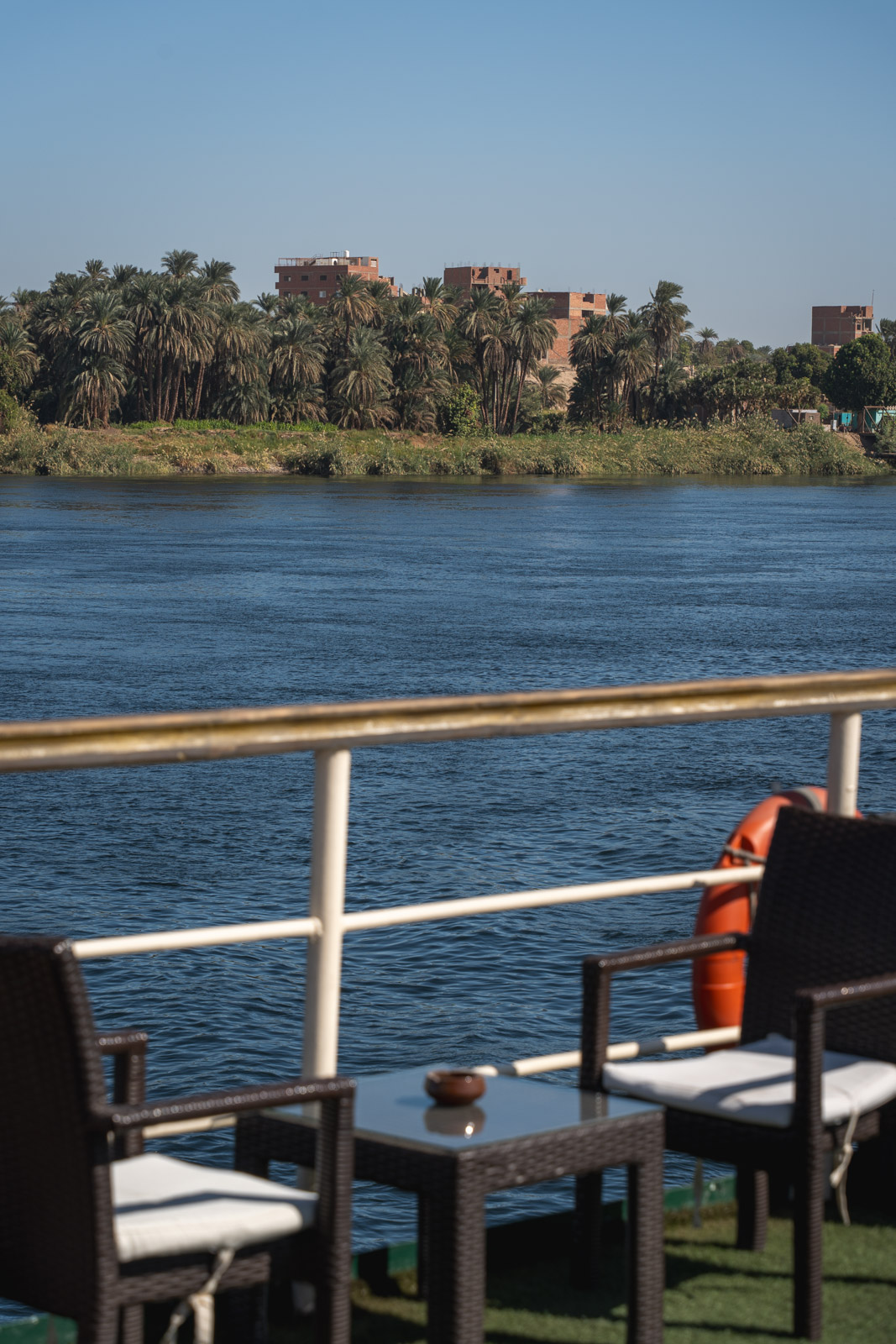
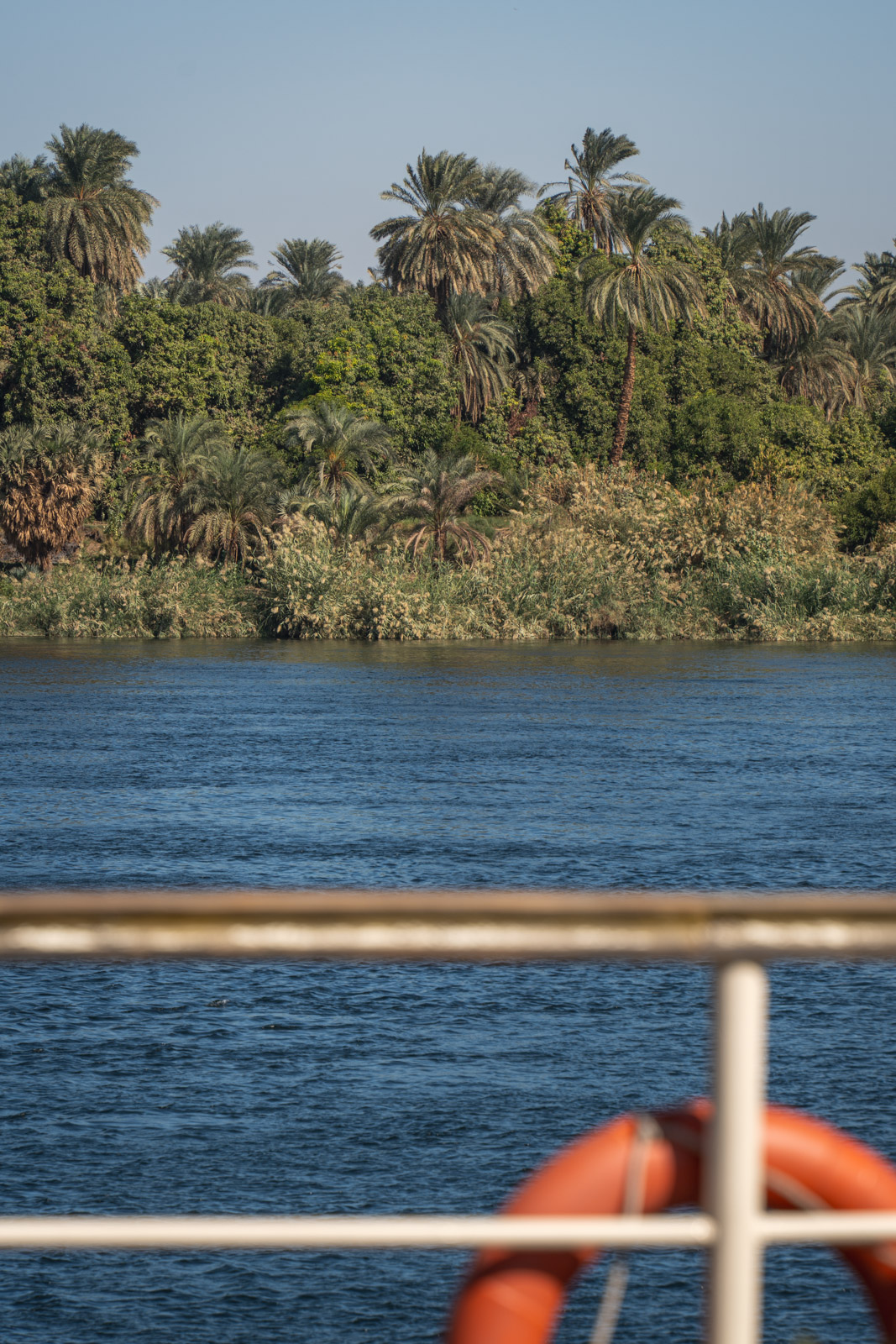
The afternoon was wonderfully slow: cappuccinos on the outdoor deck, card games and reading. We watched the Nile landscape pass by.
We enjoyed lunch on board and, next thing we know, we were docking in Edfu and getting ready for an afternoon of exploration.
Temple of Horus in Edfu
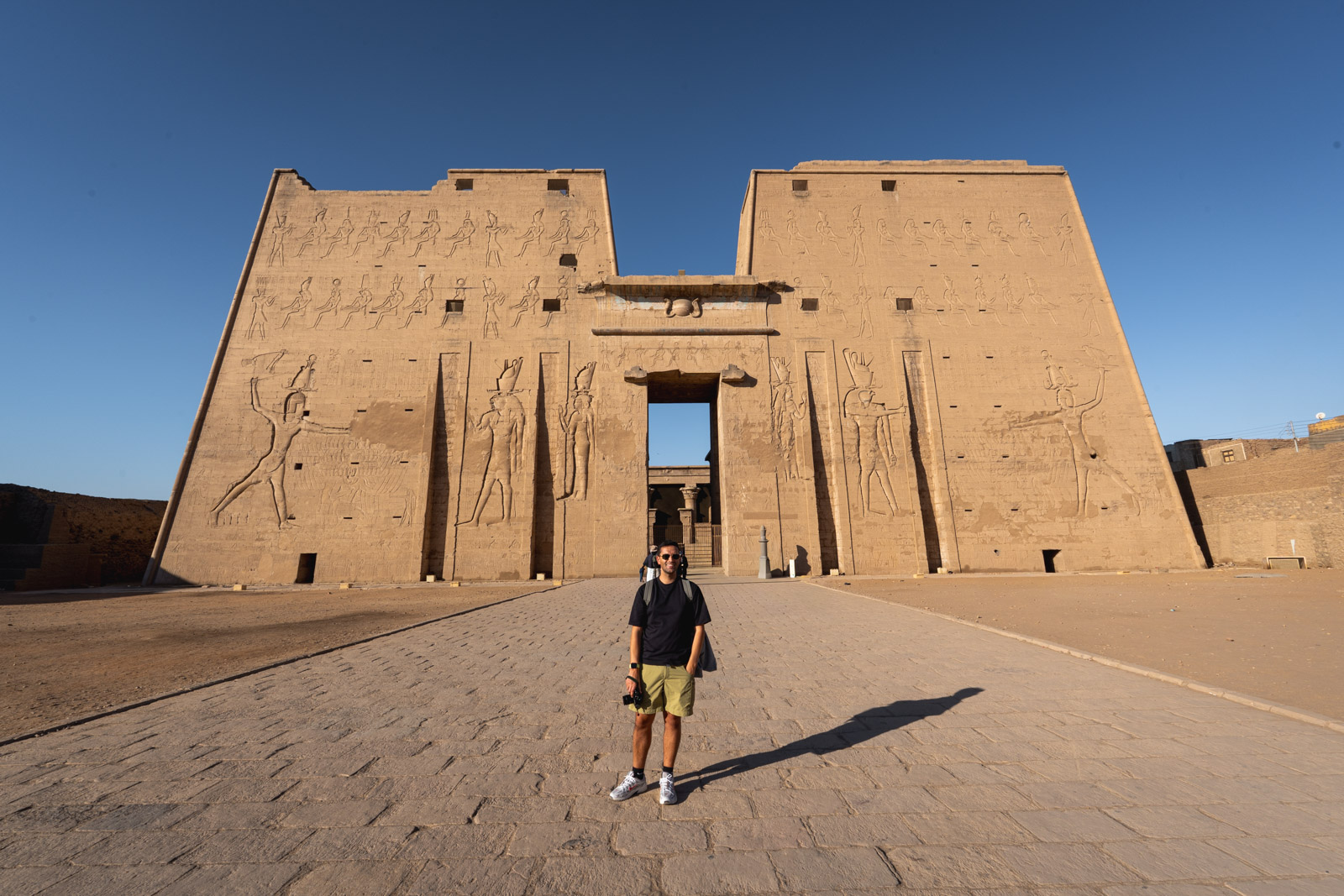
The Temple of Horus, one of the best-preserved temples in Egypt, was our second stop of the day. Massive stone walls, towering pylons and hieroglyphs make it feel almost untouched by time.
One of the reasons why the Temple of Horus is so well preserved today is because it was buried under sand and mud for many centuries. Over time, the desert slowly covered large parts of the temple, and even local houses were built on top of the buried ruins.
The sand actually helped protect the structure from weather and damage. When archaeologists started excavating the site in the 19th century, they uncovered a temple that was still incredibly intact.
Religious Significance
This site was also an important place for religious celebrations, the annual festival celebrating the union of Horus and the goddess Hathor being one of them.
During the festival, priests carried the statue of Hathor by boat along the Nile from her temple in Dendera to Edfu. The ceremony symbolized the sacred marriage between the two gods, believed to bring renewal, fertility and prosperity to the land.
The Entrance Pylon
Another impressive feature of the temple is its massive entrance pylon. This huge stone gateway rises about 36 meters high and forms the main entrance to the temple complex.
It’s one of the largest pylons in Egypt and immediately gave us a sense of the monumentality of ancient Egyptian architecture. The walls feature large reliefs showing the pharaoh defeating his enemies, a common symbol that represents the king’s strength and his role in protecting Egypt from chaos.
The Horse Carriages Mafia at Edfu Temple
For decades, the most popular option for tour groups arriving by Nile cruise in Edfu has been to reach the temple by horse carriage. We visited the temple with a pre-arranged driver, as we had already decided we didn’t want to use the horse carriages. We do not support animal labor in any form.
While waiting for our car with our guide, the scene around us suddenly turned chaotic, with drivers shouting loudly at each other in Arabic. For a moment, the loud shouting quickly turned into physical fighting. Later, we realized this is actually a daily occurrence: a mix of competition and tension between carriage drivers and car drivers, all trying to secure their share of tourists in a very short time window. It’s intense, a bit overwhelming, but also a glimpse into the realities behind such a busy tourist stop.
Back on the boat, we spent the evening the same way we had begun to love: drinks, snacks, reading on the deck followed by a relaxed dinner as we continued sailing the Nile from Aswan to Luxor, heading north toward Luxor.
Day 3 — Nile Cruise Aswan to Luxor: Exploring Luxor, The World’s Greatest Open-Air Museum
Sunrise Over the Nile in Luxor
`We woke up in Luxor and I couldn’t believe my eyes when I opened the curtains of our cabin.
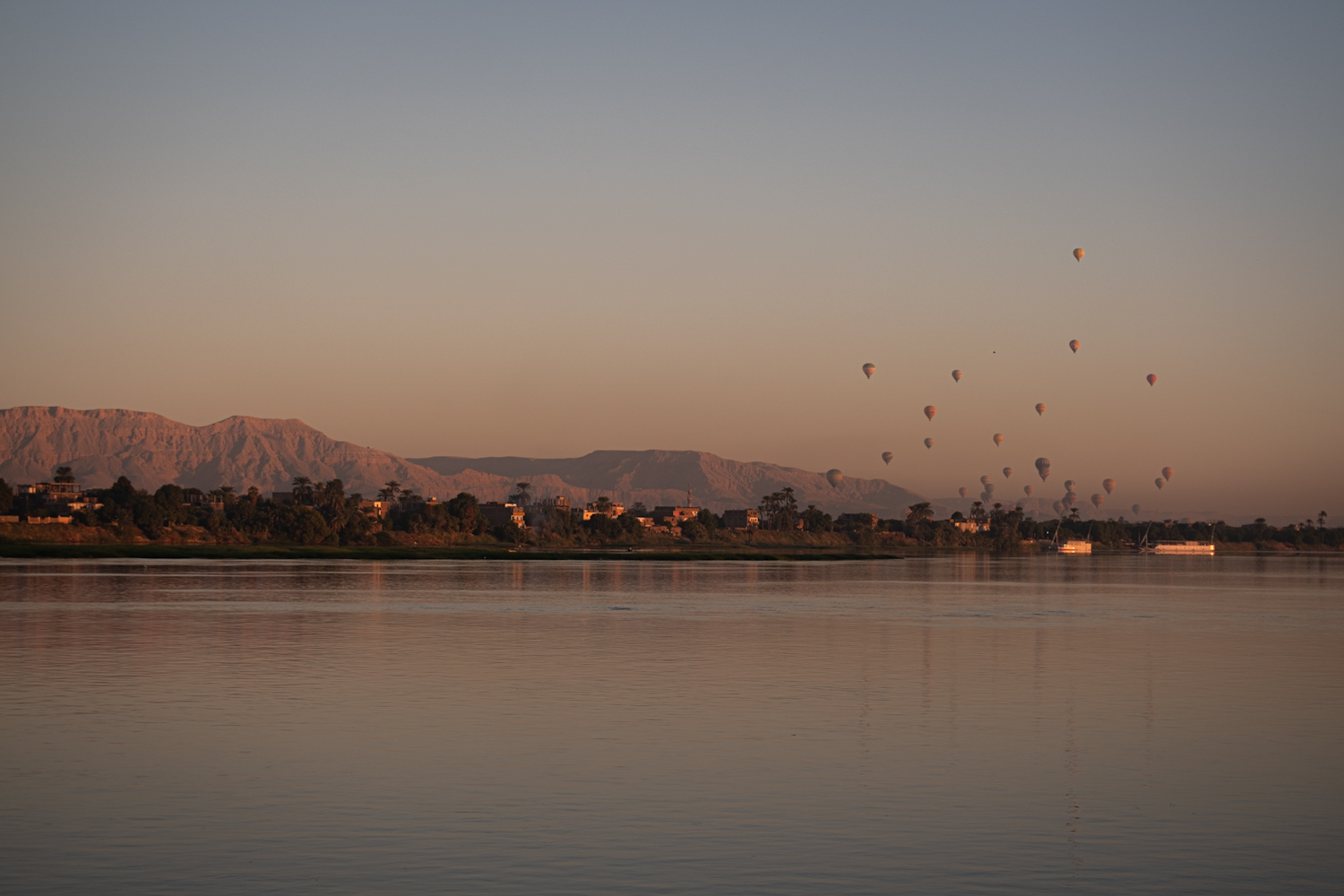
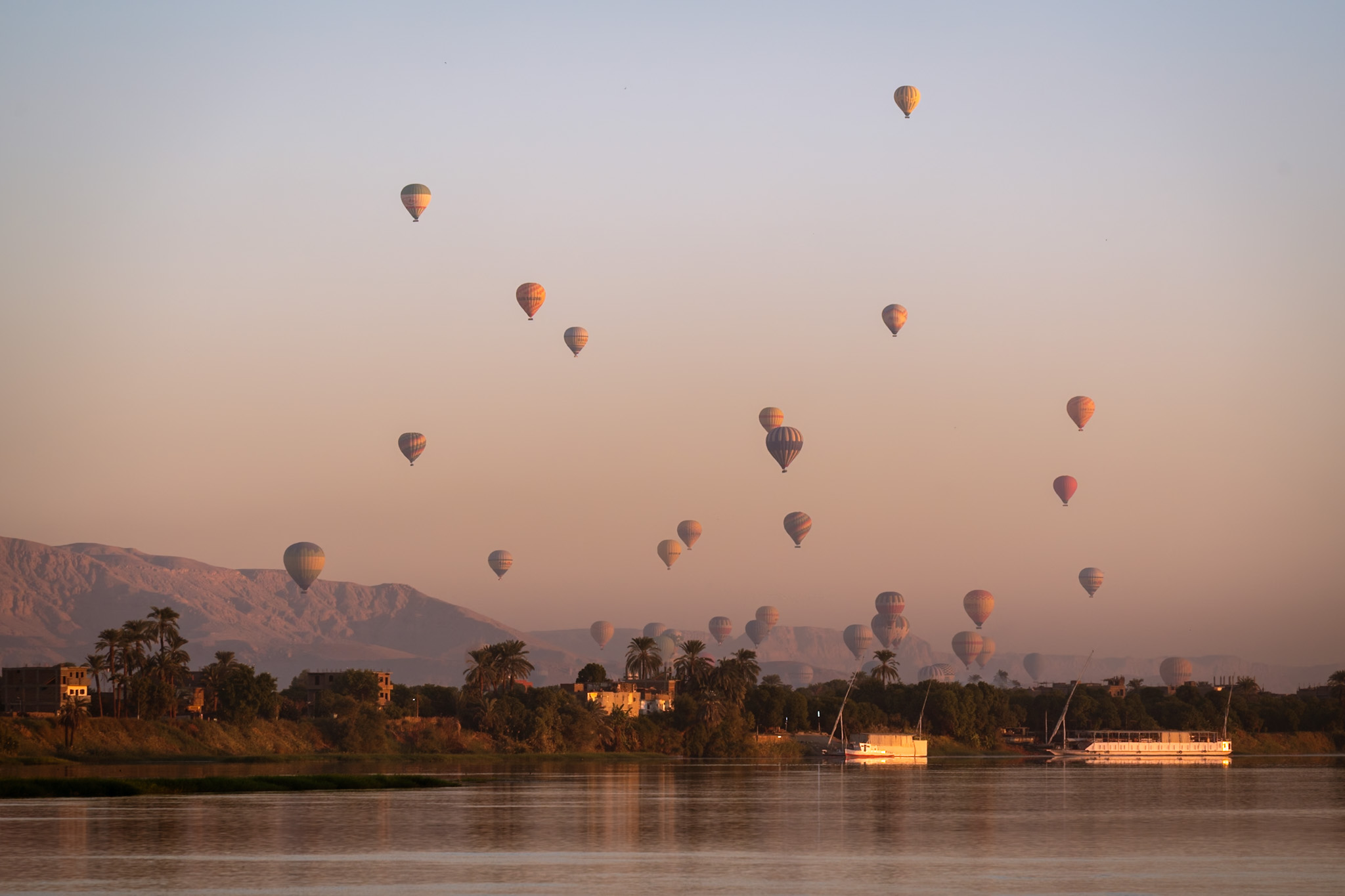
The sun rose slowly over the riverbanks, painting the sky in soft colors. Hot air balloons filled the sky. For a moment it felt almost unreal, like I had stepped into a movie scene or a dream.
Watching dozens of hot air balloons floating above the Nile while the adhan was playing softly in a nearby mosque was one of those moments that makes you pause and just take it all in.
We quickly texted Diandra and Hassan, telling them to run to the window and enjoy the view. In our minds, we imagined they were looking at the same magical sunrise and hot air balloons over the Nile.
But the situation quickly turned into a laugh when they replied with a photo of their window… showing nothing but the side of another boat docked right next to them. It was so close they could probably touch it from their cabin.
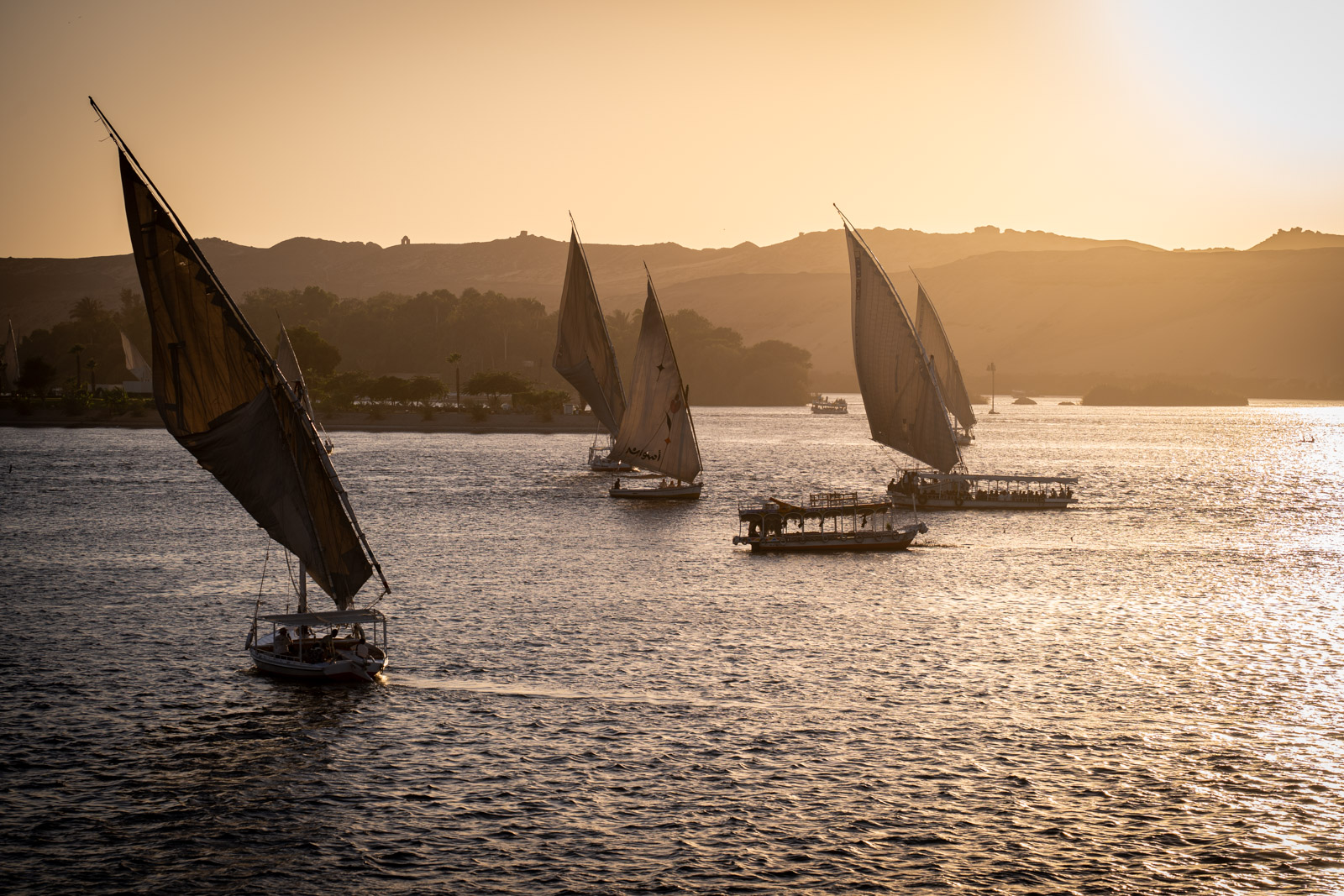
Cruising the Nile, sunrises and sunsets were among our favorite moments of the day.
Valley of the Kings
After breakfast we crossed to the West Bank to explore the legendary Valley of the Kings. Hidden in the desert hills, this royal burial ground contains the tombs of Egypt’s most powerful pharaohs.
The entrance ticket lets you visit three tombs of your choice, excluding the tomb of Tutankhamun.
We visited the tombs of Ramses I, Ramses IV, Ramses IX as those were suggested by our guide. On top of that, we bought a special ticket to visit the the tomb most famous pharaoh of all time: Tutankhamun.
Descending into these tombs is an unreal experience. It’s hot and humid, but incredibly beautiful.
Tomb of Ramses I
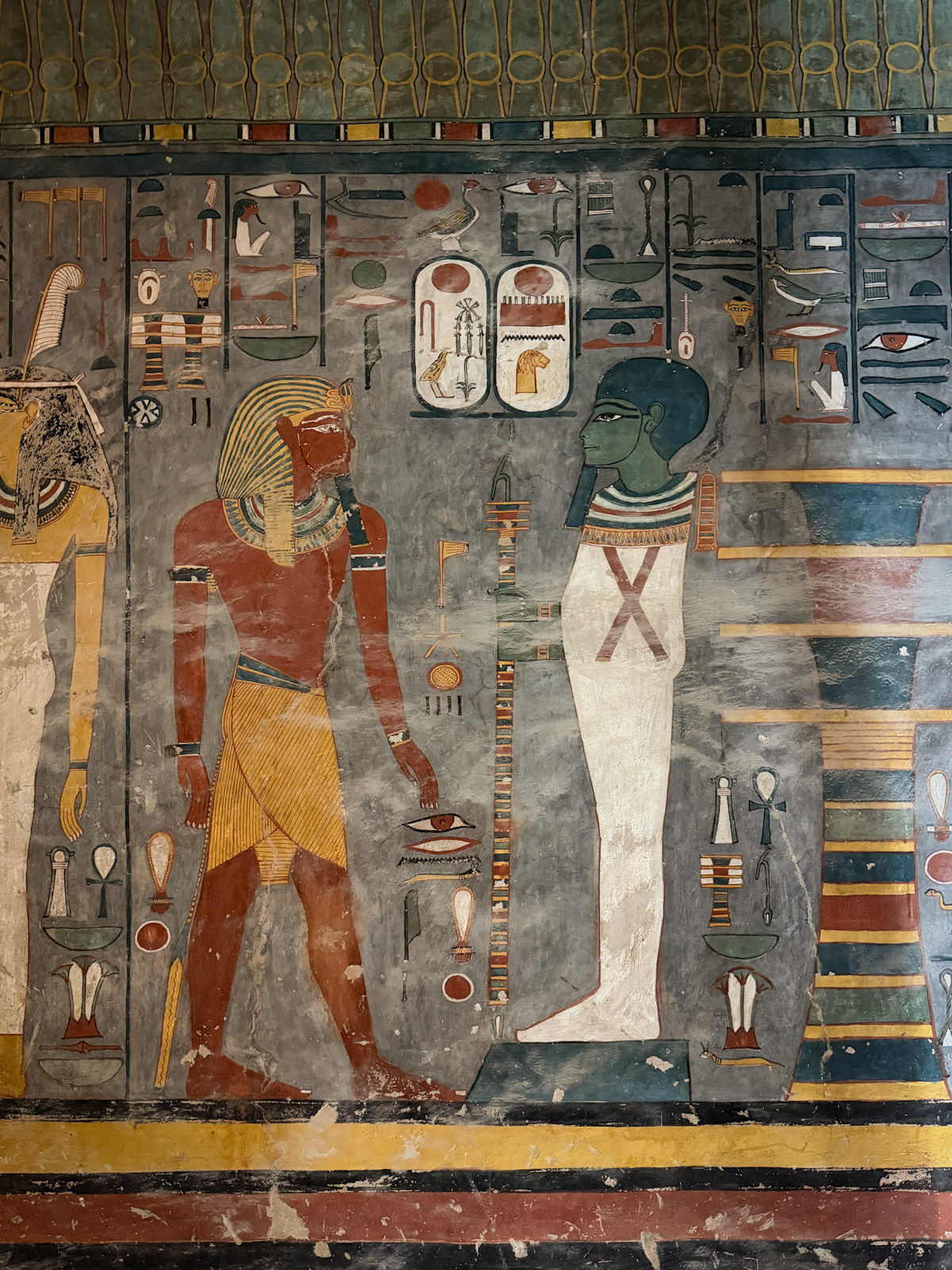
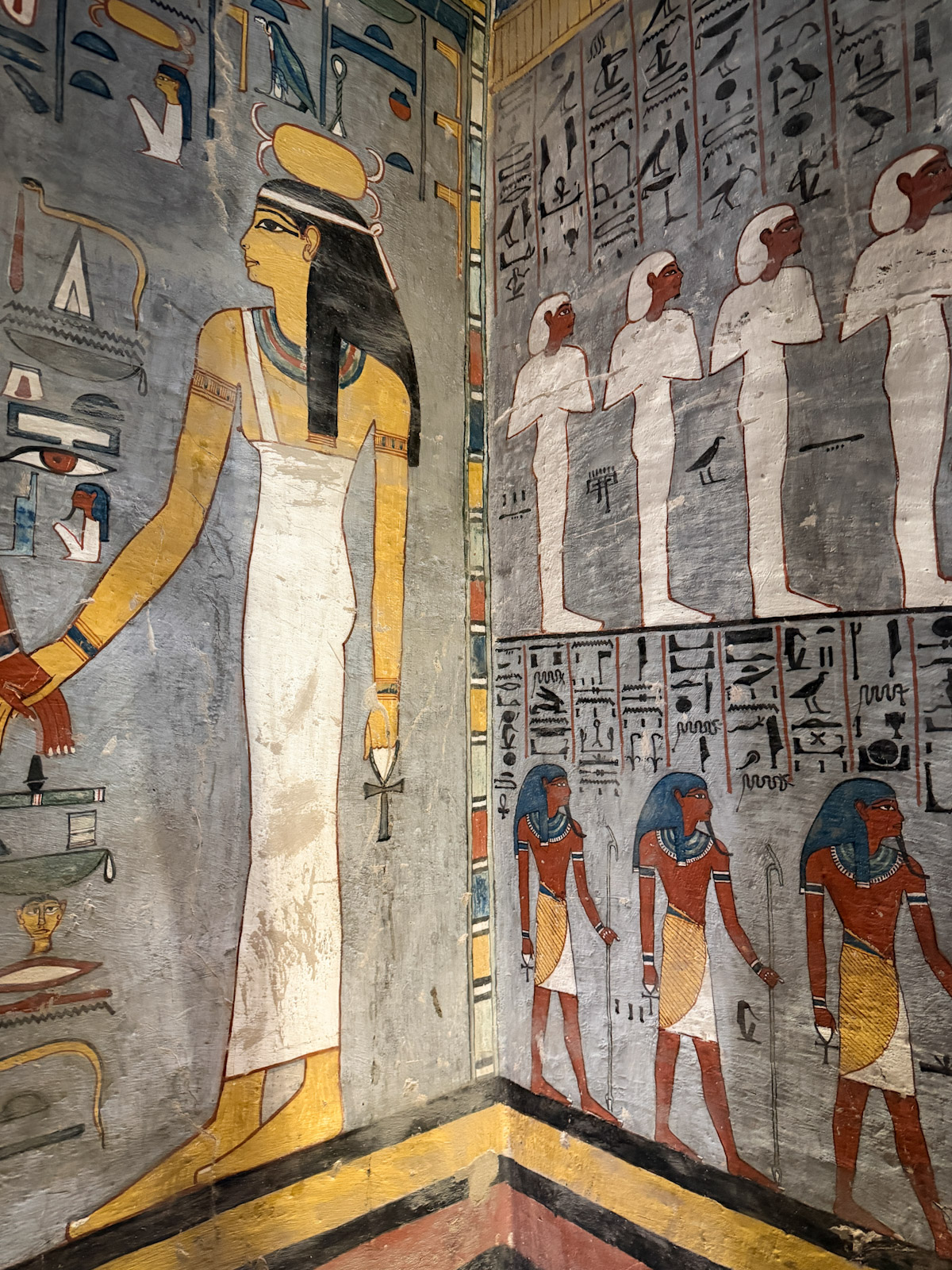
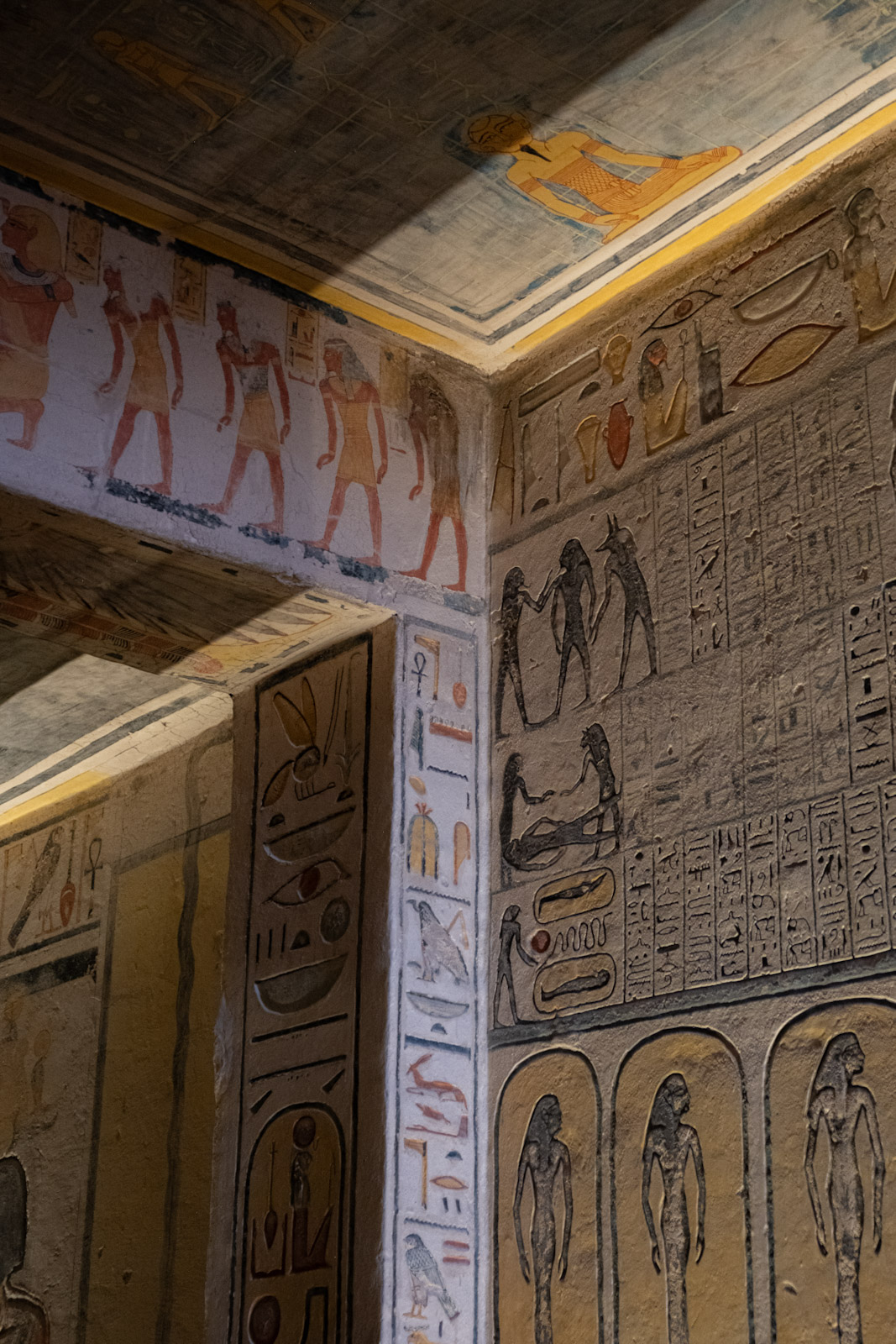
The first tomb we visited was the tomb of Ramses I. Even though he ruled Egypt for only a short time, his tomb is beautifully decorated and very well preserved.
The walls are covered with colorful scenes and hieroglyphs that guide the pharaoh through the afterlife. Because the tomb is relatively small, you can see the artwork very closely, which makes the visit feel even more special.
Tomb of Ramses IV
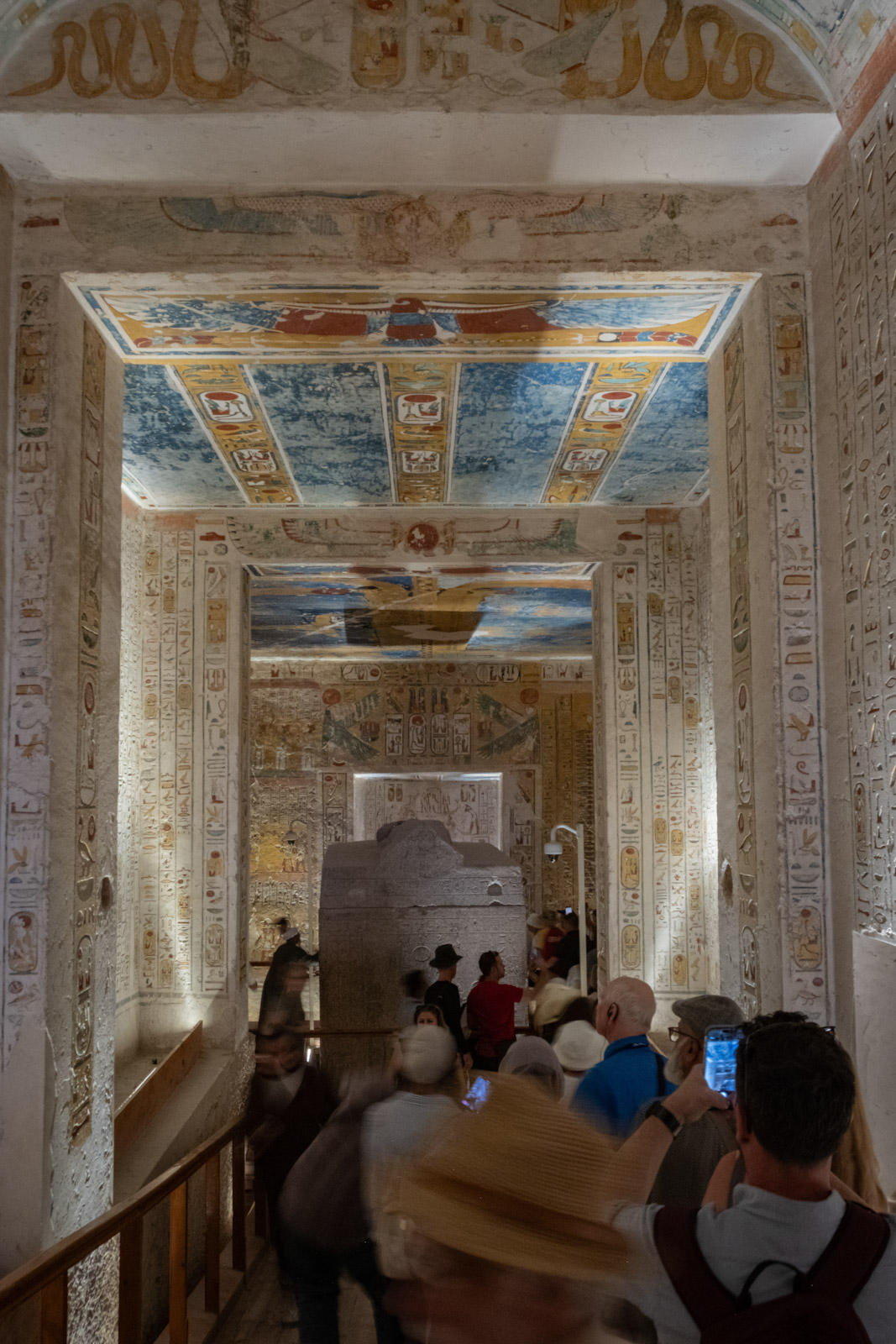
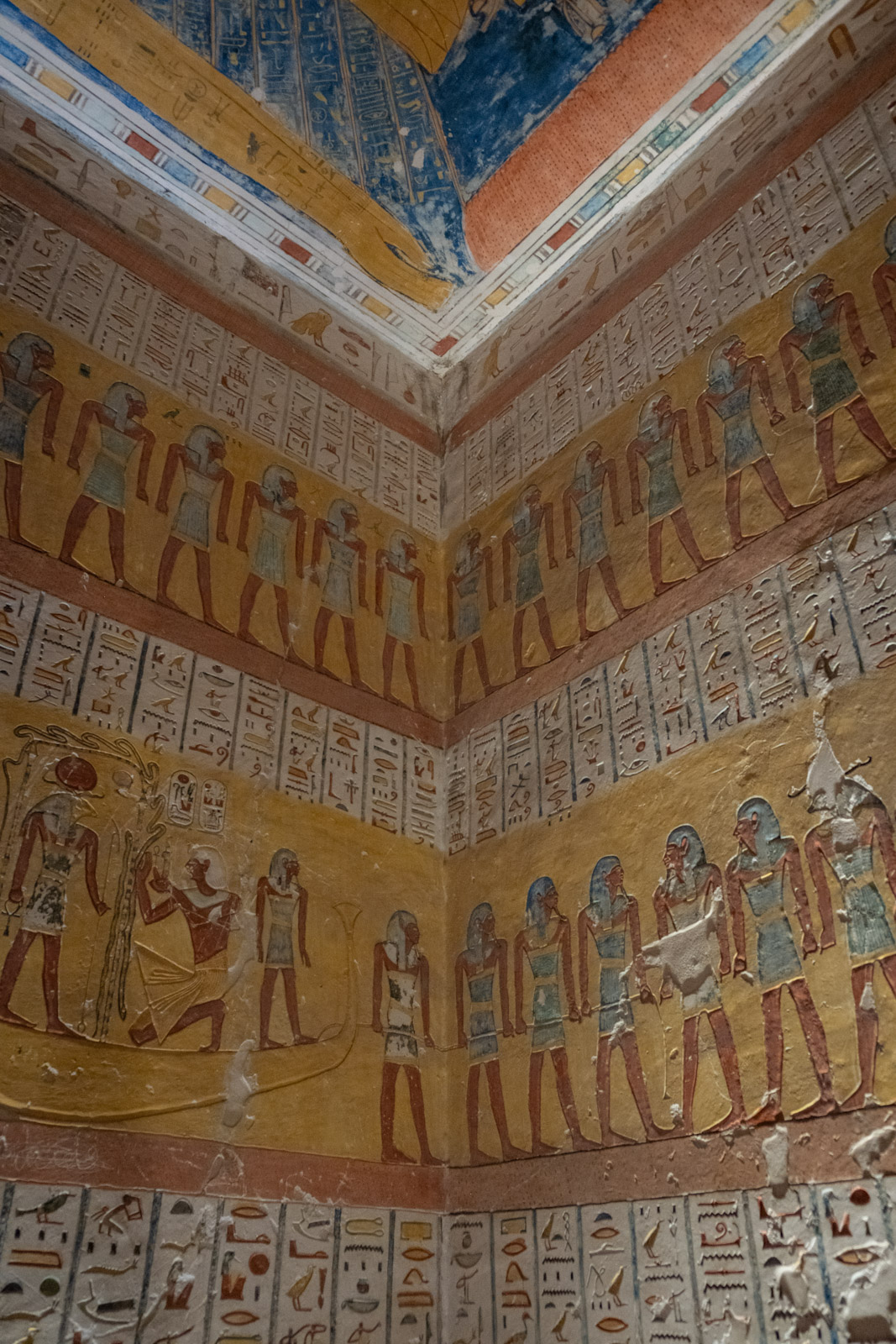
We also entered the tomb of Ramses IV, which is larger and has long corridors leading deep into the mountain.
The walls are filled with detailed carvings and texts from ancient funerary books that describe the journey to the afterlife. The scale of the tomb and the amount of decoration really show how important these burial places were for the pharaohs of ancient Egypt.
Tomb of Ramses IX
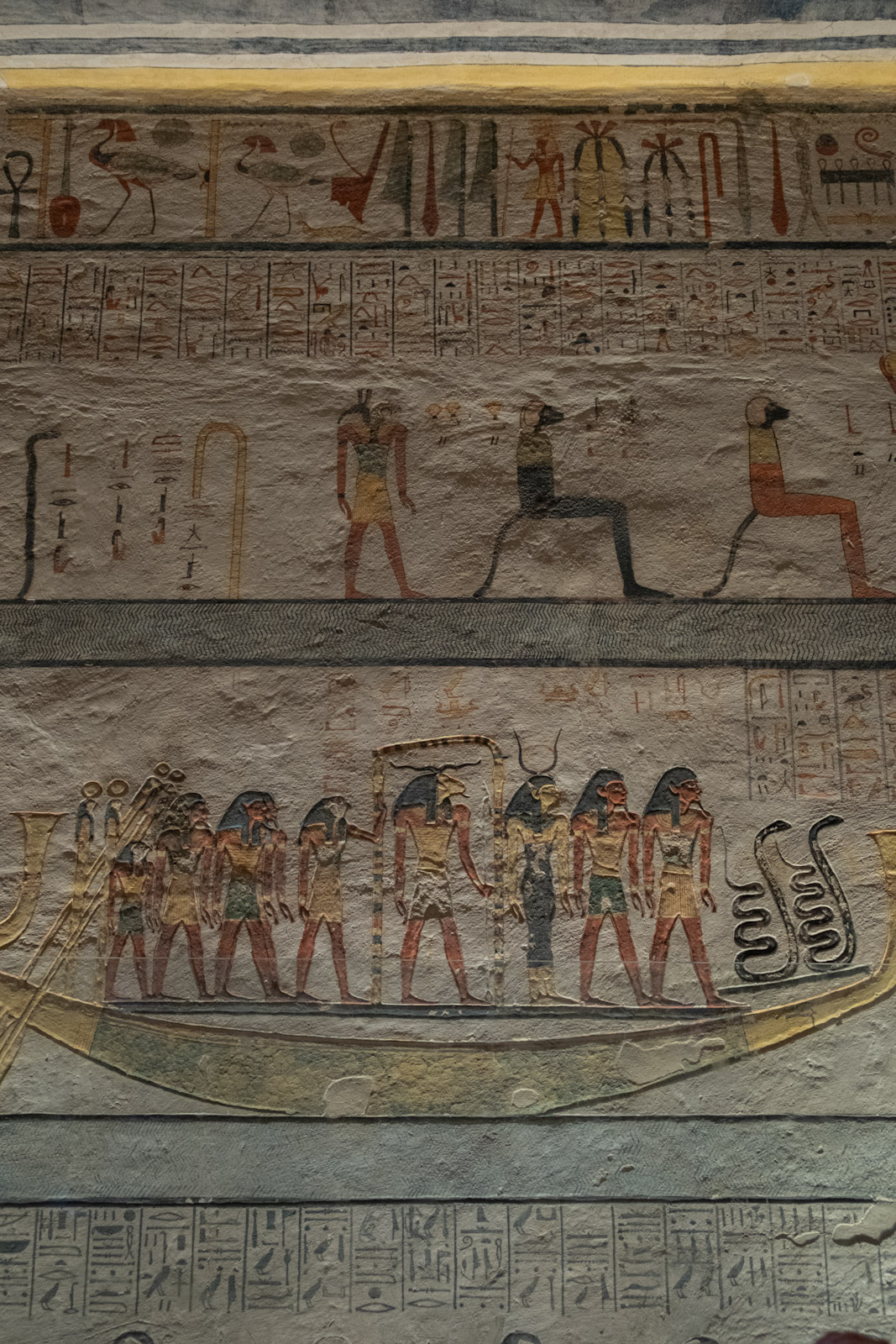
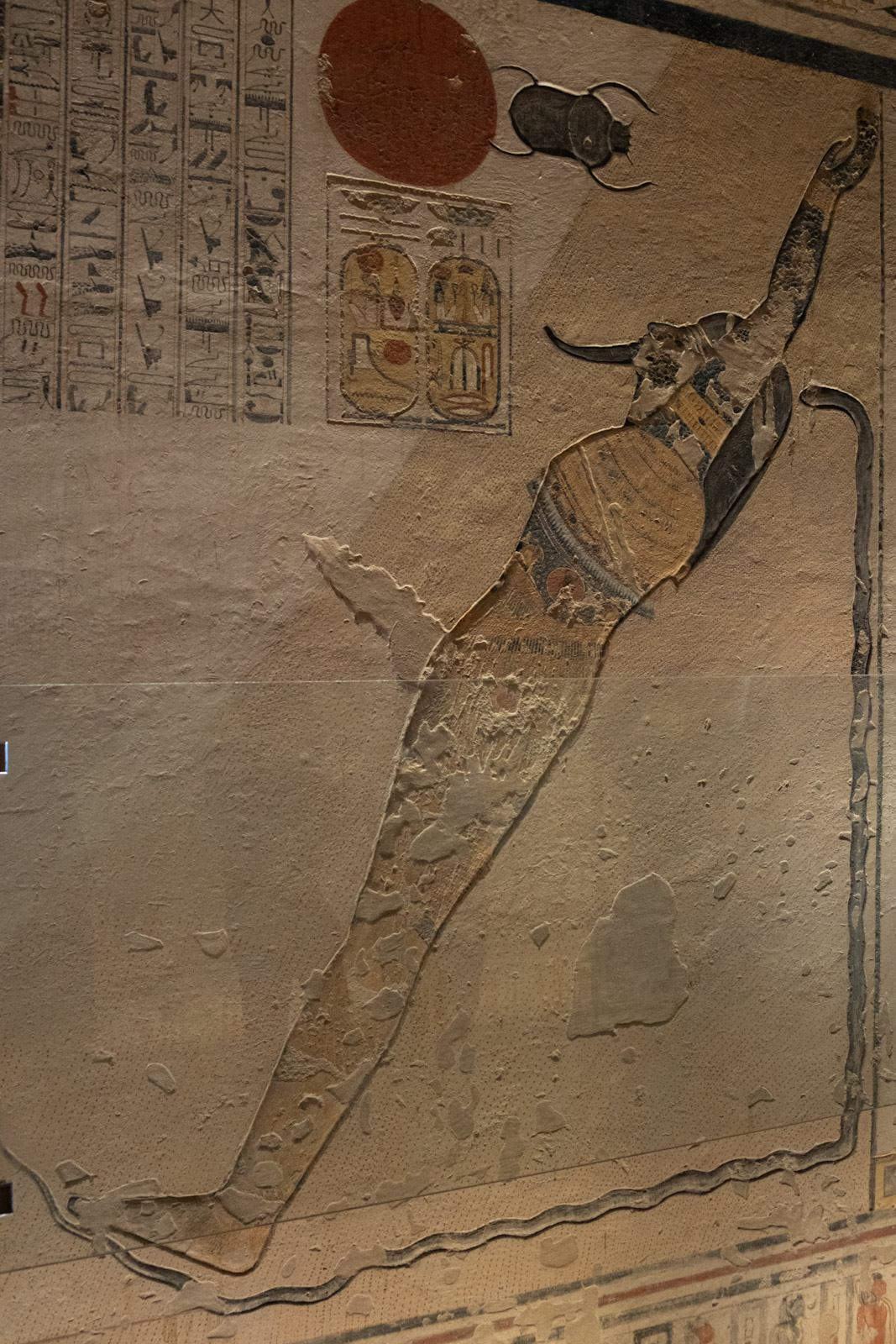
Another tomb we explored was the one belonging to Ramses IX.
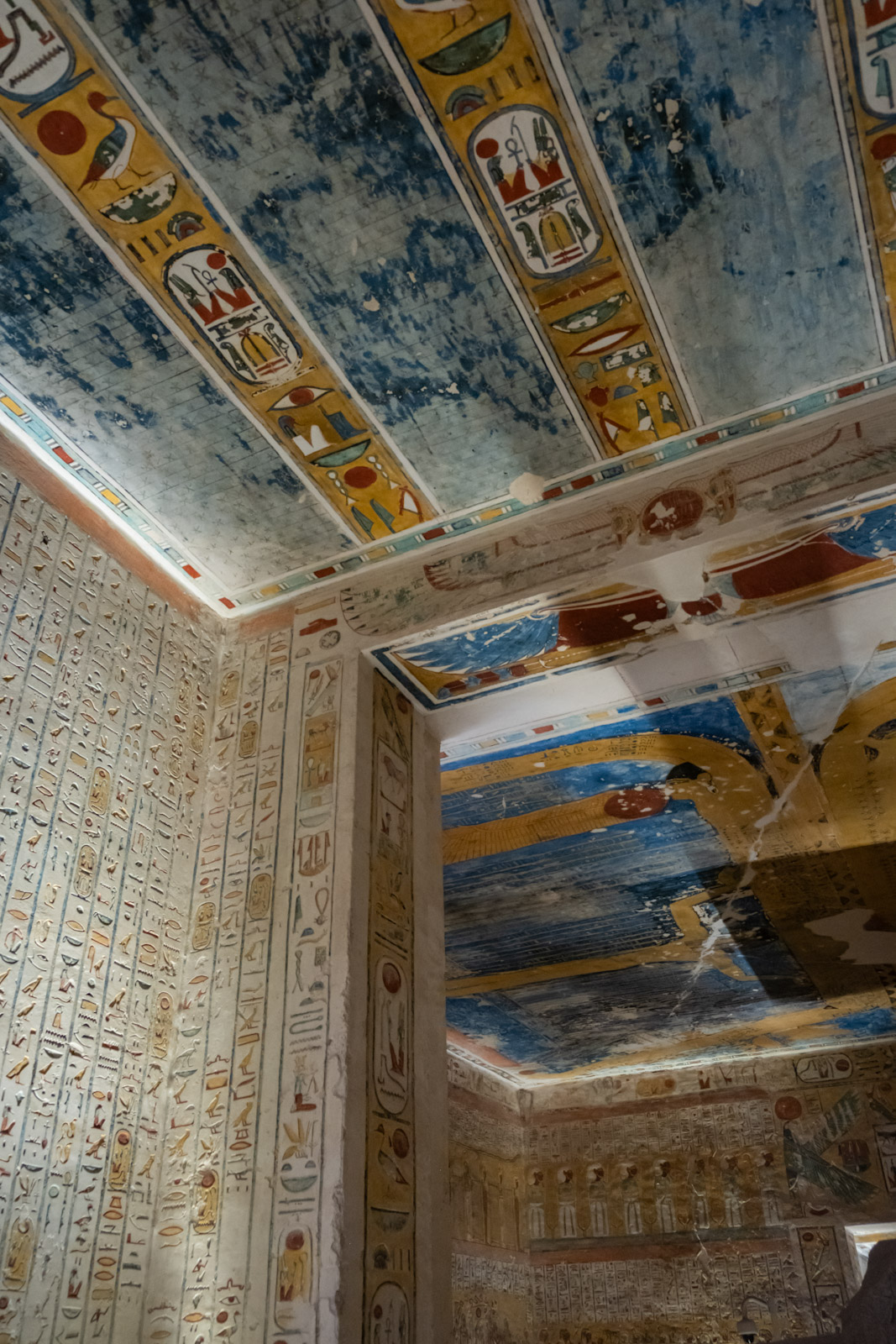
What makes this tomb stand out are its impressive ceiling decorations, especially the astronomical scenes showing the sky goddess and stars. Walking through the chambers and corridors, you can still see many colorful hieroglyphs that have survived for thousands of years.
Tomb of Tutankhamun
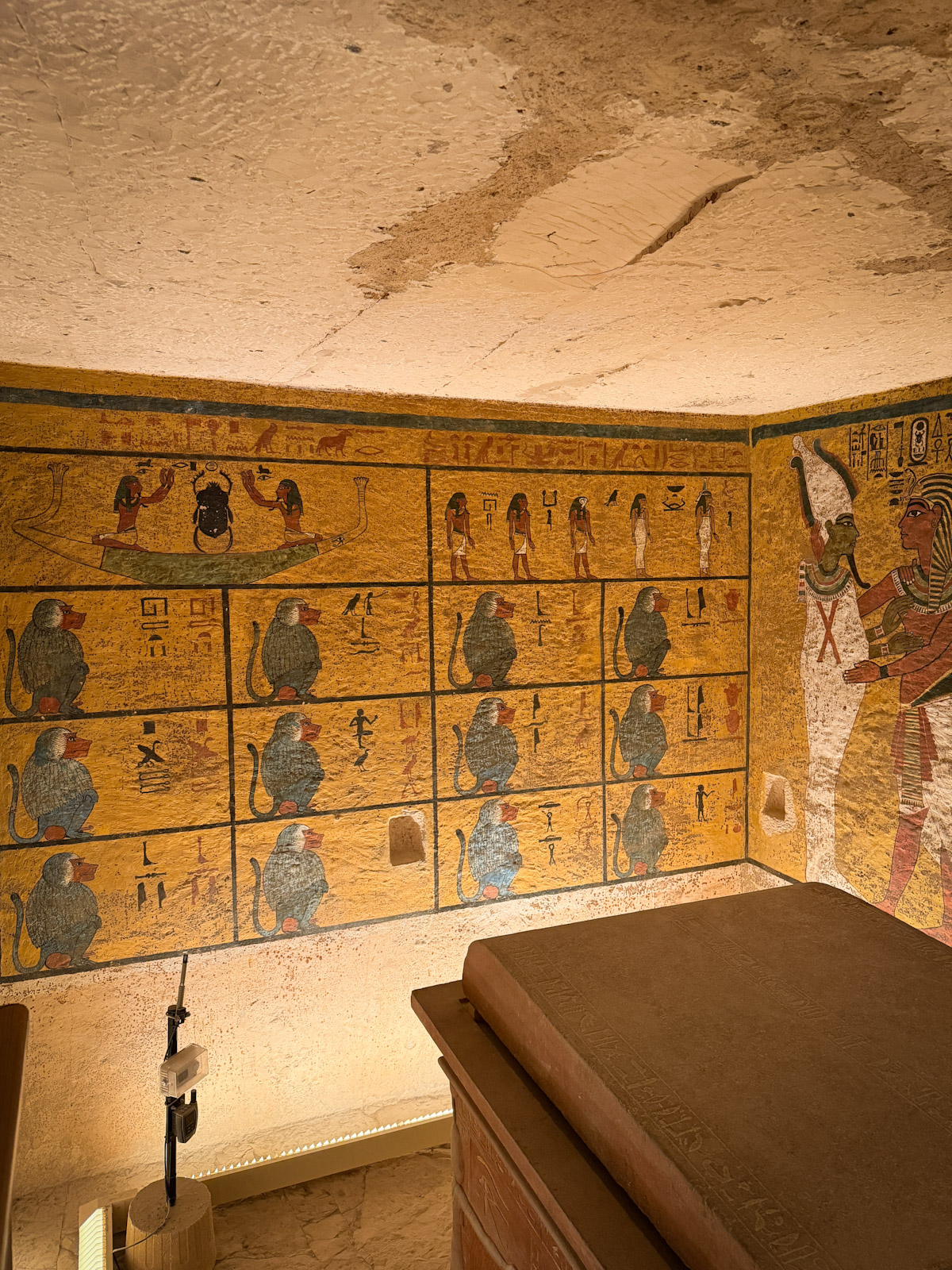
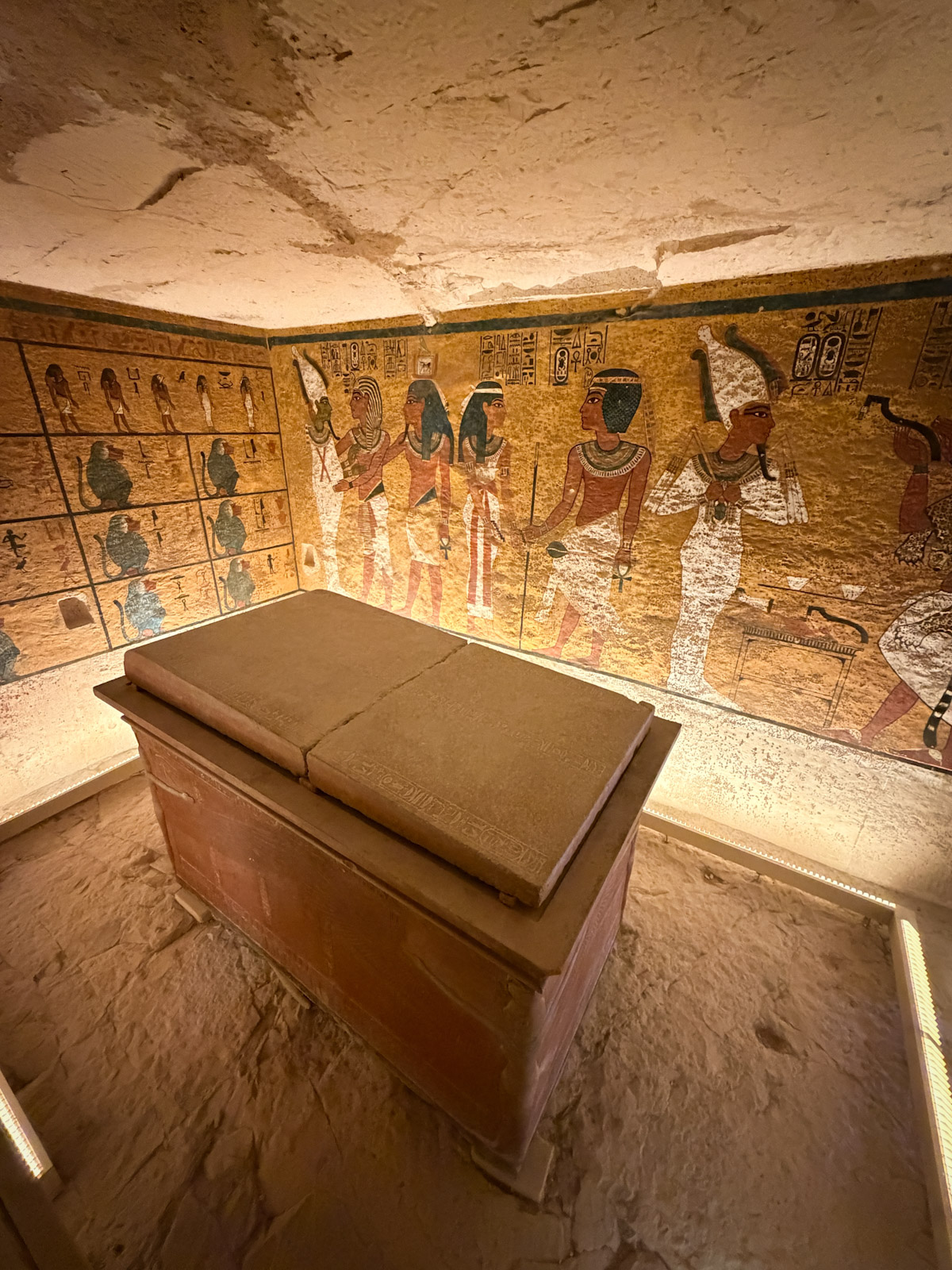
Finally, we bought a special ticket to visit the tomb of Tutankhamun, probably the most famous pharaoh of all time.
Unlike the other tombs, this one is smaller and simpler, but it holds incredible historical importance. Tutankhamun’s tomb became world famous after archaeologists discovered it almost intact in 1922, filled with treasures including the legendary golden mask.
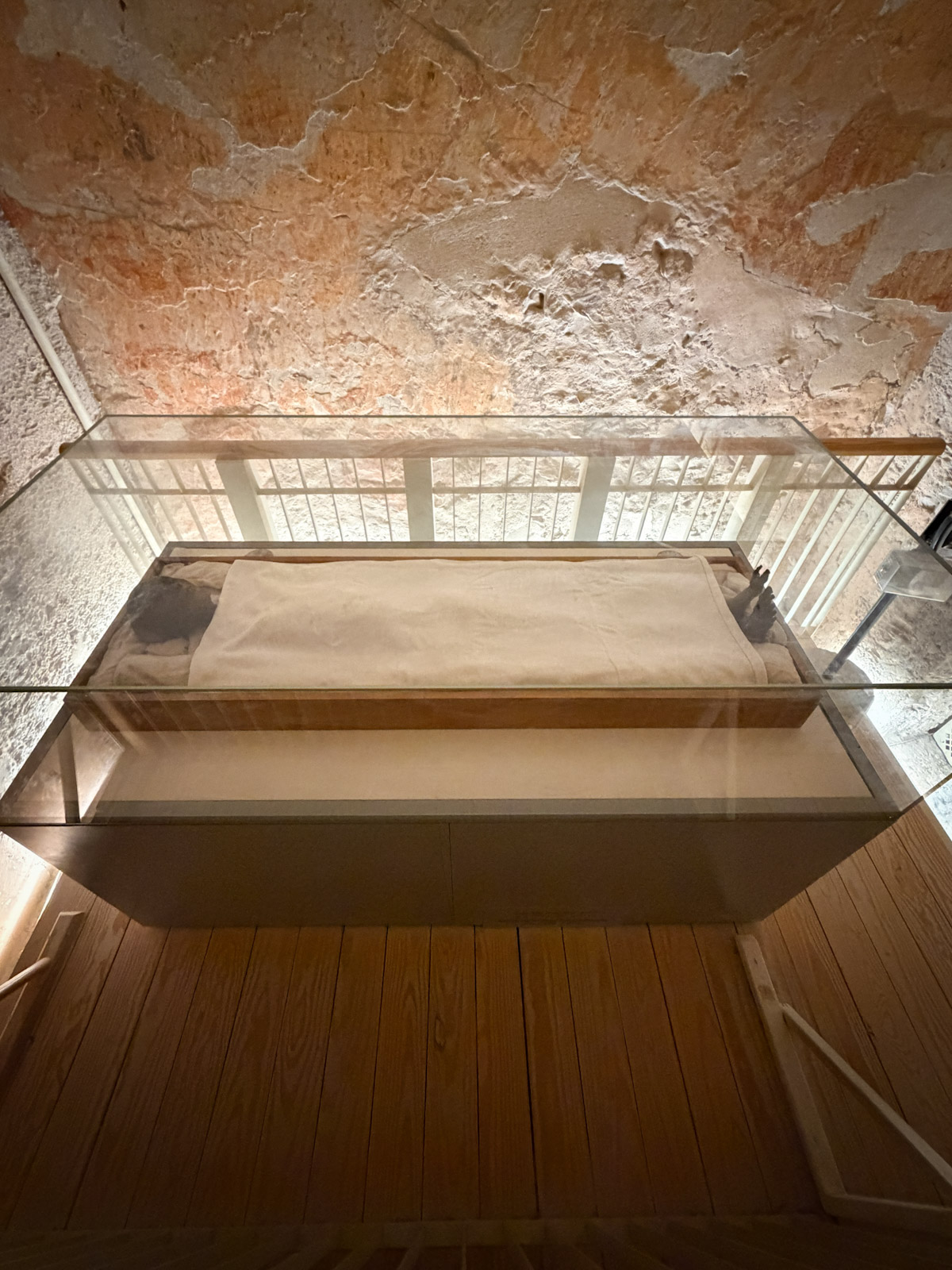
Today, only the mummy of Tutankhamun still rests inside of the tomb, in a glass case. All the treasures have now been moved to the newly opened Grand Egyptian Museum (GEM) in Cairo, which we were planning to visit a few days later.
Valley of the Queens & Hatshepsut Temple
After visiting the Valley of the Kings, we continued to the Valley of the Queens, located on the west bank of the Nile near Luxor. This valley served as the burial place for the wives of pharaohs, as well as princes and royal children.
Compared to the Valley of the Kings, the Valley of the Queens felt busier and more crowded.
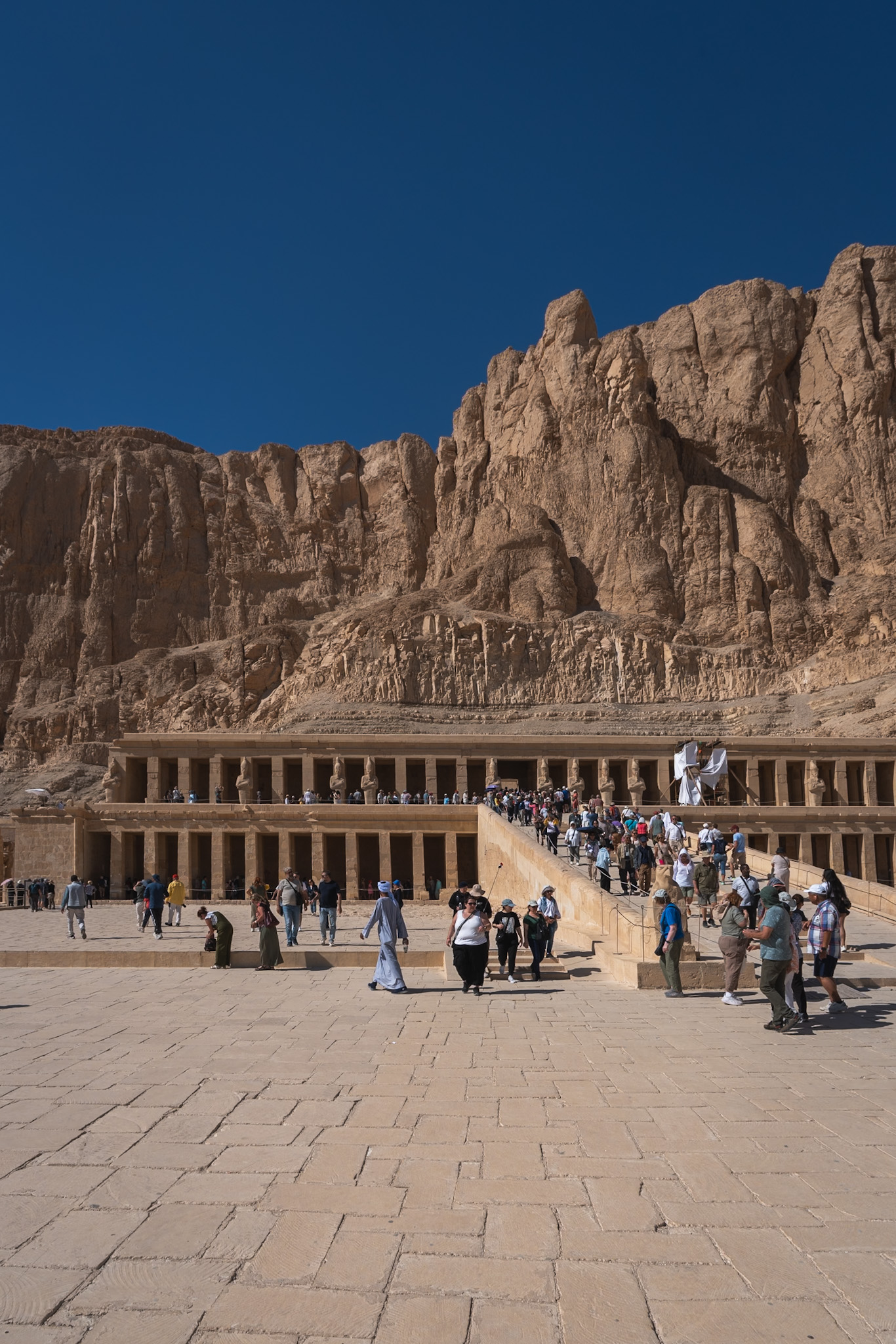
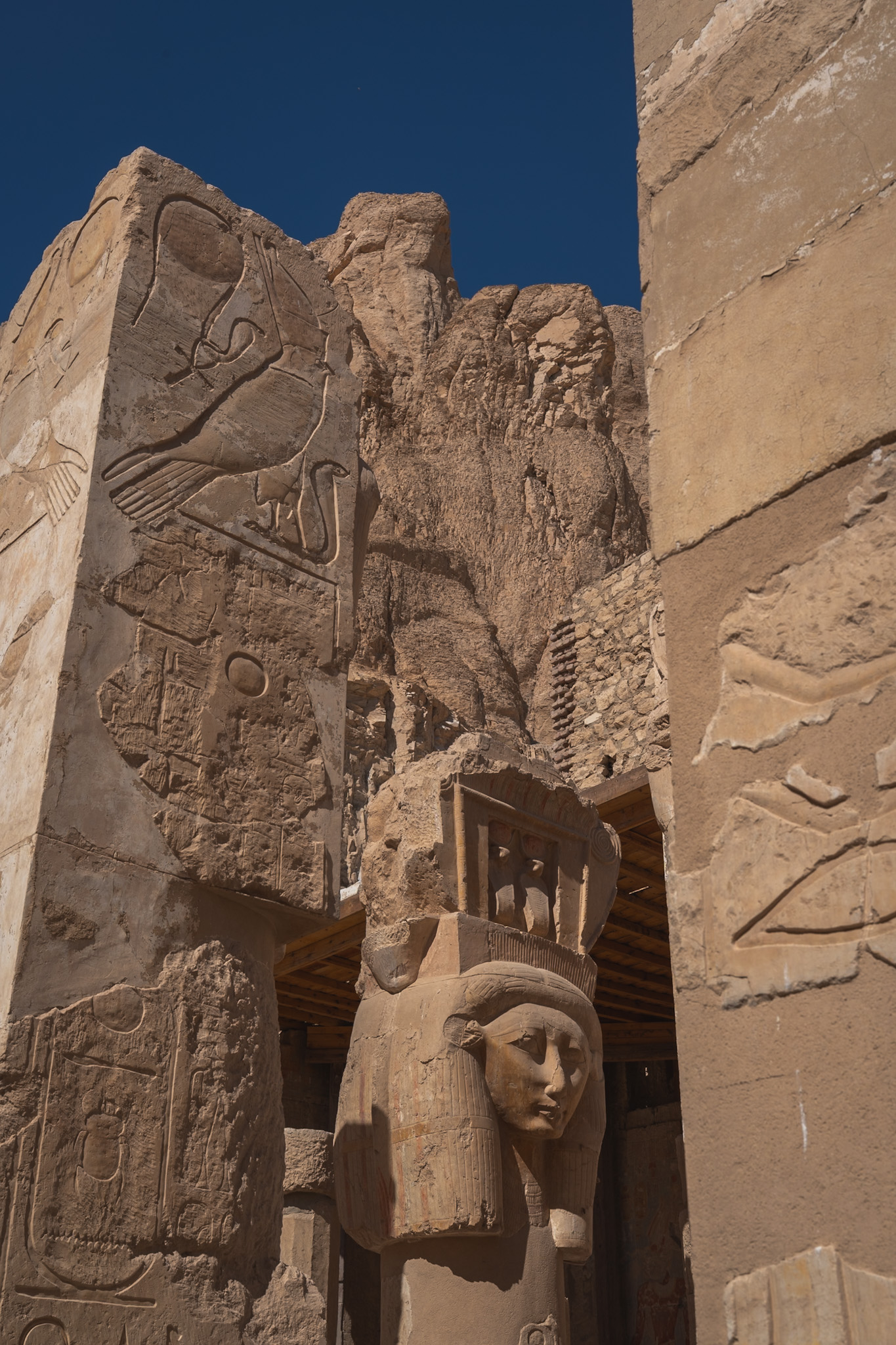
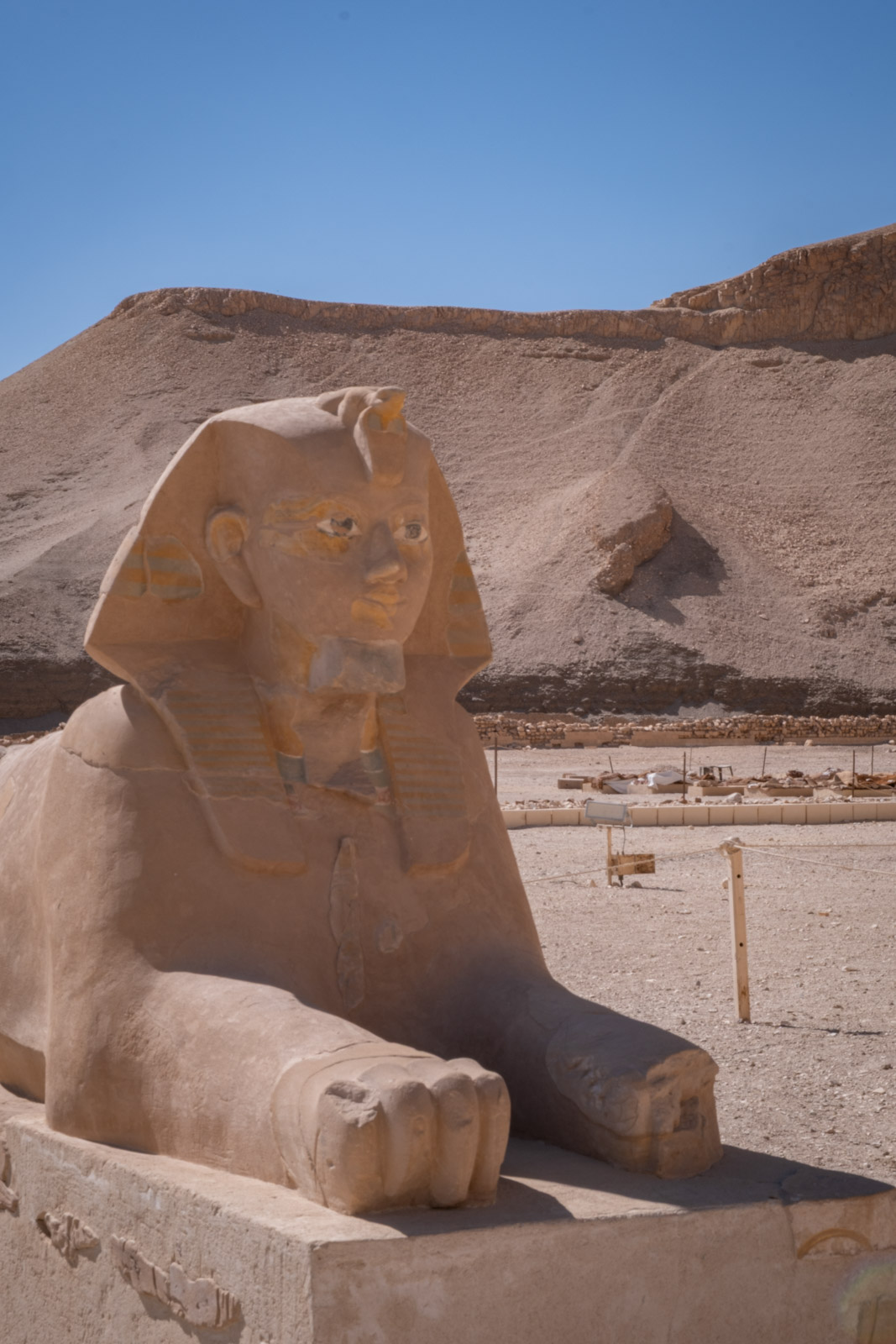
While walking to the Hatshepsut Temple, all of a sudden I was staring at the thing I was most excited about: a sphinx.
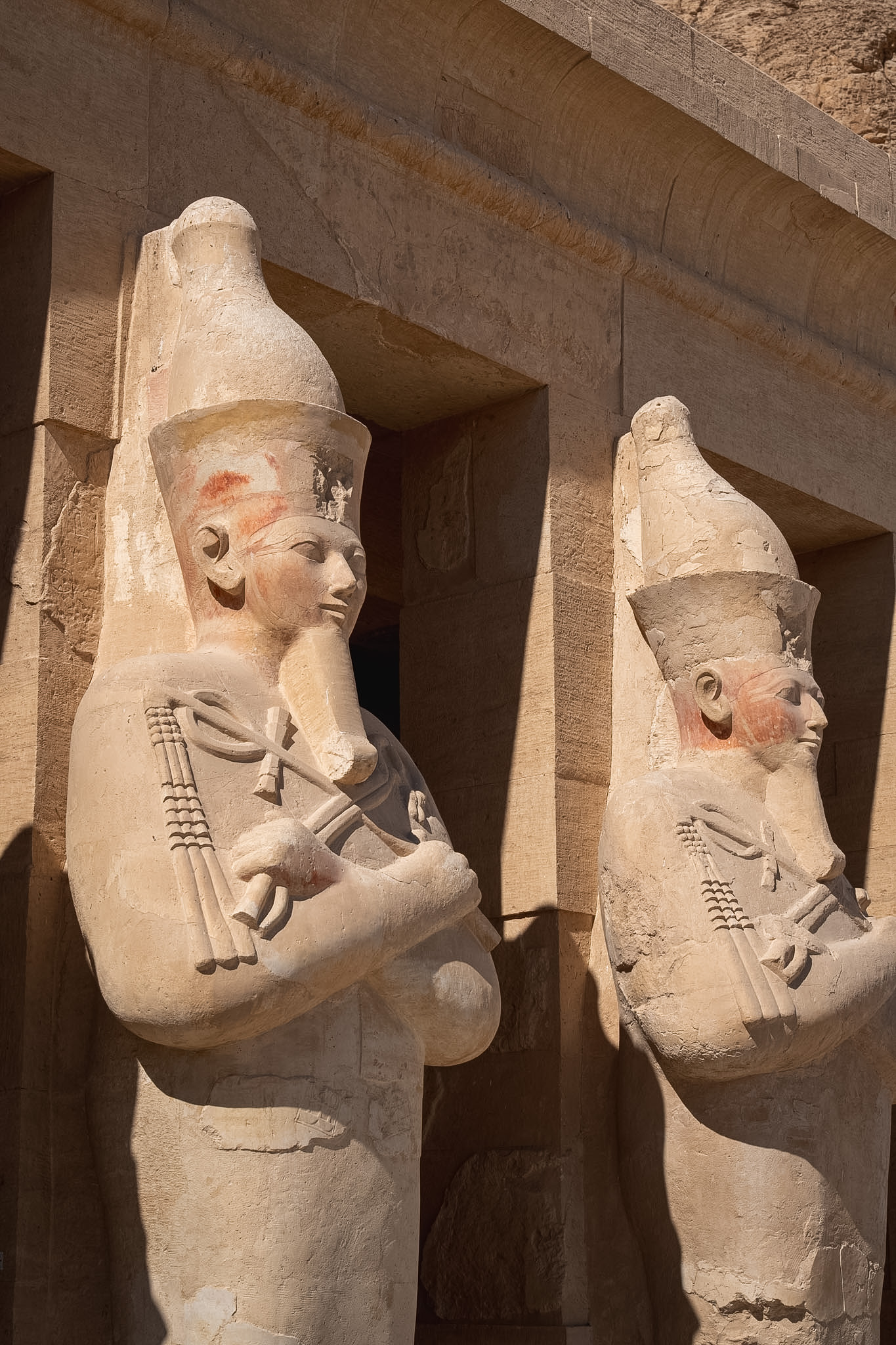
These sphinxes combine the body of a lion, symbolizing strength and protection, with the head of the pharaoh Hatshepsut. Despite being a female pharaoh, Hatshepsut is shown wearing the traditional royal headdress and ceremonial beard, emphasizing her legitimacy as ruler.
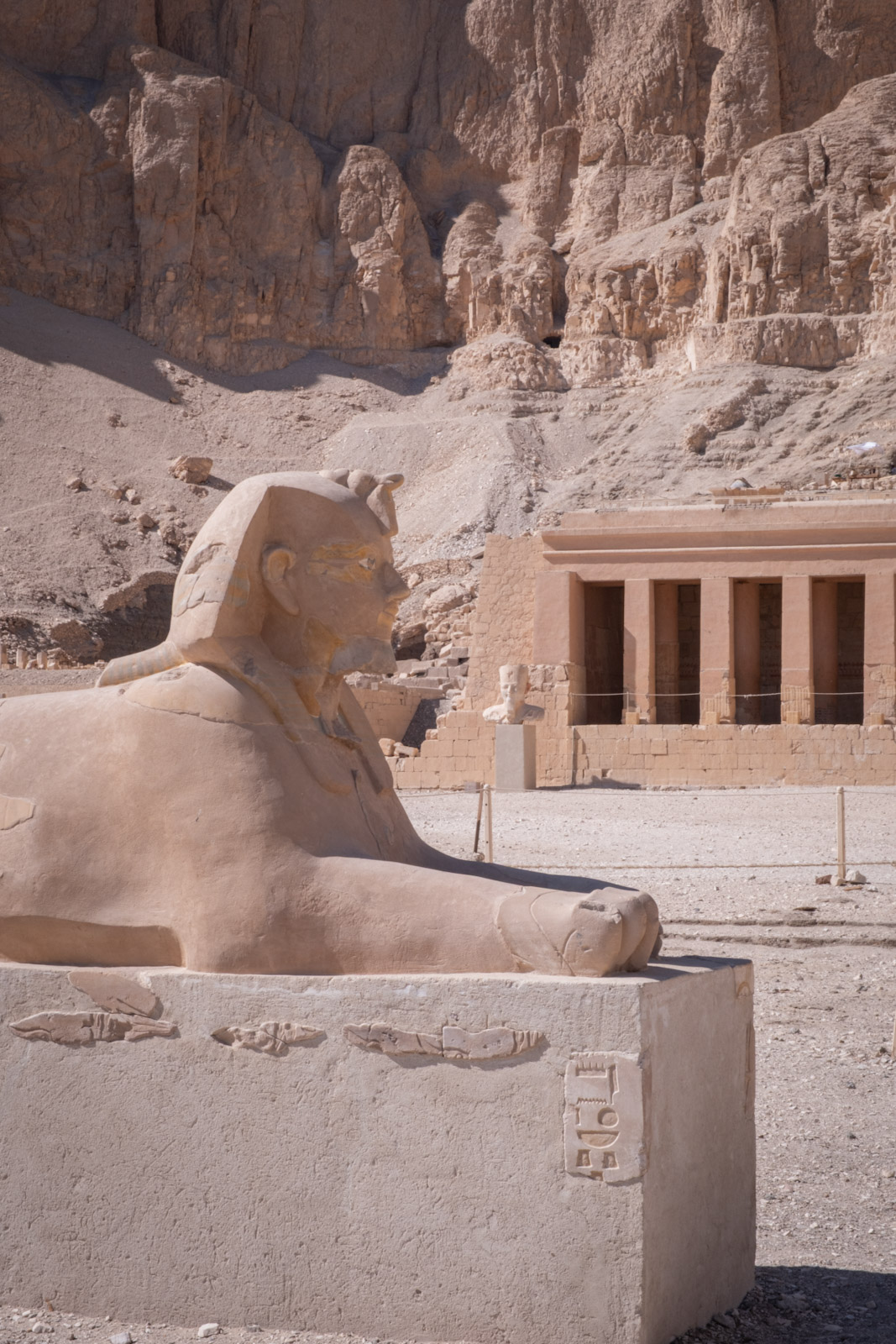
Because of the crowds and also our limited time, we only visited the outside areas of the temple. Instead of going inside the chambers, we walked along the terraces and spent more time looking at the relief carvings on the walls.
These carvings already tell many stories from Hatshepsut’s reign, including the famous expedition to the Land of Punt, where ships returned to Egypt with incense, trees, animals and luxury goods.
To be honest, the thing we wanted to see the most was the bust of Nefertiti in its well-deserved resting place back home in Egypt, not in a museum in Berlin.
Because of that, together with the heat and the long queues, we didn’t feel too worried about visiting every tomb. Sometimes just walking around the temple, looking at the statues, the carvings and the rocky mountains behind it is already enough to appreciate how incredible this place really is.
Karnak Temple
Back on the boat, we had lunch and a much-needed coffee before heading out again to visit two of Egypt’s most impressive temple complexes: Karnak Temple and Luxor Temple.
First impressions
I will never forget the feeling of entering Karnak Temple. The scale of the place is difficult to describe until you’re actually standing there. It feels almost unreal.
Different pharaohs built and expanded the temple complex over more than 1500 years, each adding new courtyards, statues, pylons and temples. They mainly dedicated it to the god Amun, one of the most important gods in ancient Egypt, especially in the city of Thebes, which is today Luxor.
The Great Hypostyle Hall
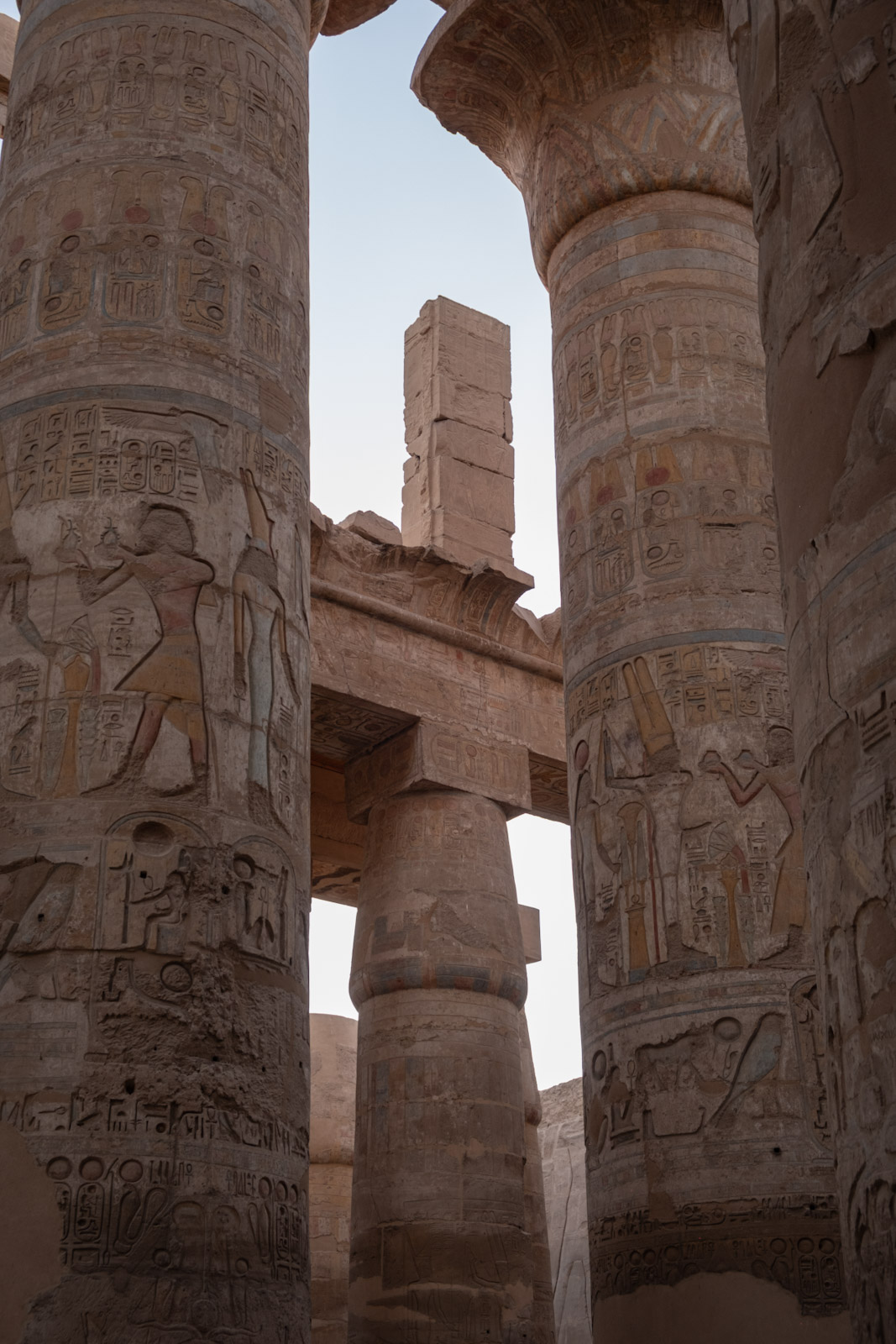
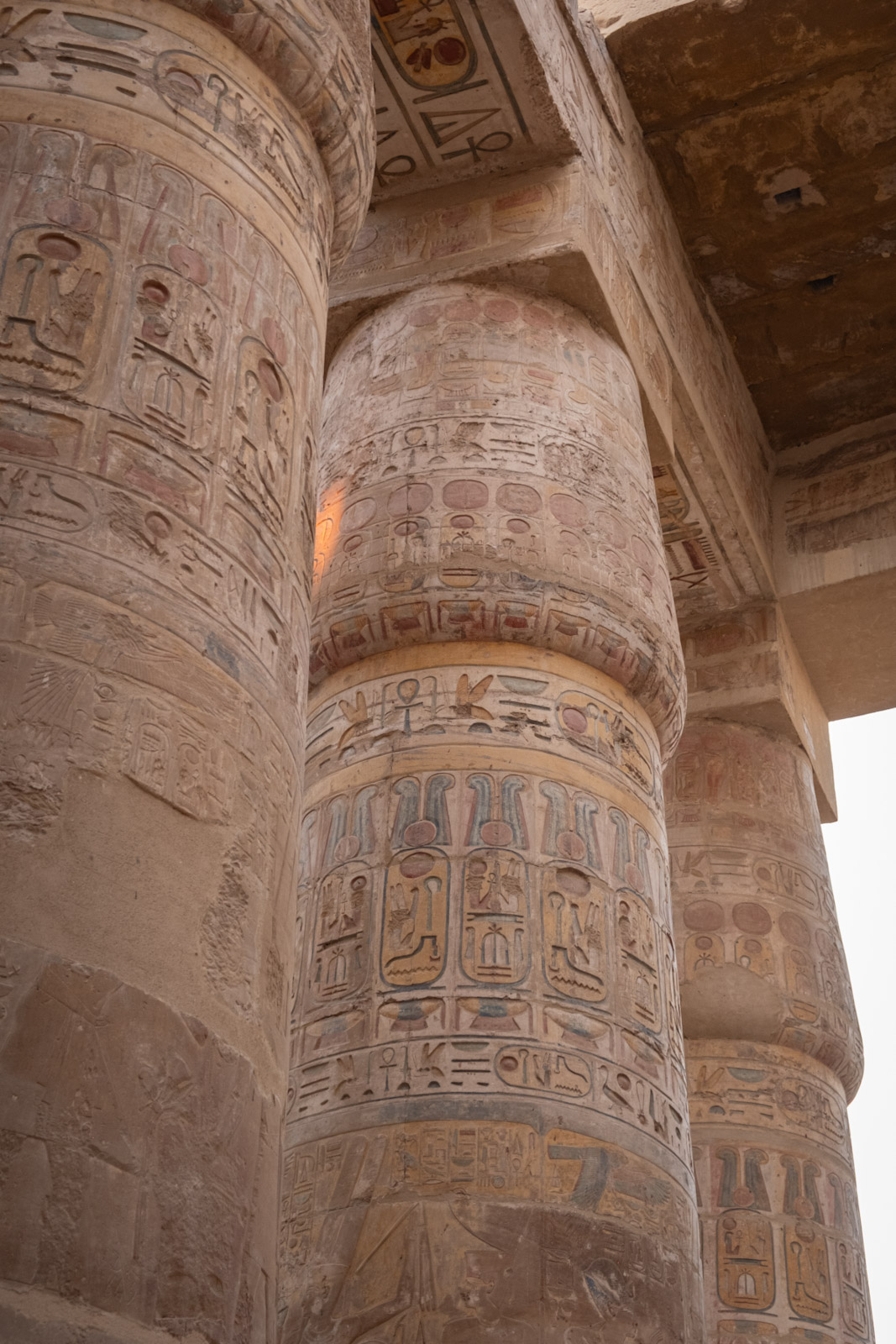
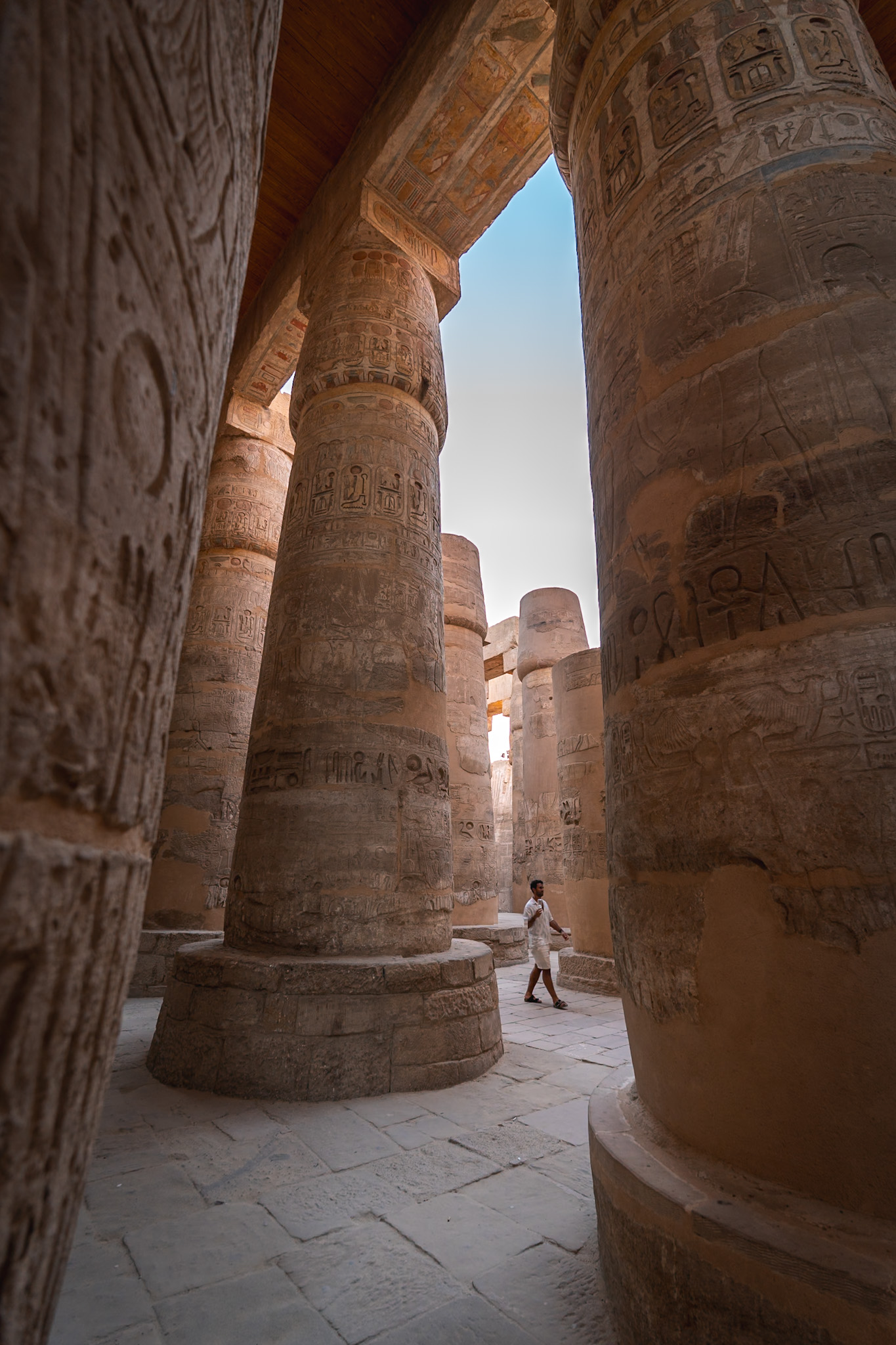
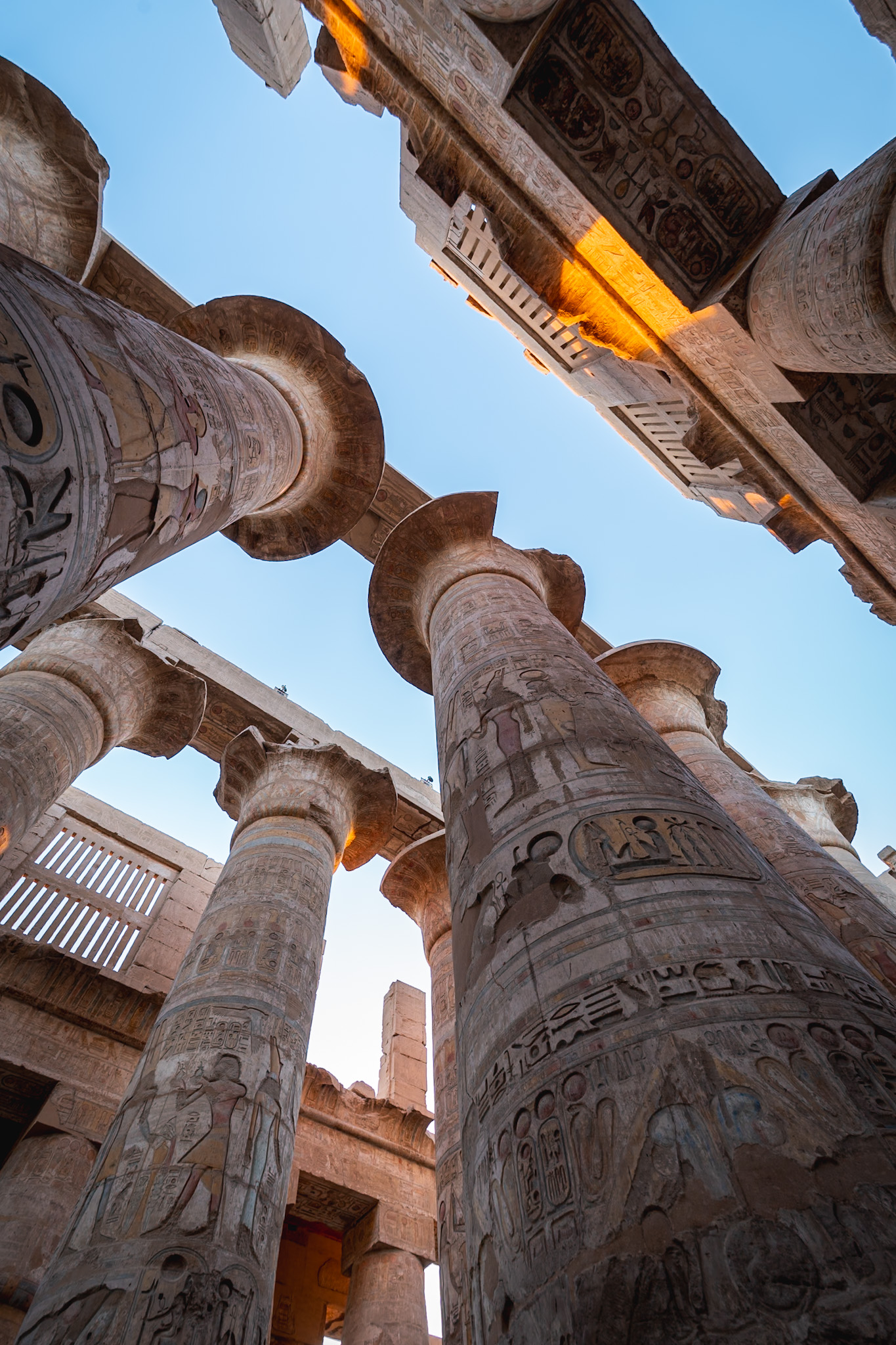
One of the areas that impressed me the most was the famous Great Hypostyle Hall. Walking inside felt surreal. There are 134 massive stone columns arranged in rows, some reaching more than 20 meters high.
The columns are completely covered with carvings and hieroglyphs, showing pharaohs making offerings to the gods, celebrating victories and telling stories about their reign. Even today, thousands of years later, many of these carvings are still visible and incredibly detailed.
If you pay close attention to the top of some of these columns, you can still see traces of the original colors.
Why It Stands Out
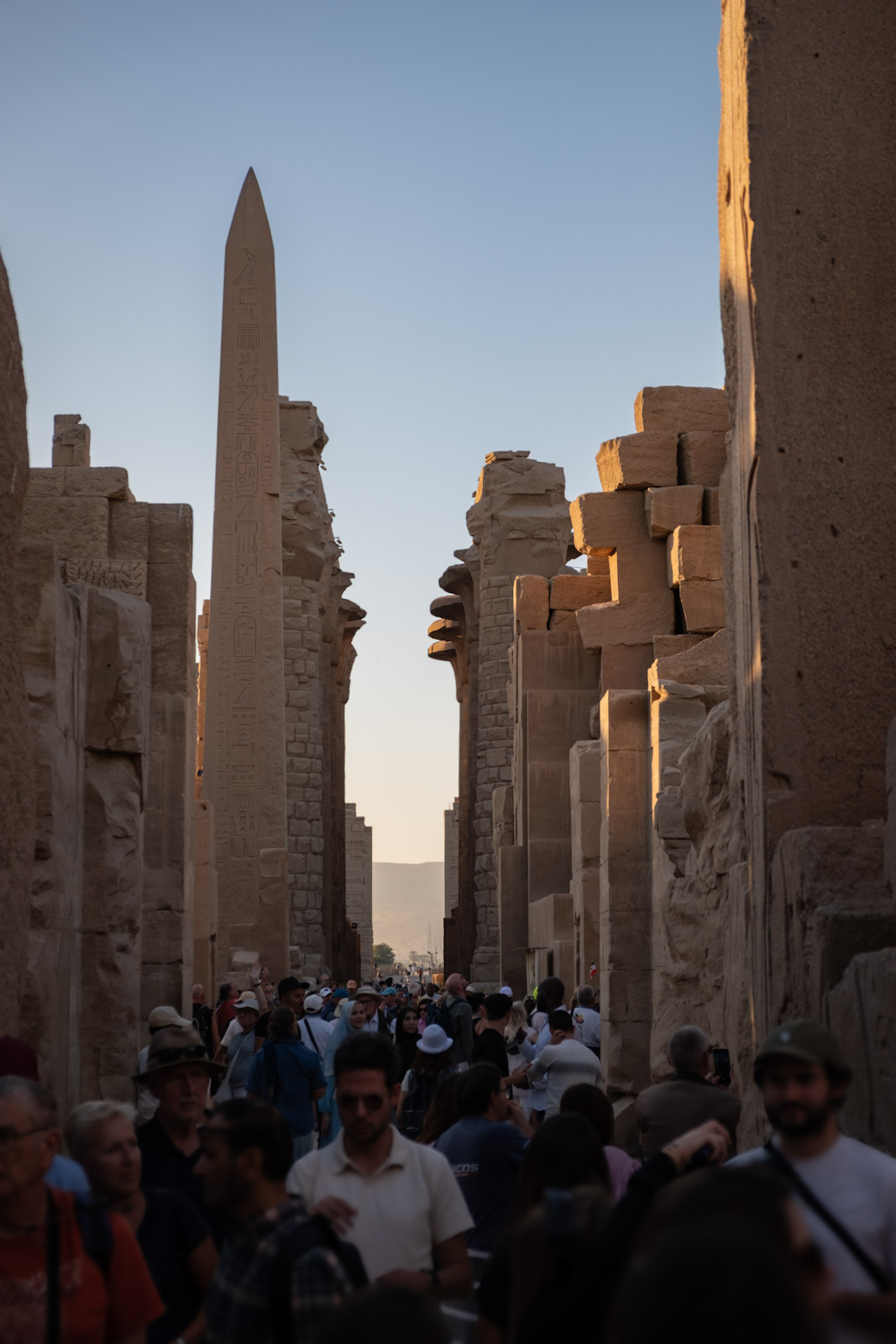
As you walk through Karnak, you pass huge statues, tall obelisks and wide courtyards that once hosted important religious ceremonies. One of the most famous obelisks here was built by the female pharaoh Hatshepsut and is still standing today.
The entrance of the temple is also connected to a long ceremonial road, known as the Avenue of Sphinxes, which once linked Karnak to Luxor Temple several kilometers away.
As you explore Karnak, you quickly realize this was not just a temple, but the religious heart of ancient Egypt. Every wall, statue and column tells a story.
No matter how hard I tried, no photograph or video can replicate the beauty of what turned out to be one of my favorite places I have ever visited.
Luxor Temple at Night
First Impressions
A short car ride away, we arrived at our next and final site: Luxor Temple, located right in the center of the modern city.
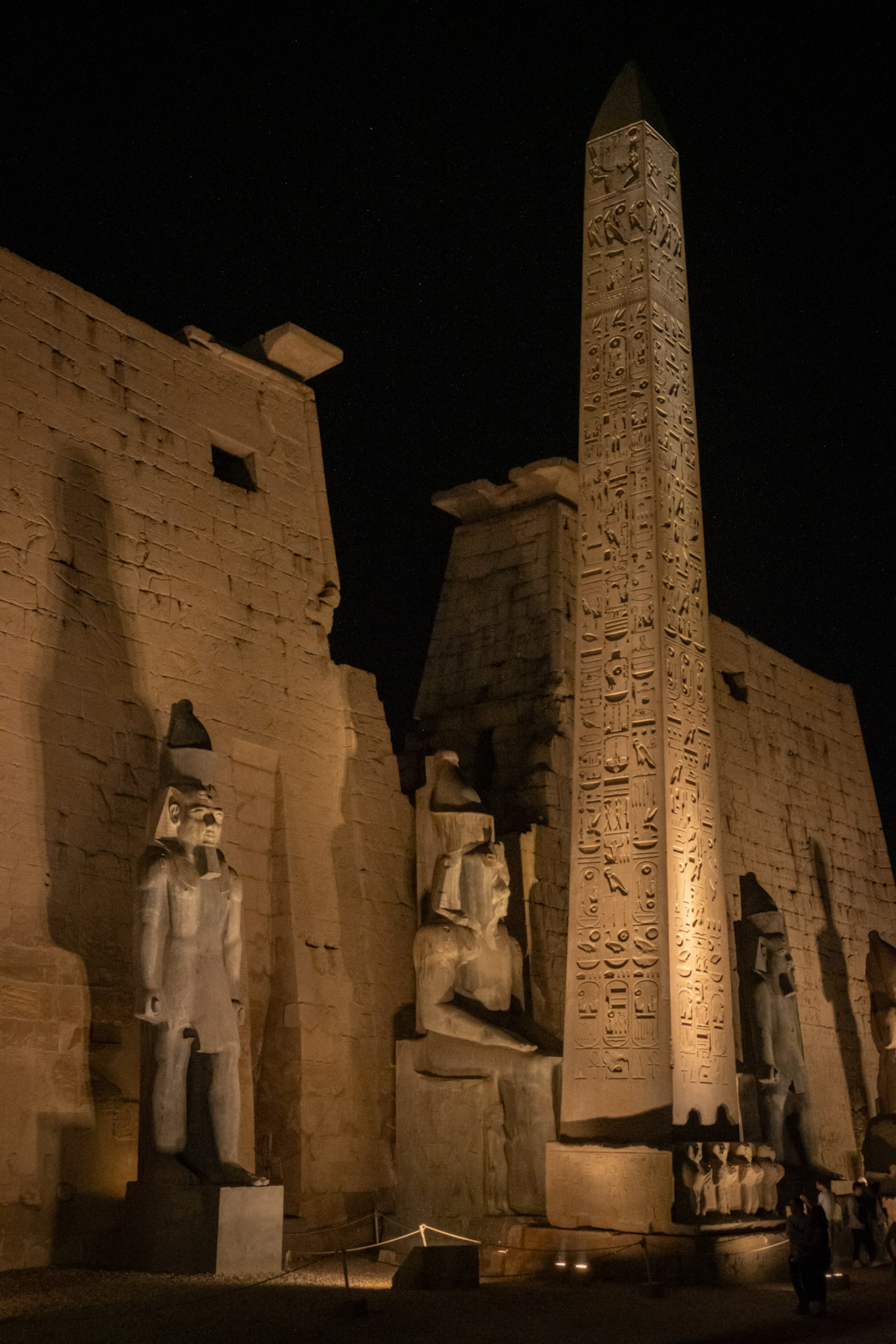
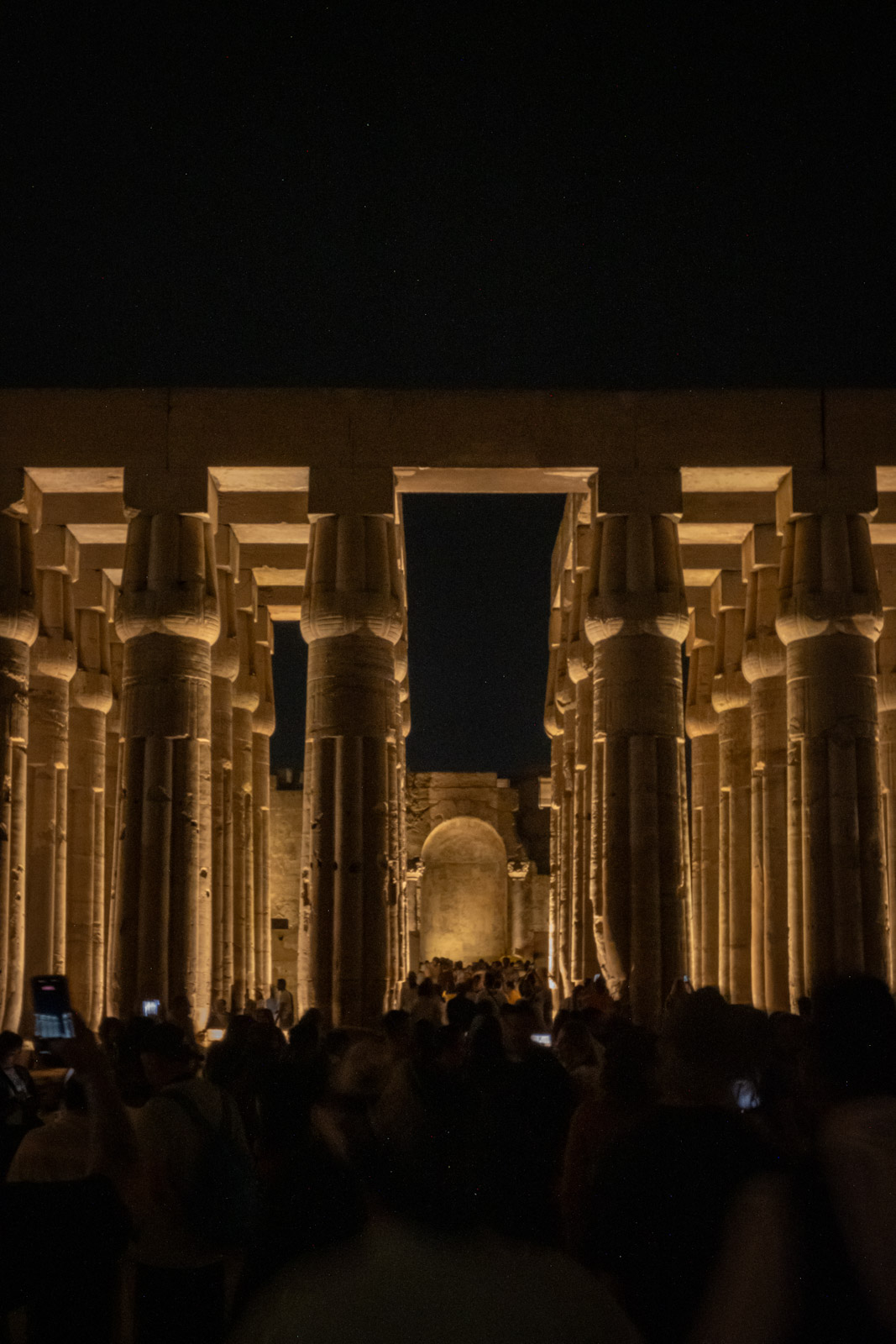
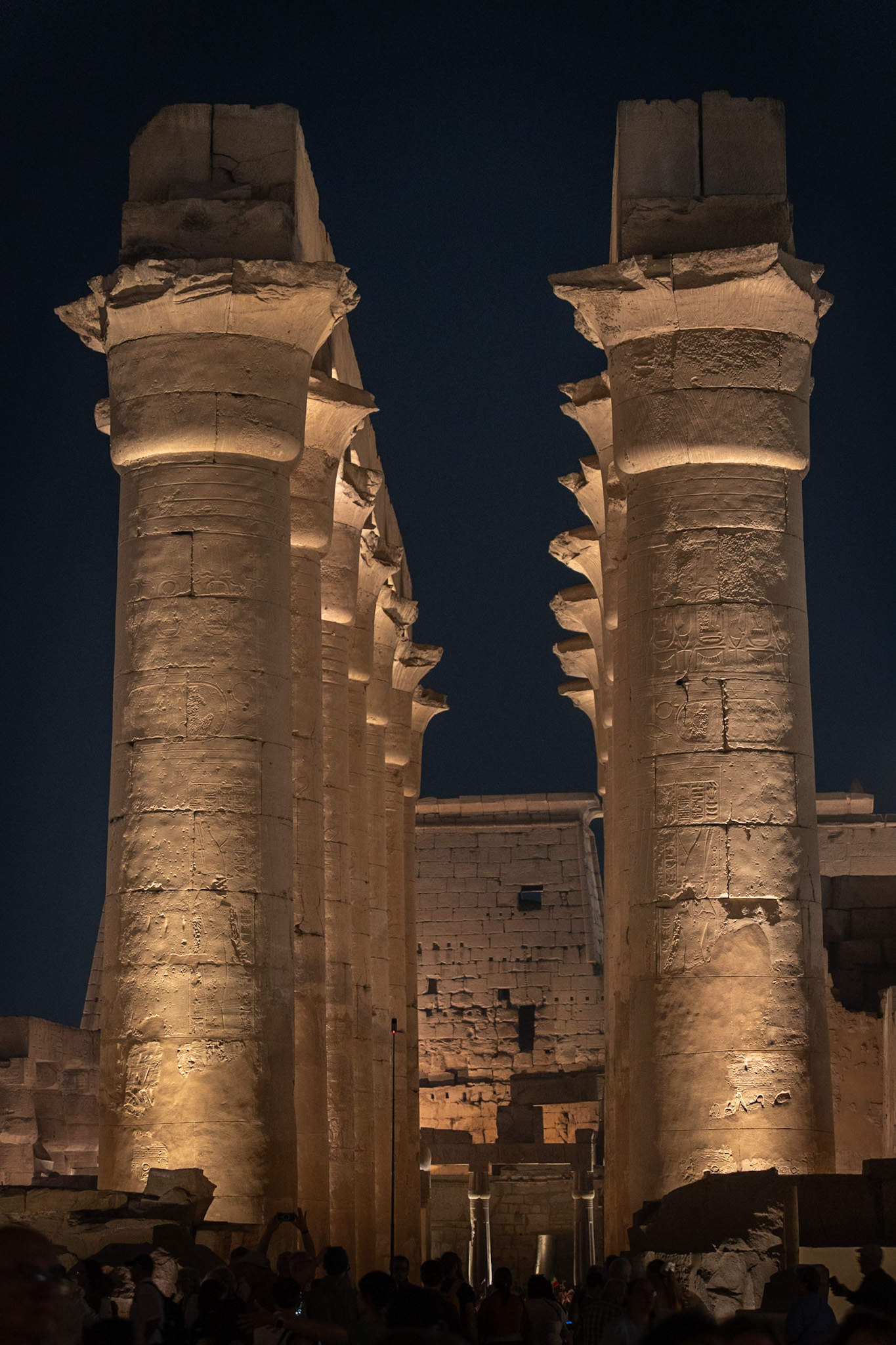
We visited after sunset, when it was already dark and the entire temple was beautifully illuminated and very crowded. Our guide led us through the crowds while explaining the temple and everything around it.
History of the Temple
The temple was mainly built during the reign of Pharaoh Amenhotep III and later expanded by Ramesses II. Unlike many other temples in Egypt, Luxor Temple was not dedicated to a specific god, but instead played an important role in religious ceremonies and festivals, especially the famous Opet Festival.
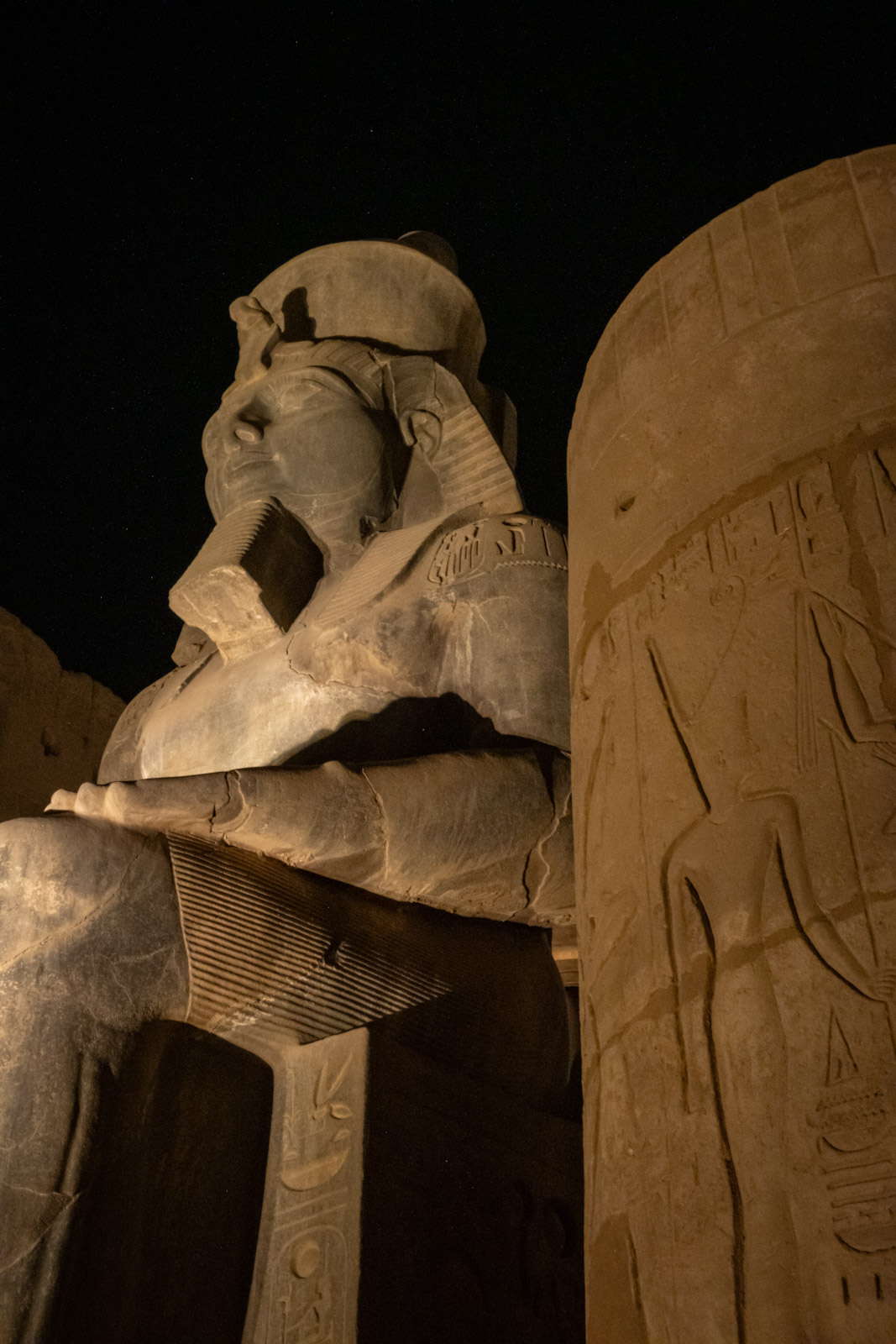
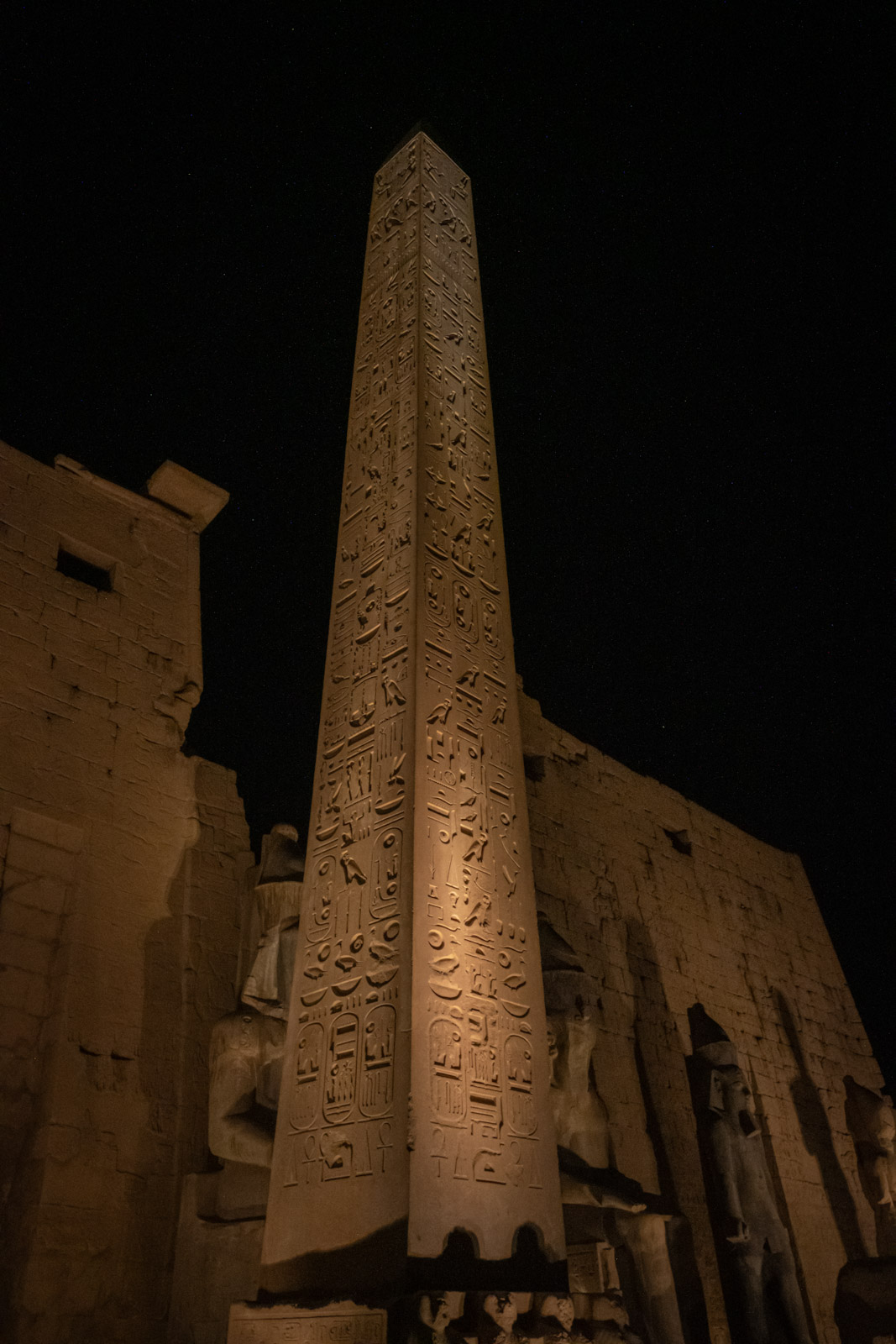
The entrance is marked by a massive pylon and large statues of Ramesses II sitting proudly in front of it. Originally there were two obelisks standing at the entrance, but today only one remains. The second obelisk was gifted to France and now stands in Place de la Concorde in Paris.
Atmosphere at Night
The lights that illuminate the temple create strong shadows between the columns and statues, making the carvings stand out even more and giving us “Night at the Museum” vibes, as if at any moment the ancient statues could start moving.
Parts of the temple were later used by the Romans, and even today you can see a mosque built directly on top of the ancient structure: the Abu Haggag Mosque.
The Avenue of the Sphinx at Night
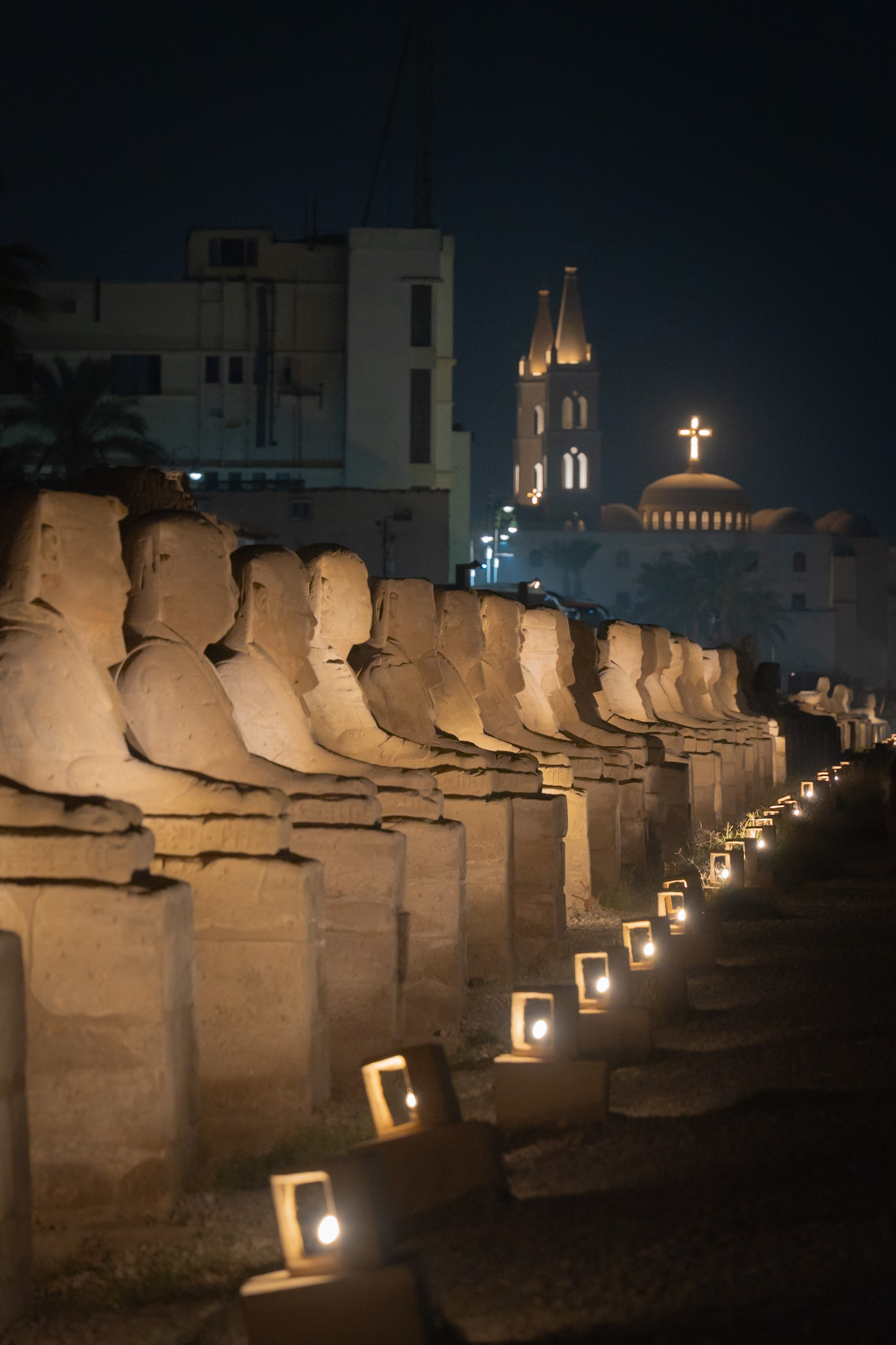
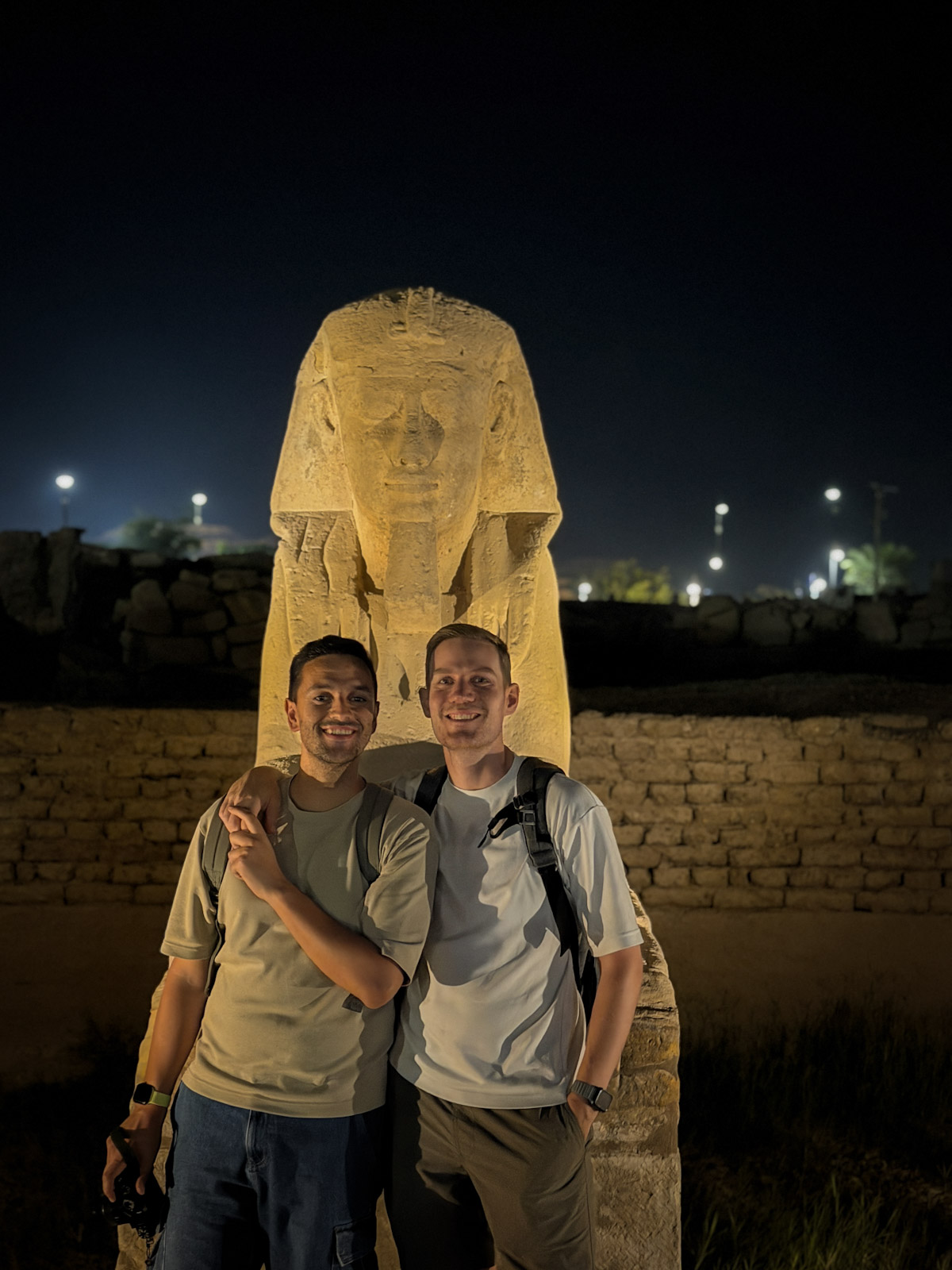
We also loved walking along the Avenue of the Sphinx, the long road that connects Luxor Temple to Karnak Temple. It stretches for almost 3 kilometers and is lined with hundreds of sphinx statues on both sides, which makes the whole walk feel very unique. At night, with the soft lighting and shadows, it felt even more special. And of course, since I am obsessed with sphinxes, this was extra exciting to me.
Small Tip:
And for those clumsy people like Michiel, here’s a small tip: try to look at the floor while walking.
The temple is so gorgeous it makes you want to constantly look up at the columns and carvings, but in some areas it can also be a bit dark. Because of that, we saw people falling one after the other after tripping on the light boxes that beautifully illuminate the temple.
And no… for once, Michiel was not one of them.
After a full day of exploring temples and tombs, we returned to the boat for dinner, beers and a few rounds of card games.
Day 4 — Luxor & Final Day
Checking in at the Pavillon Winter Luxor
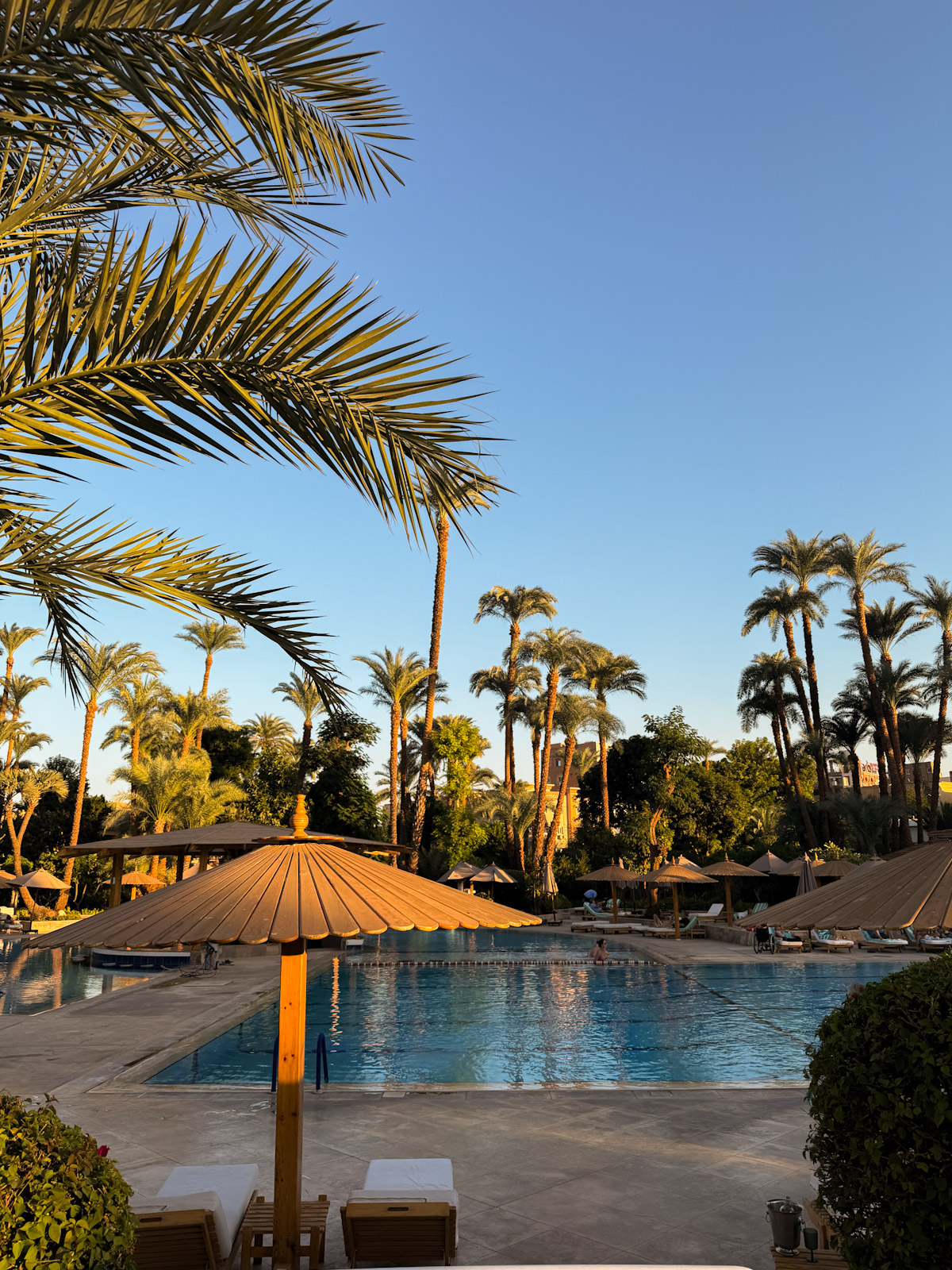
The next morning we had to check out of the Nile Plaza and as we were only flying to Cairo the next morning we had one free day to spare. We decided to check in at the Pavillon Winter Luxor hotel, which is within walking distance of the bazaar, temples and right by the Nile. We cannot recommend this hotel enough, it’s situated in a large green garden which is like an oasis in the busy and chaotic city of Luxor. And if you do not feel like doing anything on your last day, you can always relax by the pool surrounded by greenery.
Luxor Mummification Museum
After checking in to our hotel we visited the Luxor Mummification Museum, a small museum that Michiel suggested visiting and we almost skipped.
Despite its size, the museum turned out to be surprisingly interesting and very informative.
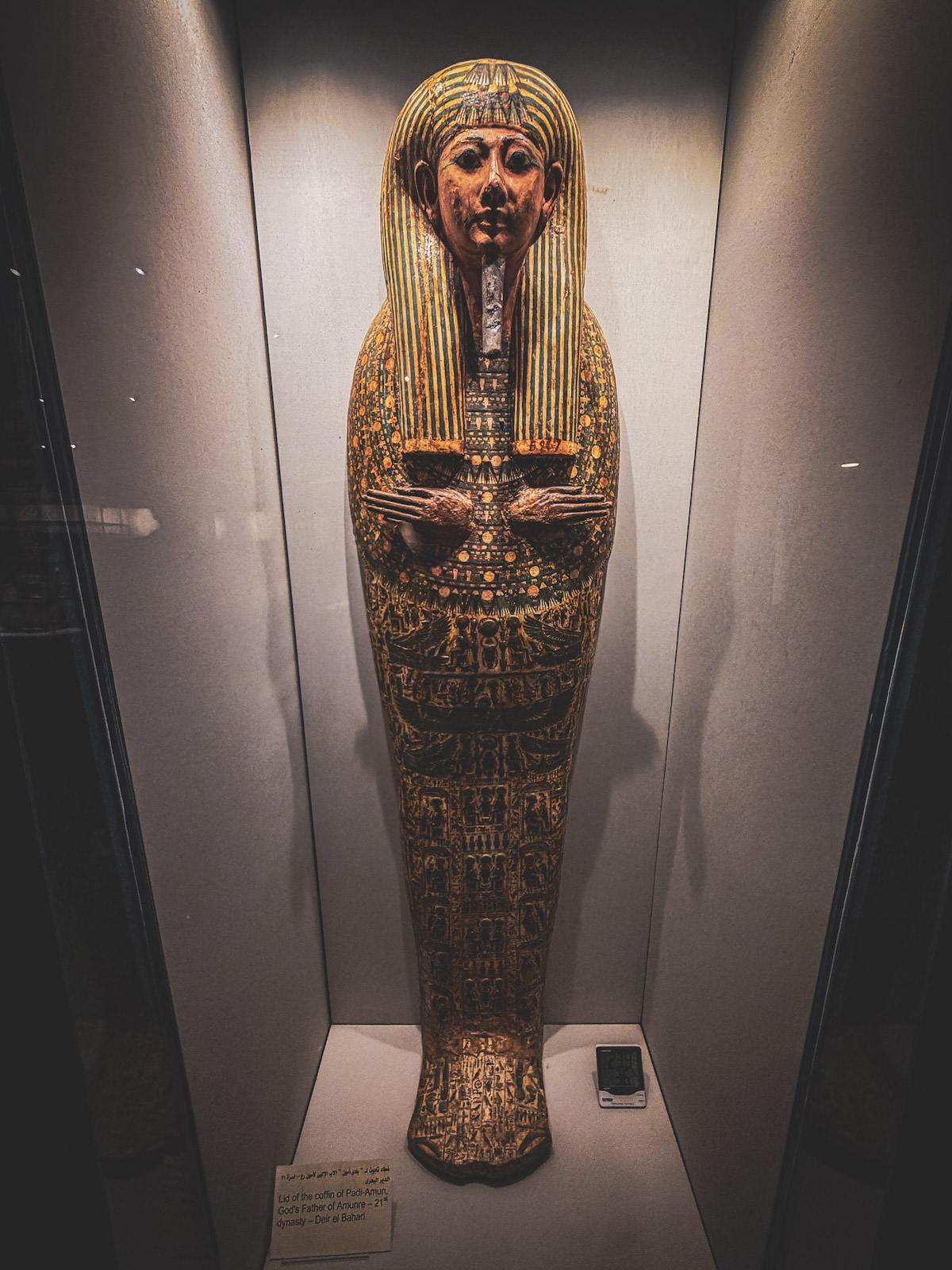
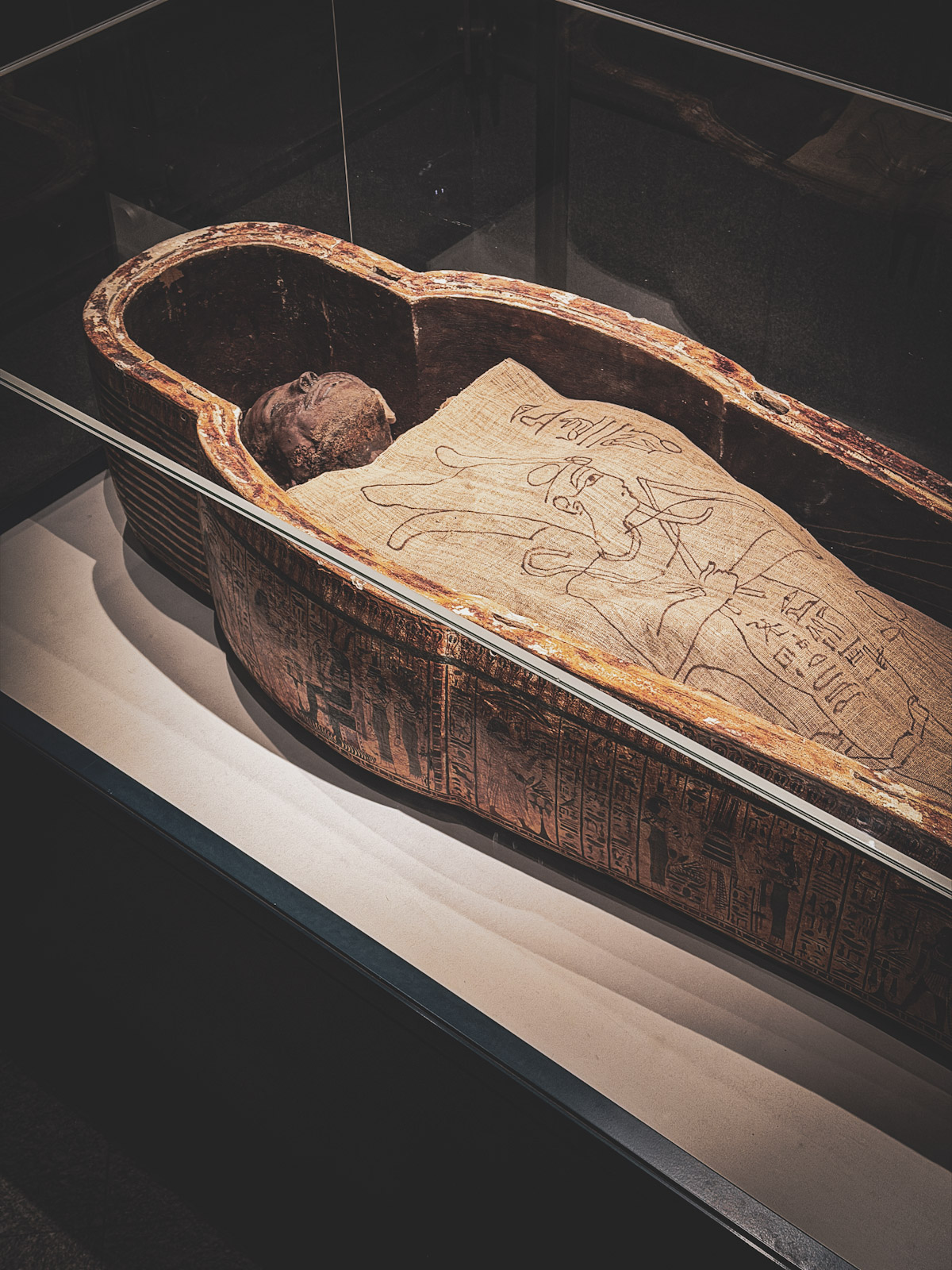
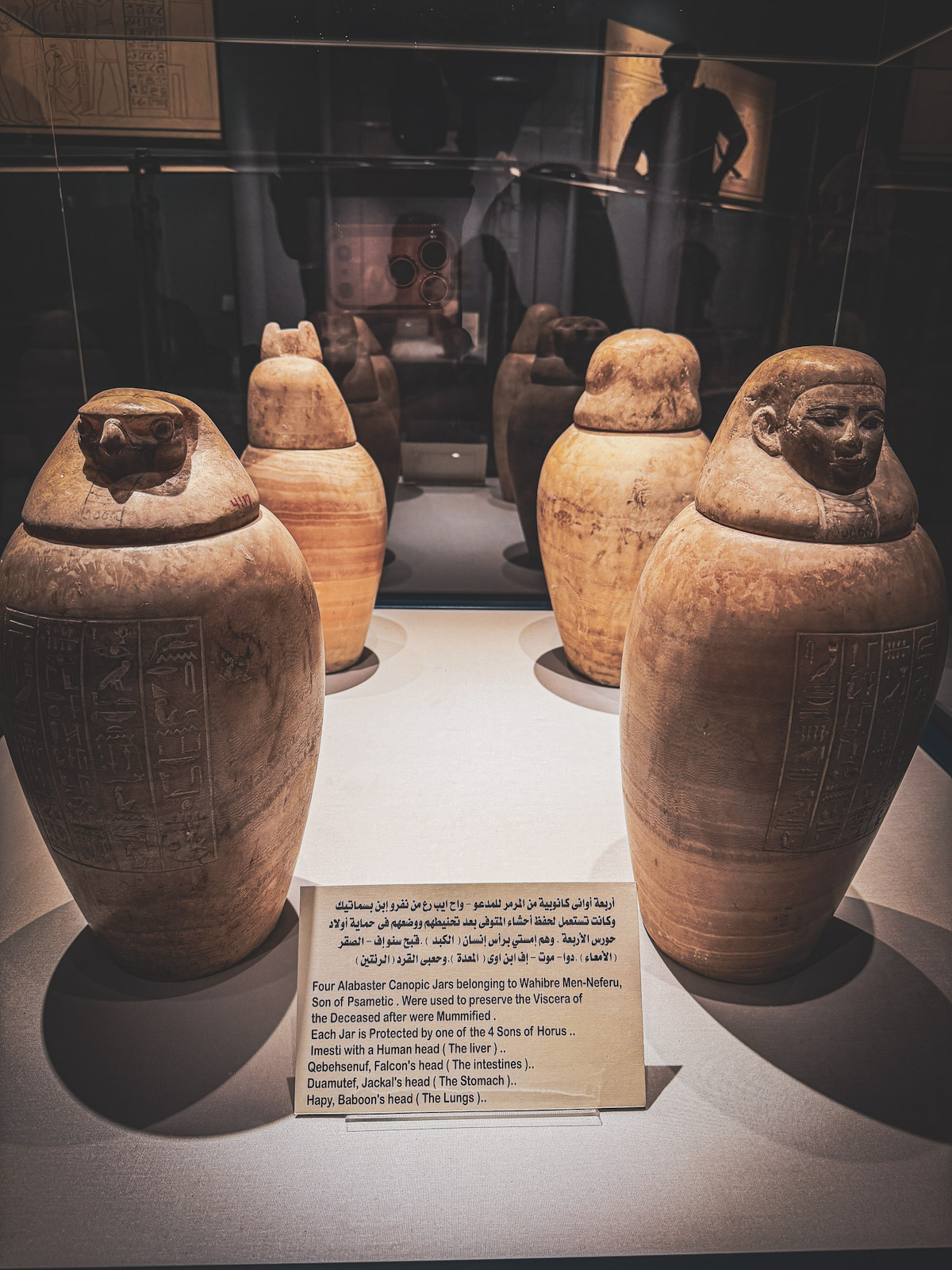
The museum explains the whole mummification process used by the ancient Egyptians, showing the tools, materials and even mummified animals that were part of those rituals.
And to our surprise, a real human mummy was displayed there. It’s believed to be Masaharta, a high priest of Amun.
The museum can be easily explored in about 10 minutes if you just walk through it. But if you take a little more time to read the information panels and look closely at the objects, you can easily spend 45 minutes or even an hour there and learn a lot about one of the most fascinating traditions of ancient Egypt.
Lunch by the Nile in Luxor
While walking to our lunch spot, Al Shabby Lane Restaurant, we stopped at a local juice shop for some sugarcane juice with lemon, highly recommended by Hassan.
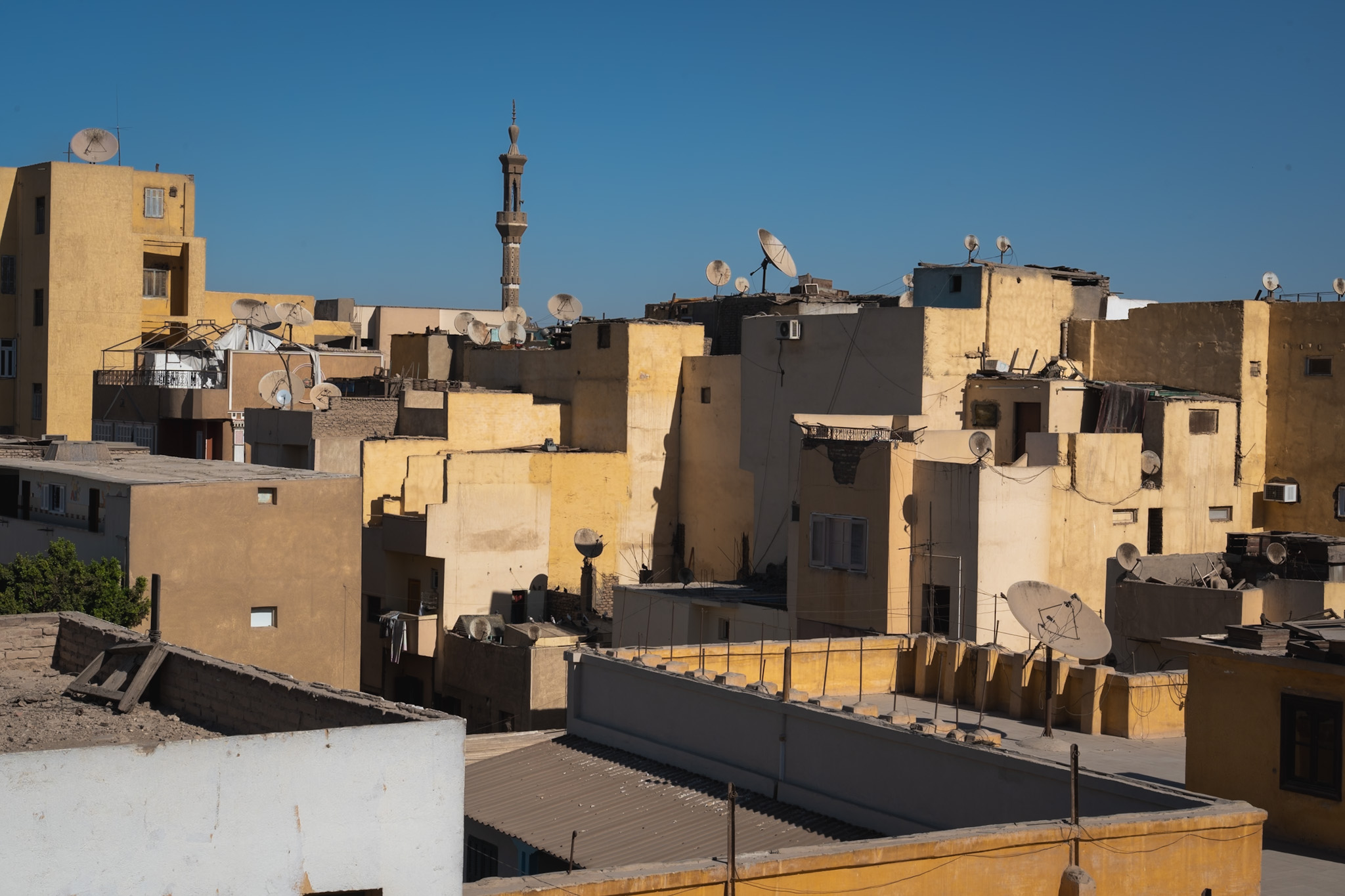
The restaurant is located near Luxor Temple and is known for its great local food and views over the Nile. Funnily, we only took a picture of the view over the city rather than the one of the Nile.
Exploring Luxor Bazaar
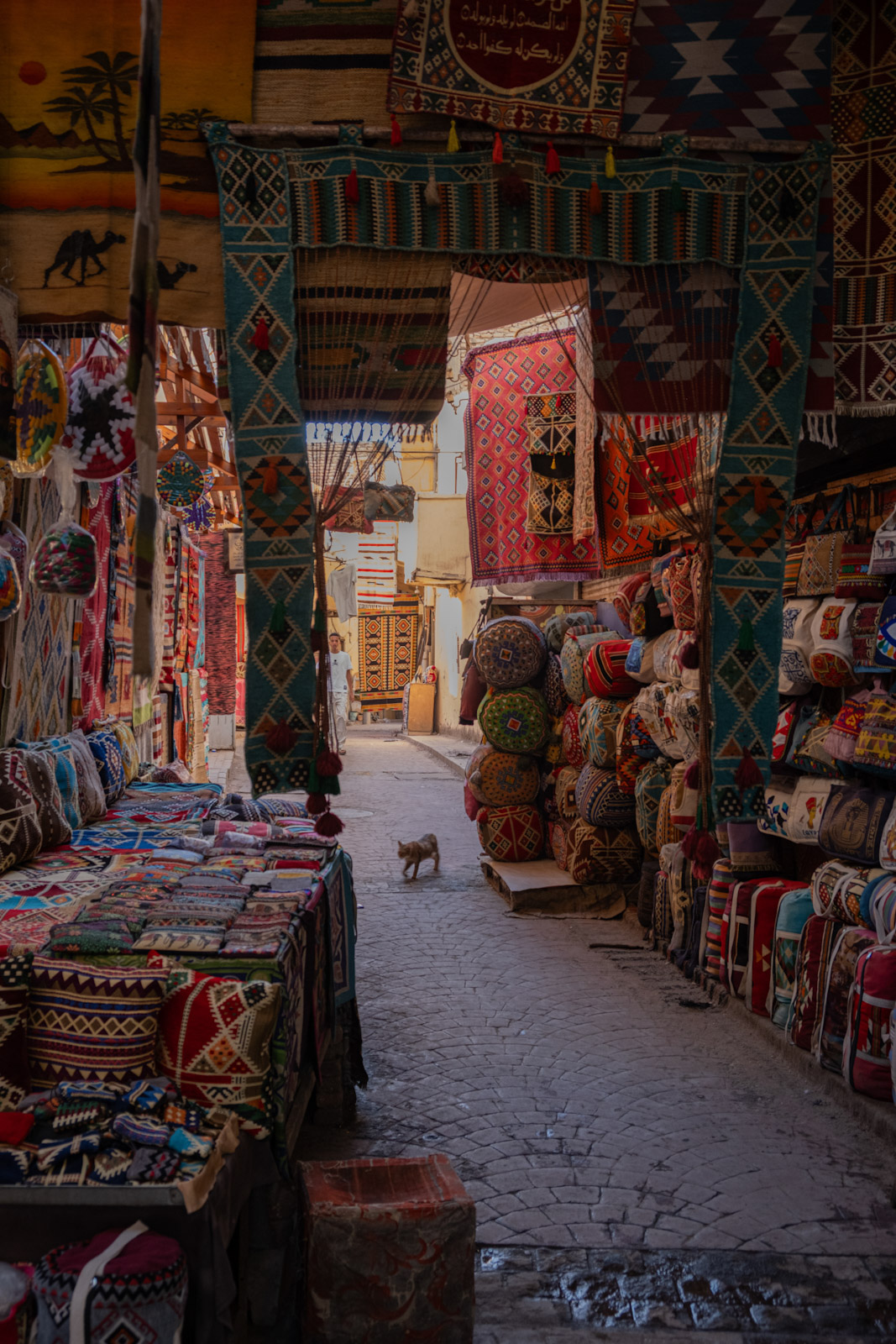
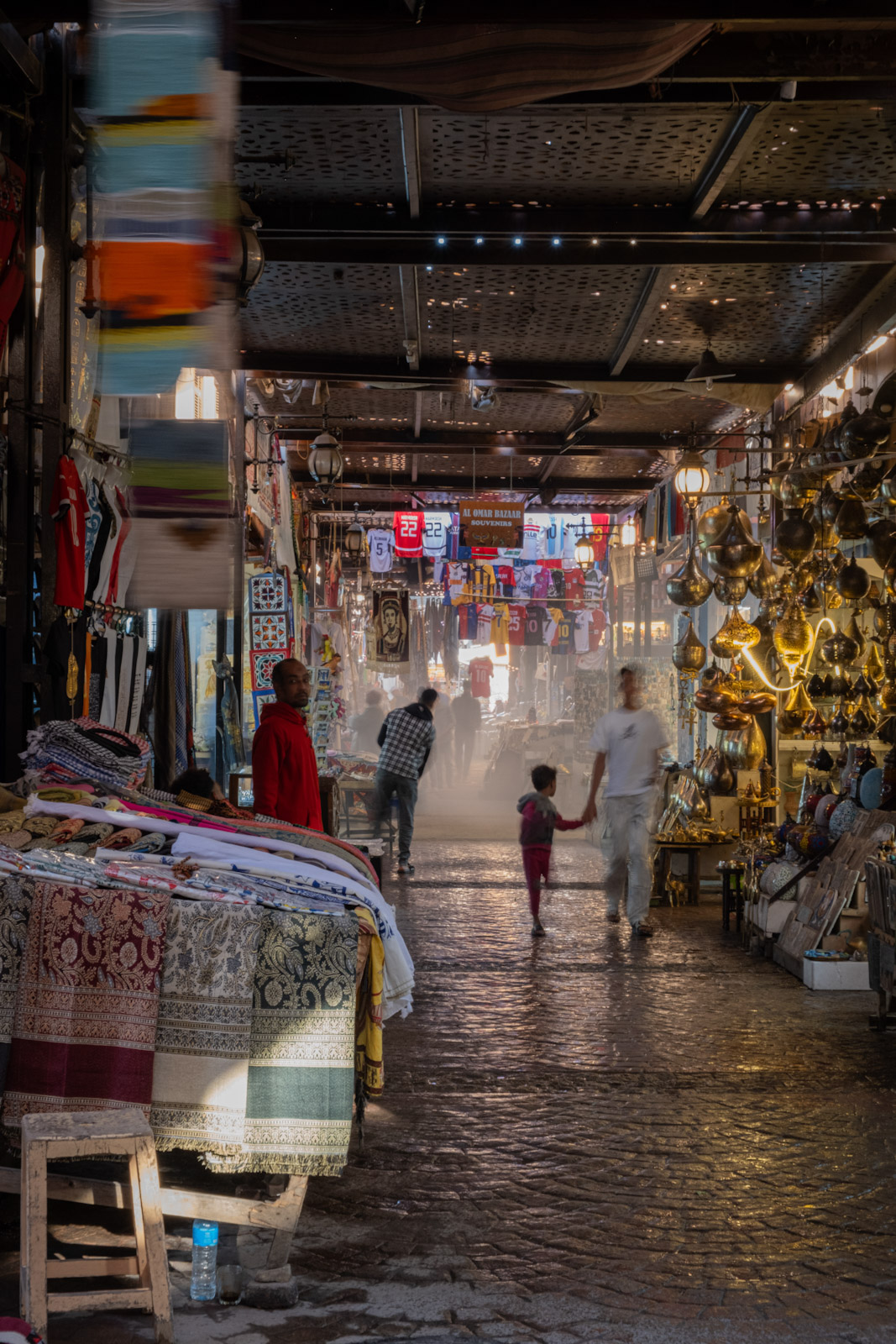
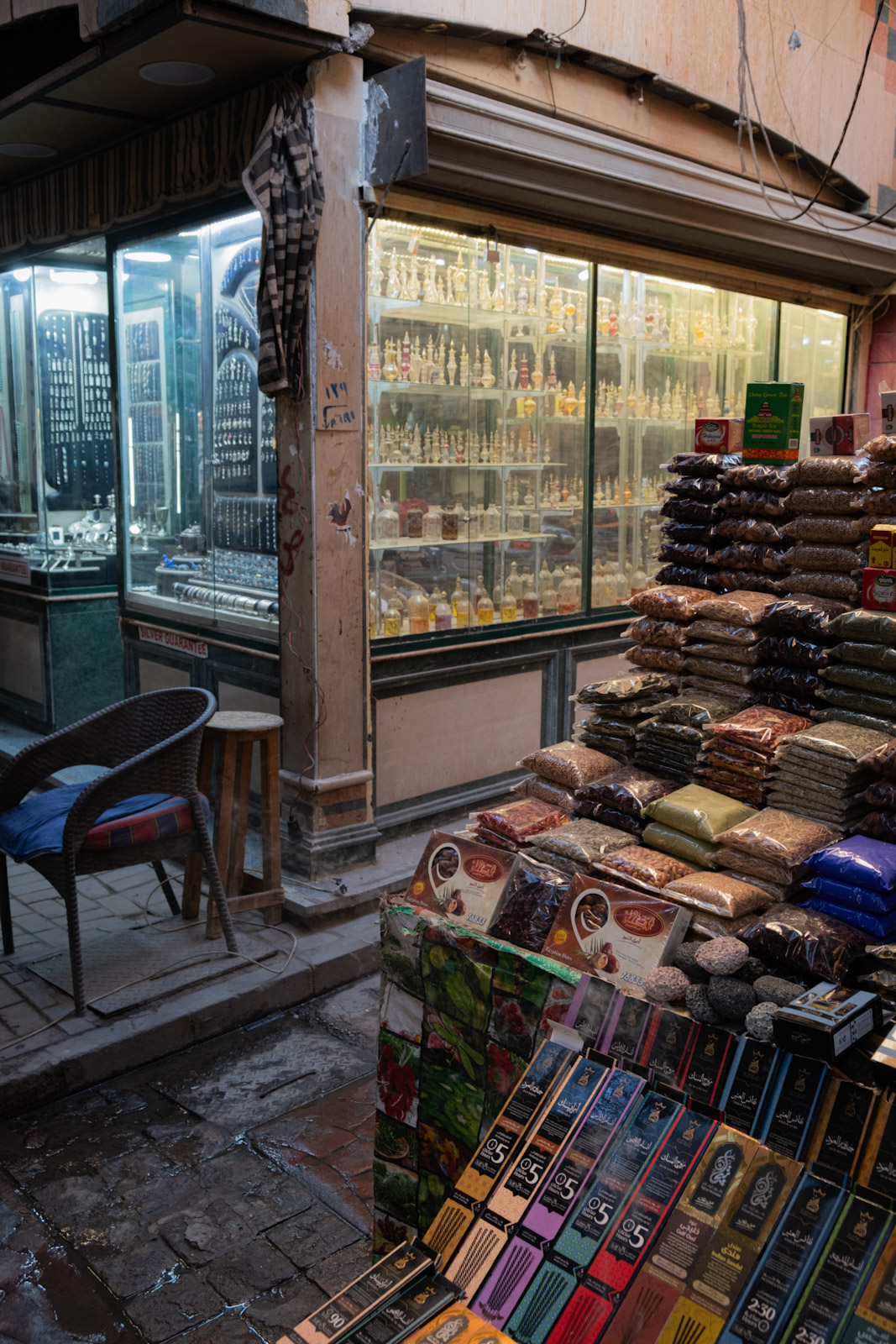
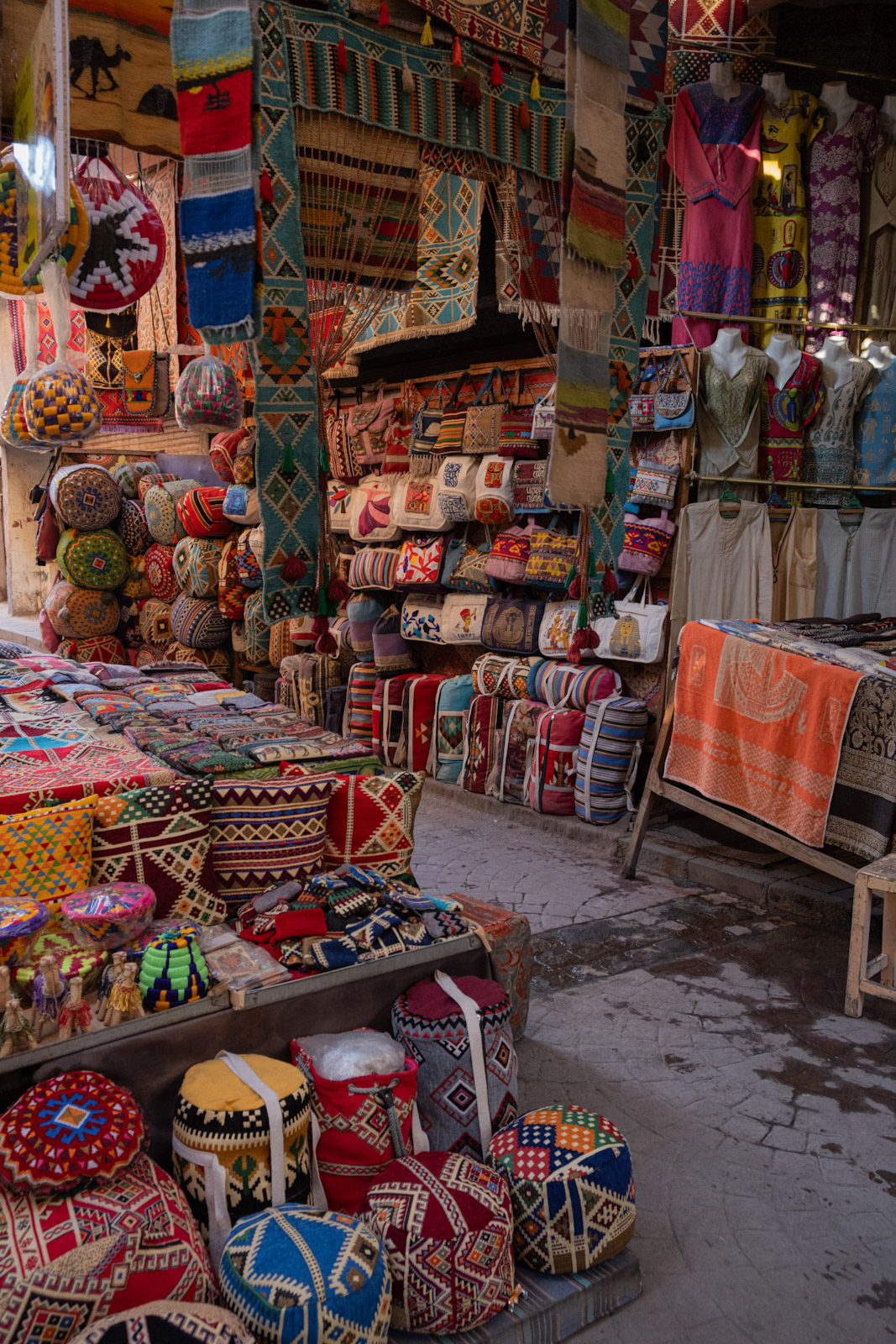
We digested our lunch by walking around the Luxor Bazaar, putting our negotiating skills to the test while arguing over the prices of souvenirs. Luxor bazaar is the place to buy souvenirs in Luxor. We bought carpets for on the wall, beautiful alabaster stone tea light holders, and much more. From our experience, never follow an old men into the depth of an alleyway. He took us through an old building and some random stairs to the second floor where he showed us his “premium” collection of carpets. Straight away I got flashes of “Sex and the City 2” with Charlotte being scammed with the Rolex, IYKYK.
After our shopping spree we headed to our hotel for farewell drinks and dinner with Diandra and Hassan, who were heading to Alexandria that night.
Final Thoughts
This Nile cruise from Aswan to Luxor ended up being one of the most memorable travel experiences we’ve ever had.
There’s something special about watching Egypt slowly unfold from the deck of a boat — temples rising from the riverbanks, fishermen casting their nets and villages carrying on traditions that have existed for centuries.
We shared this experience with dear friends, which made it even more special.
It was not just a trip through Egypt, it was a trip through history.
If you’re planning a trip to Egypt and want to combine history, iconic sights and a slower pace of travel, sailing the Nile from Aswan to Luxor is one of the best ways to experience the country.
Nile Cruise FAQ
Yes, for us, it was one of the best ways to experience Egypt. It combines history, scenery and a slower pace of travel, while allowing you to visit some of the country’s most iconic temples without constantly changing hotels.
Most Nile cruises last between 3 to 5 days. We did a 5-day cruise from Aswan to Luxor, which felt like the perfect balance between exploring and relaxing.
The most common route is between Aswan and Luxor (or vice versa), stopping at Kom Ombo and Edfu along the way. This route includes the most important temples and historical sites.
Expect early mornings for temple visits, relaxed afternoons on the deck, and a mix of guided tours and free time. It’s a balance between sightseeing and slow travel.
We booked through Presidential, but all of the companies do more or less the same route. On Getyourguide, Viator and Booking you can find different options tailored to different budgets.

